Indiana Homeowner’s Survey Confirms a Ratty Fence Sits Entirely on Her Land — Then Security Cameras Catch the Neighbor’s Son Hurling Her Leaf Bag Back Into Her Own Yard
Photo credit: AI-generated image created using ChatGPT. Illustrative only.
It started the way a lot of fence-line feuds do: with a tired, leaning barrier and a neighbor who acted like the property line was more of a suggestion. An Indiana homeowner wanted to fence in her backyard so her dogs could enjoy some privacy. Instead, she found herself staring down a “ratty” fence that wasn’t even hers—plus a strip of yard on the other side that the neighbors treated like their own.
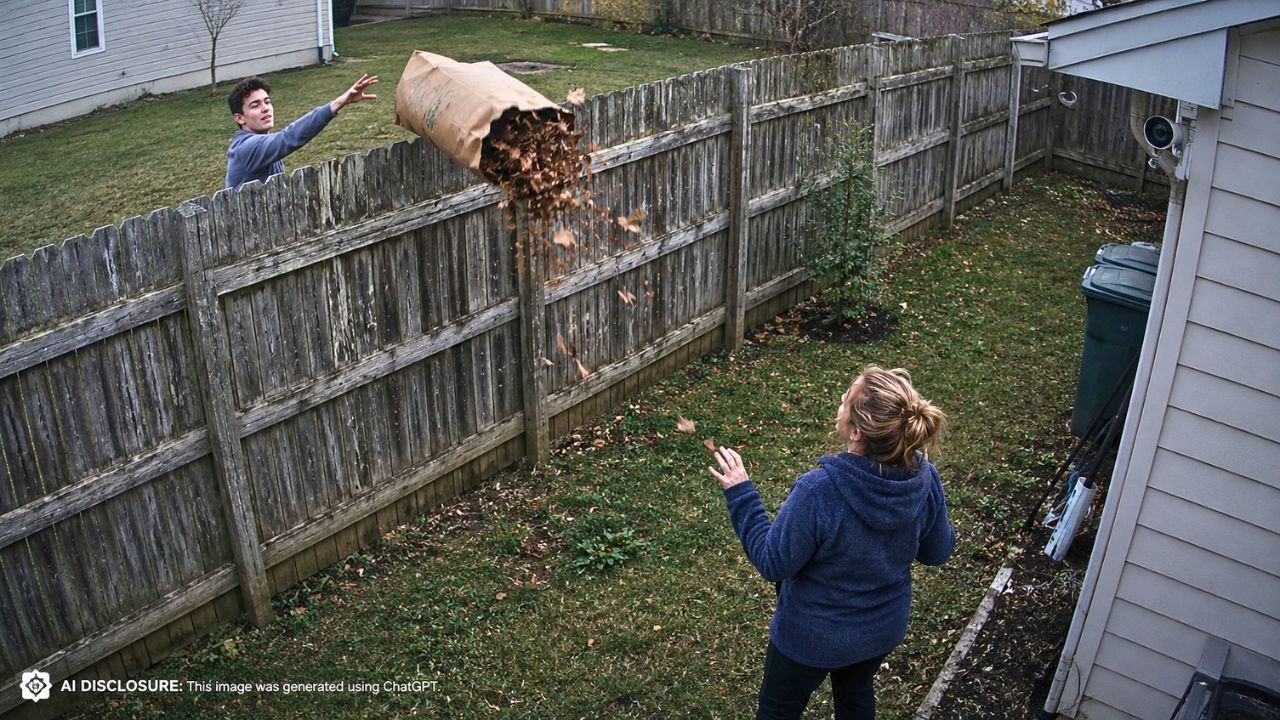
In the original post, she described a routine that had turned her backyard into a daily stress test: mow, get watched, and then see the same patch re-mowed like a petty rebuttal. But the moment that pushed it from annoying to personal was caught on her security cameras—her neighbor’s son walking over, looking angry, and throwing her bag of leaves farther into her yard. The bag ripped, and she was left cleaning up the mess.
The fence looked like the property line—until it didn’t
When she bought the home, she assumed the old fence marked where her yard ended. It’s an easy assumption to make, especially when a fence has been there long enough to look “normal,” and when the previous owner was, in her words, “a very sweet old lady” who might not have noticed if someone built slightly over the line.
But the neighbors’ behavior didn’t match a normal shared-border vibe. They cut the grass on a strip about four feet wide on the far side of their fence—land the homeowner believed was part of her property. When she mowed that strip, they’d come out and re-cut it the same day, reinforcing the message that they considered it theirs.
It’s the kind of slow, grinding territorial pressure that makes people second-guess themselves. If they act confident enough for long enough, you start wondering if you’re the one who’s wrong—even when it’s your own yard.
The leaf bag moment that flipped the switch
The homeowner was in the middle of yard work, picking up leaves, and left a bag near that disputed area. She didn’t hide why: she believed she was putting it on her property. Instead of a conversation, she got a physical response.
She wrote that the neighbors “had their son grab the bag and chuck it further into my yard.” It ripped on impact, creating “a huge mess to clean up.” The cameras caught it all: the walk over, the visible anger, the toss. It wasn’t just passive-aggressive lawn care anymore. It was someone crossing over and taking action on her side of the line, with damage as the result.
For a lot of homeowners, that’s the turning point—when you realize you’re not dealing with a misunderstanding, but with a neighbor willing to escalate when they don’t get their way.
The survey confirmed more than she expected
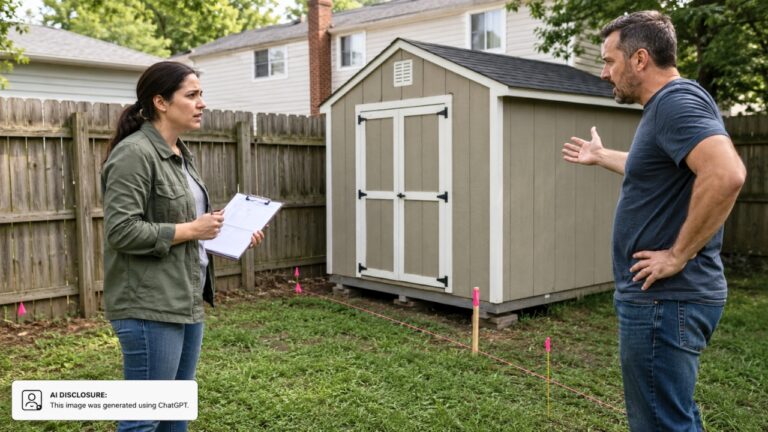
With plans to install her own fence, she did what people often wish they’d done sooner: she ordered a survey. And the result wasn’t a close call.
The survey showed that the four-foot strip the neighbors had been maintaining was entirely hers. Not only that, her property extended “another couple of feet past that fence into what they claim is their yard.” In other words, that “ratty” fence wasn’t just off by inches. It was sitting on her land.
The detail that made it feel even more deliberate was what the surveyor shared next: the same company had previously surveyed the neighbors’ land. The surveyor could show her the map of their property and what information they’d been given—meaning, in her view, they were “WELL aware” where their property ended.
Now the homeowner wasn’t just dealing with a bad fence and weird mowing habits. She was staring at the bigger problem behind so many property-line disputes: a neighbor who behaves like time and confidence can rewrite deeds.
She wants her yard back—without lighting a fuse
Once the survey stakes went in, the next question wasn’t whether the land was hers. It was how to reclaim it without triggering a full-blown war next door.
She asked the practical questions most homeowners ask when a fence turns out to be misplaced: Can she legally tear it down if it’s on her land? Does she need a court order to have it removed? She wanted to handle it “homeowner to homeowner,” letting them know she intended to take down the fence—especially since it was “barely standing up”—but she didn’t want to step outside her rights.
That’s the tightrope in these cases. On one hand, a fence on your property feels like an open-and-shut fix: remove the junk fence, put up your own, and be done. On the other hand, removing something that a neighbor believes is “theirs,” even if they’re wrong, can turn into accusations, retaliation, or a sudden flurry of threats.
And unlike a broken appliance, you can’t just swap out a fence quietly. A fence project is visible. It takes time. It involves contractors, posts, holes, materials—days of activity that can either calm things down through clarity or inflame a neighbor who thinks they’re being challenged.
What other homeowners pushed: document first, talk second
While the post itself focused on what she could do next, the shape of the story naturally points to what seasoned homeowners tend to emphasize when a boundary dispute turns physical: proof and paperwork before confrontation.
Here, she already had two things that are hard to argue with later: a professional survey and video footage from her cameras. The survey established the boundary in a way “my cousin measured it” never will. The camera footage captured the leaf-bag incident as more than hearsay, including the consequence—her ripped bag and the mess left behind.
In a neighbor dispute, that kind of documentation often becomes the difference between a clean resolution and a messy blame game. It also changes how a conversation feels. A vague complaint invites denial. A calm discussion backed by a survey drawing and timestamps tends to land differently—especially if the other side has been operating on intimidation and assumption.
Just as importantly, the homeowner was already thinking in terms of measured steps. She wasn’t talking about revenge, pranks, or “teaching them a lesson.” She wanted her fence and her yard, and she wanted to know what she could do without creating new legal problems for herself.
A backyard fence shouldn’t be this complicated
The frustrating part is how normal her original goal was: fence the yard for the dogs, get a little privacy, enjoy the space she bought. Instead, she’s now juggling a collapsing fence she didn’t put up, neighbors who treat mowing like a claim-staking ritual, and a recorded moment where her yard work was literally thrown back at her.
The survey gave her certainty, but certainty doesn’t automatically bring peace. Now she has to decide how to assert that boundary in real life, where people don’t always respond to facts with grace. The fence may be “barely standing,” but the dispute around it looks sturdier—and the next move, whether it’s a conversation or a teardown, is likely to decide what kind of neighbors they’ll be from here on out.
Like Fix It Homestead’s content? Be sure to follow us.