Landowner Mows the Neighboring Acre for Twenty-Four Years Believing It’s His — Then the Ohio Supreme Court Rules Mowing Grass Is Not Enough
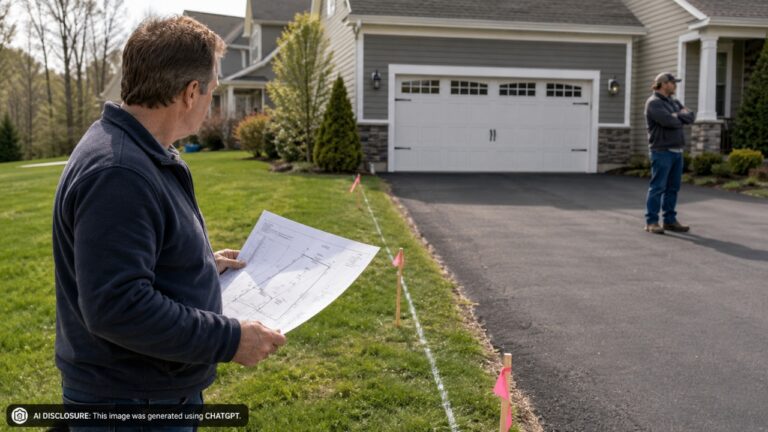
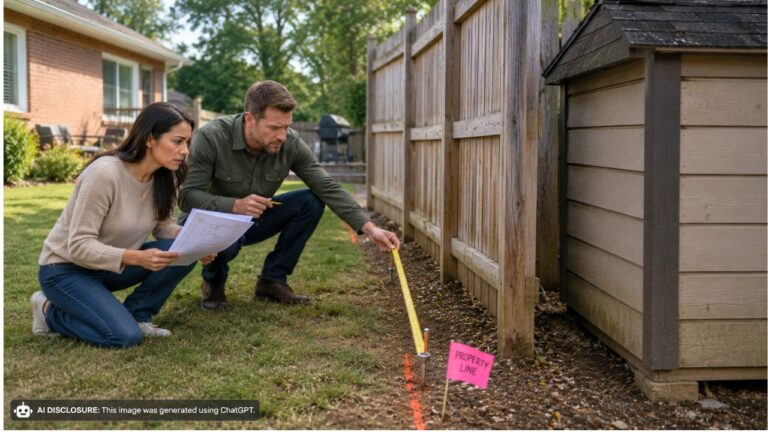
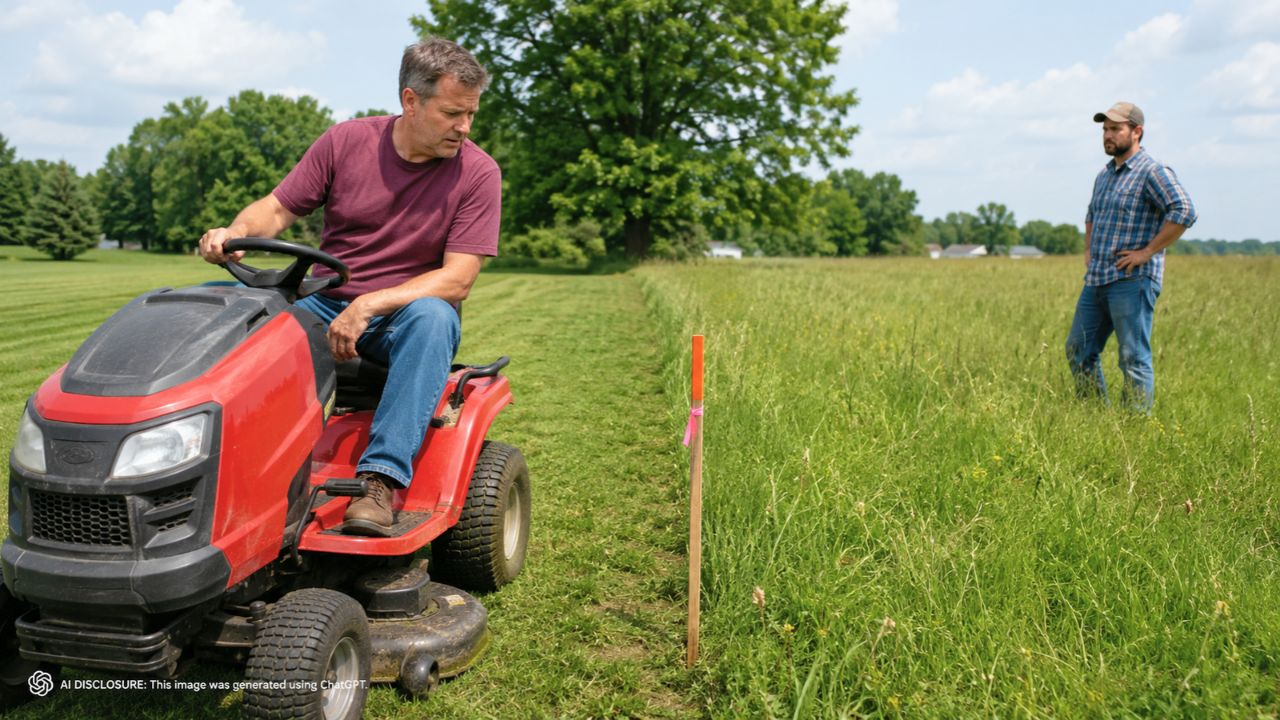
Photo credit: AI-generated image created using ChatGPT. Illustrative only.
It starts the way a lot of property-line messes start: you buy a place, you keep the outside looking decent, and you just assume that skinny strip of grass along the edge is part of the deal. For years it feels harmless—like you’re doing everyone a favor by keeping weeds down and making the frontage look cared for.
In Ohio, a Summit County business did exactly that for more than two decades, regularly mowing and landscaping nearly 1.5 acres next to its property because it believed the land came with what it purchased. Then the actual owner—Norfolk Southern Railway—put the parcels up for sale, and the whole “we’ve always taken care of it” assumption hit a hard legal wall. The Supreme Court of Ohio’s decision is summarized in the source post, and it boils down to this: mowing and basic lawn care, by itself, didn’t count as the kind of obvious “we own this now” behavior required for adverse possession.
The maintenance that felt normal—until it didn’t
The land at the center of the fight wasn’t a tidy suburban side yard. Norfolk Railway owned three parcels in Tallmadge near Munroe Falls Road, including two long, narrow strips totaling just under 1.4 acres that sat alongside the property NC Enterprises bought in 1997.
About four months after buying its property, NC Enterprises started maintaining its own land and those two neighboring railway parcels as if they were one continuous piece. It wasn’t one guy on a mower once a month, either. The company hired independent contractors for ongoing work: mowing, weeding, fertilizing, trimming bushes and trees, mulching, planting, and seasonal cleanups. That routine continued through 2021.
If you’ve ever lived next to an “unused” piece of land—railway, utility corridor, vacant lot—you know the temptation. You don’t want ticks, you don’t want tall weeds, you don’t want dumping. So you keep it neat. Over time, it starts to feel like yours because you’re the only one acting like an owner.
Small upgrades turned into “ownership” in their minds
For a few years, NC Enterprises’ involvement stayed in the landscaping lane. Then came improvements that felt more permanent. In September 2000, the company erected a fence between a section of the parcels and the road, aiming to deter theft. Three years later, it added a barbed wire fence.
In 2011, NC Enterprises installed drainage pipes on its property and the two railway parcels to help with flooding. That’s not decorative work—that’s the kind of change people make when they believe they’re protecting their own building and land from water problems.
On the ground, those actions send a clear message to neighbors: someone is taking control of this space. Fences define edges. Drainage work changes how the land functions. It’s easy to see how a long-time caretaker would start thinking, “We’ve been treating this like ours forever.”
The “for sale” sign that changed everything
The dispute didn’t flare up because someone argued over a few inches at the property line. It escalated when Norfolk Railway posted a for-sale sign for the parcels in 2021—an unmistakable signal that the company still considered it its property.
Norfolk Railway had listed the parcels for sale at various times between 2003 and 2020, although the summary notes it’s unclear whether for-sale signs were actually placed on the land during those earlier listings. But by 2021, NC Enterprises says it realized the uncomfortable truth: the land it had been maintaining wasn’t in its deed.
In July 2020, NC Enterprises notified Norfolk Railway that it was claiming ownership of the two parcels through adverse possession. Norfolk Railway responded that it was refuting that claim. A year later, NC Enterprises filed a declaratory judgment action in Summit County Common Pleas Court seeking an official ruling that it had met the requirements to take ownership.
The Ohio Supreme Court draws a hard line on mowing
Adverse possession is the legal concept that lets someone acquire ownership of land they don’t legally own—if they possess it in a way that meets strict requirements for a long time. In Ohio, the court reiterated that adverse possession is “disfavored” and the elements are “stringent.”
Justice Daniel R. Hawkins, writing for the majority, explained NC Enterprises had to prove by clear and convincing evidence that it “openly, exclusively, notoriously, adversely, and continuously” used and possessed the parcels for more than 21 years.
Here’s where the timeline mattered. Because Norfolk Railway became aware of NC Enterprises’ intentions in July 2020, NC Enterprises needed to show its qualifying possession started on or before July 1999. The problem: the fence went up in September 2000, and the drainage pipes came much later in 2011. The only thing happening before July 1999 was lawn maintenance.
The Court ruled that mowing and trimming weren’t “open and notorious” enough to put the true owner on notice. The opinion compared those acts to hanging laundry on someone else’s property—something visible, sure, but not the kind of clear flag-planting that signals, “I’m taking this.” The majority stated: “Mowing the grass and trimming the bushes are not sufficient to notify the world that NC Enterprises had exercised dominion over the parcels.”
Because the more obvious ownership-style acts didn’t run for the full 21-year period, the Supreme Court reversed the Ninth District Court of Appeals (which had sided with NC Enterprises) and ordered summary judgment for Norfolk Railway. The land stays with the railway.
The dissent argues the Court went too far, too fast
Not everyone on the Court agreed with shutting it down at the summary judgment stage. Justice Jennifer Brunner, in dissent, argued the Supreme Court was acting like a “super fact-finder,” especially since both the trial court and the Ninth District had sided with NC Enterprises.
She pointed out that while the “more obvious” work like fencing and drainage came later, it’s hard to believe Norfolk Railway was unaware someone was regularly maintaining the lawn, trees, and vegetation. Her dissent suggested there was room for reasonable disagreement on who effectively possessed the property, and that the matter should return to the trial court for more fact-finding rather than the Supreme Court essentially drawing a bright line that lawn maintenance alone can’t establish adverse possession.
Justice Patrick F. Fischer dissented without a written opinion.
What homeowners and landowners are already saying out loud
This is the kind of ruling that makes practical people immediately split into two camps.
One side hears, “Of course mowing isn’t ownership.” They picture friendly “helpful” maintenance that doesn’t challenge the true owner, especially when the land is a weird sliver next to a road or a railway. To them, if mowing counted, anyone could slowly steal land just by keeping it tidy.
The other side hears something more frustrating: if a corporate owner can ignore a parcel for decades, spend nothing maintaining it, and still keep it—even when a neighbor has been paying contractors and managing the headaches—that feels backwards. The dissent even raised a real-world point that property owners should notice if nobody is paying for upkeep.
Either way, the tension is familiar: fences, drainage, and maintenance aren’t just “chores” when they’re happening on the edge of someone else’s deed. They’re evidence. And in this case, the evidence didn’t start early enough.
NC Enterprises spent 24 years treating those narrow parcels like part of its frontage, right up until the day a for-sale sign made the paper ownership impossible to ignore. The Supreme Court’s message was blunt: if all you’ve done is mow, you may have improved the view—but you haven’t necessarily started the clock on claiming the land.
Like Fix It Homestead’s content? Be sure to follow us.
- Man Says He Found Out the Fence He Paid For Wasn’t Actually on His Property
- Woman Says Her Neighbor Started Taking Mulch From Her Delivery Pile Before She Could Even Spread It
- I made Joanna Gaines’s Friendsgiving casserole and here is what I would keep
- What Caliber Works Best for Groundhogs, Armadillos, and Other Digging Pests?