New Homeowner Builds a Code-Compliant Privacy Fence Around His First House — Then a Neighbor Starts Banging on His Car Window Before He Can Even Park, Furious About It
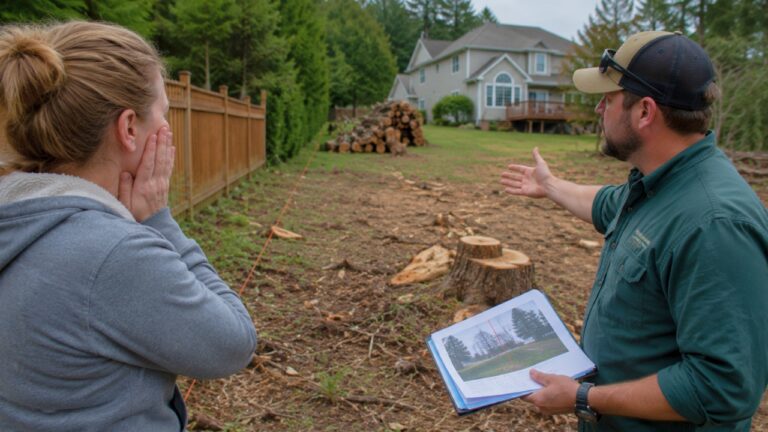
Photo credit: AI-generated image created using ChatGPT. Illustrative only.
He wasn’t even living in the house yet. Renovations were still underway, the backyard was bigger than what he was used to after years of condo life, and the whole point of buying a fixer-upper was to make it feel secure and usable—especially with a dog and a canal behind the property.
So when he pulled up to check on his new fence build, he expected to talk to a contractor, not get greeted by a furious neighbor pounding on his car window before he could even step out. The story, shared in the original post, spirals into one of those classic homeowner realities: you can do everything by the book and still end up in a property-line war.
A simple plan: fence the yard, protect the dog, finish the renovations
The homeowner had practical reasons for wanting a fence right away. The backyard backed up to a canal, and he didn’t want his dog wandering toward the water and becoming “a gator appetizer.” A contained yard also meant less stress during the renovation period—no juggling leashes, no worrying about a door getting left open while workers came and went.
He did what most people wish their neighbors would do: he got a survey, hired a fence company, and went with a layout that’s pretty common in areas where neighbors share fence lines. The plan was PVC privacy fencing in front with locking gates, existing neighbor fences along the sides, and PVC chain link in the back.
The fence company installed everything to local code, including a rule that placed the privacy fence five feet back from the front of the house. It was the kind of detail that typically ends disagreements before they start—because it’s measurable, inspectable, and not a matter of opinion.
The knock on the window that changed the whole project
When he stopped by to check progress, the neighbor to the right—who he labeled “Karen”—was already at his car. She started banging on his window before he even got out.
Her complaint wasn’t about noise, dirt, or a misplaced post. It was about access. The new privacy fence cut off her ability to use a side gate in her own fence, located next to her pool. Before the new fence went up, it sounds like she and whoever serviced her yard and pool were used to passing through what would now be his enclosed space.
Instead of a conversation that started with “Hey, can we talk about this?” the first words came wrapped in threats: she said she was going to call the city and complain. That’s a special kind of escalation when the ink on the property paperwork is barely dry.
Trying to be reasonable… and getting handed a bill
Even after getting ambushed in the driveway, the new homeowner tried to handle it like an adult. He arranged a sit-down with everyone involved: himself, his general contractor, the fence contractor, and the neighbor.
The neighbor refused to attend. She sent her husband instead—whom the homeowner nicknamed “Dick”—and he came to the meeting with a firm stance: they should still be able to use that side gate even if it meant people crossing through the new owner’s property.
That’s where this stopped being a simple fence complaint and turned into a liability problem. The homeowner explained that the fence was installed correctly and that letting someone else’s pool and lawn crews pass through his yard would be a risk he didn’t need. If someone gets hurt on your property, “they’ve always done it that way” doesn’t pay the deductible.
He even made an offer that many people wouldn’t: he suggested splitting the cost to relocate the neighbor’s gate to the front of their house. The husband rejected that and demanded the homeowner pay for a new gate outright, plus landscaping that would be required.
At that point, it wasn’t about solving the access issue. It was about forcing a new homeowner to fund a neighbor’s convenience.
City inspection backfires when the spotlight swings the other way
While the neighbor threatened to call the city, the homeowner’s fence went through the proper process and passed its final inspection. That should have been the end of it—permits, code compliance, signed off.
But during that inspection, the city official noticed something else: the neighbor’s back fence appeared to be too close to the canal. The inspector took “a bunch of pictures,” which is never a comforting detail when you’re the one who didn’t get inspected.
The homeowner didn’t claim to know what the city would do next, but the implication was clear. The neighbor tried to weaponize enforcement, and now enforcement had documentation that could create a headache on the other side of the property line—especially in a location where setbacks near water can be taken seriously.
It’s the kind of twist that happens all the time in real neighborhoods: once inspectors and code officers show up, they don’t only look at the thing you’re mad about. They look around.
The petty part: locking the gate and planting a living wall
After trying meetings and compromises, the homeowner stopped playing defense. His “petty revenge” was simple and effective: he locked his side privacy gate.
Then he planned to plant hedge shrubs in front of the neighbor’s side gate—the gate that was now functionally blocked by the new fence line. He wasn’t tearing anything down or trespassing. He was just making it clear, in a way that couldn’t be argued with, that his yard wasn’t a shared hallway anymore.
There’s also a practical angle hiding inside the pettiness. Locked gates and hedges create a physical boundary that’s hard to “accidentally” cross. When tensions are already high, clear boundaries are often safer than verbal agreements that can be twisted later.
He also mentioned taking early steps on the legal side, saying he had gone over “some preliminaries” with a lawyer and was waiting to see how the neighbors reacted before doing more. And because people get unpredictable when they feel entitled to access, he planned to install a video doorbell and outdoor cameras.
What readers homed in on: proof, boundaries, and not inheriting someone else’s shortcut
The post itself didn’t include a long comment thread, but the homeowner added an edit that shows where the practical advice tends to land in these disputes: document everything and don’t leave gray areas.
He said his lawyer wasn’t worried about the neighbors successfully claiming a right to use his property based on past behavior. He didn’t name the legal concept, but the concern is recognizable to anyone who’s owned land for more than five minutes: if you let someone use a path long enough, they may start acting like it’s theirs.
So cameras, locked gates, surveys, inspections, and written records become less about being dramatic and more about preventing the next escalation—especially when the first interaction included someone pounding on a car window before a conversation even started.
In the end, he got the fence he paid for, passed inspection, and stopped a neighbor from turning his new yard into a service corridor. The bigger question—whether the city will make the neighbor move their canal-side fence—hangs in the background. But the homeowner’s message was already clear: the property line isn’t a suggestion, and the “old way” doesn’t automatically carry over when a new owner takes the keys.
Like Fix It Homestead’s content? Be sure to follow us.