New Homeowner Has a Vacant Lot Surveyed and Boundary Markers Placed — Then the Neighbor Removes Them and Bulldozes a Lilac Bush and Trees Off the Land
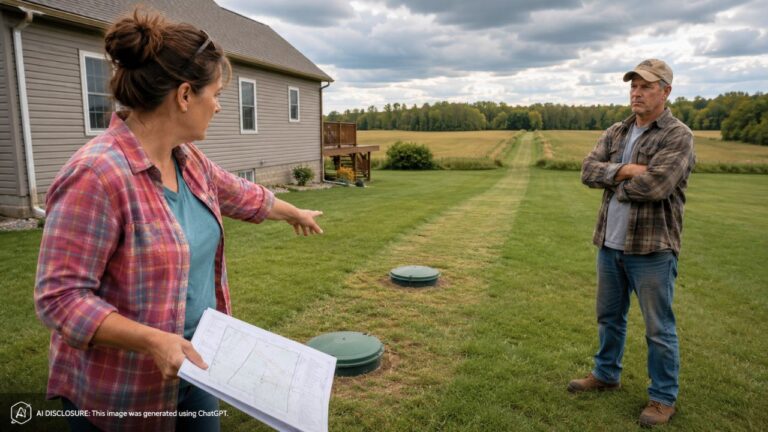
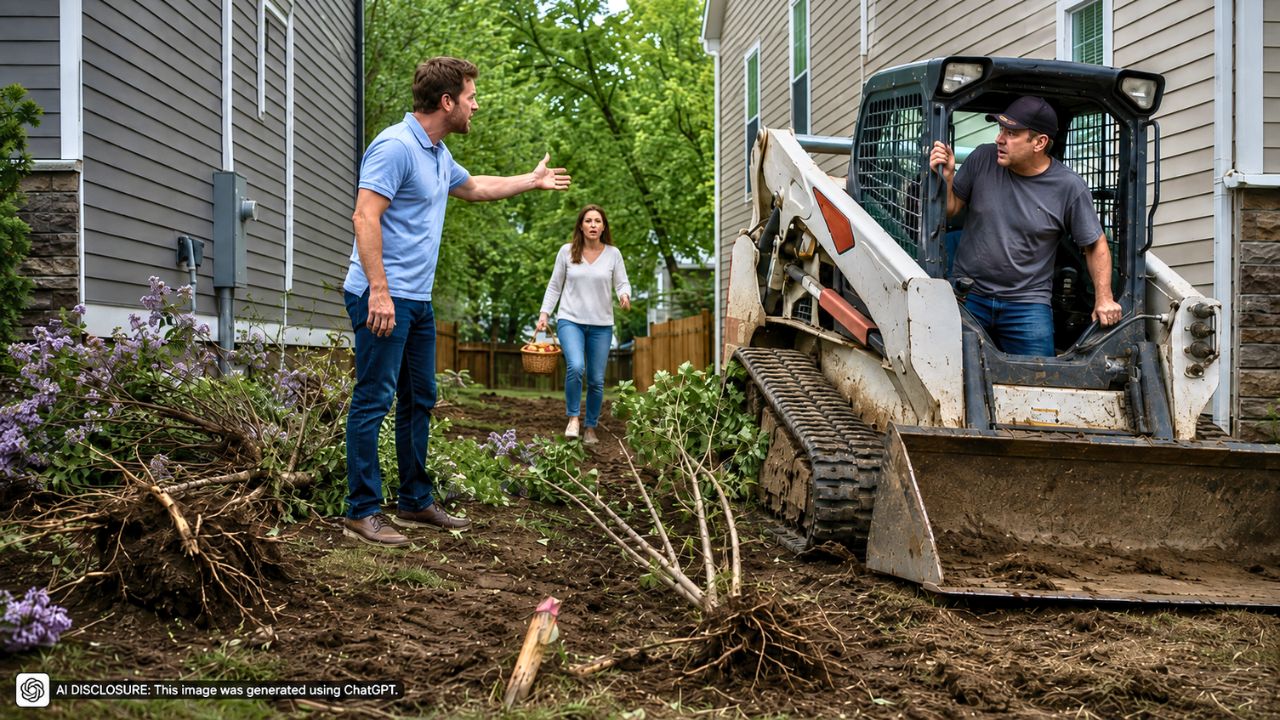
Photo credit: AI-generated image created using ChatGPT. Illustrative only.
Buying a house is stressful enough. Buying a house plus the vacant lot next to it—so you can control what happens on your side of the property line—should be the calming part. For one new homeowner, it turned into an early-morning surprise involving missing survey stakes, heavy equipment, and a neighbor who seemed to treat someone else’s land like a personal landscaping project.
In the original post, the homeowner explains that he and his wife purchased their home along with the empty lot between them and the neighbors. They had the lot surveyed and boundary markers placed, expecting that to settle any “where does your yard end and mine begin” confusion before it started.
The first sign was easy to brush off—until it wasn’t
A couple weeks after moving in, the homeowner walked outside and noticed something that immediately set the tone: the boundary markers were gone. Not knocked over. Not buried. Removed.
He’d taken photos of the markers when they were installed, so he still had a record of where they’d been. That kept it from becoming a full-blown panic moment, but it also meant the couple was now living next to someone comfortable enough to pull survey stakes out of the ground.
At that stage, it was still something you could try to explain away. Maybe someone thought they were trash. Maybe they got hit by accident. Except the next step made the intent hard to misread.
Then the machines showed up in the back of the lot
Weeks later, around 8 a.m., the homeowner went outside and saw the neighbor clearing the back portion of the vacant lot with a small piece of equipment—“some bobcat thing,” as he described it. The work wasn’t happening on a shared edge or an ambiguous strip. It was the back of the lot they owned.
In the process, a lilac bush and a few small trees were damaged or destroyed. The homeowner told the neighbor to stop, and the neighbor did—but not before the kind of damage that can’t be undone with an apology.
Anyone who’s dealt with rural or semi-rural properties knows how personal those plants can be. Even if they weren’t planted by the new owners, they were part of what they purchased: privacy, habitat, a windbreak, a little bit of character. Losing them to someone else’s bulldozer hits different than losing them to a storm.
Wildflowers became the “make the best of it” plan
Instead of spiraling immediately, the couple tried to salvage the moment. They decided to lean into a plan they’d already discussed someday: native wildflowers. They spent a couple hundred dollars on seed and spread it over the disturbed area.
It’s the kind of choice that feels very Fix It Homestead—turn the torn-up patch into something beneficial, low maintenance, and good for pollinators. It’s also a way to reclaim a space without starting a daily war.
But the timing mattered. Seeds are delicate, and the first couple weeks after you spread them is when you need the least interference. The homeowners had barely finished before the neighbor pushed the conflict from “they crossed the line” into “they’re redoing your property while you’re gone.”
Fifteen minutes away was all it took
A couple days after planting the wildflower seed, the homeowner ran to the gas station. He said he wasn’t even gone 15 minutes. When he got back, the neighbors were out there putting grass seed and straw down over the same area.
It wasn’t a misunderstanding presented as a question—no knocking on the door, no “hey, are you okay with grass back here?” It was action first, permission never. When confronted, the neighbors told the couple they thought it would look better and that they should be grateful for the “improvements.”
That moment is where small neighbor tension turns into something you can’t ignore. It’s not just trespassing. It’s someone trying to override your choices on your own land, then acting as if their taste is the standard everyone should follow.
It wasn’t just landscaping—everyday boundary creep piled up
The homeowner also described a steady drip of smaller problems that made the big ones feel even worse. The neighbors let their large dog use the yard as a bathroom. They tried to turn the back of the yard into a circle drive for their large trucks.
Those aren’t minor annoyances when you’re the one living there. Dog waste becomes a sanitation issue fast, especially if you’re trying to garden, mow, or simply walk around without watching every step. And vehicle traffic changes the land itself—ruts, compacted soil, broken roots, and the subtle message that access is “shared,” even when it’s not.
Put together—removed stakes, equipment clearing, seeding over the couple’s planting, dog waste, truck access—it starts to look less like one bad day and more like a neighbor testing how much they can take before they push back.
Commenters focused on the same thing: proof and prevention
While the post itself is a vent, the practical theme that typically shows up in these stories is the same one homeowners learn the hard way: documentation matters, and physical barriers change behavior.
The homeowner already had one smart habit in place—taking pictures of the boundary markers. That kind of baseline proof can be invaluable when markers disappear, or when someone later claims they “didn’t know” where the line was.
But the real-world fix they ended up choosing was the least fun and most effective: a fence. They’d been saving money for work the house needed, but the neighbor pressure forced their hand. The homeowner said they spent $2,500 on chain link fencing and he’s been putting it up when he can.
That’s the part that stings for a lot of new homeowners. You don’t buy a house dreaming about spending your weekends digging fence-post holes because someone can’t respect boundaries. You do it because you need a hard “no” that doesn’t require you to be outside every minute.
And chain link, while not everyone’s favorite look, is a fast way to establish a clear perimeter. It’s visible, it’s difficult to argue with, and it stops the casual “I’ll just drive over here” behavior that turns into permanent damage.
The homeowner sounds exhausted—financially and emotionally. The lot was supposed to be breathing room, an extra buffer between houses. Instead it became a battleground that forced an immediate, expensive upgrade they hadn’t planned for.
For now, the fence is going up piece by piece, the wildflowers may or may not recover under a layer of straw and grass seed, and the neighbor relationship is already burned. The most grounded detail in the whole story is also the most relatable: the homeowner isn’t asking for anything fancy. He just wants his land to be his land.
Like Fix It Homestead’s content? Be sure to follow us.