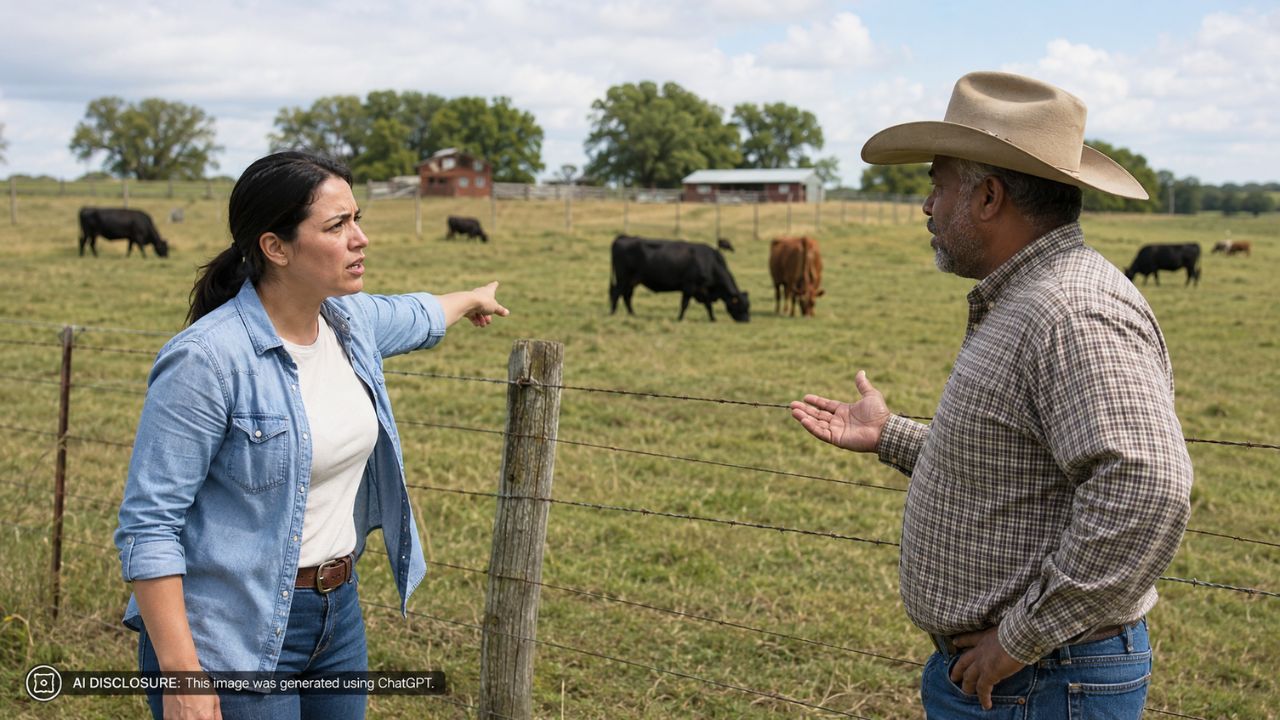
New Rural Property Owner Finds the Neighbor Has Grazed Cattle on the Back Pasture for the Past Decade Without Permission — Then the Neighbor Says There Was an Informal Grazing Agreement With the Previous Owner That Should Carry Over
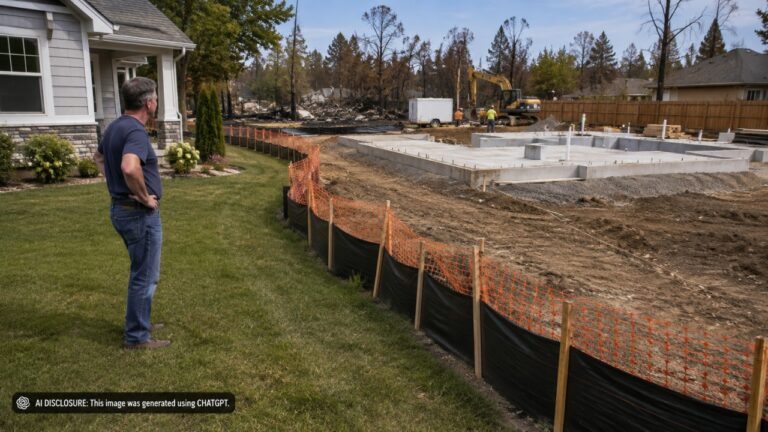
Photo credit: AI-generated image created using ChatGPT. Illustrative only.
The new owner thought the back pasture was part of the dream: a little room to breathe, some space for projects, maybe a garden that wouldn’t get trampled by suburban foot traffic. Then they noticed the prints—deep hoof marks where the ground should’ve been smooth—and a stretch of fence that looked like it had been “worked” by a large animal with patience and body weight.
It didn’t take long to spot the real giveaway: cattle. Not on the neighbor’s side, but on theirs. When the new owner went to address it, the neighbor didn’t act surprised. The neighbor acted comfortable. The explanation landed with a thud: the previous owner had an informal grazing deal for years, and the neighbor assumed it would keep going. That’s when the new owner started wondering what rights actually carry over in rural life—and what’s just handshake history. For background on how states treat agricultural operations near neighbors, this breakdown of your neighbor’s right to farm helps frame what protections exist and what they don’t.
The first sign was easy to brush off
Rural properties come with normal wear. Mud happens. Fences sag. Gates get left open by contractors, delivery drivers, or the wind if the latch is tired. At first, the new owner could’ve chalked it up to “welcome to the country.”
But pasture damage has a pattern when it’s livestock. The ground gets punched up in the same corridors. A corner becomes a favorite rubbing spot. A water source area turns into a churned-up mess. Even if the neighbor’s cattle weren’t out there every day, it only takes a few times to leave a signature.
The bigger issue wasn’t aesthetics. It was control. The new owner hadn’t budgeted for feeding someone else’s animals, repairing fence pressure points, or the liability fear that creeps in the moment you realize animals you don’t own are using your land like it’s theirs.
“We’ve always done it this way” hit a wall called new ownership
The neighbor’s claim—an informal agreement with the previous owner—put the new owner in an awkward spot. If it was true, it explained why the cattle looked so at-home. It also explained why the neighbor wasn’t asking permission now. They didn’t think they had to.
But “informal” is the word that changes everything. A handshake arrangement can work for years when two people trust each other and both benefit. It can also turn into a mess the second the property changes hands, because the new owner didn’t make the handshake and doesn’t feel bound by it.
This is where rural expectations collide with paperwork reality. Land sales feel final, but the habits around a piece of property can be older than the deed transfer. A neighbor who’s grazed cattle for a decade may feel like they’ve earned the right through time and routine. A new owner sees it as a trespass that just hasn’t been challenged yet.
Right-to-farm protections don’t automatically equal “right to use your land”
One thing that gets muddy fast in these disputes is the idea that “farming is protected.” Many states have right-to-farm laws that were created to protect normal agricultural operations from nuisance lawsuits, especially after suburban development pushed into rural areas starting in the 1970s.
The key detail is what those laws are aimed at. They’re largely about neighbors suing over the unpleasant but ordinary side effects of agriculture—noise, dust, odors, pesticide and fertilizer drift—when a farm is using generally accepted practices and following regulations. They’re meant to prevent a long-running farm from being legally squeezed out just because new residences show up nearby.
That’s not the same thing as granting a blanket permission to put livestock on someone else’s property. Right-to-farm laws are powerful, but they aren’t absolute. They don’t excuse illegal or negligent practices, and they don’t erase a property owner’s rights to contest certain harms or changes. In plain terms: “farming happens here” is different from “your land is part of my operation.”
The phrase that comes up a lot in right-to-farm discussions is “coming to the nuisance.” If you move next to an existing farm, you typically can’t turn around and sue because it smells like a farm. But a new owner noticing cattle on their own pasture isn’t just noticing a smell. They’re noticing use and access.
The practical damage starts piling up before anyone files anything
The new owner’s immediate problem wasn’t a courtroom argument. It was a boots-on-the-ground problem: how to stop the grazing without turning the property into a feud zone. If the neighbor’s cattle were getting in through a known weak point, the fence needed attention fast—because every day the animals returned, the neighbor’s “we’ve always done it” story got emotionally stronger.
And there’s the ugly side of pasture use that doesn’t show up in a listing photo. Hoof damage can turn into erosion, especially around low spots and drainage paths. Manure in the wrong area can change how the land gets used, and it can also create arguments about cleanup, flies, and water quality if runoff becomes a concern.
Even if the neighbor’s livestock handling is otherwise responsible, the new owner can still be stuck dealing with the fallout. A sagging fence line becomes an immediate repair. A gate without a lock becomes an invitation. And the anxiety goes up because nobody wants to discover—too late—that a “casual” arrangement has turned into something the neighbor treats as a permanent right.
Most people fix the documentation problem before the fence problem
In homeowner circles, the reaction to stories like this tends to be consistent: don’t make it a shouting match, and don’t rely on memory. People push for proof, clear boundaries, and a paper trail before the next conversation gets heated.
The advice usually starts with the basics: document what you’re seeing and when you’re seeing it. Photos of cattle on the property. Notes about dates and times. Pictures of fence damage before and after repairs. Not because everyone wants to “lawyer up,” but because rural disputes get rewritten in real time—especially if the neighbor believes history is on their side.
From there, commenters often point to getting a survey if boundaries aren’t crystal clear, and making sure any discussion is specific. Not “stop letting them wander,” but “no grazing on this parcel, no access through this gate, no entry past this fence line.” The goal is to remove wiggle room.
And when right-to-farm gets mentioned, the practical-minded folks usually separate two issues: the neighbor’s right to operate a farm on their property versus any claim to use someone else’s. Right-to-farm laws can limit nuisance claims over normal agricultural impacts, but they don’t give a free pass for negligence, unlawful practices, or other conduct outside what’s protected.
Living rural means old agreements don’t die quietly
The hardest part for the new owner may not be the fence repair or the uncomfortable conversation. It’s the reality that rural land often comes with invisible relationships: informal agreements, understood access routes, and “we’ve always done it this way” routines that never got written down because nobody thought they needed to.
Now the new owner has to decide what kind of neighbor they want to be while also protecting what they bought. If they allow grazing “just this season,” it can feel like permission. If they cut it off immediately, it can feel like an attack on someone’s operation—especially if the neighbor has built their stocking plans around that extra grass for years.
So the pasture sits there, looking like simple open space, while it quietly holds the weight of a decade-old handshake. The new owner wanted land they could use. The neighbor wants to keep using it the way they always have. And the fence line, suddenly, isn’t just a fence line—it’s the front edge of a much bigger argument about what transfers with a deed and what doesn’t.