Ranch Heirs Have Grazed Sheep on the Same Mountain Since 1844 — Then the Billionaire Owner Asks the Court for a 233-Acre Private Buffer Zone
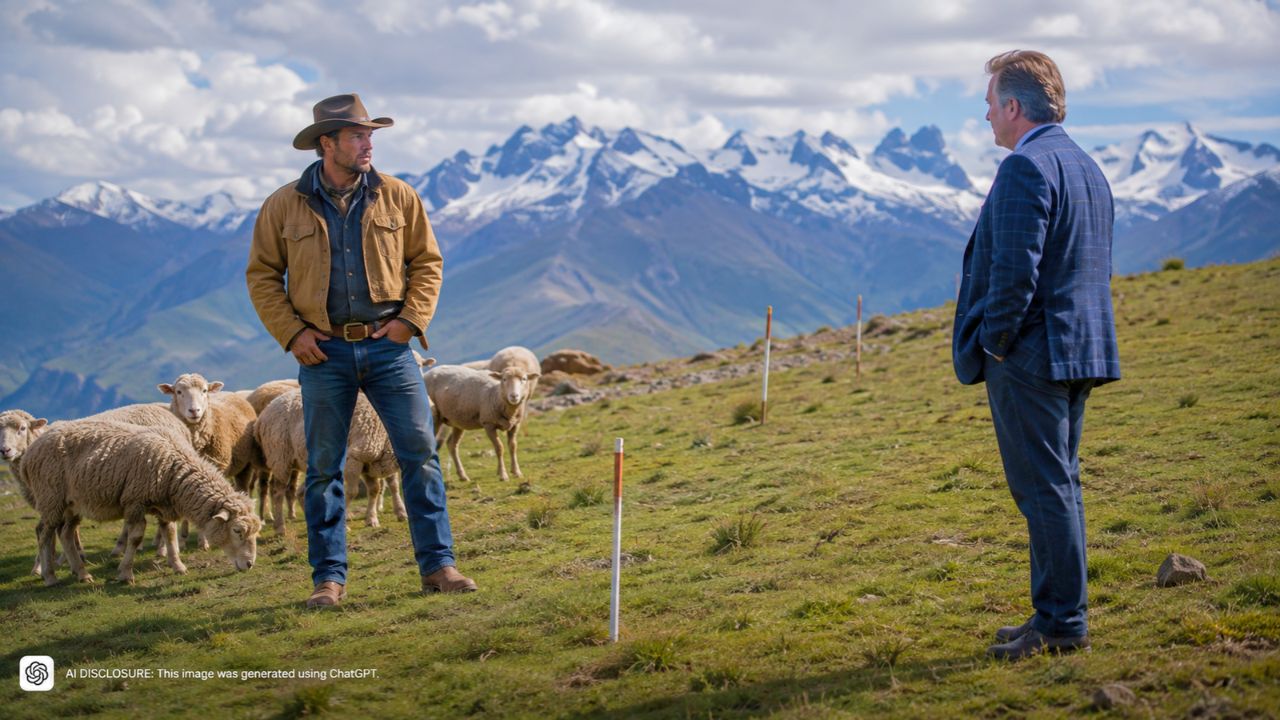
Photo credit: AI-generated image created using ChatGPT. Illustrative only.
Up in the mountains above Colorado’s San Luis Valley, the kind of rural dispute that usually starts with a fence line or a locked gate has escalated into a courtroom fight: a wealthy landowner planning a private home compound wants a wide no-go zone around it, and local ranch heirs say that “buffer” would cut right into the mountainside they’ve used for generations.
The latest chapter is spelled out in the original post, which describes a multi-day hearing in Costilla County where a court-appointed special master will decide whose access rights win: an oil heir seeking privacy for new construction, or the descendants of the valley’s earliest settlers who say they have a right that dates back to the 1840s to graze livestock and gather firewood on land they call “La Sierra.”
A mountain that’s never been “just someone’s backyard”
This isn’t a story where someone bought a cabin last summer and discovered the neighbor’s chicken coop is too close to the property line. The access rights being argued reach back to the Sangre de Cristo Grant of 1844, when Mexico granted land in part to encourage settlement in the valley.
The people who settled there—farmers and ranchers, and their descendants—have long claimed they’re allowed to enter the landscape to do very practical things: graze livestock and gather firewood. In a place like the San Luis Valley, those aren’t hobbies. That’s heat, feed, and survival-level routine wrapped into tradition.
So when a modern landowner looks at the same terrain and sees a future private retreat, those two visions don’t just clash—they physically occupy the same slopes and routes.
When “privacy” becomes a 233-acre ask
The specific flashpoint now is a planned housing compound in the mountains. The landowner—described as an oil heir and billionaire in the reporting—wants to build a new private home with multiple outbuildings on his property.
And here’s where it stops feeling like a simple “please don’t come near my house” request. The landowner is asking a court for a 233-acre private buffer zone around the new place. In rural terms, that’s not a small circle around a front porch. That’s a swath of mountain big enough to change how and where people move.
If you’ve ever dealt with an easement dispute, you know the pattern: one change on paper can turn into a real-life choke point. A buffer that large can swallow the easiest routes, the gentler grades, the spots with reliable access—exactly the places you’d use when you’re moving animals and not just hiking for fun.
The heirs say the right is older than Colorado
The ranching families on the other side aren’t arguing for special treatment. They’re arguing that the right already exists, and it’s older than the state itself.
The source material frames it plainly: descendants of the original settlers say they have a 182-year-old right to use the land. They point to longstanding permissions to gather firewood and graze livestock on “La Sierra.”
This isn’t theoretical. Picture what “grazing sheep” means on a mountain: seasonal movement, familiar routes, predictable use areas, and a lot of time spent following the land’s patterns. A court-approved buffer zone doesn’t just create “privacy.” It can force herders and ranchers to reroute—sometimes into rougher ground, sometimes into areas that are unsafe, sometimes into places that simply don’t work for animals.
That’s how property disputes go from awkward to expensive. You’re not only fighting over land. You’re fighting over the only practical way to use it.
A long-running land war that won’t stay buried
This hearing isn’t happening in a vacuum. It’s described as the latest twist in one of Colorado’s longest-running land disputes, tied to the case Lobato v. Taylor.
That lawsuit was filed in 1981 against a former owner of the Cielo Vista Ranch. The roots go deeper than that, back to the 1844 grant itself and the expectations that came with settlement—who could do what on the mountain and why.
When a fight has been running that long, it usually means two things for everyday people: nobody trusts anyone’s “informal permission,” and every step starts to require paper, rulings, and enforcement. In other words, the neighborly version of access—“we’ve always gone this way”—gets replaced by the legal version—“show me where it says that.”
And once you reach that stage, a new construction project can act like a match. It forces old rights to collide with new plans, on a schedule set by money and building timelines.
The hearing: not a jury, not a handshake, a special master
The decision isn’t coming from a quick town meeting or a one-day hearing where everyone vents and goes home. A multi-day hearing in Costilla County is putting the question in front of an appointed “special master,” who is tasked with choosing between the landowner’s request and the heirs’ claimed access rights.
That detail matters because it signals how technical and document-heavy this has become. A special master is typically brought in when the court wants someone to dig into complex facts and history, not just weigh who seems more reasonable in the moment.
So the practical reality for both sides is weeks and months of uncertainty. For the landowner, it’s hard to design and site a home compound if you don’t know what access has to remain open. For the heirs and local ranchers, it’s hard to plan grazing and seasonal movement if a big chunk of the mountain might suddenly become off-limits.
That’s the quiet cost of these fights: even before anyone “wins,” life gets put on pause.
The reactions you always see when access is on the line
Even without a comment thread attached, this kind of story tends to pull out the same real-world reactions from rural homeowners and land users: document everything, map everything, and assume “common sense” won’t survive first contact with a courtroom.
People who’ve lived through shared-road or grazing-access battles know how quickly a normal day can turn into “prove it.” If your family has used a place for generations, you start digging for old records and prior rulings. If you’re building a private home, you start thinking about security, safety, and whether you can realistically keep your space private without cutting off someone else’s established route.
And then there’s the physical side that never makes it into neat legal phrasing. Sheep don’t read maps. People herding livestock can’t always pivot on a dime because a new boundary line got sketched in. Every change in access has downstream effects: where animals concentrate, where erosion increases, where conflicts intensify.
This is why buffer zones become such a flashpoint. It’s not just privacy. It’s the power to reshape how the mountain works for everyone else.
For now, the mountain is waiting on a decision that will either preserve a long-claimed tradition of use on “La Sierra” or carve out a wide ring of seclusion for a new build. Either way, the outcome won’t stay contained to paper—it will show up in where people walk, where sheep graze, and how welcome (or unwelcome) the next person feels when they step onto the same slopes their family has known for generations.
Like Fix It Homestead’s content? Be sure to follow us.