Tulsa Homeowner Watches the Retaining Wall Fail After the Neighbor Deliberately Reroutes Water Onto the Land — Then Gets Repair Quotes That Would Gut Their Savings
Photo credit: AI-generated image created using ChatGPT. Illustrative only.
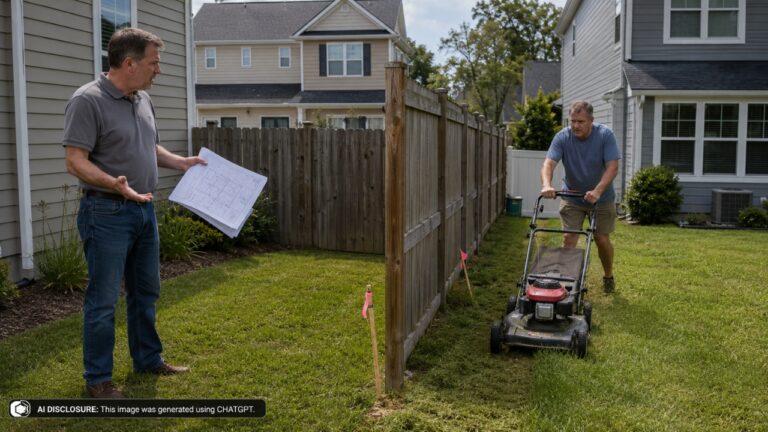
It started like one of those problems homeowners argue about in passing: water has to go somewhere, yards slope, and every heavy rain finds the weakest spot. But in Tulsa, one homeowner says the weak spot didn’t happen by accident—it was created when a neighbor cut into their own land specifically to send runoff downhill.
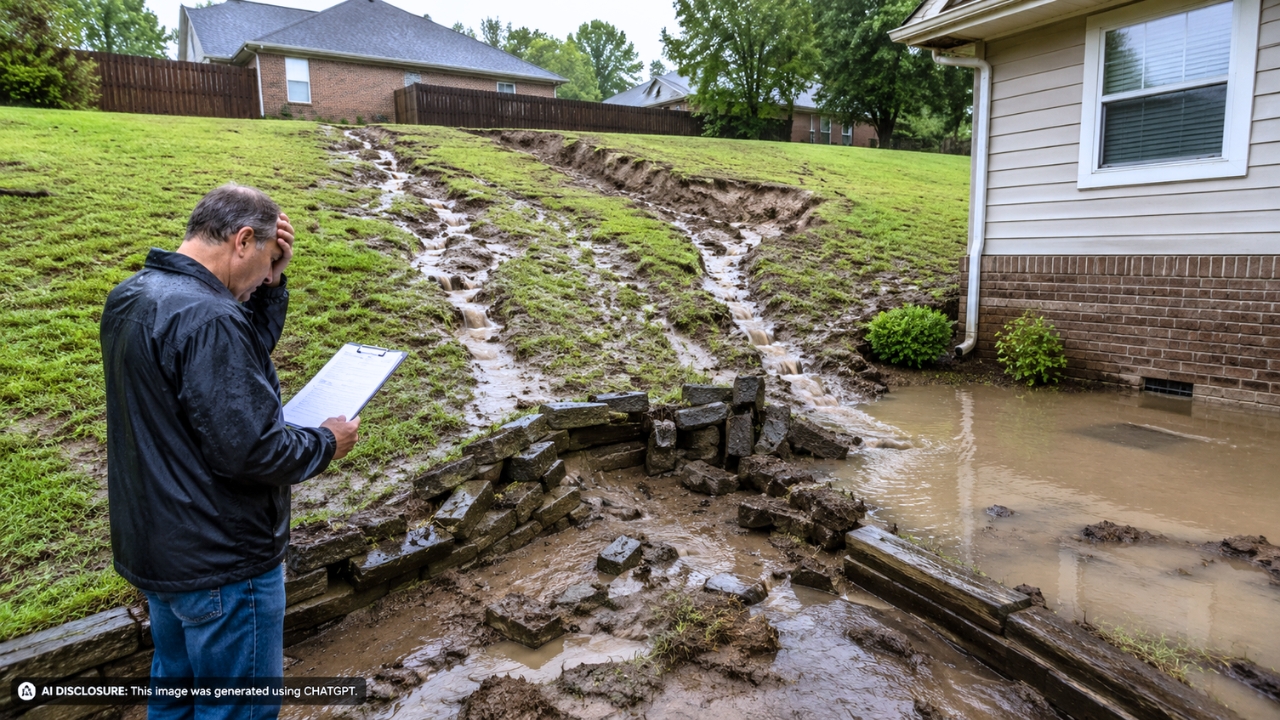
In the original post, the homeowner describes a yard that now behaves like a drainage ditch. After the neighbor’s changes, they’re dealing with major erosion, multiple channels of flowing water, and standing water that forms “a shallow lake” whenever it rains.
They live downhill, and the water started acting different
The homeowner says they’re slightly downhill from the neighbor, which is normal enough—gravity does what it does. What changed was the neighbor altering their property in a way that redirected the flow onto the downhill lot.
The result wasn’t subtle. The homeowner describes “three separate rivers” running through the yard. That kind of detail doesn’t sound like a little extra puddling near the fence line; it sounds like a new drainage pattern, one that repeatedly carves the soil and keeps feeding itself.
And once water decides where it wants to go, it tends to keep choosing the same path—especially during storms, when every small rut becomes a channel.
The moment it stopped being a yard problem and became a house problem
Plenty of property disputes stay outside. This one didn’t. The homeowner says one of their rooms flooded due to water buildup along the side of the house.
That’s the line most people don’t realize they’re crossing until it happens: when runoff goes from being annoying to being destructive. Yard erosion is expensive, but interior water is where the panic sets in—flooring, baseboards, drywall, maybe electrical, and the looming question of what you can’t see yet.
The homeowner’s description also hints at something worse than a one-time storm event. If water is “buildup” against the side of the house, it’s not just passing through; it’s pooling, pressing, and waiting for an opening.
The retaining wall failed, and age didn’t help
One of the clearest signs the drainage has shifted: the retaining wall gave out. The homeowner calls it old and says it wasn’t meant to handle this much water.
Retaining walls can tolerate normal drainage when things are built and graded correctly. But when a wall that has survived for years suddenly fails after a change uphill, homeowners tend to connect the dots fast—even if proving it is another matter.
Once a wall fails, it’s not just a “replace the blocks” job. Soil movement doesn’t politely stop at the edge of the collapse. Erosion can undercut nearby areas, destabilize grade, and create new low spots that hold even more water.
The quotes landed like a second disaster
Then came the estimates. The homeowner says a company quoted $8,000 to $15,000 to address the issue, and even at that price, they’re not confident it will work.
That’s the gutting part for a lot of people—paying a chunk of savings for a repair that still feels like a gamble. Drainage work isn’t always a clean, guaranteed fix because it depends on soil type, slope, where the water originates, and what the neighboring property continues to do.
And with water problems, the clock keeps running. Every storm becomes another test, and every test risks more erosion, more seepage, and more damage to landscaping and foundation-adjacent areas.
The homeowner also added an important piece of context: since they’re downhill, “unless I can reverse gravity,” sending the water back isn’t realistic. That one sentence captures why this feels like a trap—because it’s not just about moving water, it’s about whether they’re being forced to accept someone else’s drainage by design.
The real question: can a neighbor do that on purpose?
The homeowner’s central question is blunt: if a neighbor cuts into their land to reroute runoff onto yours, is it legal? And if it isn’t, what’s the next step—do you hire a lawyer?
In real life, that decision is never just about being “right.” It’s about how fast damage is happening, how much documentation exists, and whether there’s any practical way to stop the water before the next storm. It’s also about how far a homeowner is willing to escalate a fight with someone living a few yards away.
Even if a homeowner believes the neighbor caused the issue, they’re still the one watching their yard wash out and their room flood. That creates a miserable pressure to fix it immediately—sometimes before anyone has time to sort out responsibility.
People pushed for receipts, proof, and a paper trail first
While the post itself is short, it reflects the kind of responses these disputes usually trigger: don’t lead with a shouting match—lead with proof. When a neighbor’s land alteration is at the center of a runoff disaster, the practical next steps people tend to emphasize are documenting what changed and when it changed.
Homeowners dealing with runoff fights often end up collecting photos after every rain, videos of active flow, and any evidence of recent grading or digging. They also tend to keep copies of repair quotes, because those numbers matter when you’re trying to show real damages instead of “my yard looks bad.”
There’s also a reason people urge caution before paying for a big fix: if the water is being intentionally directed, you can spend thousands treating symptoms while the cause stays untouched uphill. That doesn’t mean you can ignore the emergency—especially after interior flooding—but it does change how homeowners think about what to do first and what to preserve as evidence.
The homeowner in Tulsa is stuck in that uncomfortable middle ground: water is actively damaging the property, the repair price is steep, and the most obvious fix—just sending the water back—doesn’t exist when you’re the downhill lot.
For now, they’re looking at a yard that’s become a set of channels, a retaining wall that couldn’t hold, and a house that has already taken on water. The next storm isn’t going to wait for anyone to sort out blame, and that’s what makes this kind of neighbor drainage fight so brutal: you’re paying in real time, whether you win the argument later or not.
Like Fix It Homestead’s content? Be sure to follow us.