Vermont Landowners Find a Neighbor’s Septic Boundary Crossing Onto Their Land — Then Learn State Rules Let It Happen Without Their Consent or Compensation
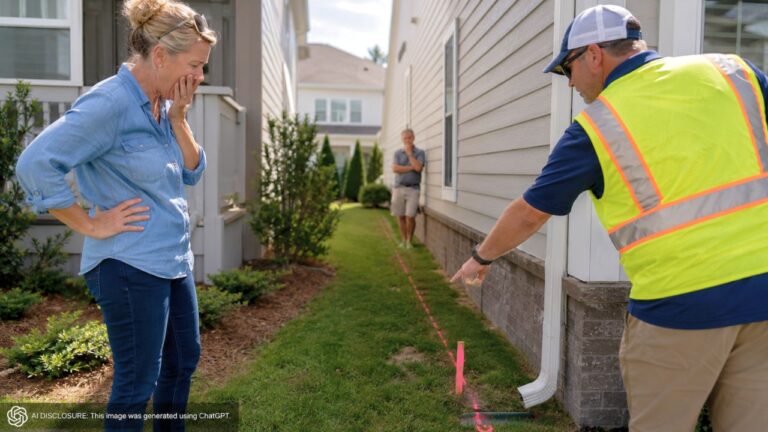
Photo credit: AI-generated image created using ChatGPT. Illustrative only.
Most property-line problems start small: a shed that’s a little too close, a fence post that drifts, a driveway that gets “temporarily” widened. But a septic system is different. Once it’s in the ground, it’s expensive to move, easy to forget about, and it can quietly dictate what the neighbor is allowed to do with their own land.
That’s the knot Vermont lawmakers are now wrestling with, after cases where a neighbor’s septic boundary crosses onto someone else’s property and the affected landowner discovers the state rules can still allow it—without their consent and without compensation. The details came out in the source post, which describes a proposed amendment meant to at least study whether those landowners should be paid when their usable land gets effectively shrunk.
The “invisible line” that suddenly changes what you can build
If you’ve ever tried to add a small cabin, put in a new well, or even just plan a future homesite, you already know the land isn’t as simple as what’s on the deed. There are setbacks, rights-of-way, and all the hidden “no-go” zones that don’t show up until you pull permits or talk to an inspector.
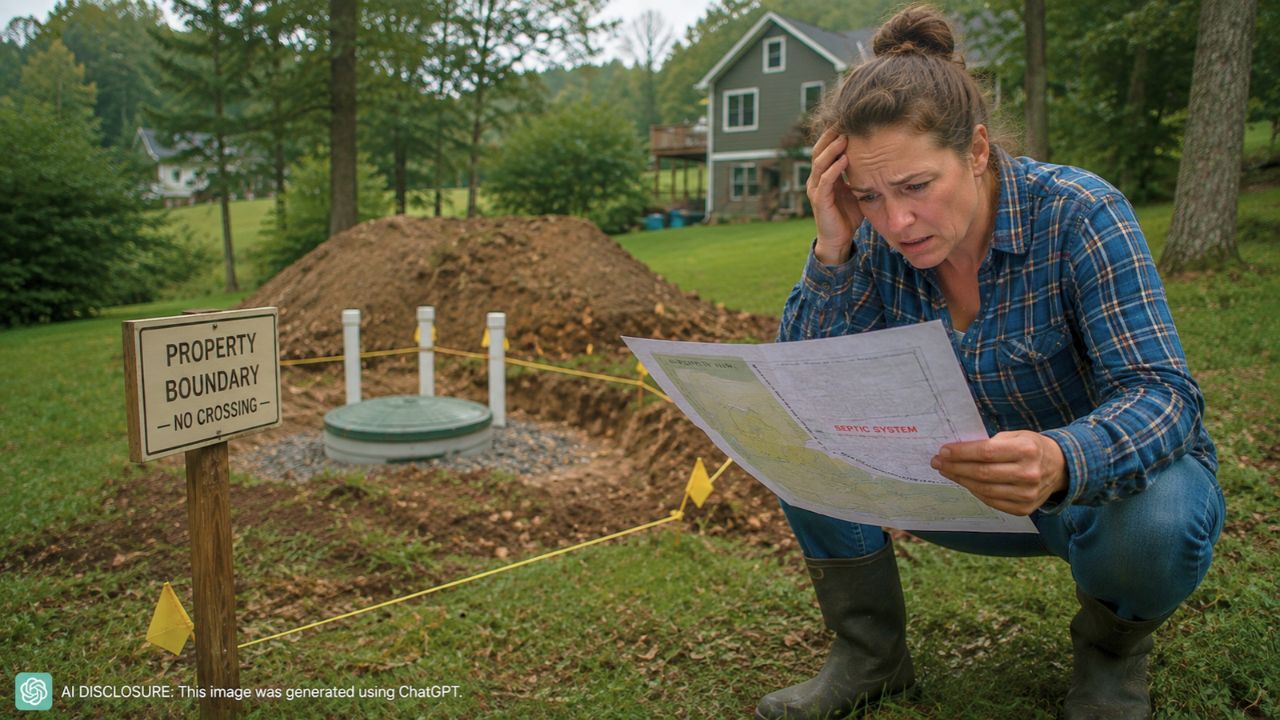
In Vermont, state public health rules set limits on the distance between private septic systems and drinking water systems. That sounds straightforward—until the boundary tied to that septic system crosses over a property line. At that point, the neighbor’s septic layout can affect how you’re allowed to use your land, even though it’s not your system and not your decision.
This isn’t the kind of thing you notice while mowing. It’s the sort of problem that appears when you go to improve your own property and someone tells you, “You can’t put that there.” Then you find out the reason sits next door.
How it turns into a money problem fast
There’s a practical side and an emotional side to this. Practically, a septic boundary crossing onto your property can box you in. It can limit where you can drill a well, expand a house, add an accessory dwelling, or place certain structures—anything that triggers health rules and distance requirements.
Emotionally, it feels like being told you own the land, but not really. Rep. William Greer, D-Bennington, put it bluntly in the WCAX report: “Basically, in Vermont right now, you are able to do something to someone else’s property without their consent and without their permission,” he said. “Their property is devalued and is not being used the way they want it, and there’s no respect there.”
And that devaluation isn’t theoretical. If part of your lot becomes less usable—especially in rural areas where septic and well placement can make or break a building plan—that can show up when you refinance, try to sell, or even just try to plan your next step.
The political split: study compensation, or slow down?
The immediate fight in Montpelier isn’t even a final “pay people” bill. WCAX reports that House Democrats were split on a measure to study giving affected landowners money if they lose control of part of their land because a neighbor’s septic boundary crosses over.
Greer’s point is that some of these disputes end up in expensive lawsuits. That’s the part homeowners recognize instantly: once neighbors are lawyering up over dirt and lines on paper, the meter is running, and the relationship is usually already toast.
But House leadership, according to the report, said the measure should not advance and needs more vetting. The vote on the amendment was pushed to Tuesday, leaving the underlying homeowner problem right where it’s been—real, personal, and unresolved for the people living with it.
What makes septic encroachment feel different than a fence dispute
With a fence, at least you can see what’s happening. You can photograph it. You can argue about it over a weekend, move a section, or pay to have it re-set. A septic boundary is paperwork first and dirt second. Most people don’t even know it exists until it collides with their own plans.
Once it shows up, the options are rarely clean. Moving a septic system is expensive and disruptive. Leaving it in place can permanently limit what the other landowner can do. And because the issue is tied to health rules—distance between septic and drinking water systems—it’s not just a neighbor-to-neighbor handshake fix. It can involve permits, designers, and state standards that don’t bend easily.
That’s why this kind of encroachment can feel like a slow-motion taking. Not dramatic enough for flashing lights, but serious enough to change a property’s future.
Homeowner reactions: document first, talk second
When stories like this circulate among homeowners, the most common reaction is usually some version of: “Get everything in writing.” Even without a courtroom in sight, property disputes become he-said/she-said fast, especially when the problem is underground and the boundary is technical.
People tend to focus on proof before confrontation—surveys, site plans, and clear records of what was approved and when. The reason is simple: neighbor conversations can be friendly one day and icy the next, and once trust breaks, the only thing that matters is what can be documented.
There’s also a second, quieter reaction: folks start side-eyeing their own lots. If you live in a place where private wells and private septic systems are the norm, it’s hard not to wonder what invisible lines are crossing under your own grass—and whether you’d find out only when you try to build something.
The tension that lingers when the law doesn’t match the deed
The WCAX report doesn’t describe a single household by name, but it captures a dynamic that feels familiar in rural and semi-rural living: one person’s functional system becomes another person’s limit. And because the rule is rooted in public health setbacks, it doesn’t behave like a typical “bad neighbor” story where the fix is just enforcement or a stern letter.
Greer’s argument is that when landowners lose control of part of their property—through no choice of their own—there should at least be a pathway to compensation, or at minimum a serious look at what fair compensation would be. House leadership’s response is to slow down and vet it more, which is the kind of phrase that makes affected homeowners feel like they’re being asked to live indefinitely with someone else’s boundary on their side of the line.
For now, the ground truth is unchanged: septic boundaries can reach across property lines, and the consequences land on the person who didn’t install the system. The vote may have been delayed, but the day-to-day reality for landowners dealing with these invisible restrictions doesn’t pause just because the calendar at the State House does.
Like Fix It Homestead’s content? Be sure to follow us.