Virginia Homeowner Refuses to Let the Neighbor Dig a Creek Through Newly Fenced Land for His Cattle Pond — Then Comes Home From a Cruise to Find It Dug Anyway and the Fence Broken
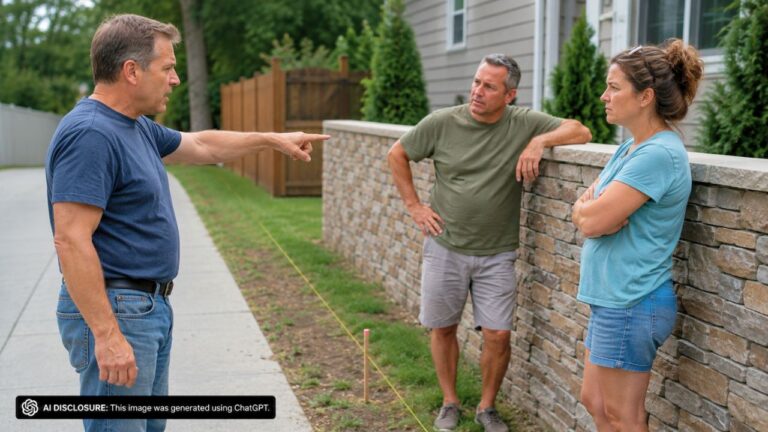
Photo credit: AI-generated image created using ChatGPT. Illustrative only.
When you live out where ponds and fences actually matter, you get used to neighbors asking favors. But one Virginia couple says a simple “no” turned into a mess they didn’t authorize, didn’t plan for, and didn’t even witness in real time.
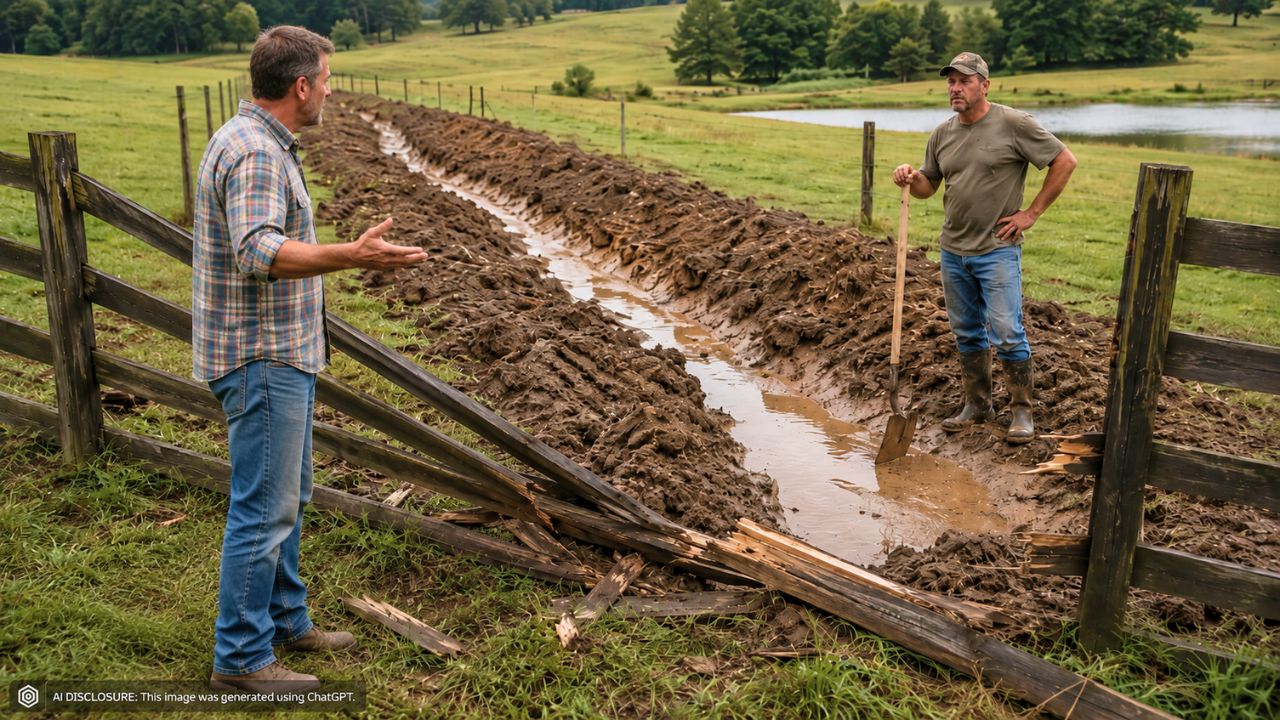
In the original post, the homeowner described coming back from a cruise to find his neighbor had dug a partial creek through the couple’s property anyway—right through the area where a new fence stood. The fence was broken, and the neighbor’s response was basically: he’ll fix it and pay for it. That might sound like a resolution, until you picture what “a creek” can do once water starts moving.
A favor request that came with strings attached
The homeowner, 28, and his wife, 32, live in a smaller town in Virginia. About four months before the cruise, the neighbor came over with a plan: he wanted them to sign off on routing part of a creek through their land to feed another pond for his cows.
At first, the homeowner says he wasn’t automatically against it. He could even see a benefit—water, fish, maybe a nicer feature on the property. That’s the kind of “country trade” idea people sometimes agree to with a handshake and some shared maintenance.
Then the detail that changed everything came out: the creek would need to run through where the couple had a new fence. Not an old, sagging line fence they didn’t care about. A new one. And he wasn’t willing to take it down.
The “no” that didn’t land
He told the neighbor no, apologizing but holding firm once the fence issue was clear. The neighbor wasn’t happy.
That unhappy part matters, because this wasn’t a misunderstanding later about where a ditch could go. The homeowner had already made the boundary plain: you can’t run it through the fenced area, and I’m not removing the fence for your pond project.
Four months passed. Nothing resolved on paper. No new agreement. No mention of a compromise route around the fence. And then the couple left town.
Coming home to fresh dirt, broken fence, and a new “creek”
The couple went on a cruise. While they were away, the neighbor apparently moved forward anyway and excavated a channel through their property.
When the homeowner returned, he found the work already done and the fence damaged. That kind of discovery hits different after you’ve been away: you’re tired, you’re trying to get back into normal life, and instead you’re doing that slow walk around your own yard trying to understand what changed.
The neighbor reportedly told him not to worry—he would fix the fence and pay for it. But the homeowner woke up the next morning with “tons of anxiety,” stuck between not wanting confrontation and knowing something bigger than a broken fence post might now be in motion.
The part that keeps homeowners up at night: water doesn’t stay put
A broken fence is visible and easy to price out. A cut-through creek is different. Once a channel is dug, it can change how water moves across a property, especially after storms. What looks like “a little creek” can turn into erosion, undercut fence posts, muddy washouts, and a widened channel that creeps year by year.
Even if the neighbor truly intends to repair the fence, the more complicated question is what exactly was dug: how deep, how wide, how it ties into existing drainage, and what happens when it starts carrying real flow. If it’s feeding a pond, it may be designed to move water consistently—or at least during wet periods—and that can mean ongoing saturation along the banks.
And then there’s access. If the neighbor feels entitled to maintain the channel or clear blockages, does that become an ongoing reason to enter the couple’s land? What starts as “I’ll fix the fence” can quietly turn into repeated foot traffic, equipment tracks, and arguments every time something needs “just a quick adjustment.”
Reactions leaned hard toward documentation before emotions
Even without a long comment thread included in the source material, this type of property dispute tends to pull the same practical instincts out of readers: don’t argue first—document first.
In plain homeowner terms, that means taking clear photos and video of the broken fence, the excavated path, and any disturbed ground, especially from multiple angles that show where it sits relative to the fence line and recognizable landmarks. It also means writing down the timeline while it’s fresh: when the neighbor asked, what was said about the fence, when the couple left, and what they saw immediately upon returning.
People who have been through boundary disputes also push for keeping everything in writing going forward. Not to be petty, but because verbal promises like “I’ll fix it” have a way of shrinking over time—especially if the neighbor decides the creek is now a done deal and the couple should simply accept it.
Why “he’ll pay for it” still isn’t a clean ending
The homeowner’s worry isn’t just about the money. It’s about control. When someone alters your land without permission, it leaves you wondering what else they’ll do when you’re not home, and whether your “no” will be treated like a suggestion next time.
There’s also the risk of getting rushed into an agreement after the fact. Once the channel exists, it’s easy for the other side to act like the only question is how quickly the fence can be patched. But the bigger decision is whether the couple is willing to have that channel at all, where it runs, and what standards it needs to meet so it doesn’t continue to damage the property.
And if the neighbor’s cows and pond are part of the reason for the digging, the couple may be staring at long-term consequences they never signed up for: wet ground near fence lines, a spot that becomes a mosquito factory in summer, or a muddy corridor that’s hard to mow and easy to slip around. Fixing a fence panel is a weekend project. Undoing a drainage cut can be a whole different level of expense and disruption.
The homeowner ended his post with the most relatable part: he hates confrontation and doesn’t know what to do next. But now the confrontation has effectively come to his yard. The fence can be repaired, but the real question is whether the couple lets this “creek” become permanent—or treats it like what it feels like in the moment: an unwanted change to their property made while they were gone.
Like Fix It Homestead’s content? Be sure to follow us.