10 Ways People Store Firewood Indoors That Invite Problems
Photo credit: Mulevich/Shutterstock.com
A little firewood inside is handy, until it starts acting like a sponge, a bug hotel, and a dirt bin all at once. Most indoor wood problems don’t show up the day you stack it, they show up a week later as smells, mess, or mystery insects. The fix is usually simple, but you’ve got to store it like a fuel, not like furniture.
1. Hauling In Weeks Worth At Once

The biggest mistake is treating your living room like a woodshed. A big indoor stack raises indoor humidity, and damp air finds cold surfaces fast. That’s when you start seeing condensation on windows, musty smells near the pile, and in some homes, a little spotty mildew on nearby drywall or trim.
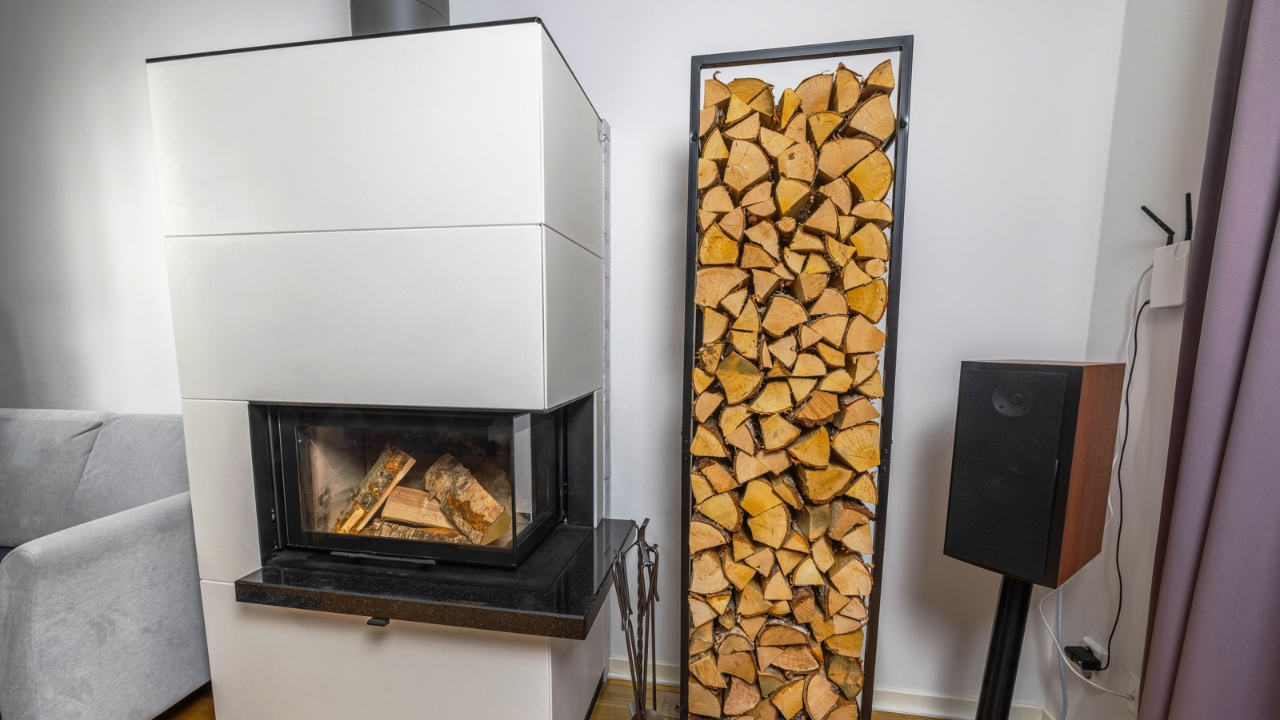
Keep the bulk of your wood outside, covered, and off the ground, then bring in a day or two at a time. If you burn daily, a small rack plus a tote by the door is plenty. If the house already feels damp, run a dehumidifier for a couple days after you change habits and watch what happens to the windows.
2. Stacking Wood Directly On The Floor
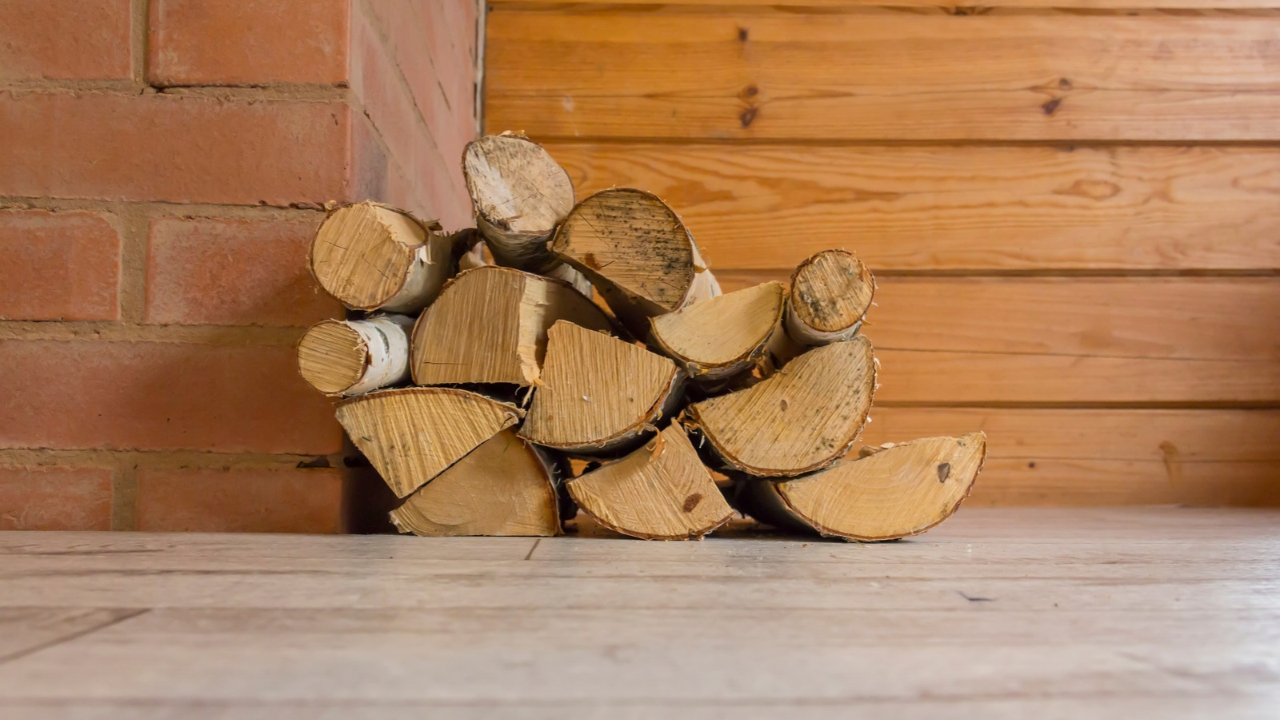
Wood drops grit, bark, and tiny slivers no matter how careful you are. Put that right on hardwood and you’ll grind scratches in the finish, especially in winter when boots track in sand. On carpet, the debris gets mashed down and turns into a scratchy, smoky-smelling mess that’s hard to vacuum out.
Set the rack on something that actually contains the dirt, a boot tray, a shallow plastic mixing tub, or a scrap of vinyl flooring with the edges turned up. If you have a concrete basement floor, you still want a barrier. Concrete wicks moisture, and the bottom row will go punky before you notice.
3. Storing It Against Drywall Or Paneling
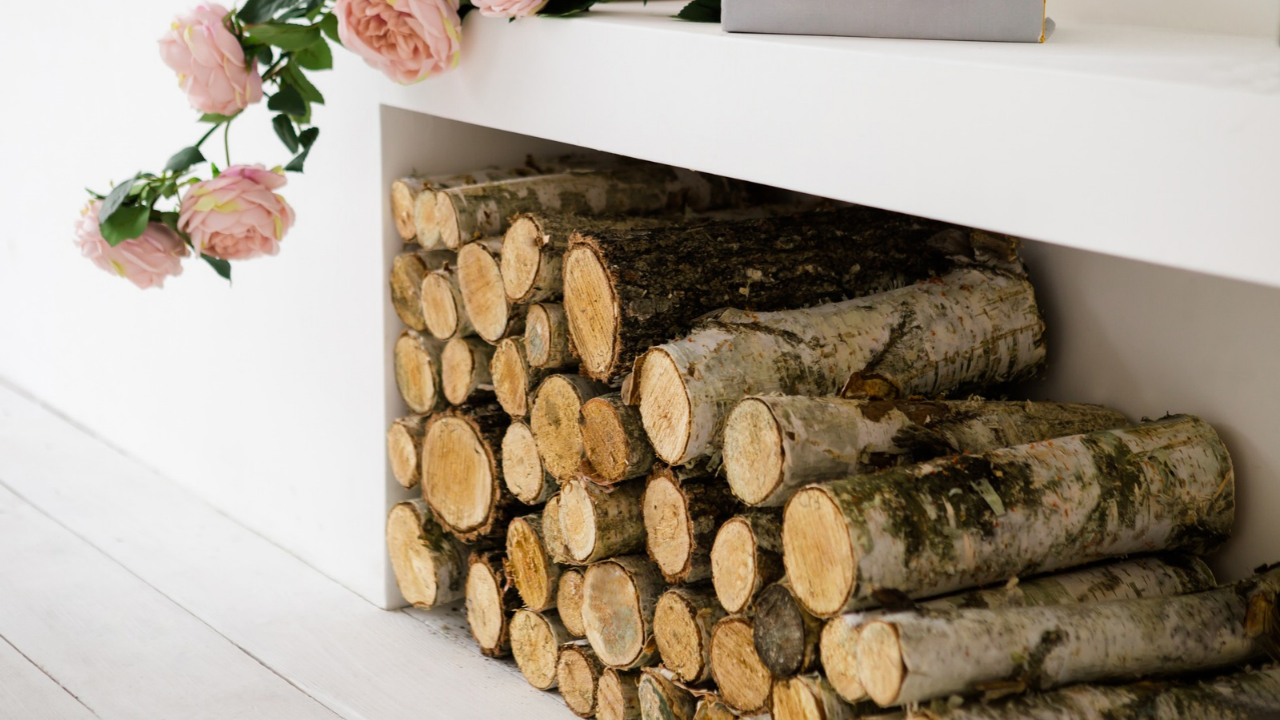
Wood needs air, and your walls do too. When the pile touches drywall, you make a dead zone where moisture lingers, and you can end up with a faint brown stain from bark and dust. In bad cases, you’ll find soft, crumbly drywall paper where the stack sat all season.
Leave a few inches of space, even indoors. A simple rack with a back bar helps, or screw a strip of wood to the baseboard as a spacer you can’t “accidentally” stack past. If you’re storing wood in a finished basement, this spacing is even more important because basements already run cool and damp.
4. Bringing In Wood With Loose Bark
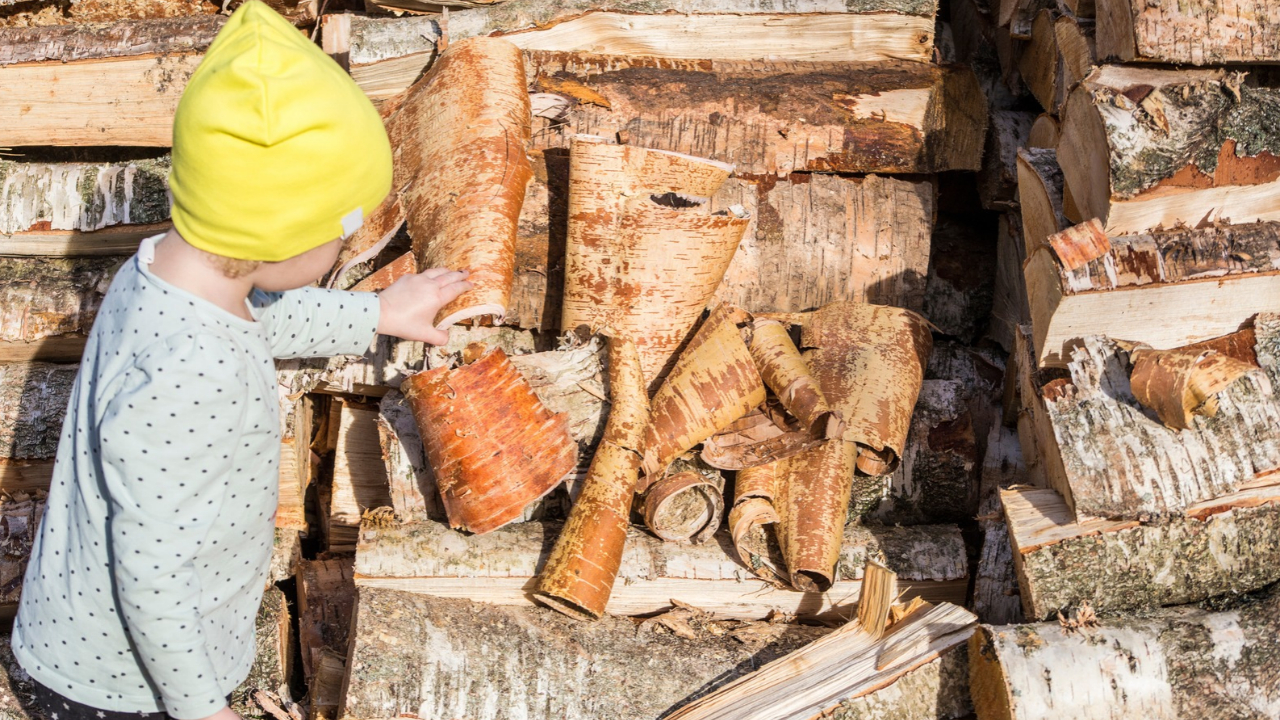
Bark is where the mess lives. It flakes off into the cracks of your floor, and it’s also a great hiding place for spiders, beetles, and egg sacs. You don’t need an infestation to have a problem, one surprise centipede sprinting across the hearth is enough to ruin a quiet night.
Before wood comes inside, knock the pieces together outside and peel off loose bark into a bucket. A stiff hand brush works, so does a quick tap with the back of a hatchet, lightly. Save the cleanest splits for indoor storage and burn the ugly, barky stuff first.
5. Using Plastic Bins With Tight Lids
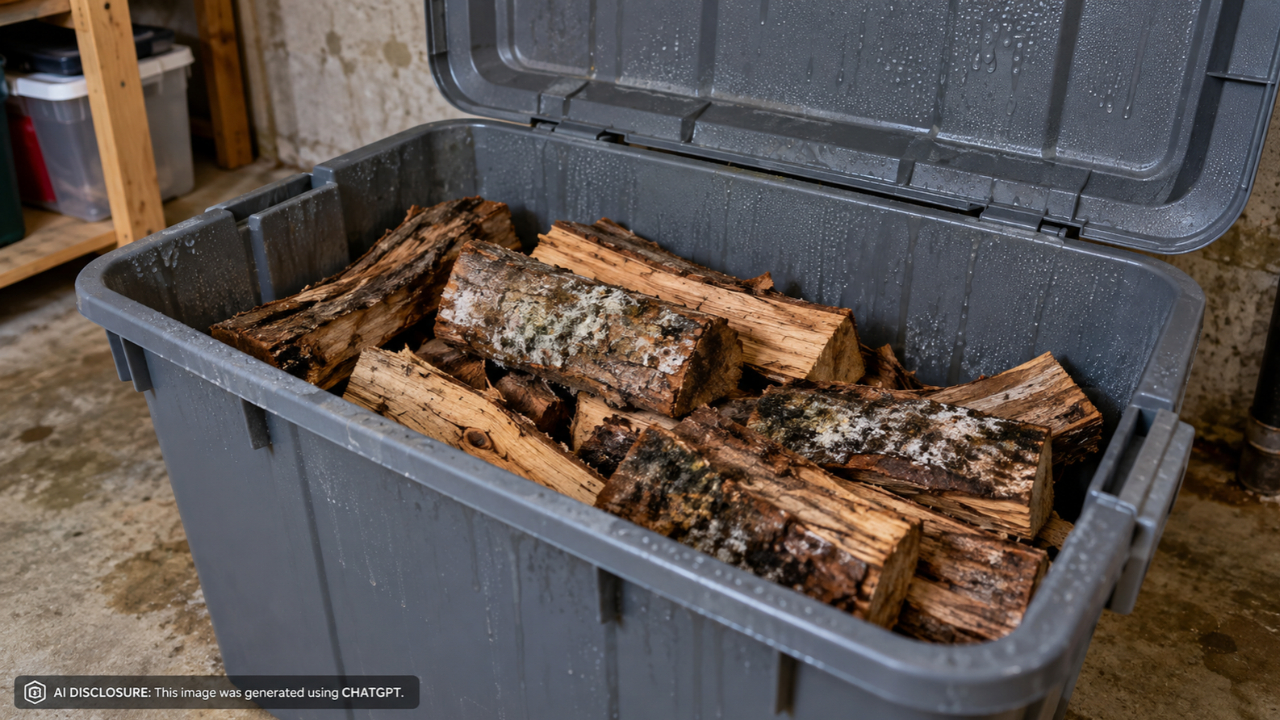
Those big tote bins look tidy, then you open them and get a sour, funky smell. Tight plastic traps moisture from the wood and from indoor air, and it turns a decent split into a little science project. Mold likes dark, still air.
If you want a container, pick something that breathes, a wire rack, a milk crate, or a canvas log carrier you hang up after use. There is one exception: a sealed bin can work for kiln-dried scraps or manufactured fire logs, as long as the contents are bone dry when they go in and you don’t store them in a damp basement.
6. Parking The Stack Beside A Heat Register
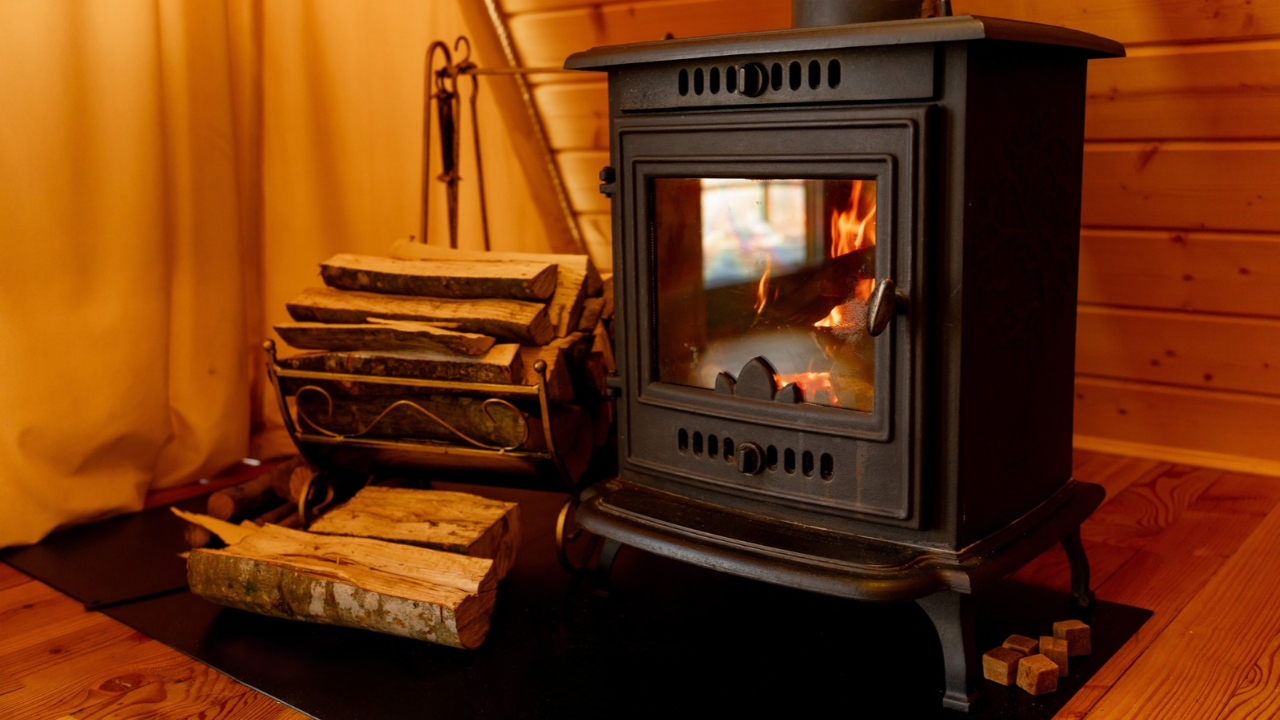
Warm air blowing across wood sounds helpful, but it creates a different problem. The surface dries too fast, the ends check and split, and bark dust gets blasted into the room. If you’ve ever noticed a fine grit on the nearby table, that’s often why.
Move the rack away from forced-air vents, baseboard heaters, and radiator fans. If you need to dry a couple splits in a hurry, set them near the stove on a hearth pad or on a rack made for that, not in the direct path of a vent. If your only storage spot is near a register, deflect the airflow with a vent diverter and keep the pile smaller.
7. Leaving Indoor Wood Uncovered In Mud Season
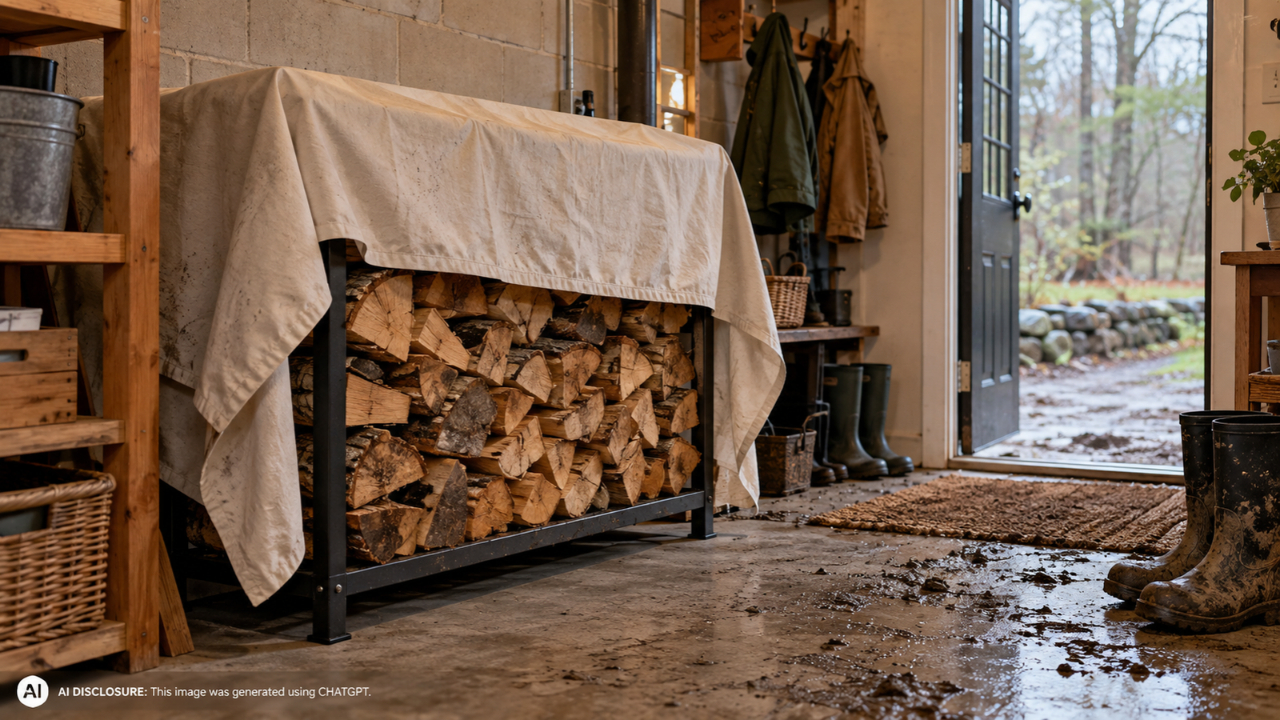
Spring is when the trouble sneaks in. You track in wet grit, the basement smells a little earthy, and your wood pile starts acting like a mud shelf. Even if the splits are dry, the ends pick up damp from boots, pets, and mopping, and that damp transfers through the stack.
During wet weeks, throw a washable cover over the rack, an old sheet, a moving blanket, even a piece of canvas. It keeps splash and grit off the wood and makes cleanup simple. Wash it when it starts smelling like smoke and dirt, not when it’s black.
8. Mixing New Green Wood With Seasoned
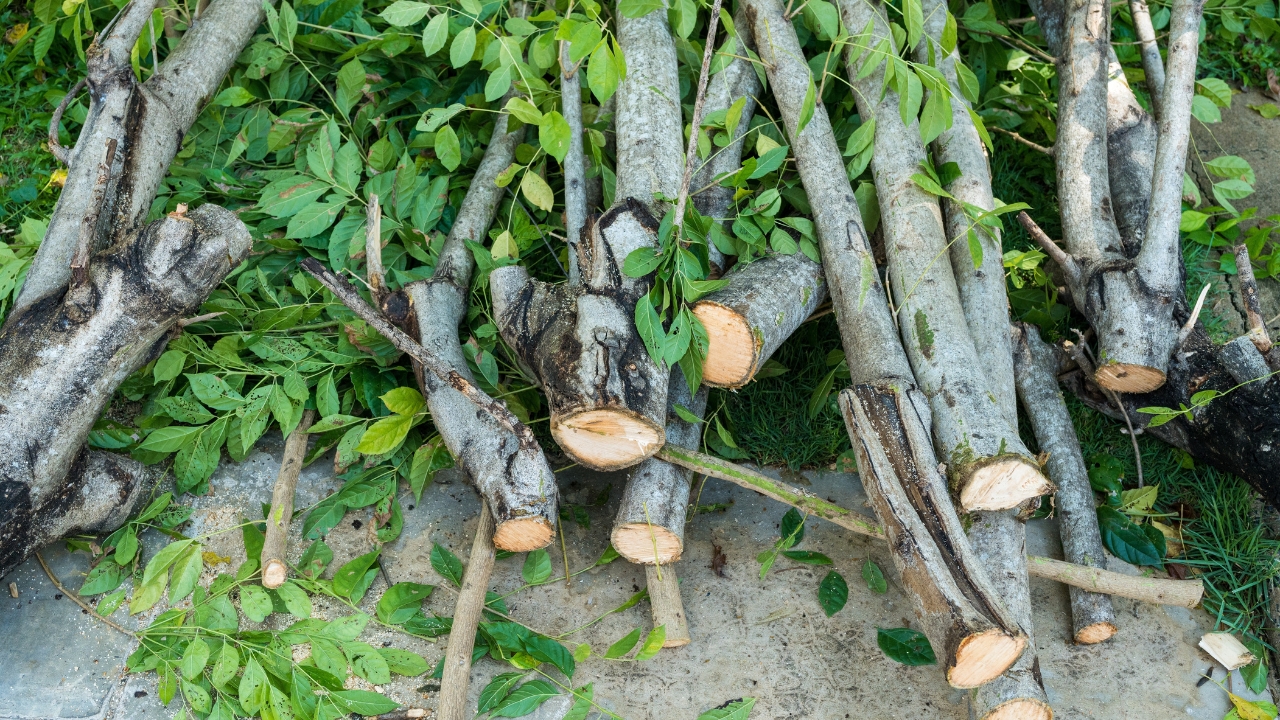
This one costs you money and time. A couple “almost dry” pieces mixed into the good pile raise the humidity right where you store your best fuel. Then your stove burns lazier, the glass soots up quicker, and you start fighting smoke smell you didn’t have before.
Keep green or questionable wood outside, even if it’s just a small side stack under cover. Indoors, only store wood you’re confident is seasoned, light for its size, with cracks on the ends and a hollow sound when knocked together. If you’re not sure, burn it sooner in shoulder season when you can run a hotter fire and keep an eye on it.
9. Stacking Too Tight For Air To Move
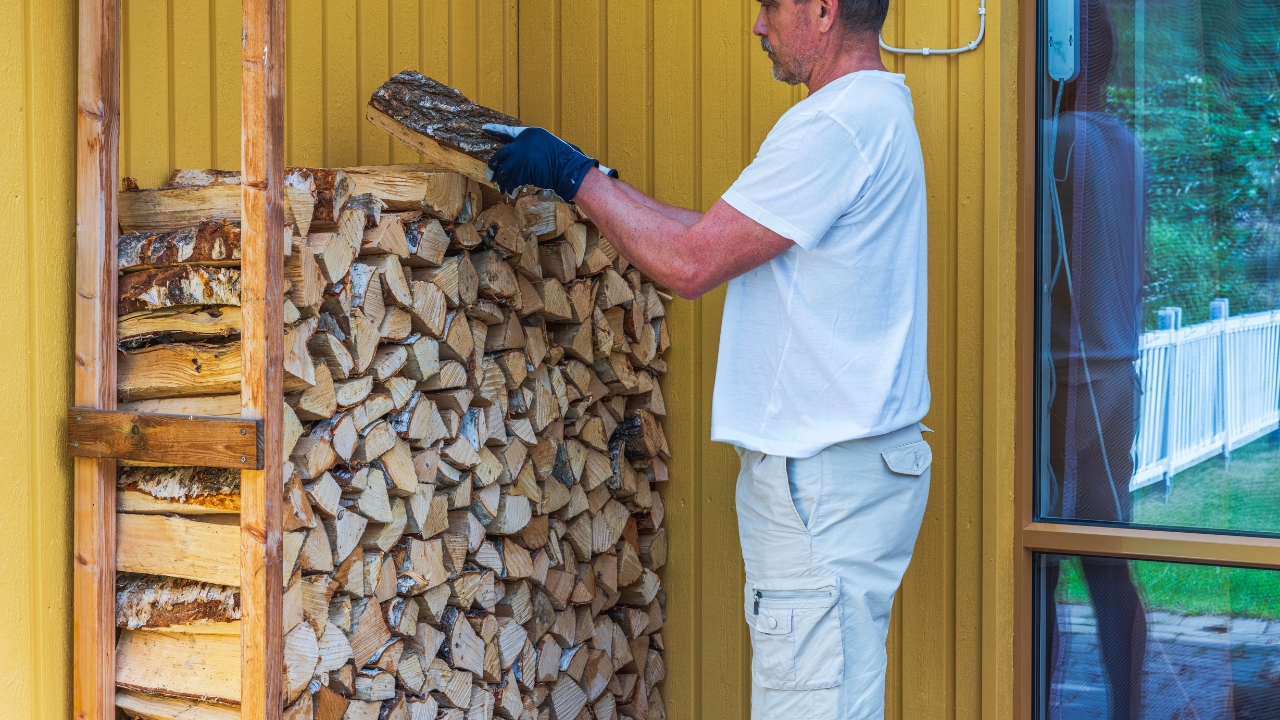
A neat, brick-tight stack looks good in photos. In real life, it holds moisture pockets, especially if some pieces have snow melt or rain on them from the trip inside. You’ll notice it as a musty odor that clings to the pile and doesn’t go away, even though the room feels warm.
Stack with small gaps and vary the piece sizes so air can snake through. A rack that holds wood off the base and lets air in from the sides is worth the floor space. If you already stacked it tight, restack it, it takes ten minutes and beats smelling that funk for a month.
10. Ignoring Tiny Piles Of Wood Dust
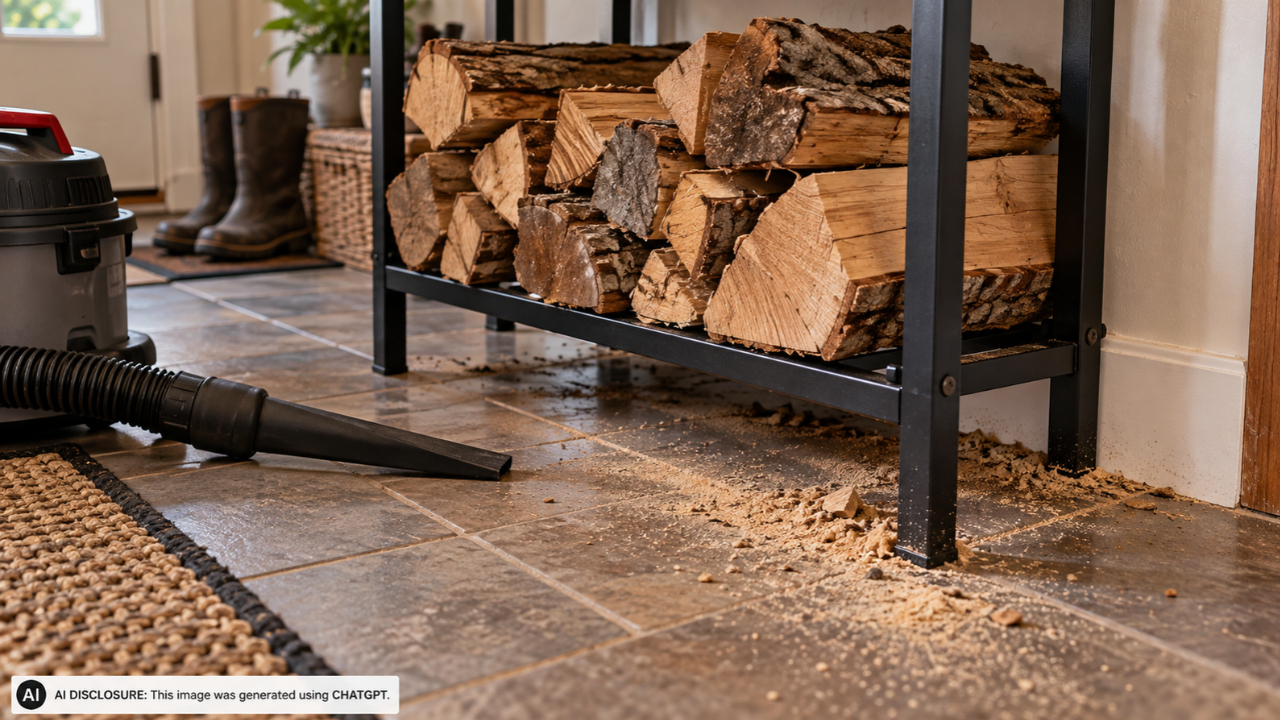
Wood dust ends up everywhere, under the rack, behind it, in the corner you never look at. That dust feeds insects, holds moisture, and can make the room smell stale even when the wood itself is fine. It’s also how you end up with splinters in socks and gritty dog paws.
Slide the rack out every week or two and vacuum under it with a crevice tool. A shop vac is better than a broom for this job because it actually removes the fines instead of pushing them around. If you see little pepper-like specks or fresh sawdust that wasn’t there yesterday, move the wood back outside and check it piece by piece for insects.
Indoor wood storage works best when it’s small, clean, and rotated fast. Keep the big stack outdoors where it belongs, and treat your indoor rack like a pantry, bring in what you’ll use soon and keep the area easy to sweep. Your stove will burn cleaner and your house will smell like home, not like a damp woodpile.
Like Fix It Homestead’s content? Be sure to follow us.