New Homeowner Watches a Renter Install a Fence Past the Marked Property Line — Then the Installer Refuses to Stop
Photo credit: AI-generated image created using ChatGPT. Illustrative only.
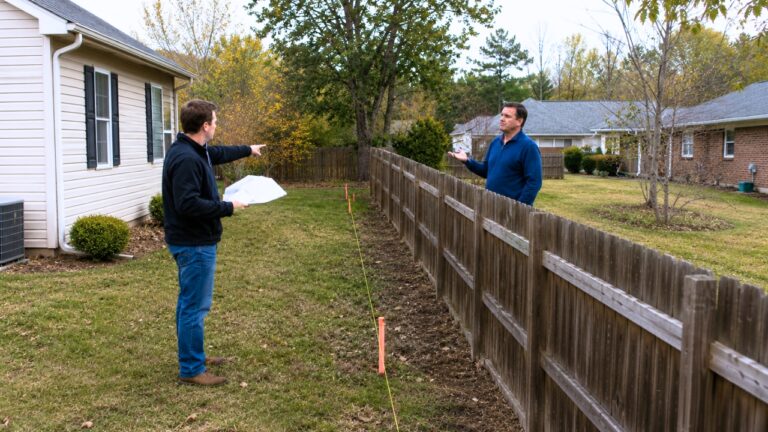
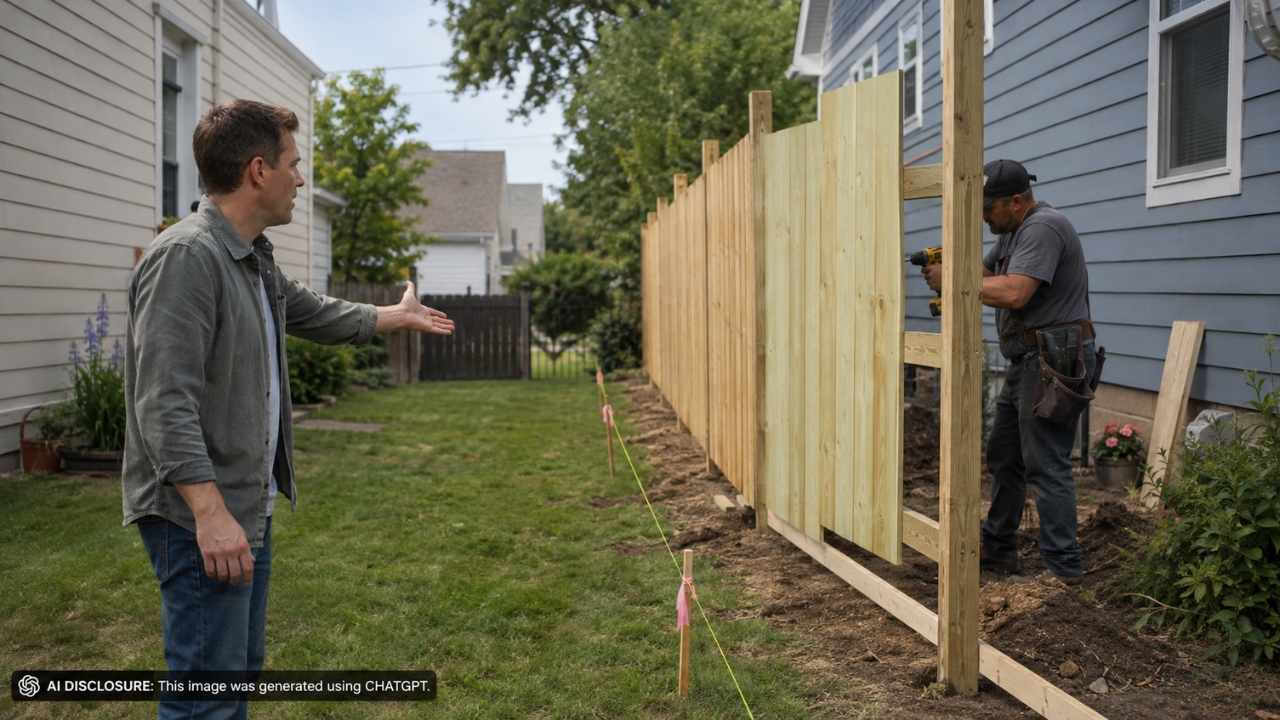
It starts as a normal day at home: a crew shows up next door, posts go in, panels stack up, and suddenly there’s a brand-new fence marching across the yard. Only this time, the homeowner watching from their own property says the line wasn’t a mystery at all—there were clear markers—and the fence still went in the wrong place.
In the original post, the homeowner describes a moment that still stings three years later: they told the installer to stop, right there during the build, and the installer refused. The neighbor’s home is a rental, and when the homeowner tried calling the landlord/owner using the number the tenant provided, nobody picked up. With the fence going up in real time, they were left standing there with no practical way to make it stop.
When the fence went up, the homeowner tried to stop it in real time
The homeowner says the fence was installed without consultation, even though the property line markers were “clear.” They were home during the installation and did what a lot of people would do first: they walked over and told the person installing it to stop.
But instead of a pause, a phone call, or even a “let me check,” they got a flat refusal. That’s the kind of detail that turns a property-line disagreement into a personal memory—because it’s not just about inches of land anymore. It’s about being ignored on your own property while a permanent structure gets locked into the ground.
The renter wasn’t the one calling the shots. The homeowner got the landlord’s number from the tenant and tried to reach the owner during the build, but couldn’t get a hold of them. By the time the crew finished, the fence wasn’t just “in progress.” It was done.
A rental property meant the homeowner couldn’t get a decision-maker on the phone
Living next to a rental can be fine—until you need someone to authorize a fix. Here, the homeowner says the owner rents the property out, and that separation became part of the problem. The tenant can hand over a phone number, but they can’t sign off on moving a fence or paying for a new survey.
And when the owner doesn’t answer, everything stalls. The homeowner didn’t describe a face-to-face meeting or any quick resolution—just unanswered calls while the fence was actively being installed and, later, repeated attempts to address it.
That dynamic matters because fences aren’t like noise complaints or a messy yard that changes week to week. Once posts are sunk and panels are aligned, “we’ll deal with it later” becomes a serious bet. Every day the fence sits where it is, it starts to feel more permanent—both physically and socially.
Three years of “excuses” turned a boundary problem into a long-term burden
According to the homeowner, they’ve been trying to get the fence moved for three years. Periodically, they reach out, and the owner either ghosts them or offers “various excuses.” That kind of slow-walk is exhausting because it keeps the homeowner in a loop: hope for progress, get nothing, wait, try again.
Worse, the owner allegedly refuses to recognize the homeowner’s survey as valid. That’s a classic roadblock in property disputes—if one side won’t accept the measurements, they can treat the entire conversation like it’s optional.
The owner’s other stated reason is money: they claim to have no funds to move the fence or pay for a survey of their own. Meanwhile, the fence stays where it is, the homeowner stays frustrated, and the wrongness of the line becomes part of daily life—mowing, landscaping, future projects, and just the feeling of “my yard is smaller than it’s supposed to be.”
Why a misplaced fence is more than a cosmetic annoyance
A fence looks simple from the street. Up close, it’s a boundary that controls access, visibility, maintenance, and sometimes even how you use parts of your property. If it’s installed past the true line, it can interfere with routine chores and long-term plans.
It can also change neighbor behavior. People tend to treat fences as the truth on the ground, even when they’re wrong. Over time, a wrongly placed fence can normalize the idea that the space on the “fenced-in” side belongs to whoever benefits from it.
The homeowner’s post doesn’t get into specific yard damage, but the stress is clear: they felt “taken advantage of and helpless” during the install, and that helplessness has lingered. A structure that’s supposed to bring peace of mind—privacy, separation, safety—has become a three-year reminder that someone else made a decision over their boundary and got away with it.
Commenters pushed documentation and formal pressure, not more arguing at the fence line
The homeowner came asking what they can do “to finally get this addressed,” and that’s typically where practical advice starts to shift away from face-to-face confrontation. When someone ignores property markers and an installer refuses to stop, arguing louder usually isn’t the missing ingredient.
In disputes like this, the most common theme is proof and paper trails: surveys, written communication, and records of attempts to resolve it. The homeowner already has a survey, but they’re stuck at the “the other side won’t accept it” stage, which is often where people start talking about escalation through official channels instead of personal appeals.
Another practical theme is pulling the issue away from the tenant and back to the actual owner. Renters come and go. The fence remains. So do the property records. If the owner is comfortable ghosting calls, commenters often steer people toward methods that create deadlines and consequences—things that can’t be ignored as easily as a missed voicemail.
Staring at the fence every day is its own kind of pressure
The hardest part of a slow-moving property fight is that you still have to live there. The homeowner has spent three years watching a fence sit where they believe it doesn’t belong, trying to be persistent without triggering a full neighbor war.
And because the installer wouldn’t stop in the moment, there’s a specific kind of regret baked into it: the feeling that if you’d known exactly what to do that day—who to call, what to say, what authority would actually respond—you could have prevented the whole mess. Instead, the homeowner is left trying to undo something that was literally built into the ground.
For now, the fence is still there, the owner is still resisting, and the homeowner sounds worn out from repeating the same request into the same silence. It’s the kind of homeownership headache that doesn’t leak water or break an appliance—but it can take up just as much mental space, because you can’t fix it with a weekend trip to the hardware store.
Like Fix It Homestead’s content? Be sure to follow us.