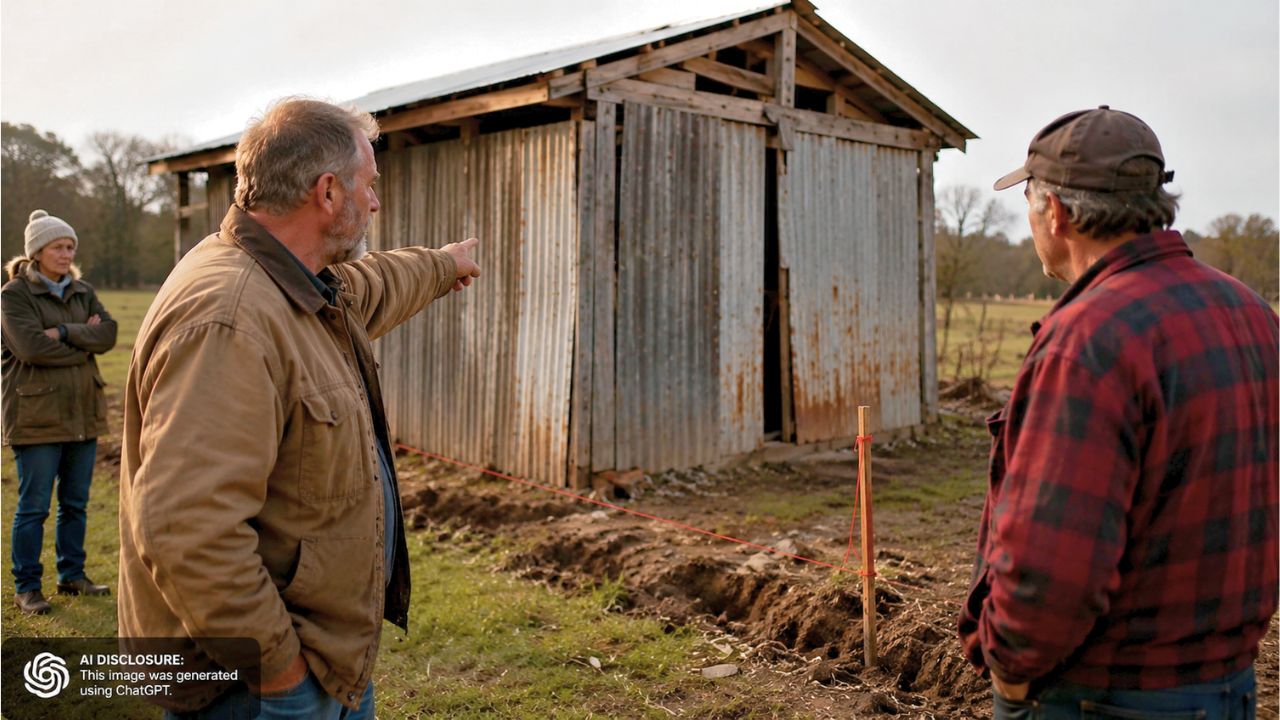
Rural Landowner Finds a Neighbor’s Shed Encroaching on Vacant Family Land — Then a Year of Fighting Still Hasn’t Gotten It Removed
Photo credit: AI-generated image created using ChatGPT. Illustrative only.
It started the way a lot of rural property problems start: a family lot that’s been sitting quiet for decades, and a neighbor who got a little too comfortable with the edge of the line. A New York landowner said their dad owns a vacant parcel that’s been in the family since 1937, and the plan is simple—transfer it down and finally build a home there.
Then a survey showed a shed from next door is sitting about seven feet onto the family’s land, and a year of calls, code enforcement, and waiting still hasn’t gotten the structure moved. The full play-by-play is laid out in the original post, but the heart of it is painfully familiar: it’s hard to build your future when someone else’s “temporary” building is parked on your property.
A clean title, a new build, and one shed in the way
The land isn’t just sentimental. It’s the key to a new life plan—getting out of a high cost-of-living rental situation and putting down roots. But the poster said their dad already spent around $10,000 working with a lawyer to get the title cleaned up, and now the encroachment is threatening the next step.
They said the shed is not only over the line; it also creates a setback problem. Their survey showed the structure encroaches about seven feet, and with a 12-foot setback requirement, the shed would need to move roughly 19 feet to be in full compliance.
The neighbor’s initial reaction didn’t help. The poster said the neighbor told the surveyor their dad “should just sell him the land.” That one line set the tone: this wasn’t going to be a friendly, “whoops, my bad” kind of fix.
When “let’s handle this neighbor-to-neighbor” fell apart
At first, the poster planned to work it out directly and get the shed moved without burning bridges. But they said the neighbor blocked their number and wouldn’t answer the door when they visited in August.
That’s when the practical costs started stacking up. The poster said their dad can’t pass along a clean title with an encroachment hanging out there, and without that clean title, they can’t secure a home-building loan. In other words: the shed isn’t just annoying—it’s freezing the entire build.
Living out of the area made it worse. When you’re not local, you can’t casually knock on a door again, or catch the neighbor outside, or follow up with town offices in person. Everything turns into phone calls, voicemail, and waiting.
Code enforcement got involved—and then it stalled
With the neighbor refusing to engage, the poster said they contacted the town. They found local code language that would, on paper, put pressure on the neighbor: a $100-per-week penalty for the violation. They also said the shed doesn’t have a permit, and the town requires permits for structures over 120 square feet.
The building inspector reportedly told the neighbor to remove the shed from the poster’s family property. According to the poster, the neighbor ignored that instruction for about five months.
Eventually, the inspector had the city attorney send a letter in January giving the neighbor 60 days to respond. But the poster said they haven’t been able to get a copy of that letter, despite requesting it multiple times—leaving them unsure what was demanded, what deadlines were set, and what consequences were attached.
What’s driving them up the wall isn’t just the neighbor’s stubbornness. It’s the feeling that the town has the tools to force compliance, yet isn’t using them. The poster said their requests to enforce penalties—or even seek an injunction-like step such as padlocking the shed to prevent use—went unanswered.
The neighbor finally agreed… then moved the goalposts
After about 90 days passed following the attorney letter, the poster said the neighbor finally agreed to move the shed. That should have been the turning point. Instead, it became a new round of delays.
The neighbor, according to the poster, insisted the family needs to hire surveyors to pin exactly where the shed should go so he “doesn’t have to do it twice.” The poster said they already have three different surveys and pins at each corner of the property.
Still, their surveyor quoted $700 to come out and mark where the shed should be moved. The poster’s frustration is blunt: why should they pay to help the neighbor get back into compliance when the neighbor is the one encroaching?
And the timeline didn’t make sense to them either. The neighbor allegedly claimed it would take “5 months after we pin the property” to move it. Meanwhile, the poster said they called shed movers and got a quote of $575, with one mover saying they could do the job as soon as next week.
That mismatch—“five months” versus “next week”—is where trust evaporates. The poster is worried that even if they pay for extra staking, the neighbor will find another reason to delay.
The real cost: a stalled life plan and a town office that won’t return calls
For the poster, this isn’t about winning a petty boundary argument. It’s about losing a year of forward motion. They’re still renting, still paying high monthly costs, and still stuck watching a build plan sit idle because a small outbuilding is in the wrong place.
They also described communication problems with the building inspector. The inspector reportedly doesn’t answer their calls, and when the poster contacted the town clerk for more information, the inspector was unhappy about it. That kind of friction can make a homeowner feel like they’re being treated as the inconvenience—even though they’re the one with land being used without permission.
The poster did the math on what penalties could look like if enforced: at least $4,400 in weekly fines so far, plus more if the neighbor keeps stretching the timeline. In their mind, real enforcement would create real urgency.
Instead, the neighbor appears to be betting on exhaustion—on the idea that the family will give up, accept a “revokable license,” or sell off the sliver of land just to move on.
How readers sized it up: documentation, pressure, and skipping the endless waiting
The poster’s question is essentially, “What now?” Their instincts are already pointing toward the typical escalation ladder: keep everything documented, lean on written records, and prepare to involve a private attorney if the town won’t act.
They said they have a lawyer “in my back pocket,” but legal action is expensive. Even a letter could cost $1,500, and they expect the process would take time. A proposed option was a revokable license to allow the shed to remain temporarily, but the poster doesn’t want to give the neighbor anything—especially when they now want to build a driveway and put up a fence where the shed has been encroaching.
In the background of all this is a theme anyone in a rural area recognizes: enforcement can be inconsistent. Sometimes codes are strict on paper but slow in practice, and a determined neighbor will exploit every gap—silence, delays, vague deadlines, missing paperwork—to keep things exactly where they are.
The poster is left trying to choose the least bad option: keep pushing the town and hope it finally bites, pay for more survey work to remove excuses, or spend real money on a lawyer to force movement. For now, the shed is still doing what it’s been doing all along—taking up space that isn’t its owner’s, and holding up a home that hasn’t even been built yet.
Like Fix It Homestead’s content? Be sure to follow us.