Homeowner Finds a Neighbor Dug Up Old Fence Posts to Close Off a Four-Foot Maintenance Gap Between the Fences — Then Loses Access to Her Own Side
Photo credit: AI-generated image created using ChatGPT. Illustrative only.
You don’t usually build a fence and expect the real problem to show up eight months later—on the far side, where you can’t even see it. But that’s exactly what happened to one homeowner who left a deliberate buffer behind a new privacy fence, only to discover that a neighbor had quietly used that space to push their own fence line forward and shut the gap completely.
In the original post, the homeowner explains they had a survey done and then installed a 6-foot privacy fence. Local rules allowed them to build right up to the property line, but they chose not to. Instead, they left roughly three feet inside their boundary on purpose—both to avoid any hint of encroachment and to keep a “maintenance lane” for fixing boards, trimming growth, and handling repairs behind the fence.
A three-foot buffer that turned into a trap
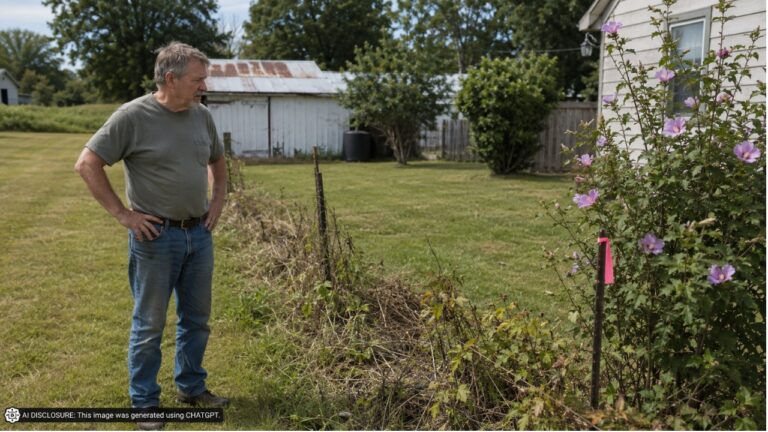
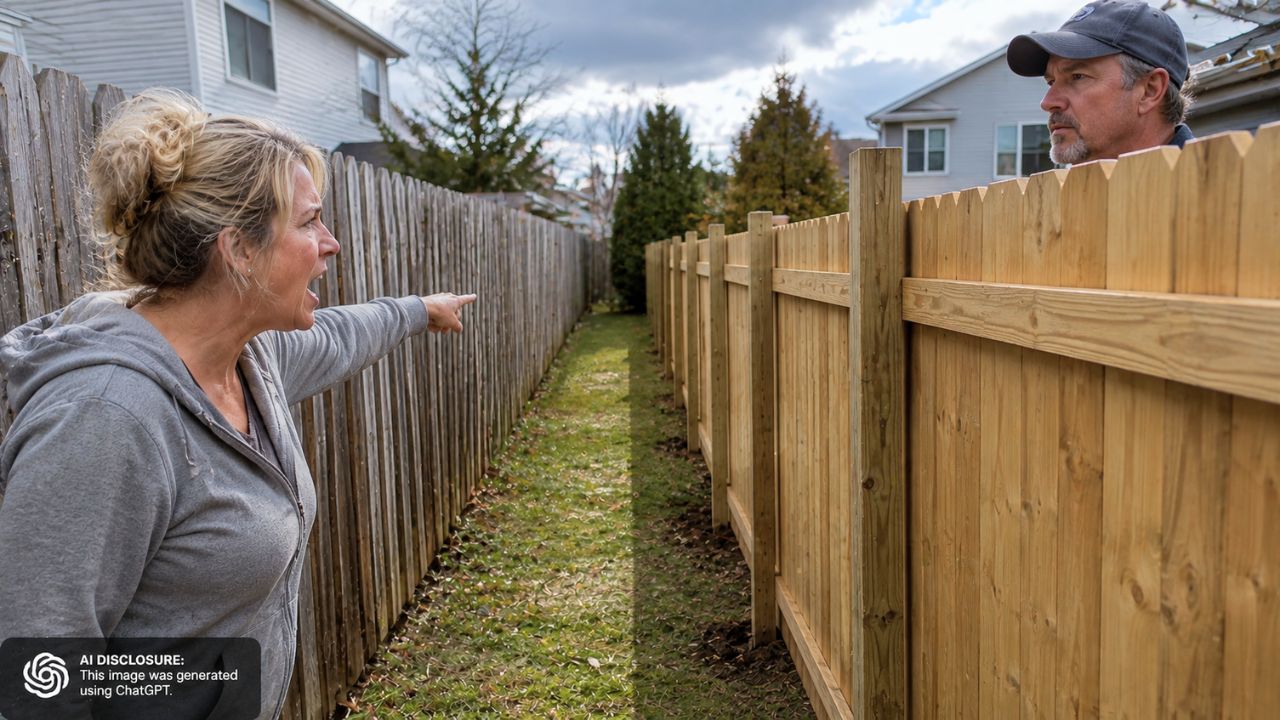
From the homeowner’s perspective, the setup was clean: their fence, set back from the property line, with survey spikes still visible in the ground. Behind it, there was space—about a four-foot passage between the two fences—enough room to walk, weed-whack, and keep vegetation from turning into a mess.
Then one day they noticed something that made their stomach drop. The neighbor behind them had dug up their old fence posts and moved their corner posts to butt right into the corners of the homeowner’s privacy fence. Not only did that block access to the back side of the homeowner’s fence, it also meant the neighbor was now using the homeowner’s fence line as part of their own enclosure.
The homeowner’s immediate worry wasn’t just the principle of it, though that was clearly there. It was practical: a kid and a dog now treating their fence like a shared wall, with no way for the actual owner to get behind it for maintenance if a panel fails, weeds take over, or repairs are needed.
Markers in the ground—and the feeling of being played
The homeowner believed the neighbor’s changes weren’t a misunderstanding, because the survey pins were still present. To them, it looked like the neighbors had simply ignored the markers and expanded their usable yard by roughly a 4-by-70-foot strip.
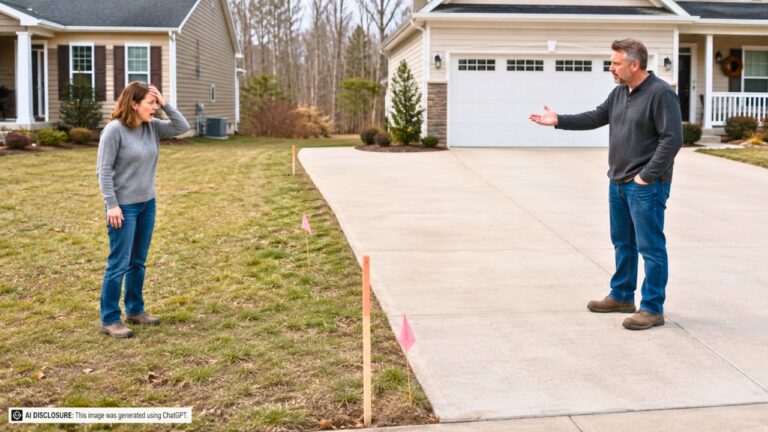
When the homeowner walked over to talk, the timing was almost absurd. The neighbor’s wife was outside smiling and FaceTiming her mom, showing off the “progress” with the fence. The homeowner asked her to come over to the side and pointed out a boundary spike at the corner, explaining that the new fence work had been built outward from it and beyond it by close to three feet.
The conversation didn’t calm things down. The homeowner says the neighbor’s wife acted as if she thought the markers were hers—and claimed they had moved one. She also argued the space between fences wasn’t big enough for their tractor and that maintaining the narrow strip was a hassle. The homeowner pushed back, saying the lane was maintained and that part of their routine had become cutting back the neighbor’s bushes that weren’t being kept up.
When “my survey says…” makes everything messier
The dispute picked up a second layer of tension when the neighbor suggested they’d had a survey too—and that their survey indicated something different at an opposite corner, involving a decorative rock and shed area belonging to another neighbor. That raised the possibility of conflicting surveys or, at minimum, a confusing wedge-shaped property line that didn’t match anyone’s assumptions.
Importantly, the homeowner wasn’t claiming their own fence was over the line; if anything, they had built it inside their boundary to avoid exactly this kind of headache. But the mention of conflicting plats made the whole thing feel less like a simple “move it back” and more like the start of a longer property-line fight.
The neighbor’s wife floated the idea of an easement agreement that would document that the land was the homeowner’s, not theirs. The homeowner’s response was bluntly practical: if access was being blocked, any arrangement would need a gate that let them reach their own property when they wanted.
At home, the homeowner and their spouse agreed on one thing: they didn’t want any shared-fence arrangement at all. No leaning on it, no attaching to it, no treating it like a joint structure.
The paper trail that changed the tone overnight
Instead of letting the conversation stay verbal, the homeowner followed up in writing. They emailed the neighbor a copy of the survey plat, along with a bird’s-eye visual showing options that wouldn’t require ripping out everything—while still making the point that, no matter what, the fence had to be pulled back off their property.
That’s when the neighbor’s tone shifted. In a text message, the neighbor apologized for not talking first and said they would rectify it “today” and ensure they were entirely off the homeowner’s property. But the apology came with a side of blame: they claimed the homeowner hadn’t maintained the grass behind the fence even once, that it became an “eyesore,” and that removing their fence section had been their way of making mowing easier—especially since there was no gate for the homeowner to access the area.
The homeowner took issue with several parts of that message, including an admission that the neighbor removed the wooden flagged stake (not the metal pins) because it was “an eyesore.” The homeowner also felt the neighbor was rewriting history by implying the homeowner watched the work happen and waited until it was complete to complain.
Still, results matter. A couple days later, the homeowner walked outside and found the encroaching fence segments removed on both sides.
Fixed fence line, broken neighbor relationship
With the encroachment removed, the neighbors began constructing a new privacy fence about an inch inside their own line. Because of the property’s wedge shape, that created a tighter pinch point at one corner—about 1.5 feet open—before it opened back up to roughly three feet.
The homeowner asked the neighbor if they could start building from the far side to allow time to lay weed barrier and fabric in the narrow section. The neighbor brushed it off, saying neither of them would need to worry because “not much should grow between two fences.”
That could have been the end of it. Instead, the homeowner says the neighbor started making passive-aggressive comments about how it was “funny” the homeowner wanted to landscape back there since they supposedly never maintained it. When pressed on why they didn’t just knock on the door in the first place, the neighbor minimized the trimming work as “two minutes” and “not a big deal,” even while still justifying the fence move as a maintenance solution.
The exchange escalated into insults and yelling. The physical fence problem was being corrected, but the human problem—trust—was gone.
How readers tended to react: prove it, document it, don’t share it
Even without a full comment thread included in the updates, the homeowner’s actions match the pattern many homeowners recognize: when property lines get involved, the fastest way to stop “creative” boundary adjustments is documentation. A survey plat, visible pins, and a written message created a clean record of what was said and what needed to happen.
There’s also a practical undercurrent here that resonates with anyone who’s maintained a fence: access matters. A three-foot gap can feel wasted until the day a panel warps, a post shifts, poison ivy shows up, or vines start eating your pickets. Blocking that lane doesn’t just feel disrespectful—it can turn routine maintenance into a bigger job, or a future repair into a dispute about who’s allowed to step where.
In the end, the neighbor did remove the encroaching sections and started rebuilding inside their own line. But the homeowner is left with the kind of aftermath that doesn’t show up on a plat map: a narrow strip of land that still needs upkeep, a corner that’s still a little weird, and a next-door dynamic that now comes with baggage every time someone picks up a shovel.
Like Fix It Homestead’s content? Be sure to follow us.