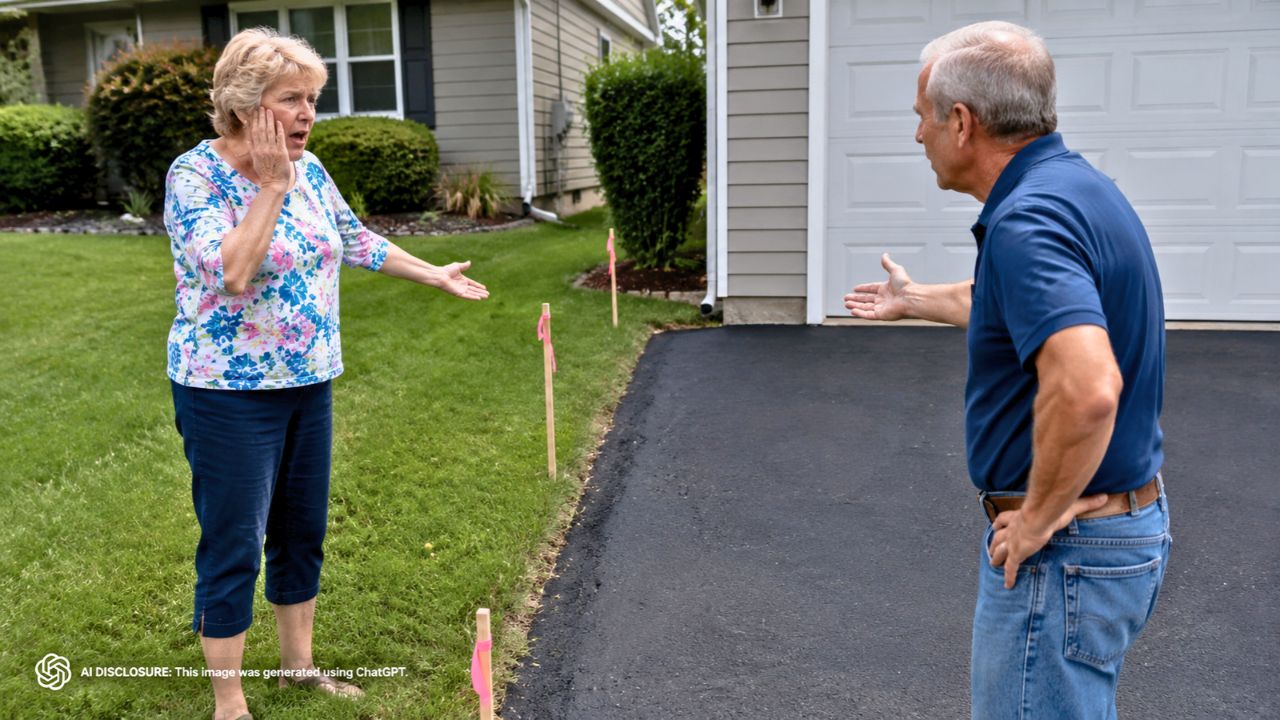
Homeowner Selling After Thirty-Seven Years Learns the Neighbor’s Paved Driveway Sits Five Feet Onto Her Land — Then His Lawyer Claims It by Adverse Possession
Photo credit: AI-generated image created using ChatGPT. Illustrative only.
Charlotte Tyson thought she was doing the normal, stressful-but-manageable thing: selling the home she’s lived in for decades so she can move someplace easier on her health. Then the buyer did what buyers are supposed to do—ordered a survey—and her quiet block in Cary turned into a property-line nightmare.
In the original post, WRAL’s Monica Laliberte lays out the problem in a way every homeowner recognizes instantly: the neighbor’s concrete driveway, fence, and landscaping don’t just sit near the line. The survey shows they reach about five feet onto Tyson’s land. And once that’s on paper, it’s not a “neighborly” issue anymore—it’s a sale-stopper.
The sale was moving forward… until the survey did its job
Tyson had a buyer lined up after living in the house for 37 years. She wasn’t selling for fun—she said she has health issues and needs a place that’s easier to get around in.
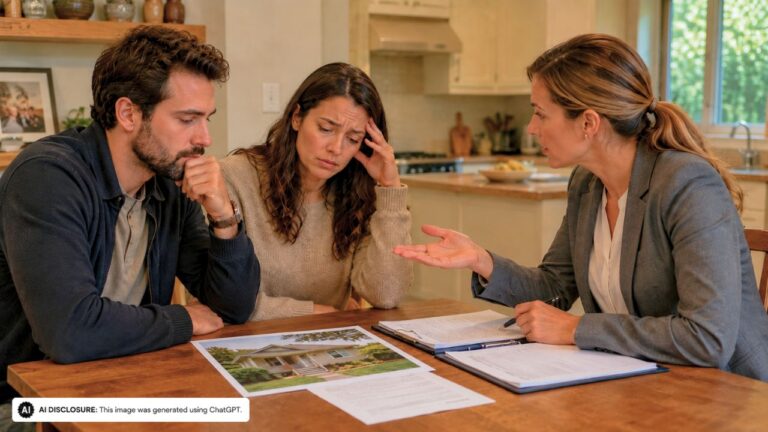
But the buyer’s survey flagged an encroachment. Suddenly, this wasn’t about fresh paint and curb appeal. It was about who owns the ground under the driveway and whether the buyer would be inheriting a legal fight on day one.
Her realtor, Marilyn Tschudi, didn’t mince words about the lesson here. She said a survey—often a few hundred dollars—“protects you,” even if you’re not planning to build a fence. In Tyson’s case, that piece of paper effectively put the brakes on everything.
Everyone on the street “knew,” but no one fixed it
The backstory makes this feel even more like real life: Tyson and her neighbors said it was common knowledge that when the homes were first set up, multiple grass driveways on the street were aligned wrong. Over time, that “close enough” alignment turned into people using, maintaining, and improving land that wasn’t technically theirs.
Tyson dealt with it in her own way—she moved her driveway. That’s the kind of fix that feels like the responsible option when you plan to stay put. You swallow the annoyance, pay for changes on your side, and move on with life.
Her neighbor, Ken Davenport, took the opposite path: he paved the driveway he was already using. Tyson said she left town to care for her mother, came back, and it was paved. She remembers thinking, “why did you do that’?”
Poured concrete changes the tone of everything
A grass “driveway” that drifts over a line can feel like a shrug. Concrete feels permanent, and it announces a claim. Once you’ve got a paved surface, edging, and landscaping, the line stops being theoretical.
Tyson said she paid the taxes on the land during the years that followed. But she also admitted she never confronted Davenport about where the driveway sat. She said she didn’t want conflict and she had no plans to move, so she figured she’d stay there and live with it.
That’s the trap a lot of people fall into with neighbor issues: it’s uncomfortable, it’s awkward, and it’s “fine” until you need to refinance, build, replace a fence, or sell. Then it’s suddenly not fine—and it’s usually more expensive and more emotional than it would have been earlier.
Then the letter shows up: “adverse possession”
The escalation here wasn’t a shouting match over the hedge. It was a lawyer’s notice.
Davenport’s attorney sent Tyson and her realtor a “notice of a claim for adverse possession of the land,” a concept many people only hear about as “squatter’s rights.” The message was blunt: “Davenport is not going to move the drive.”
Davenport told WRAL, “I do have a legal claim to the land.” His position was that the driveway “has been here forever,” and that he didn’t “commandeer” anything—he used what was already there.
The landscaping didn’t help. Davenport admitted he planted bushes on Tyson’s yard, but described that as a “separate issue.” To a buyer staring at a survey, though, it all blends together: hardscape, plantings, fence—signs of long-term use that now come with legal teeth.
The real damage was financial—and it hit fast
Property disputes have a way of punishing the person who’s trying to do the normal life step. Tyson wasn’t looking for a courtroom. She was looking for a closing date.
Instead, she found herself stuck between a buyer who now has a legitimate reason to hesitate and a neighbor who says he’s not moving anything. Tyson said the mess could cost her “thousands of dollars” she’d lose, including the deposit she put down on her next home.
That’s the gut-punch part. Even without a judge involved, the financial pressure starts immediately—storage plans, bridge housing, rate locks, moving schedules, deposits. A driveway that’s five feet over the line becomes a domino that knocks down the whole move.
WRAL reported Davenport told them his attorney planned to meet with the buyer’s attorney. That’s where this kind of thing often heads: not into a neat neighborhood compromise, but into negotiations where every inch has a price tag and every document matters.
Homeowners watching this focused on one word: “survey”
When stories like this circulate, the practical reactions tend to cluster around proof and paperwork. A handshake agreement from 15 years ago doesn’t calm a lender, and “we’ve always done it that way” won’t satisfy a title company.
The survey was the turning point because it turned a vague suspicion into a measured encroachment. It also created a record that can’t be unseen by the buyer, the agents, or the attorneys.
And that’s why Tyson’s realtor emphasized handling boundary problems early, even when it feels petty. The awkward conversation you avoid now can become the expensive one later—when you’re trying to move for your health, when a buyer is waiting, and when the neighbor is already holding a legal position that starts with “no.”
Tyson’s story is the kind that makes you look out the window differently: at the fence that doesn’t quite line up, at the driveway that flares just a little, at the shrubs that were “always there.” Because once the concrete is poured and the years pile up, it stops being a simple fix—and starts becoming a claim.
Like Fix It Homestead’s content? Be sure to follow us.