Family Finds the Developer Next Door Moved the Fence Line Closer to Their House — Then They Get an Eviction Notice for Their Own Home
Photo credit: AI-generated image created using ChatGPT. Illustrative only.
One day you look out your side window and the fence is… wrong. Not broken, not leaning—just closer than it used to be, like someone quietly slid the boundary a few feet while you were living your life.
That’s what a Third Ward family in Houston says happened next door, in a dispute that went from “we’ll replace the old fence” to lawyers and a court-ordered pause. The details come from the source report, where the Pattersons describe a fence line shift—followed by something most homeowners can’t even imagine: receiving an eviction notice for their own home.
A fence replacement turned into a boundary fight
The Pattersons bought their home in 2006. Frankie Patterson told reporters the place is personal—close to where she grew up, where she raised her children and grandchildren, and where she wants to stay as she nears retirement.
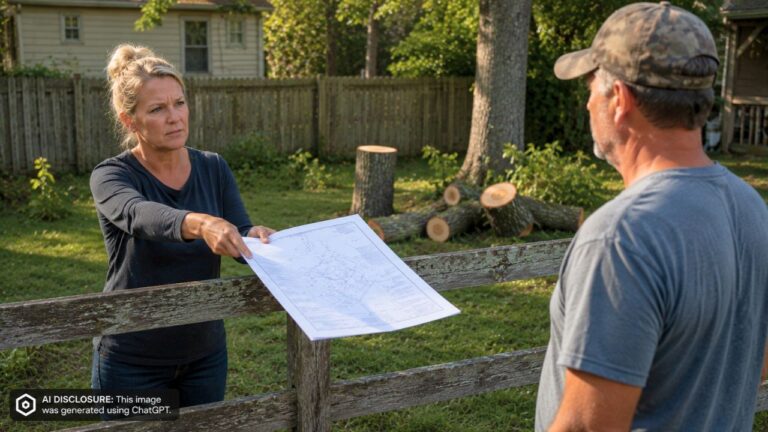
The trouble started with the fence separating their property from a development next door, tied to New Signature Homes LLC. According to the Pattersons, there was an initial agreement to remove the previous fence. That’s a normal neighbor thing—old fence comes down, new fence goes up, everyone moves on.
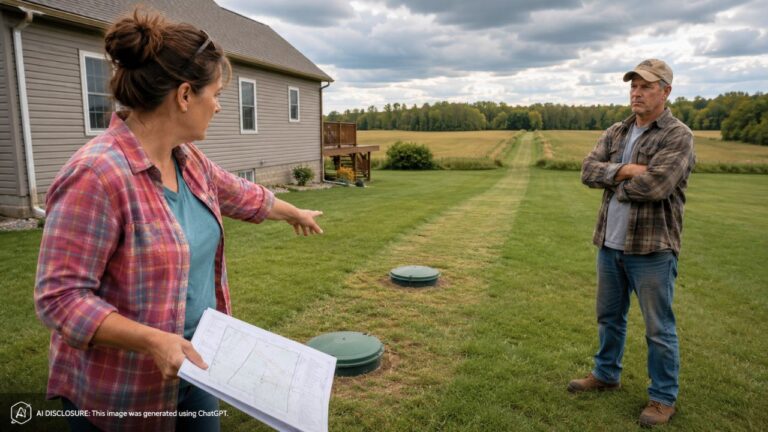
But when the new fence was going in, the family claims the developers moved the line closer to the Pattersons’ home. Not a cosmetic change—something that, if true, shrinks the buffer around the house and changes how the side yard functions day-to-day.
When the line moves, everything around the house changes
Homeowners don’t always think about how much that narrow strip beside a house does until it’s gone. It’s access for maintenance. It’s room for ladders. It’s the space you squeeze through to check siding, look for termites, clear leaves, or deal with drainage issues before they become foundation issues.
It’s also safety. The City of Houston statement included in the report explains there isn’t a specific ordinance requiring fences to be three feet from a home, but the city uses “three feet as a guidance for emergency escapes.” The city also noted that a fence can’t block access to a meter box or meter can, and that fence placement can’t create a life safety issue with the existing property.
So even without a neat “fence must be X feet away” rule, the practical stakes stay high. A fence that inches in can make a home feel boxed in—and can create real problems if it blocks emergency egress windows or limits access where first responders might need room.
They spoke up—and got hit with an eviction notice
Frankie Patterson said the family felt the developers were counting on them staying quiet. “Those developers are coming out here, you know, just doing what they want to do, and they feel, you know, we’re not going to say anything,” she said. “We’re not going to bite…”
Once the Pattersons questioned why the fence line was moved, the tone shifted fast. Instead of a back-and-forth conversation like before, the family says they received an eviction notice.
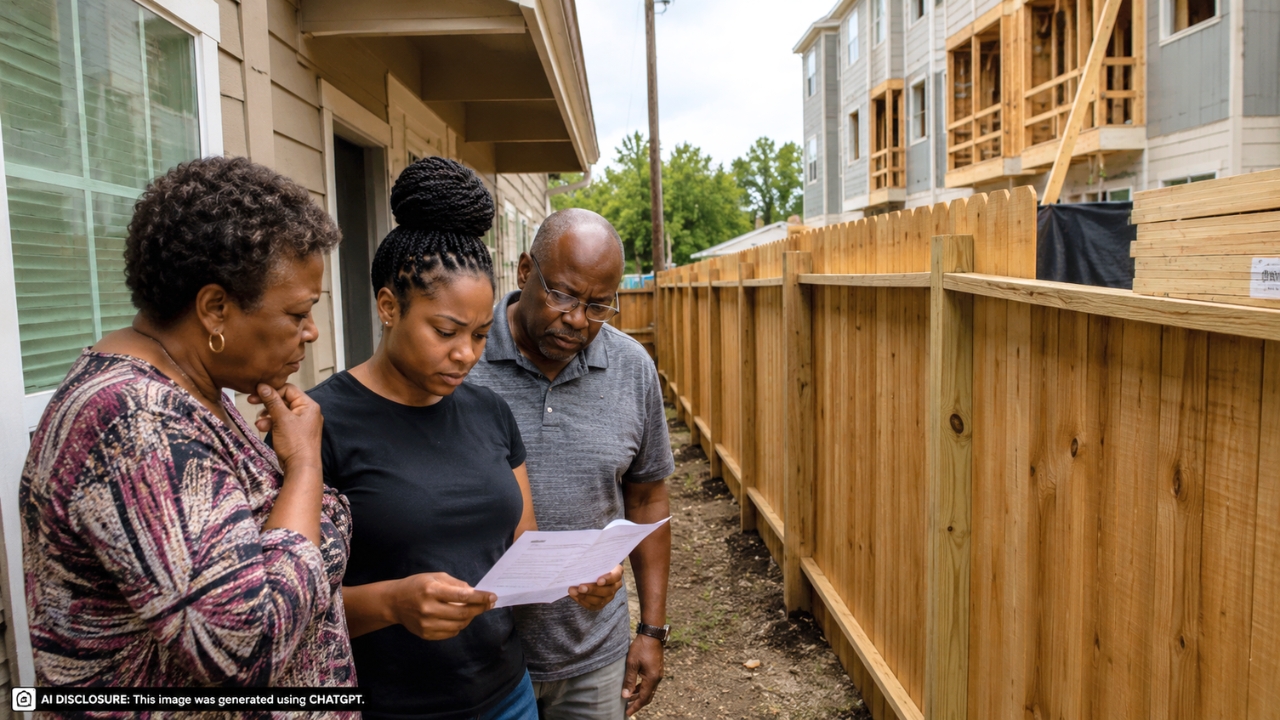
The letter the Pattersons shared with KPRC 2 included this warning: “Should you and your fence still be remaining at the property three days from the day this letter is delivered, New Signature will commence forcible entry and detainer proceedings against you.”
For homeowners, that kind of wording lands like a punch. Even if you’re confident the property is yours, an eviction threat can rattle a family—because it signals the other side is willing to escalate, and because legal paperwork (or something that looks like it) can be used to intimidate people into backing down.
Their next move was paperwork, not shouting over the fence
Danielle Patterson, Frankie’s daughter, didn’t just assume the letter was legitimate—or ignore it and hope it went away. She went looking for filings.
According to the report, Danielle visited the county clerk’s office and searched for eviction filings. She said she didn’t find anything in her parents’ names or under New Signature Homes LLC.
“We feel it was a bully tactic and we didn’t want to play or assume it was a bully tactic,” Danielle said. “We went straight to the courts.”
That’s the part that will sound familiar to anyone who has dealt with a property line dispute: the argument isn’t won with a louder voice. It’s won with records. Surveys. Filings. The unglamorous stuff you can hand to a judge when the other side is acting like the facts are flexible.
A judge presses pause, but the clock is still ticking
The Pattersons filed a lawsuit, and the dispute landed in civil court. The report says a judge issued a temporary restraining order blocking any new fence installation for two weeks, giving both sides time to try to work it out outside of court.
That kind of short-term order doesn’t “solve” the underlying problem. It’s more like hitting the pause button before concrete gets poured—because once a fence is installed, moving it later gets messier, more expensive, and more likely to spark more retaliation.
After the hearing, KPRC 2 spoke to the developer’s attorney, Nicholas Martinez, who did not have a comment.
Frankie Patterson’s position was simple and exhausted at the same time: “I don’t want to go to court, you know. But this is where we are now.”
Homeowner reactions tend to focus on proof and safety
When fence disputes pop up in homeowner circles, the advice usually isn’t “go argue.” It’s “document everything.” The Pattersons’ response lined up with that instinct: search the public records, confirm what’s actually been filed, and move quickly through the court system once a threat arrives.
There’s also the safety angle raised by the city’s statement. Even if property lines are the central issue, a fence that tightens the space beside a home can create secondary problems—blocked meter access, reduced maintenance access, or concerns around emergency escape routes.
And that’s what makes these battles so draining. You’re not only defending a line on a map. You’re defending the livability of your own house: the space to repair it, access it, and feel secure in it.
For now, the fence is on hold for a couple weeks, and the Pattersons are doing what many families end up doing when a neighbor dispute turns hard-nosed—letting the paperwork speak. The uncomfortable part is that they’re still waking up in the same home they’ve owned for years, with the next-door boundary suddenly feeling like a moving target.
Like Fix It Homestead’s content? Be sure to follow us.