Septic Operator Is Charged With Dumping Sewage on a Neighbor’s Land — Then Arrives Thirty Minutes Late to the Hearing on His License
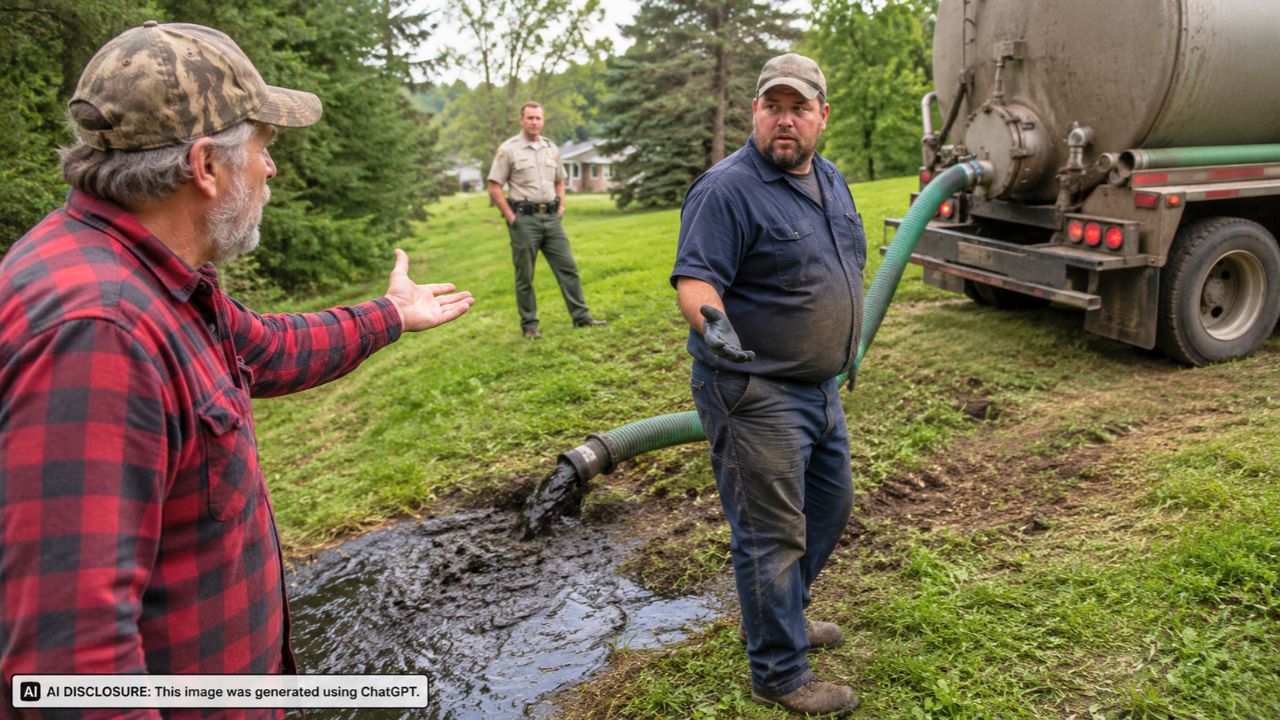
Photo credit: AI-generated image created using ChatGPT. Illustrative only.
There’s a special kind of dread that hits when you realize something nasty didn’t just “happen nearby” — it happened on the land you mow, walk, and planned to enjoy. In Virginia’s Northern Neck, neighbors say that’s exactly what they were dealing with after raw or partially treated sewage was allegedly dumped onto private property, followed by a fire in the same area.
Now the septic operator at the center of it, Douglas Berry, is facing criminal charges and a threat to his professional license. And in a detail that didn’t help the optics, Berry arrived 30 minutes late to an informal fact-finding conference with state regulators, as reported in the original post.
The first “you’ve got to be kidding me” moment: sewage where it doesn’t belong
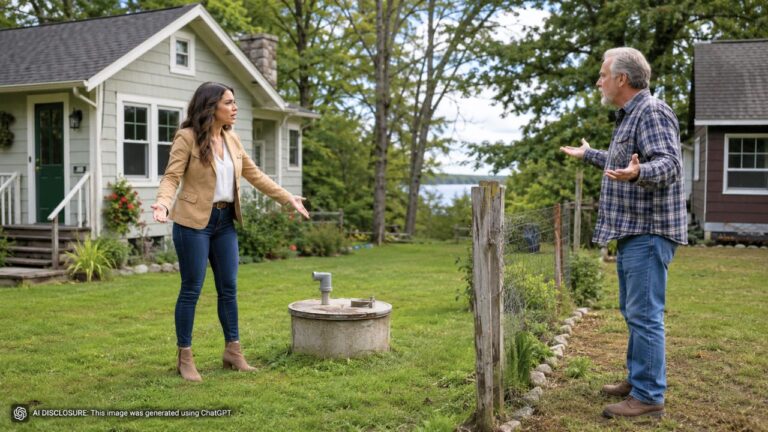
The allegations trace back to October 2024. Investigators say Berry dumped raw or partially treated sewage onto a neighbor’s property, then set fire to the area. If you’ve ever lived rural, you know how fast “a weird smell” turns into “something is wrong,” especially when it’s not your own system failing.
A neighbor, Charles Lomax, described what he believed he was seeing in a cell phone recording: “Second dump in less than 3 or 4 hours,” he said, referring to alleged waste on Sam McGill’s property.
Sam McGill’s wife, Ashley McGill, didn’t mince words about what it looked and smelled like. “I’ll just be graphic — it was tampons, toilet paper, it was super, super smelly,” she said. That’s the kind of detail that takes this out of “messy contractor dispute” territory and into “biohazard on someone’s dream property.”
When the paperwork catches up: missing gallons and a reported admission
This wasn’t just about one ugly day on one parcel of land. The Virginia Department of Health (VDH) had already taken a hard look at Berry’s operation. CBS 6 previously reported that VDH determined at least 20,000 gallons of sewage were unaccounted for from Berry’s operation over a six-month period.
Then came a detail that’s hard to ignore in any neighbor dispute: state records showing Berry told officials on October 22, 2024, that he had discharged “probably three or so pump truck loads or about 6,000 gallons of sewage onto the ground.”
If you’re the homeowner on the receiving end, that kind of statement changes everything. It’s no longer just “we saw something.” It becomes a fight over what was dumped, where it went, whether it soaked into soil, and what it might do next time it rains.
The fire made it feel like more than a cleanup job
The next day, according to the report, VDH received a complaint that Berry “had set fire to the area where the state representatives had previously observed the sewage.” To neighbors, that reads like escalation — and like someone trying to make the problem disappear fast.
Sam McGill captured cell phone video of what he said was happening. “I’m on my property, there is nobody here, you see this, you’ve got a big fire over there and there is nobody here,” he said.
At the later regulatory conference, the McGills were allowed to speak. Ashley McGill pointed to what she described as an admission in the records: “He’s already admitted and confirmed to VDH he did in fact dump it, it’s right here,” she said. Sam McGill was equally direct about what he believed burned: “I was there for that fire, and it was sewage burning,” he said.
Anyone who has dealt with smoke drifting across property lines knows how that turns neighbor tension into something that affects your daily life. It’s not just unpleasant. It’s the feeling that you don’t control what’s happening on your own land.
The license hearing: 30 minutes late, camera moved, and no answers from the operator
Berry’s appearance before the Department of Professional and Occupational Regulation (DPOR) was about whether his professional license stays intact. He arrived 30 minutes late to the informal fact-finding conference. Once he arrived, DPOR’s Director of Adjudication, Free Williams, told CBS 6 that Berry might refuse to participate if the news camera wasn’t moved to a different location in the room. The station moved it.
Berry didn’t speak during the conference. His attorney, George Townsend, told DPOR: “Mr. Berry, on advice of counsel, is not going to make any statements today.”
Williams tried to pin down the central question — the one every property owner wants answered when their land is involved. “Is it Mr. Berry’s position that he did not dump the sewage from his trucks on the property?” Williams asked.
Townsend didn’t offer a straight yes or no. “Mr. Berry contends that he did not dump — well, I can’t say anything beyond what is in the file,” he responded.
Cleanup photos, “impeccable reputation,” and the fight over what’s true
Townsend’s defense leaned heavily on Berry’s standing in the community and efforts after the fact. He told regulators the photos submitted showed “the extent of the clean up on the property that was taken by Mr. Berry on a voluntary basis.”
He also pushed back on some allegations, saying claims like destroying evidence by burning “all those things aren’t true” and that Berry could show compliance with the Department of Environmental Quality (DEQ) process.
And then there was the character argument — the kind that always shows up when a local business owner is suddenly facing public accusations. Townsend said Berry had “been involved in septic disposal for almost 30 years” with “never had any history of any sort of problem, no infractions, nothing.” He added, “If you look at the letters in the file we submitted, he’s really a person who has had an impeccable reputation.”
That may matter to licensing boards. But to a homeowner standing on land where sewage was allegedly dumped, reputation doesn’t remove what they say they saw, smelled, and recorded.
What neighbors keep circling back to: proof, permits, and what happens next
This is the part of these stories that homeowners recognize instantly: the real battle isn’t just the mess — it’s the documentation. In the reporting, cell phone recordings and videos are a big part of the timeline, along with state records about missing sewage volume and alleged statements to officials.
On the regulatory side, Berry’s business already took a major hit. VDH revoked the sewage handling permit held by Berry’s business, Berry’s Septic Pumping. DPOR is now looking at two potential violations: one related to the permit revocation, and another alleging Berry failed to notify DPOR in writing within 30 days of the disciplinary action.
The next step is DPOR’s full board meeting on April 23. They’ll consider a recommendation from Erica Duncan, the board member who attended the fact-finding conference. The range of outcomes is wide: no action, probation, a fine, or pulling Berry’s license.
For the neighbors living next to the property at the heart of this, that pending date probably feels far away. When sewage has been on the ground — and especially when fire enters the picture — it stops feeling like a dispute you can “wait out.” It becomes the kind of thing you keep thinking about every time the wind shifts or a storm rolls in.
Like Fix It Homestead’s content? Be sure to follow us.