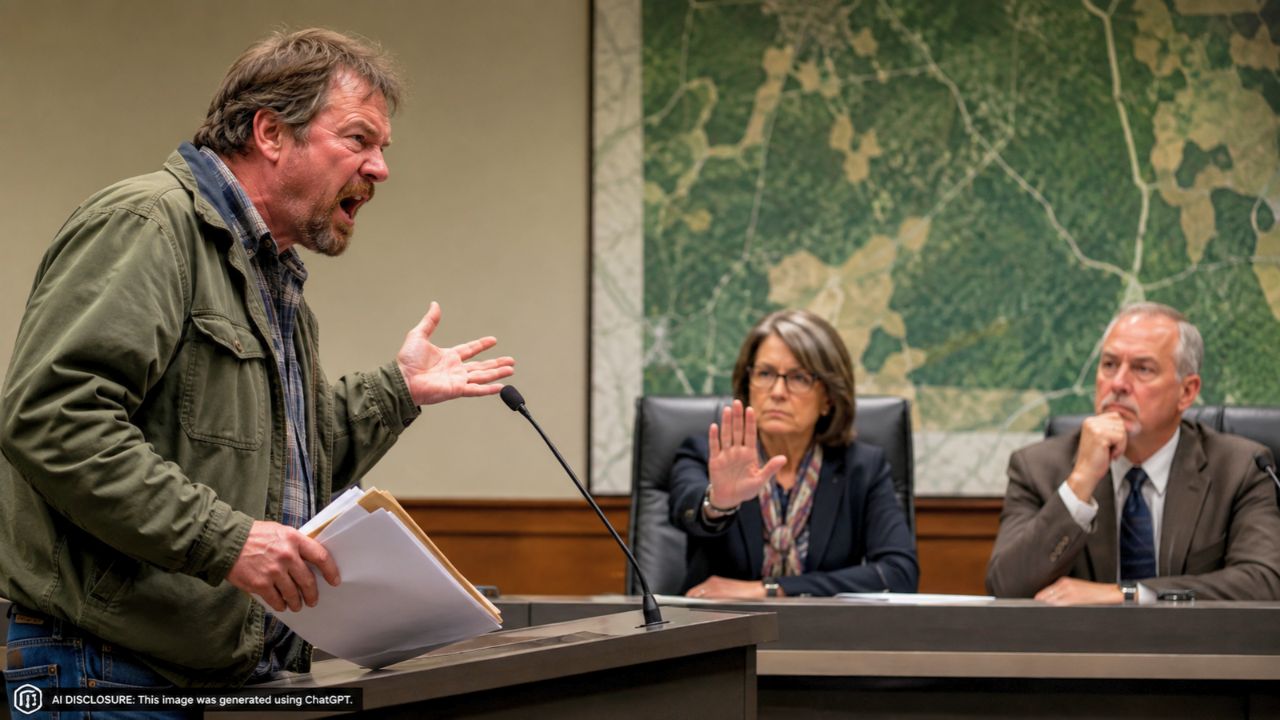
Lewis County Landowner Petitions to Erase the Access Road Easement Crossing His Property — Then the Commissioners Vote Him Down Unanimously Over Public Forest Access
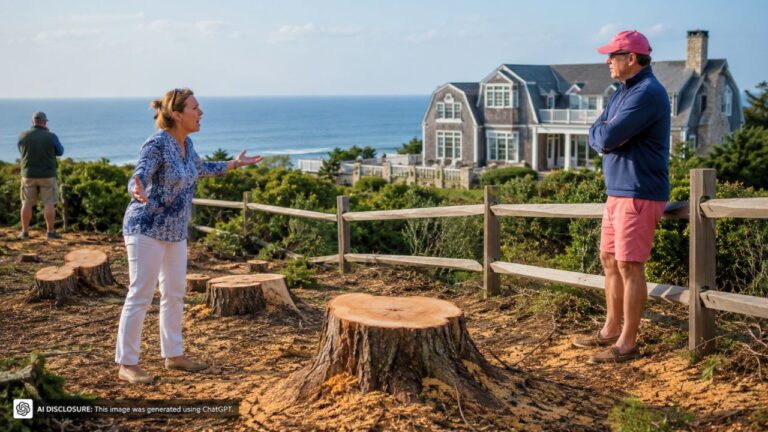
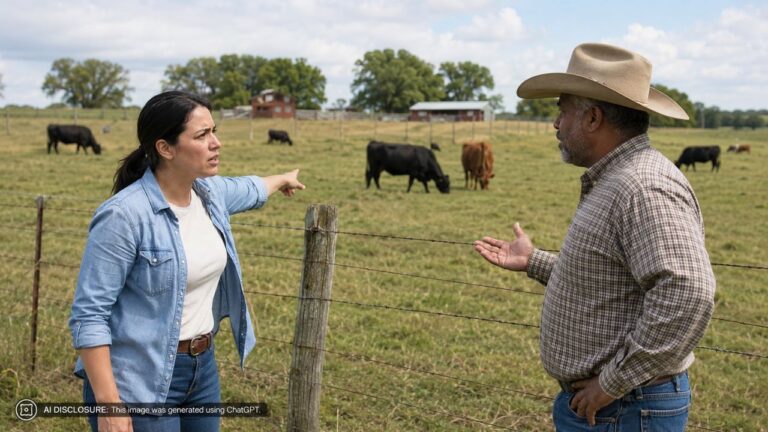
Photo credit: AI-generated image created using ChatGPT. Illustrative only.
Out on the rural edges of Lewis County, access isn’t just a convenience. It’s the difference between a public forest you can actually use and a map that only looks public on paper.
That’s why a small strip of road near the end of Mattson Road—an access easement cutting through private property—turned into a bigger-than-it-looks showdown this week. In the source report, county commissioners unanimously shut down a landowner’s request to start the process of vacating that right-of-way, after residents warned it would effectively lock people out of thousands of acres of state-owned forestland.
A “little” road with big leverage
The request in front of the Lewis County Board of Commissioners wasn’t to pave a new road or widen an old one. It was to erase a short access road and easement that crosses privately owned land and leads toward a large area of state-owned forest.
These are the kinds of roads that don’t look like much to someone who doesn’t use them. A gate. A gravel track. Maybe a spot you’d miss if you weren’t looking. But in rural areas, that narrow corridor can be the only thread connecting the public to public land.
County commissioners didn’t even agree to take the first step. The resolution on the table would have directed county staff to examine the land proposed for vacation and report back with a recommendation. The board voted against that resolution—unanimously.
The public comment that hit a nerve: “the only way that you can get in is through that gate”
During public comment, a local resident, Eric Diesch, described what it’s like trying to access the state land without that right-of-way. He told the board he’d spent years trying to get in legally, including an attempt that turned into a long loop.
“I did an over 7-mile loop trying to find access from Mattson to get in … I couldn’t find it,” Diesch said. “There’s miles and miles of road back there that the only way that you can get in is through that gate.”
If you’ve ever lived near working timber ground, you know this pattern: the public land exists, but the access points are narrow and specific. Miss the legal entrance and suddenly you’re staring at posted signs, locked gates, and the nagging worry that one wrong turn turns into trespassing.
Diesch also told commissioners he’d had hostile encounters with private landowners he believed were preventing access to public land—including encounters with the landowner requesting the vacation. He said he continued accessing the land only after confirming with county staff that the route was public via the county right-of-way.
And then came the line that’s going to stick with anyone who hunts, hikes, or just wants their public land to stay public: “If this right-of-way or this easement goes away, we’re effectively creating a private game reserve for one person,” Diesch said.
The paperwork argument: “Vacate it if it hasn’t been open for five years”
The landowner’s petition leaned on a specific piece of Washington law: RCW 36.87.090. In plain terms, it says a right-of-way that hasn’t been open to public use for five years or more should be vacated.
According to the report, the petition didn’t include other reasoning for why the road should be vacated—just that legal hook.
Anyone who has dealt with rural access knows how messy “open to public use” can get in practice. A road can be physically passable but socially “closed” if neighbors intimidate people, if signage is confusing, or if there’s a gate that looks private even when the right-of-way says otherwise. People stop using it because they don’t want a confrontation, and then the lack of use becomes its own argument later.
This is where homeowner and landowner life gets weird: a road can exist on the books and still feel unusable on the ground.
County staff warned it wasn’t just one property at stake
Lewis County Public Works staff didn’t treat the petition like a minor boundary clean-up. Public Works Director Geoff Soderquist and County Engineer Wes Anderson told commissioners the petition was signed by only one landowner, and that vacating the right-of-way would render other rights-of-way and access roads inaccessible.
That detail matters because it undercuts the idea that this is a simple “my land, my choice” request. If an access easement is part of a chain—one segment unlocking another—then removing one link can collapse the whole access route.
Staff also said the other landowners served by that access road aren’t a handful of neighbors on quarter-acre lots. They’re government entities, including the Washington State Department of Natural Resources, along with state trusts.
Commissioner Scott Brummer added that he believed it to be a well-used access road for DNR. And the reporting points to maps showing the road offering access to thousands of acres of forest land owned by various state agencies, trusts, and in some cases private timber companies like Port Blakely and Weyerhaeuser.
There’s also a money-and-mission layer here that’s easy to miss if you don’t follow timber country politics: state trust lands are working timber lands, and revenue is dedicated to public education and other public institutions. It’s not just recreational access on the line, at least in principle—it’s access to land managed for public benefit.
The part that made locals nervous: how common road vacations usually are
One reason this vote landed with a thud is that vacating rights-of-way is usually not rare. Counties often give up small slivers of unused land tied to old projects—paper roads, dead-end spurs, odd triangles left over from earlier plans.
But this time, the board didn’t even greenlight a closer look.
That’s a tell. It suggests commissioners saw the request as more than routine housekeeping and didn’t want to start a process that could end with public access getting pinched off. The report also notes the worry echoes a bigger issue seen elsewhere in Washington—when large land purchases or policy changes suddenly change what locals have always treated as usable access.
In rural communities, access is a fragile agreement. Once people believe a route is “gone,” it can take generations to restore it—if it ever comes back.
The real-life homeowner angle: gates, maps, and the headache of proving where you can drive
This is the kind of property-line drama that doesn’t stay theoretical. When an easement crosses private land, everyone ends up living with the daily friction: gate etiquette, road maintenance questions, dust and noise complaints, and the constant suspicion that “the other side” is pushing the limits.
And for regular residents trying to reach public land, the cost is time and stress. Diesch described a seven-mile loop trying to find another way in. That’s fuel, daylight, and wear-and-tear just to confirm what you already suspected—that without that particular path, you’re effectively boxed out.
The commissioners’ unanimous vote doesn’t magically fix the underlying tension between private ownership and public access. But it does keep the legal doorway open for now, and it signals that Lewis County leadership isn’t eager to help turn a public access route into a dead end.
Out there near Galvin—off Lincoln Creek Road, near the end of Mattson—this wasn’t just a vote about a strip of ground. It was a vote about whether “public land” still means something once you get to the gate.
Like Fix It Homestead’s content? Be sure to follow us.