10 Reasons a Gate Stops Working in Cold Weather
Photo credit: Deek/Shutterstock.com
Cold snaps have a way of turning a perfectly normal gate into a daily fight. One morning it drags, the next it won’t latch, and by the weekend the opener just clicks and gives up. Most winter gate problems come down to small shifts, stiff parts, weak power, or water that got into the wrong place.
1. Frost Heave Lifts Gate Posts
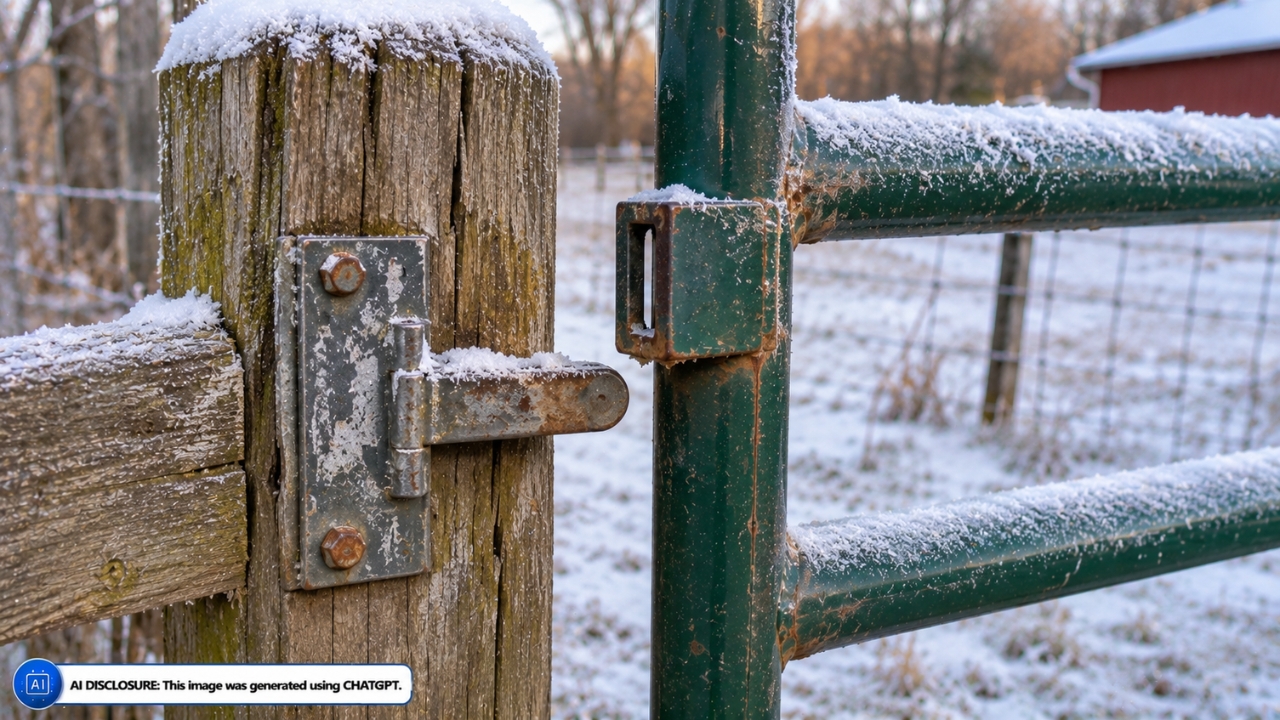
Your gate was fine in October, then January hits and the latch side is suddenly an inch too high. Frost heave pushes posts and footings up as the soil freezes, especially in clay or wet ground. You’ll see new gaps at the hinge side, a latch that won’t line up, or a gate that swings open by itself because the slope changed.
Don’t start by cranking on hinge bolts until everything is maxed out. First, check the post with a level and look for fresh cracks around the base. If the post is moving every winter, the real fix is deeper footings below frost line or re-setting the post in better-draining gravel, which is a warm-weather job. For a temporary winter fix, adjust the hinges just enough to latch and plan the permanent repair when the ground thaws.
2. Wet Soil Turns to Hard Ruts
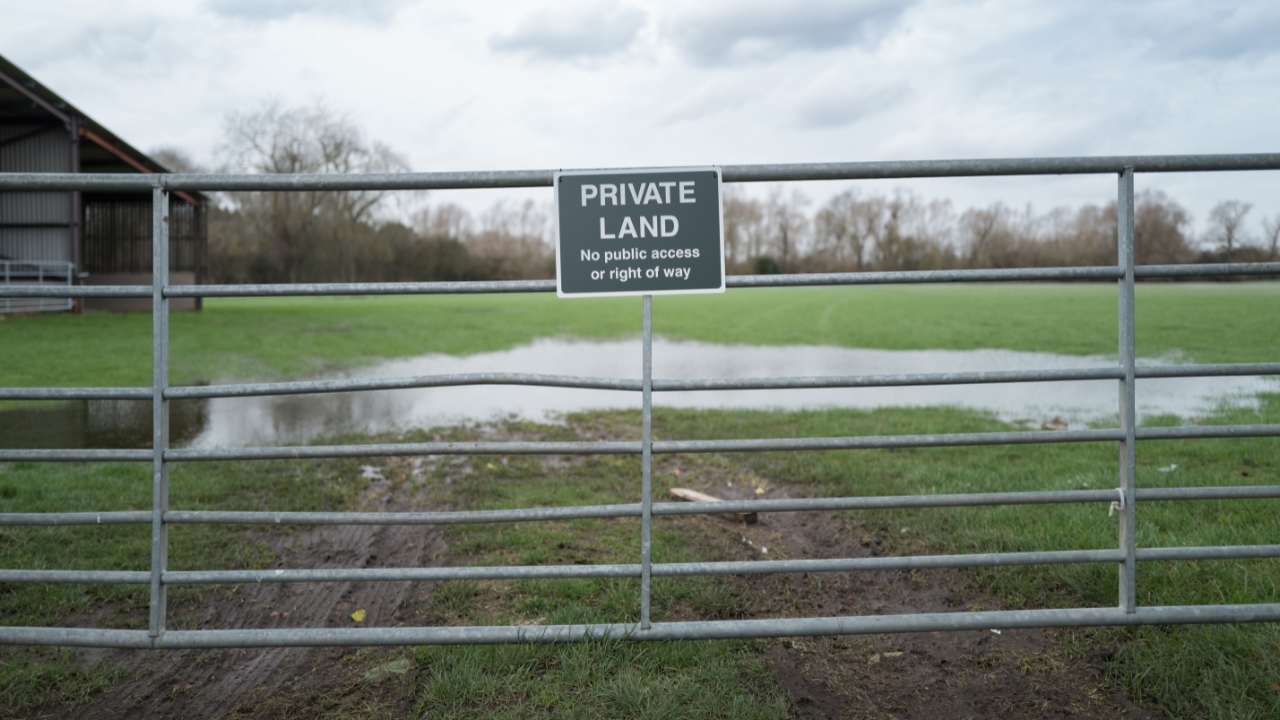
A swinging gate needs clearance, and winter steals it. Mud ruts freeze into rock, a gravel drive heaves, and that “just barely clears” gate starts scraping. You’ll hear it first, a grind at the bottom corner, then you’ll see metal shavings or a fresh gouge in wood.
Chip and shovel the high spots back down and pull snow away from the swing path before it packs and freezes. If the drive edge is the culprit, add a thin layer of gravel once things soften, then rake it smooth so water runs off instead of pooling. A cheap square shovel and a digging bar beat fancy tools here.
3. Hinges Lose Lube and Bind
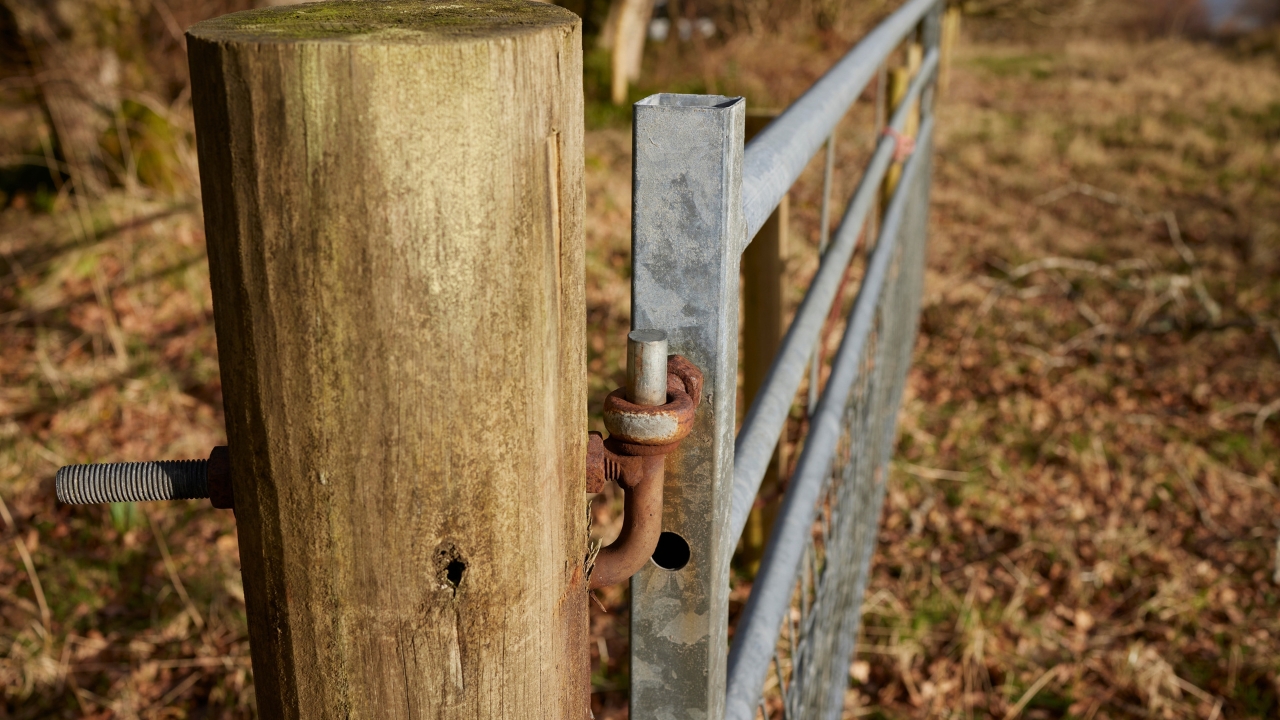
Cold thickens old grease and turns a slightly rusty hinge into a stuck hinge. The gate gets heavy, it won’t swing all the way, or it snaps shut instead of moving smooth. If you’ve got an automatic opener, binding hinges make it work harder until it trips the force limit or burns through gears.
Clean first, then lube. Knock off rust and grit with a wire brush, then hit the hinge pins with a spray that actually penetrates, not just a light silicone mist. For plain steel hinges, a heavier lubricant can be fine in winter, but don’t pack grease into a hinge that’s already full of dirt. Work the gate back and forth after you lube it so it pulls the oil into the pin.
4. Ice Bridges the Latch and Strike
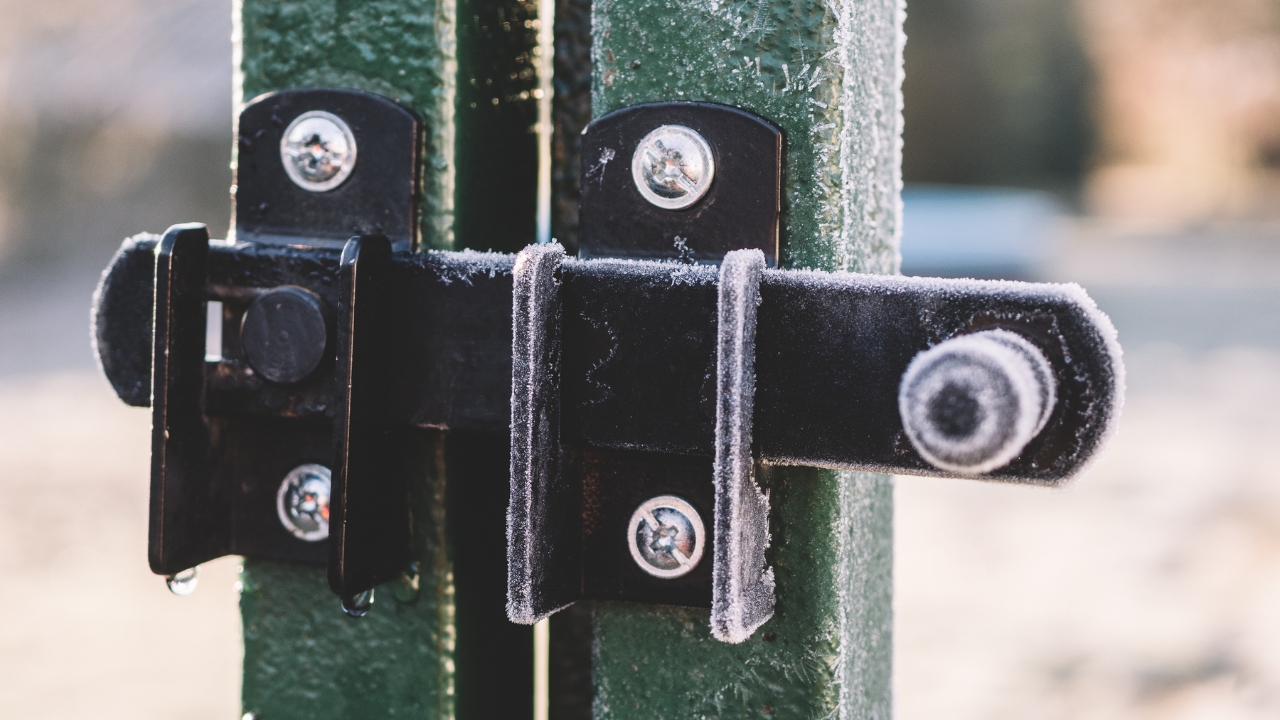
The gate “closes” but won’t latch, or it latches and won’t open. That’s often an ice bridge in the latch cup, around the bolt, or inside a gravity latch. A little meltwater runs in during the day, freezes at night, and suddenly the latch feels welded.
Skip the hammering, it bends hardware and cracks welds. Use warm water, a hair dryer, or a de-icer that’s safe for metal, then dry it out. Once it’s working, add a simple drip edge above the latch area, or move the latch so it’s less exposed to roof runoff. A tiny roof leak can ruin a gate latch all winter.
5. Automatic Opener Batteries Sag in Cold
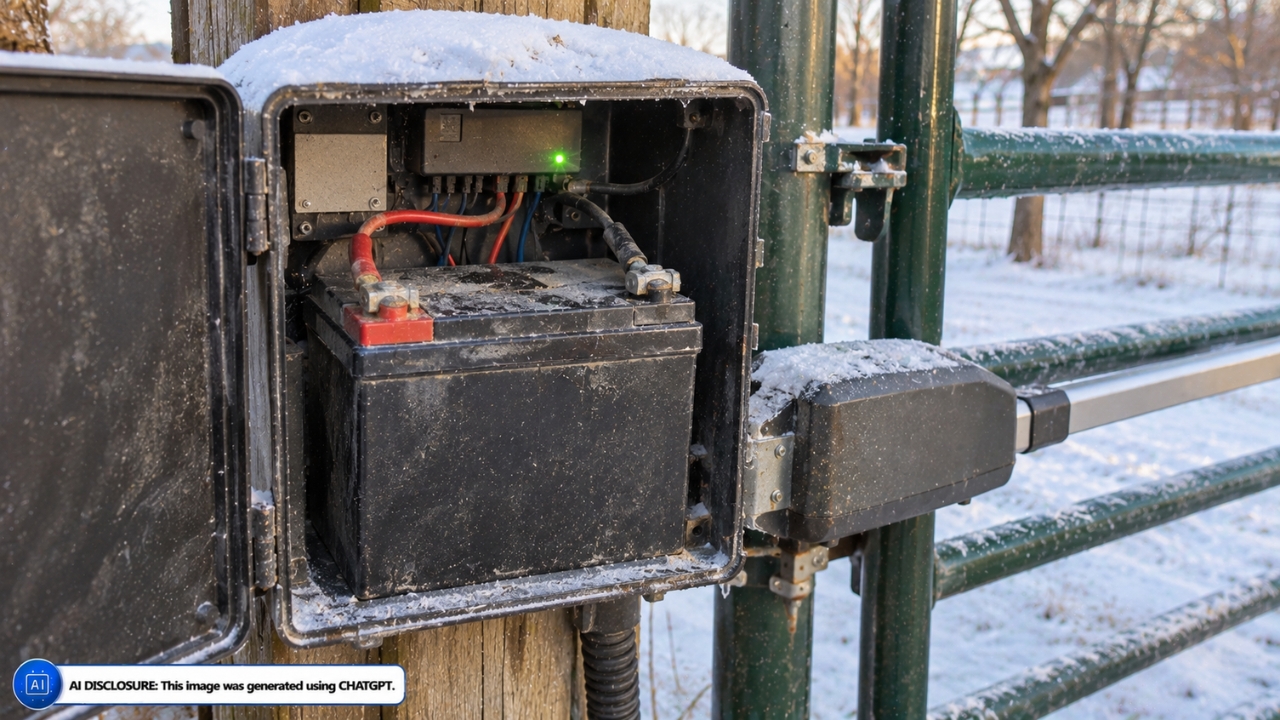
If your gate opener runs on a battery, winter is where weak batteries get exposed. The opener may click, start, then stop, or move slow like it’s tired. Even a decent battery loses punch when it’s cold, and a battery that was already aging will fall on its face.
Start with the easy check: clean, tight terminals. Corrosion looks small but it steals voltage. If the battery lives in a metal box, consider adding insulation and keeping vents clear, or move the battery to a less exposed spot if the manufacturer allows it. If the system is solar-charged, winter sun angles and short days mean you may need a larger panel or a second battery, which is often cheaper than replacing an opener board you cooked by under-voltage starts.
6. Grease Thickens in Gearboxes
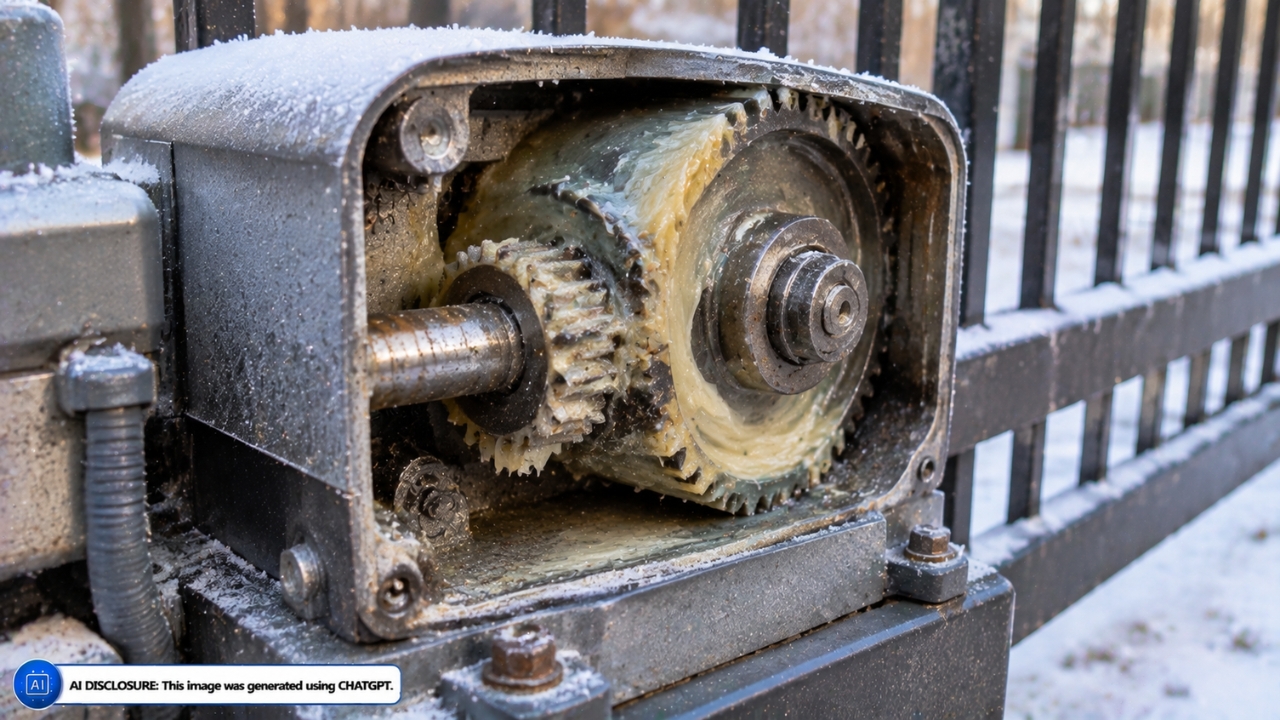
Swing gate operators and slide gate motors usually have a gearbox, and cold turns some greases into taffy. The motor hums, strains, or trips out right at the start. You might also notice it runs fine midday and fails at dawn when everything is cold-soaked.
Check the manual for the lubricant type before you add anything. Some units want a specific cold-rated grease, and mixing the wrong stuff can make it worse. If the operator is older and already noisy, paying a gate tech for a winter service call can make more sense than guessing and stripping gears. Gear parts are not cheap.
7. Snow Packs Into Slide Gate Tracks
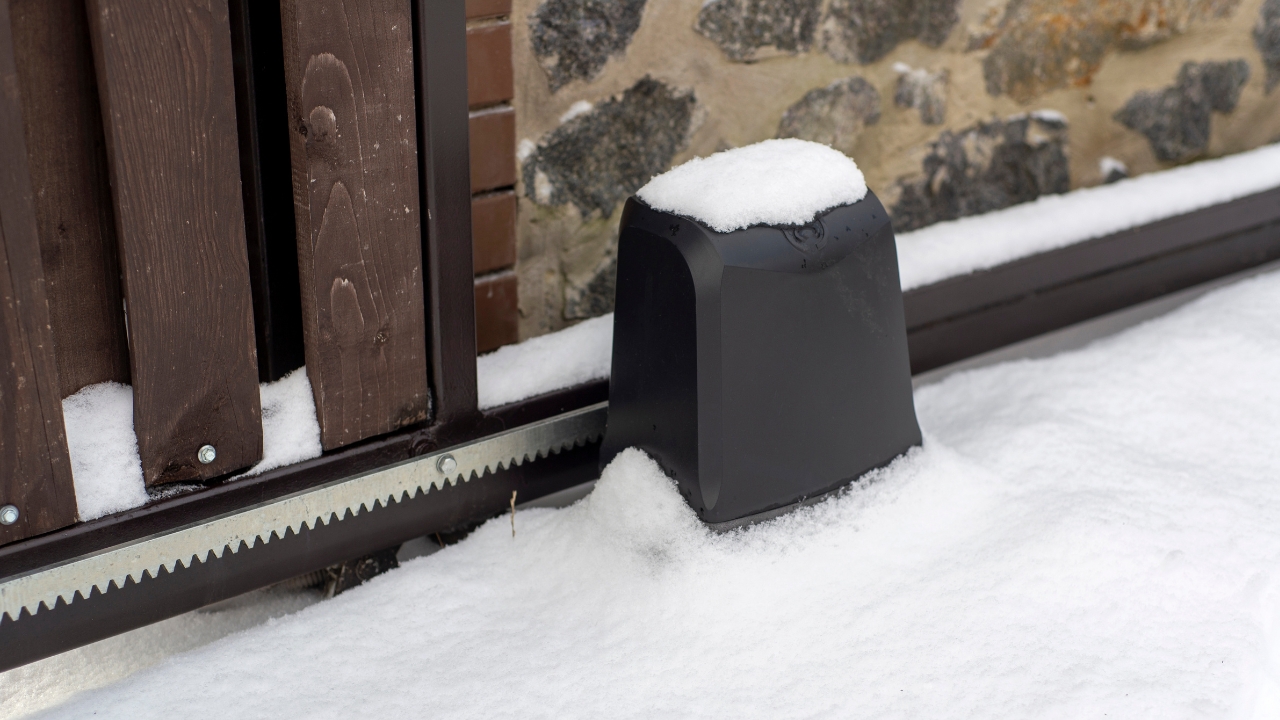
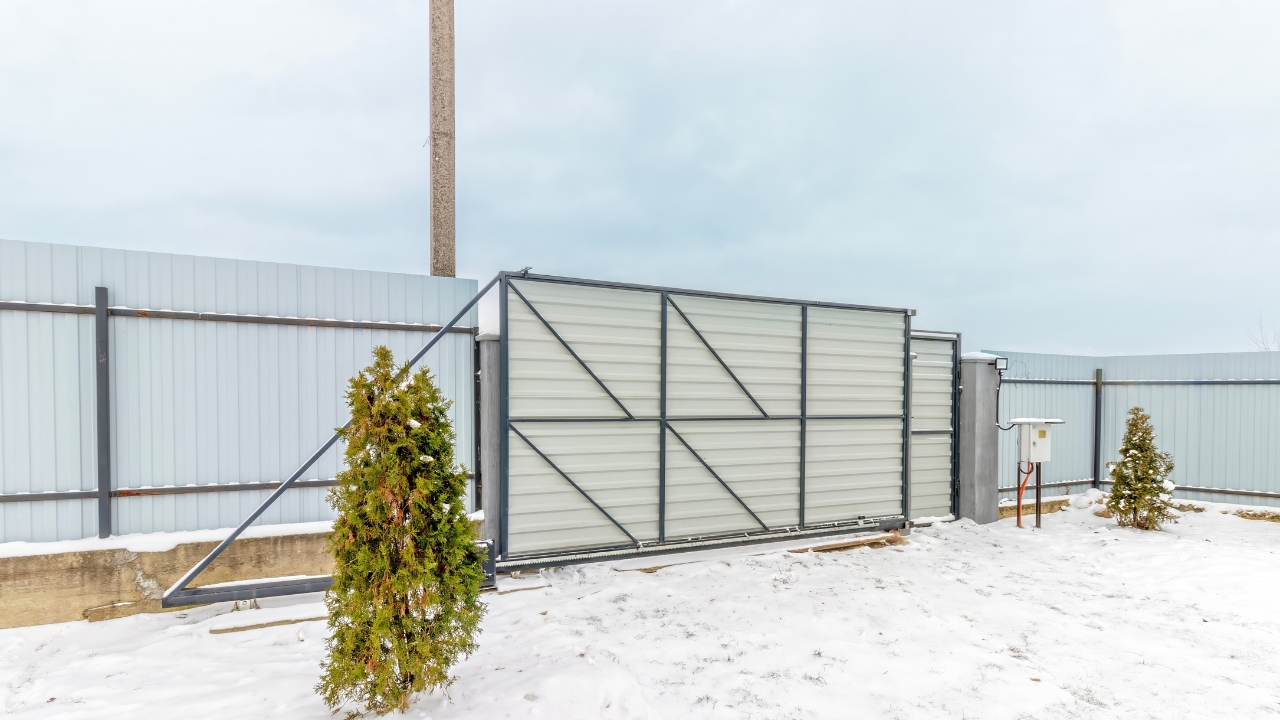
Slide gates fail in winter for a simple reason, the track fills up. Snow blows in, melts a little, then freezes into a ridge that lifts the wheels. The gate shudders, rides up, or derails, and you end up yanking on it until something bends.
Keep a stiff broom and an ice chopper near the gate and clear the track early, before tire traffic turns it into concrete. If you’re using salt, go light, too much can chew up steel and stain concrete. In some setups, a little sand for traction is the better move, messy but it won’t eat hardware.
8. Metal Hardware Shrinks and Loosens
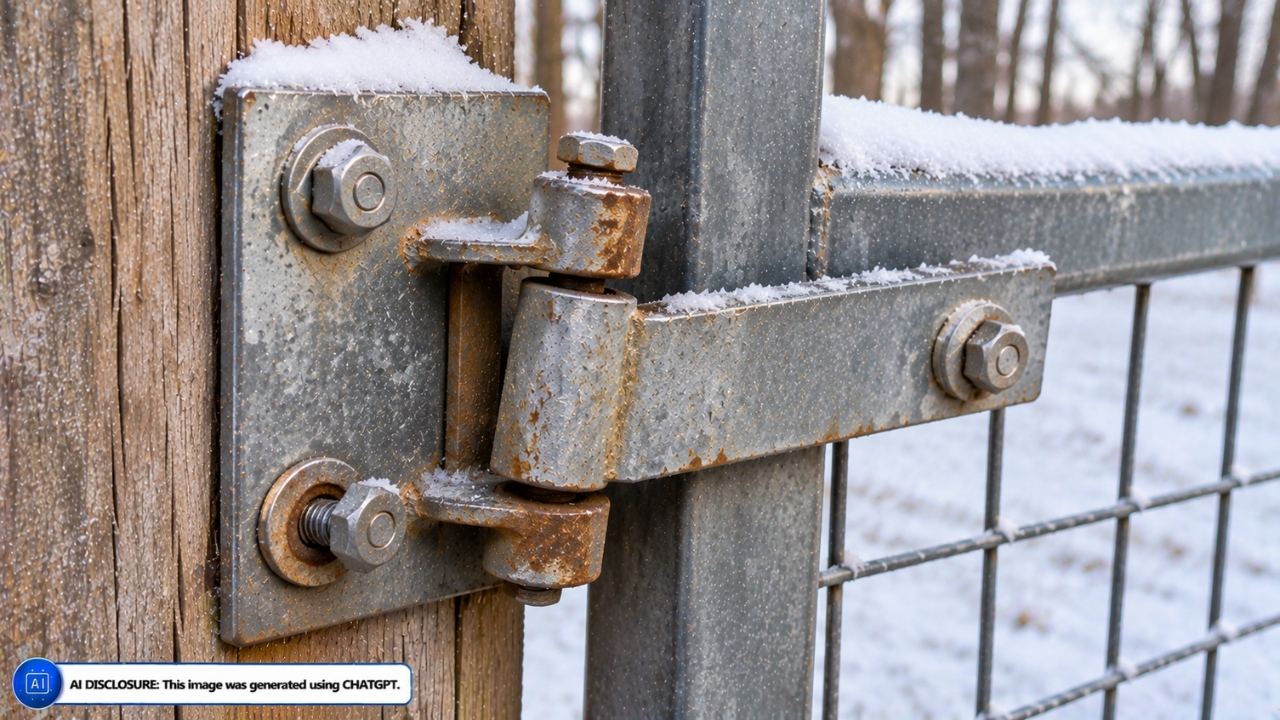
Cold contracts metal, and that shows up as “mystery play” in hinges, latch brackets, and roller mounts. A bolt that was barely tight in summer can start rattling in winter. You’ll hear clunks, see hinge straps shifting, or find the gate dragging because one hinge plate slipped.
Go through with two wrenches and snug hardware, especially on through-bolted hinges and latch posts. Use threadlocker only where you’re sure you won’t need quick adjustments, because winter gate alignment changes. This is one place where the cheap fix is fine: a couple lock washers and proper bolt tension often lasts longer than fancy parts.
9. Water Gets Into Buried Wire Splices
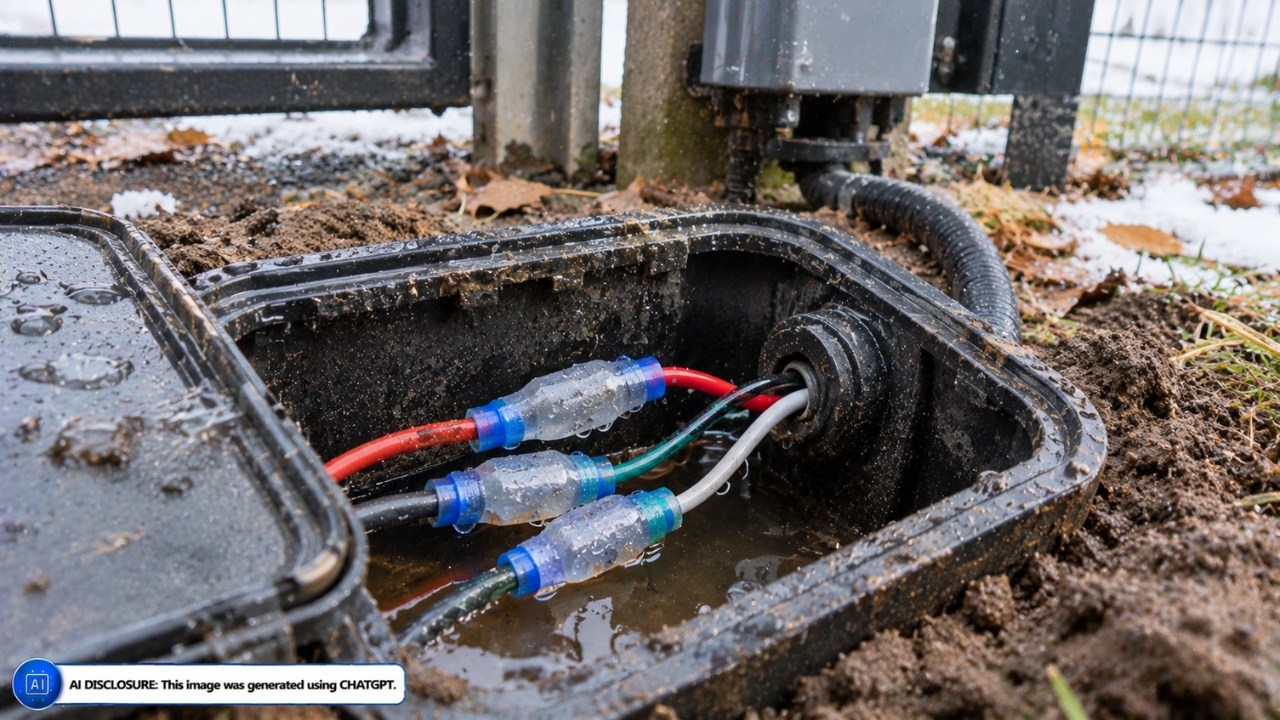
A powered gate that works until it gets really cold, then starts throwing errors, can have water in the wiring. Underground splices are the usual suspect. Water sneaks into a connector, then freezing expands it, breaks contact, and you get random stops, photocell faults, or a keypad that goes dead.
If you have to dig, call 811 or your local utility locate service first, even if you think you know where lines are. Fix splices with waterproof rated connectors inside an approved burial box, not a twist-and-tape job. If troubleshooting has you inside an electrical panel or dealing with mains voltage, stop and call a licensed electrician. Gate controls are fussy, and miswiring cooks boards fast.
10. Wind and Cold Throw Off Close Limits
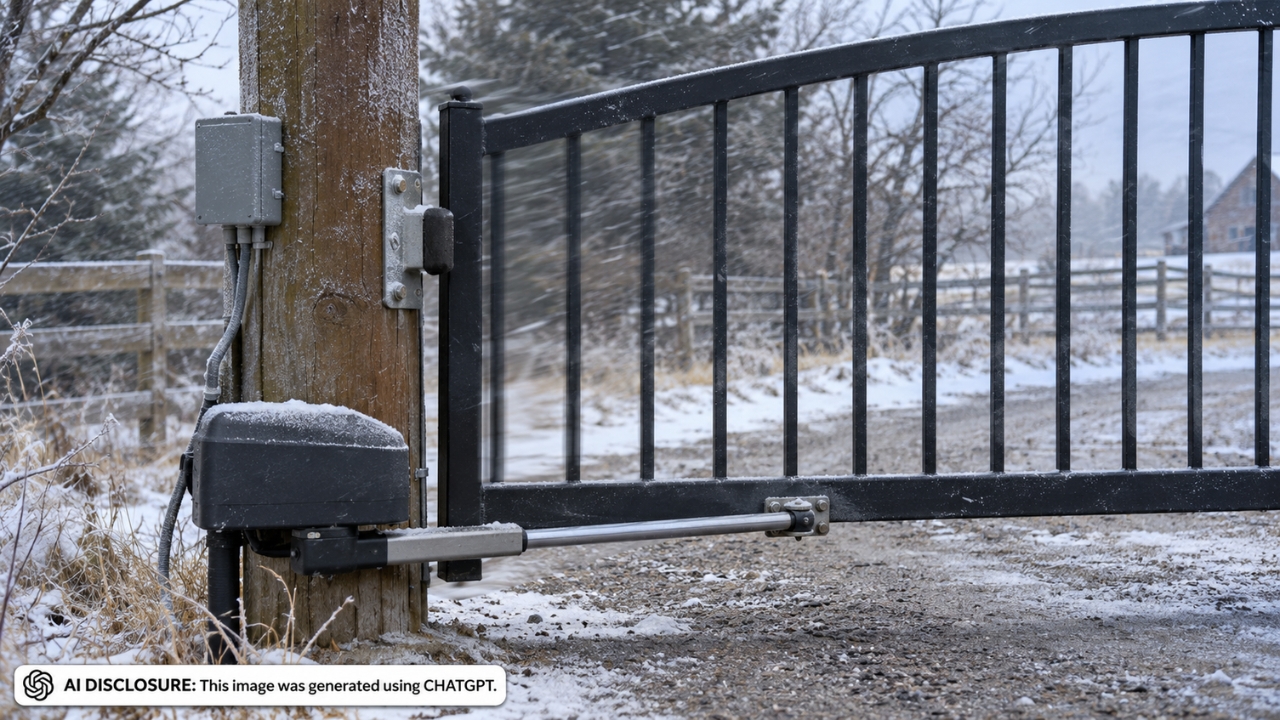
On windy winter days, a gate can hit its close stop harder than usual, or it can bounce and never “see” the final position. That shows up as a gate that reopens right after closing, or an opener that keeps trying to push after it’s already shut. Cold also changes the speed of some systems, which can make limit settings marginal.
Check for loose stop hardware and look at where the gate actually lands versus where the opener thinks it lands. On many operators, limit adjustments are simple, but don’t crank the force up to bully a stuck gate shut. Fix the drag first, then set limits so the gate closes firmly without slamming.
Winter gate problems usually come back to water control, clearance, and power that’s just a little weak. Fix what you can with cleanup and adjustment, then put the deeper repairs on the spring list while you can still open and close the place without a wrestling match.
Like Fix It Homestead’s content? Be sure to follow us.