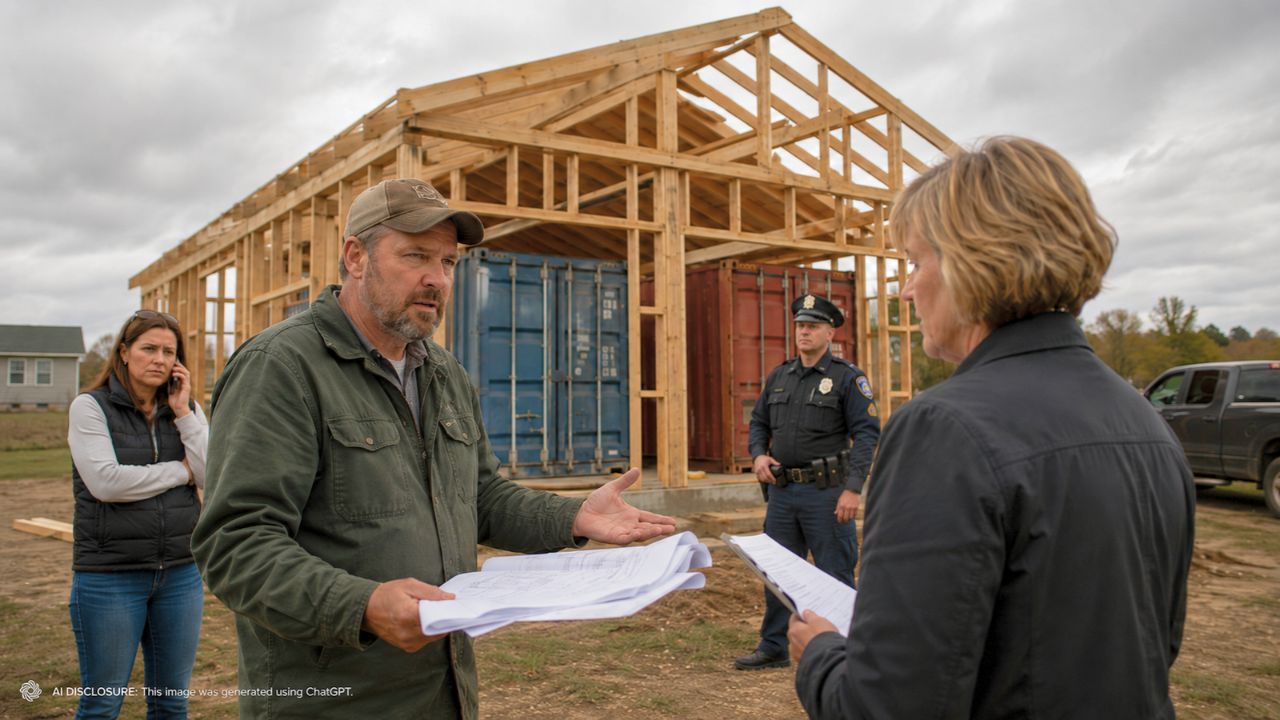
Landowner Wraps a New Barn Around Two Shipping Containers on His .95-Acre Lot — Then the Zoning Board Denies Three of His Four Variances
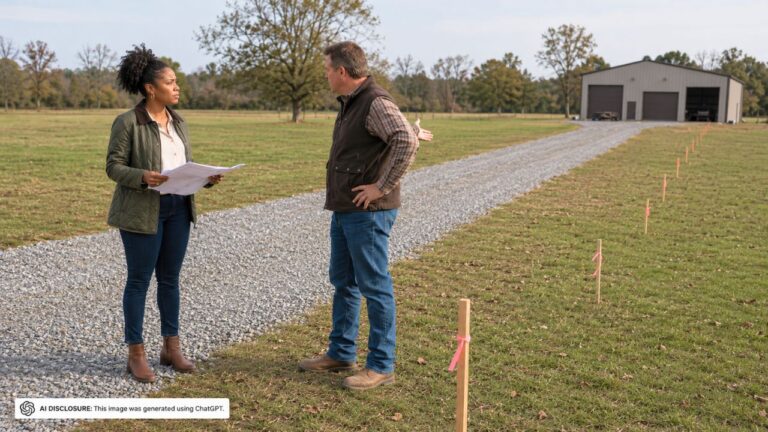
Photo credit: AI-generated image created using ChatGPT. Illustrative only.
On a small .95-acre lot in the Town of Floyd, New York, a landowner tried to solve a storage problem the way a lot of rural property owners do: by setting down a shipping container and calling it practical. Then he added another one. Then he started wrapping a new wooden barn around both containers—only to find out the rules had changed, and the town wasn’t interested in retroactive approval.
The resulting fight ended up in court, and the judges weren’t sympathetic. In the court decision, the Appellate Division upheld the zoning board after it denied three of four variances tied to the second container and the barn plan.
It started with a permit… and then a second container showed up
The owner, Jeffrey Kotary, had a paper trail at first. In 2019, he got a special-use permit to build storage units and a vehicle service garage, and the town later approved one shipping container to be used as a storage unit.
Then he bought and installed a second shipping container without getting zoning approval. That one decision became the hinge point of everything that followed—because the town adopted a new shipping-container law in the window between the first approval and the second drop-off.
The new ordinance generally limited properties to one shipping container per acre and prohibited shipping containers altogether on parcels under one acre. Kotary’s parcel was .95 acres, meaning it fell on the wrong side of that line. Town officials told him the first container stayed lawful because it had been approved earlier, but the second one didn’t.
The “barn around the containers” plan turned into a paper chase
Once the second container was flagged, Kotary tried to fold the whole problem into a bigger project: build a wooden storage building or barn around both containers. It’s the kind of workaround that sounds neat on a sketch—hide the metal boxes inside a more traditional structure and move on.
But the timeline didn’t help him. He started building the barn before receiving a building permit, and the record didn’t show that a permit was ever issued. When he later sought zoning approval, the code-enforcement officer denied the application and told him to seek variances tied to the second container. He was also issued a notice of violation.
That’s when the project stopped being “just storage” and turned into a full zoning-board fight. Variances are where homeowners go when they can’t meet the letter of the code and want permission anyway—and Kotary needed four of them to make the plan work.
Four variances requested, only one partly granted
To keep the barn-and-containers plan alive, Kotary asked for four variances: one to let the barn exceed the maximum height by five feet, one to reduce the required highway setback from 100 feet to 70 feet, one to allow the second container to qualify as an accessory structure, and one to allow a second shipping container on property measuring less than one acre.
Before the zoning board even voted, both the Oneida County Planning Department and the Town of Floyd Planning Board recommended against the project. County planners called the requested variances substantial, said they appeared to come from “self-created hardships,” and pointed out they could be avoided through other available options.
After a public hearing, Kotary got one partial win: the zoning board approved the height variance. But it denied the other three—meaning the setback change didn’t happen, and neither did the approvals needed to legitimize the second container as part of the property’s accessory structures on a sub-one-acre lot.
The board’s big point: this wasn’t a surprise hardship
In New York, zoning boards deciding area variances are supposed to weigh the benefit to the property owner against the potential harm to the community. They can consider whether the change would alter neighborhood character, whether there’s a feasible alternative, how substantial the request is, environmental or physical impacts, and whether the problem was created by the applicant.
In Kotary’s case, the “self-created” factor landed hard. The appellate court emphasized that he installed the second container after the ordinance prohibiting it had been enacted. And starting barn construction before getting approvals didn’t create goodwill either.
The judges also pointed to something that homeowners run into all the time: once you choose a particular design, you can start believing it’s the only design. The court noted Kotary had another straightforward option—build a barn without incorporating the two shipping containers. If the barn didn’t need to be built around those containers, at least some of the variances wouldn’t even be necessary.
That mattered because it supported the zoning board’s view that the barn proposal looked less like a reasonable accommodation and more like an attempt to work around an existing shipping-container violation.
How homeowners reacted: “permits first” and “don’t build yourself into a corner”
Property folks tend to split into camps on shipping containers. One side sees cheap, weather-tight storage; the other sees an eyesore that turns into a semi-permanent structure without oversight. Even without a comment thread attached, the practical homeowner takeaway almost writes itself: once your town draws a hard line—one container per acre, none under an acre—trying to “creative-design” your way around it is a gamble.
The other reaction you hear in these disputes is more basic: do not start construction while you’re still asking permission. A half-built barn frame or site work in progress changes the tone from “proposal” to “defiance,” even if that wasn’t the intent. And when you finally sit in front of a board asking for variances, they’re not just judging your plan—they’re judging whether you respect the process.
People who’ve been through code enforcement will also tell you the same thing county planners did here: if there’s a feasible alternative, the board will want you to take it. A conventional barn that doesn’t depend on a prohibited second container is the kind of alternative that’s hard to argue against.
He went to court, but the judges wouldn’t redo the zoning vote
Kotary petitioned to overturn the zoning board’s denials. But the Appellate Division unanimously upheld the board’s decision and dismissed his challenge.
One key detail in these cases is that courts don’t treat zoning fights like a fresh do-over. The appellate court noted that even if the evidence could have supported granting the variances, judges can’t substitute their judgment for the board’s if the board had a rational basis for its decision.
On a lot that’s just a sliver under one acre, that rational-basis standard is a tough wall to climb. The owner didn’t just run into bad luck—he ran into a new ordinance, a second unapproved container, and early construction that made the whole project feel like it was already in motion.
For anyone watching from the sidelines, the tension is the same one rural homeowners deal with all the time: you can build almost anything if you do it in the right order. Do it out of order, and even a “simple storage idea” can turn into a violation, a variance battle, and a court loss—while your half-finished plan sits there on the land, waiting for a next move.
Like Fix It Homestead’s content? Be sure to follow us.