New Homeowner Notices the Neighborhood Creek Has Gone Stagnant — Then Learns a Neighbor Built an Illegal Dam and Refuses to Take It Down
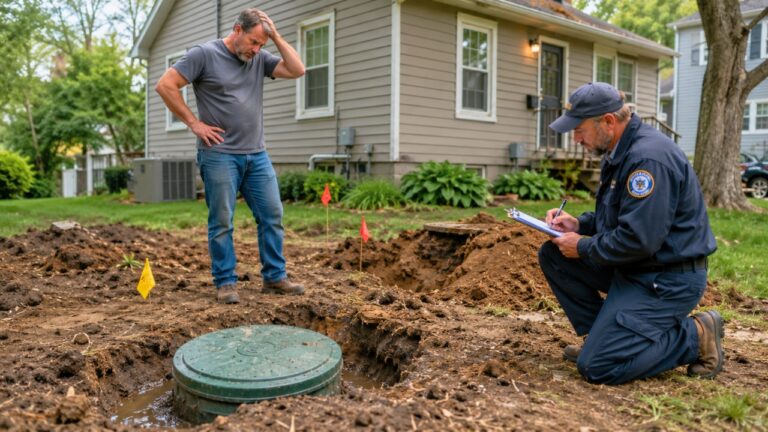
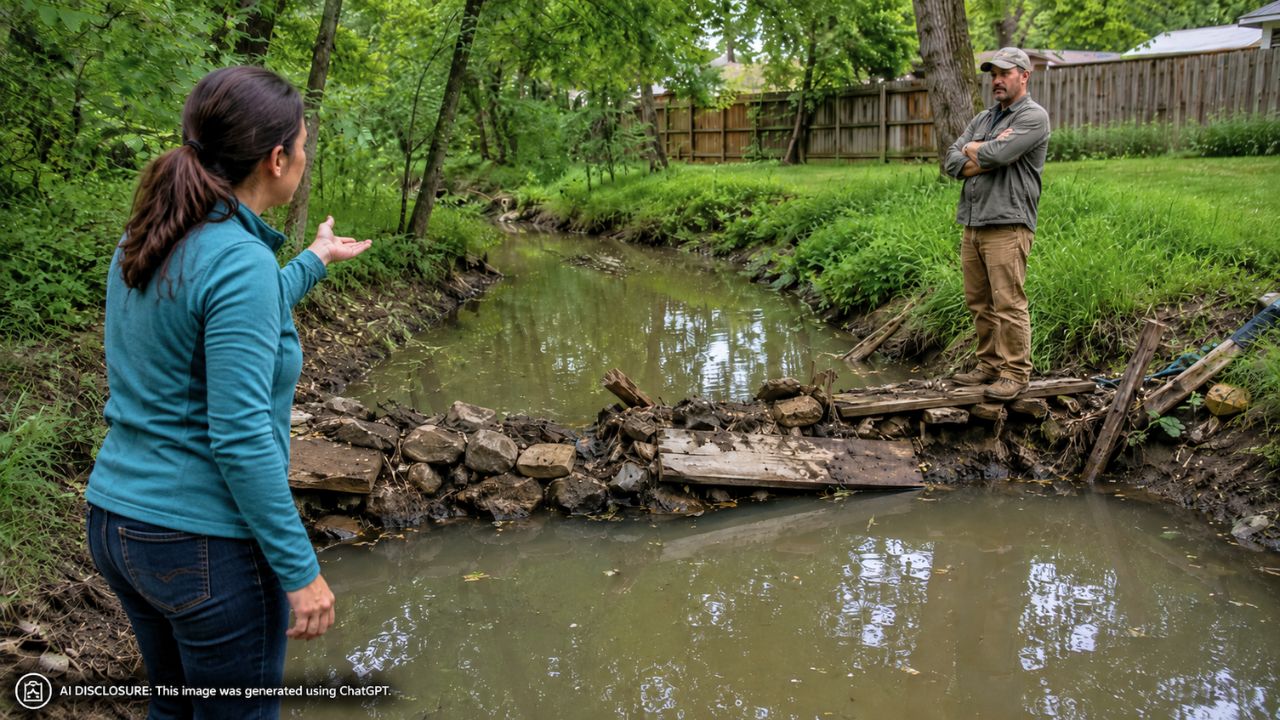
Photo credit: AI-generated image created using ChatGPT. Illustrative only.
When you buy a new house, you expect the usual surprises: a sticky door, a mystery switch, maybe a sprinkler head that doesn’t work. This homeowner’s surprise was outside the fence line—behind a row of backyards where a neighborhood creek had always been part of the scenery.
Not long after moving in, they and several neighbors noticed something was off. The creek water stopped moving and started sitting there, stagnant. Digging around for a cause led them to a blunt discovery, laid out in the original post: a neighbor had built a dam across the creek and wouldn’t remove it.
The first sign was easy to brush off
At first, “the creek looks different” is the kind of thing people chalk up to weather. Texas can swing from heavy rain to dry stretches, and water levels change fast. But this wasn’t just a lower creek or a slower trickle.
The homeowner described a clear shift: water that used to run behind multiple properties had stopped flowing entirely. And once water stops moving, it doesn’t stay neutral for long. It turns murky, warms up, and becomes the kind of backyard feature you avoid instead of enjoy.
Stagnant water changes the feel of the whole backyard
A creek is supposed to be background noise—moving water, birds, the occasional fallen branch after a storm. Stagnant water is different. It’s a smell on hot days. It’s a slick surface that makes you wonder what’s growing underneath.
For homeowners along a shared waterway, this kind of change doesn’t stay contained to one lot. A backed-up creek can creep onto low areas, soak soil longer than it should, and make drainage problems worse. Even if it never floods a yard, it can still turn the whole stretch into a breeding ground for pests people don’t want near patios, playsets, or dogs that love to investigate.
And there’s a social side, too. When something goes wrong behind a line of homes, everyone ends up looking at each other, trying to figure out who touched what.
Then they found the cause: a homemade dam
The neighbors eventually tracked the problem upstream and found what they believe was the source: a dam built by one of the homeowners along the creek. According to the post, there was no permit anyone knew about and no notice given to the surrounding homeowners.
The frustrating part wasn’t just the structure itself. It was the refusal to take it down once multiple people noticed the creek had gone still. In a neighborhood setting, that kind of refusal lands like a dare—especially when the consequences are spreading beyond one person’s property.
The homeowner also had a basic question that a lot of people in their shoes would ask: isn’t it illegal in Texas to block a creek like that?
The real problem: nobody they called wanted to own it
The next chapter is the one every homeowner dreads: making phone calls and getting bounced around. The poster said everyone they contacted had been unhelpful so far, leaving them stuck with a visible, worsening problem and no obvious authority stepping in.
That’s a particular kind of stress when you’re new to a home. You don’t want to start your time in a neighborhood with a feud. You also don’t want to sit quietly while stagnant water settles in behind your fence and becomes the new normal.
When a creek runs behind multiple properties, it can be hard for residents to know who actually has jurisdiction—especially if the creek isn’t a tidy, engineered canal but a natural waterway that’s just always been there. The poster’s experience captured that helpless feeling: they had a clear physical change and a clear suspected cause, but no clear path to enforcement.
Why a backyard dam is more than “one neighbor’s project”
From the outside, it’s tempting to think of this as a petty neighbor dispute—someone built something, someone else doesn’t like it. But blocking flowing water isn’t like putting up an ugly shed. Water has downstream and upstream consequences.
If a creek stops flowing, the backed-up water can spread into areas that weren’t designed to hold it. Soil stays saturated. Erosion patterns change. And if heavy rain hits, that blockage can create a sudden bottleneck that sends water where it didn’t used to go.
Even without dramatic flooding, stagnant water can become a neighborhood-wide quality-of-life issue. People start getting more mosquitoes. The view behind the houses becomes a warm, still basin. Homeowners who chose creek-adjacent lots for the “nature” now get the worst version of it.
And then there’s the resale question nobody wants to think about right after closing: if a creek behind the neighborhood has been altered and now looks unhealthy, does that become a disclosure headache later? It’s the kind of thing that can stick in a buyer’s mind during a showing, especially in summer.
What readers pushed: document first, escalate smart
Even from the limited details in the post, the direction people typically push in these scenarios is practical: don’t make this a shouting match over the fence. Treat it like a property and drainage problem that needs a record.
That means photos of the stagnant water, photos of the dam itself, and notes on when the flow changed. It also means writing down who has been contacted already and what they said, because repeated calls with no paper trail can disappear into the void.
People also tend to caution against taking matters into your own hands. It can feel satisfying to imagine tearing down a few boards and “fixing” the creek, but that can turn the builder into the victim and drag the whole block into a different kind of mess. When water is involved, any tampering can also create damage quickly—especially if something breaks loose during a storm.
The strongest theme in these kinds of homeowner stories is the same: proof travels farther than outrage. And the more neighbors who are affected, the more important it is to stay coordinated and factual instead of emotional.
The homeowner’s post ends where a lot of real-life neighborhood headaches end: with a visible problem still sitting in place and a resident trying to find the one office or agency that will actually step in. The creek is still there, the water is still not moving, and one neighbor’s stubborn DIY build is now everyone’s backyard problem.
For a new homeowner, that’s a rough welcome—learning fast that you don’t just inherit a house. Sometimes you inherit a shared landscape, and the choices people make upstream can reach your fence line whether you invited them or not.
Like Fix It Homestead’s content? Be sure to follow us.