Homeowner Has a Survey Done and Gets Stakes Set Two to Three Feet Back for a Neighbor’s New Retaining Wall — Then the Neighbor Builds It Eight Inches Onto Their Side Anyway, Topped With Planters
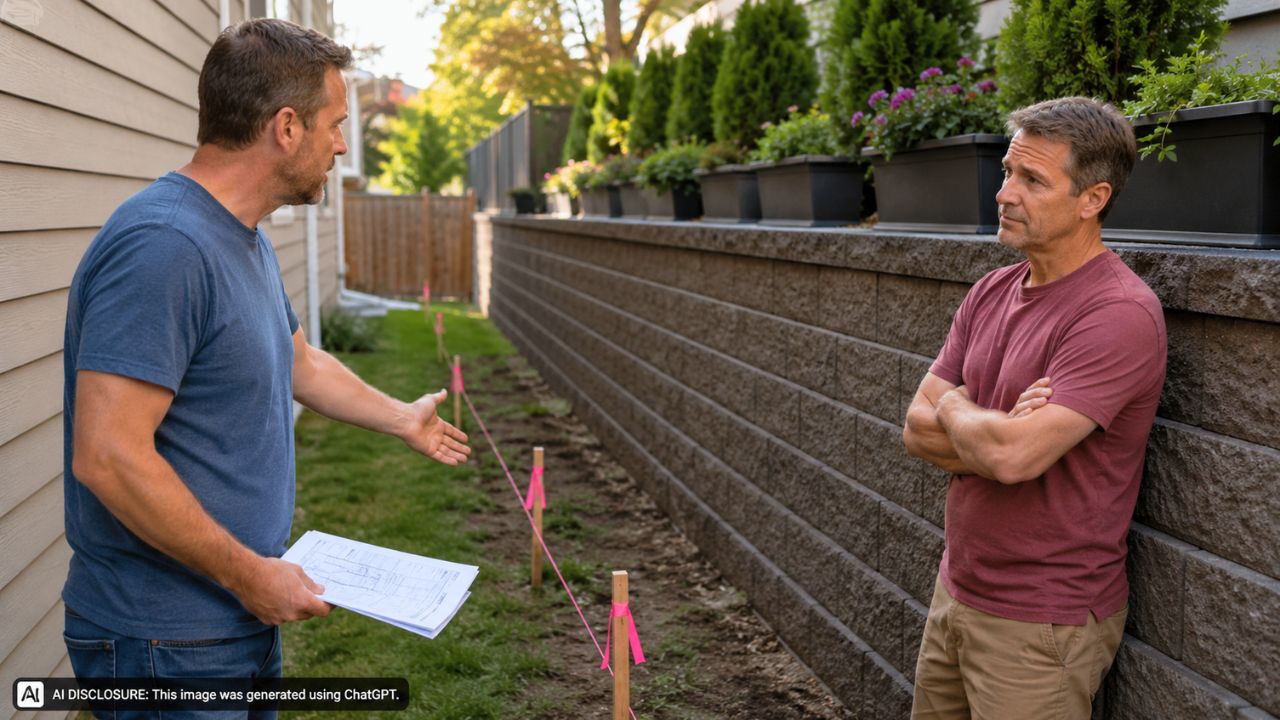
Photo credit: AI-generated image created using ChatGPT. Illustrative only.
It started as one of those “sure, just tell me what you’re doing” neighbor conversations that usually ends with a handshake and a weekend of construction noise. A homeowner in the Hollywood Hills said their neighbor wanted to build a retaining wall right along the property line, topped with plants, and it sounded fine—so long as the boundary was clear.
So they did the responsible thing: they paid for a survey. In the original post, the homeowner explains that the surveyor set stakes that showed a clear setback—one about two feet from the line and another about three feet back. Then the wall went up anyway, with the outer edge landing roughly eight inches onto the homeowner’s side, plus planters on top that made it read like a finished, intentional “this is ours” feature.
The fence made the boundary feel fuzzy—until the stakes showed otherwise
A big part of the mess is that the homeowner’s existing fence wasn’t on the line. It was intentionally set a couple of feet inside their property because of a slope. That kind of offset fence is common on tricky lots, but it has a predictable side effect: neighbors start treating the strip outside the fence like it’s unclaimed space.
That’s exactly how the homeowner described it. The neighbor looked at land outside the old fence and mentally filed it under “my side,” even though the survey says otherwise. And when you’re dealing with hillside property—where usable flat space is rare—those assumptions can turn into permanent “improvements” fast.
The survey stakes went in, and the wall still crossed the line
The homeowner wasn’t trying to block the project. They were trying to prevent this exact outcome: a structure being placed where it shouldn’t be. The surveyor placed two stakes that effectively gave the neighbor a clear visual cue: the line is over there, and you should stay back.
But once the retaining wall was built, the homeowner says the outer edge ended up about eight inches inside their property line. The wall itself was described as six to eight inches thick, and the top had planters—meaning the “presence” of the structure isn’t just a thin edge of masonry. It’s now a landscaped feature that signals ownership and invites ongoing use.
That landscaping detail matters because it’s not a temporary encroachment like a wheelbarrow parked in the wrong spot. It’s a “finished” project that’s meant to stay, get watered, and be maintained—potentially for years.
It wasn’t about the inches—it was about the paper trail
The homeowner made a point that will sound familiar to anyone who has dealt with property lines: the panic isn’t really about losing 16 inches of dirt. It’s about what those inches could turn into later.
They worried about a prescriptive easement or a cloud on title when it’s time to sell. In plain homeowner terms, that means the fear isn’t “I can’t use that little strip today.” It’s “Will this become a documented boundary headache tomorrow?”
Encroachments have a way of multiplying. What starts as a wall edge can become access needs for maintenance, irrigation lines, planter care, and an expectation that the neighbor can step onto that area whenever they want. And if the wall ever needs repair, replacement, or drainage work, the ownership question becomes the whole fight.
The neighbor’s response stayed slippery: “We’re ok with it, right?”
The homeowner described the neighbor’s posture as a frustrating mix of playing dumb and brushing it under the table. Instead of acknowledging the stakes and correcting course, the neighbor kept floating the same pressure line: “we’re ok with it right?”
That question is doing a lot of work. If the homeowner nods along, even casually, the neighbor gets to treat the encroachment as agreed upon. If the homeowner pushes back, the neighbor can act surprised, as if the wall just happened to land where it did.
Meanwhile, the wall is already up. That’s the part that changes everything—because now the “fix” isn’t a simple adjustment of string lines and forms. It’s demolition, rework, and money. And when money is attached, people tend to suddenly get foggy about what they promised.
What people focused on: documentation first, emotions second
Even without a long thread of comments included in the source material, the core practical reaction to stories like this is consistent: treat it like a boundary and records problem, not a personality problem.
The homeowner already did the most important early step by getting a survey before the build. That creates a timestamped, professional reference point that’s hard to wave away later. In disputes over lines, the side with clear documentation—survey results, photos of stakes before construction, photos during construction, and the finished encroachment—usually has a much easier time being taken seriously.
There’s also a practical reason people push “write it down” so hard: neighbor disputes tend to get re-litigated during the next sale. Buyers ask questions. Agents disclose what they know. Title companies flag anything that looks unresolved. A clean file can prevent the homeowner from having to negotiate away thousands later just to close escrow.
The wall is now a permanent object—and that’s why it can’t be ignored
A retaining wall isn’t just decorative. It manages soil and slope, and sometimes drainage. When it’s built even slightly off, it can affect who controls runoff, who maintains it, and who is responsible if it fails. Add planters, and you’ve got irrigation and moisture sitting right at the top—another long-term variable.
In the Hollywood Hills, that combination—retaining structure plus water—can feel especially loaded. Even when nothing is “wrong” today, homeowners know how fast hillside issues can become expensive once water starts moving in unintended ways.
And the longer a wall stands without challenge, the harder it can feel to pull the ripcord. That’s the tension running underneath the homeowner’s post: they don’t want a neighbor war, but they also don’t want to silently accept a boundary change they never agreed to.
For now, the wall sits where it sits: eight inches over the line, capped with planters, visually claiming space that the homeowner says is theirs. The homeowner’s fence may have been set back for practical reasons, but the survey stakes tried to make the legal line visible. The neighbor built past them anyway—and now the homeowner is left deciding whether to force a correction, negotiate something in writing, or risk letting a small strip of land become a permanent, sell-the-house kind of problem.
Like Fix It Homestead’s content? Be sure to follow us.