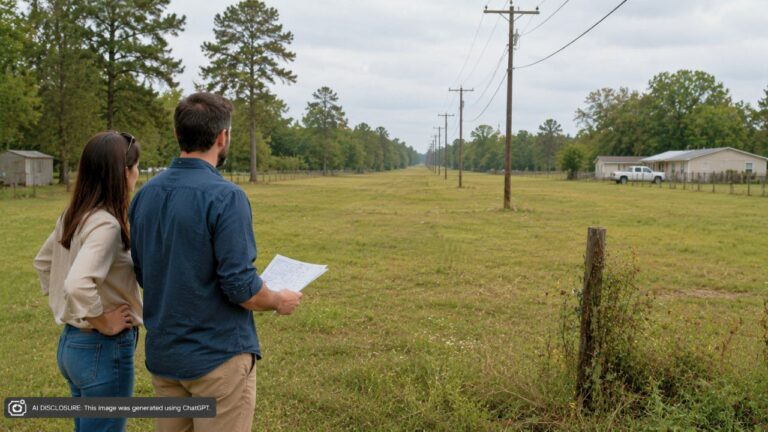
Homeowner Shows the Neighbor Three Years of Video Proof That His Drain Tile Is Flooding Her Yard — Then He Keeps Promising to Fix It and Never Does
Photo credit: AI-generated image created using ChatGPT. Illustrative only.
It starts the way a lot of yard problems start: a little extra water after rain, a spot that stays soggy longer than it should. For one homeowner who’s been in their house for six years, that “minor inconvenience” quietly turned into something they couldn’t ignore—standing water and flooding tied to a neighbor’s drain line.
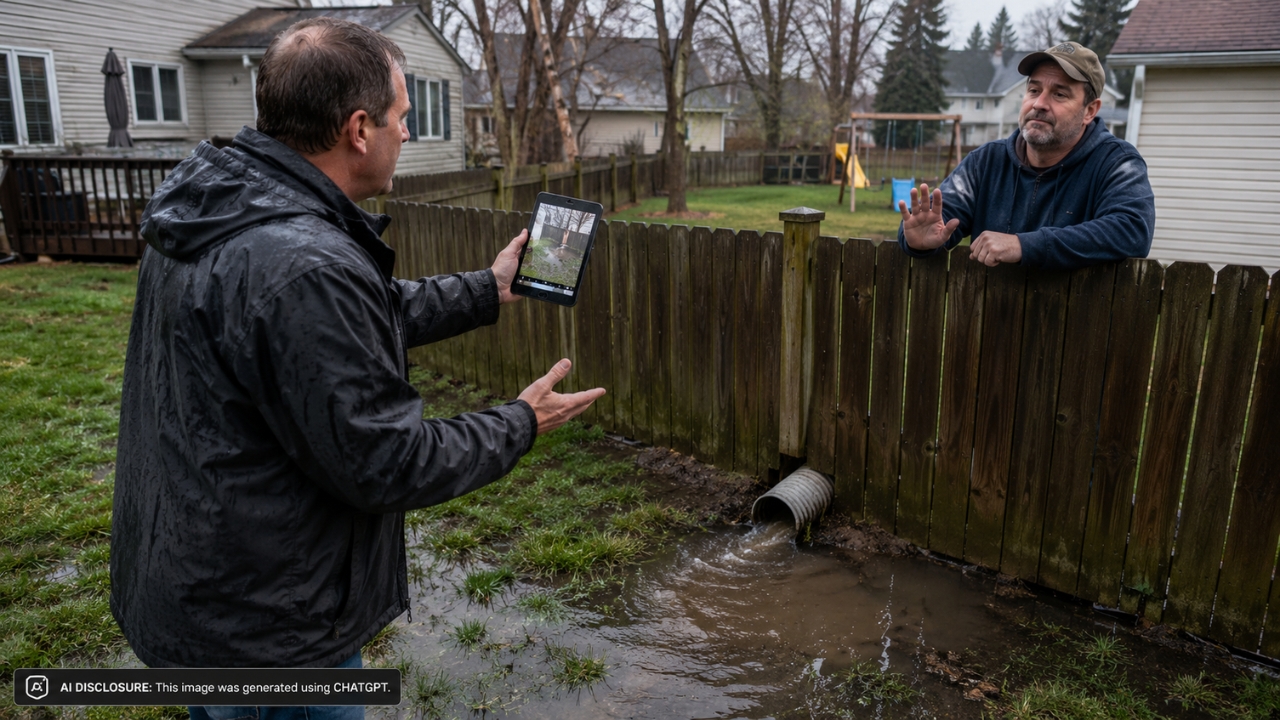
In the original post, the homeowner describes a drain tile their neighbor runs under the fence and onto the homeowner’s property. Over time, that line didn’t just keep discharging water—it apparently surfaced through the yard, leaving the homeowner dealing with worsening flooding for the last three to four years.
The first couple years felt like normal yard nuisance
When you move into a new place, you learn its quirks in seasons. A little pooling here, a soft patch there—sometimes it’s just clay soil, a low spot, or a yard that hasn’t been graded in decades.
That’s how this one began. The homeowner says the first few years were manageable, more annoying than alarming. But the pattern changed, and it wasn’t just a “wet spring” problem anymore.The drain line didn’t just fail—it showed itself
Drain tile is supposed to be out of sight, out of mind. Buried, pitched correctly, and routed to a legal discharge point, it moves water where it won’t cause damage. When it’s installed poorly or breaks down, it can do the opposite—creating a new water problem while hiding the cause long enough for real damage to set in.
In this case, the homeowner says the neighbor’s line actually surfaced through their yard. That detail matters because it suggests more than simple runoff. A surfaced line can mean the tile has shifted, the soil eroded around it, the outlet is clogged and pressurizing the run, or the pipe has separated and is now dumping water where it shouldn’t.
And when a neighbor’s system is literally crossing a fence line, the flooding doesn’t just feel like “weather.” It feels personal, because it is: one property’s fix becoming the other property’s mess.
Three years of proof, and the same promise on repeat
The homeowner didn’t go straight to threats or formal complaints. They did what most people try first: document what’s happening and talk to the neighbor like a human.
They say they’ve shown pictures and videos for the last three years and asked the neighbor to replace the drain tile. Each time, the response has been some version of “we’ll fix it,” followed by no real follow-through.
That’s where these disputes get sticky. A one-time overflow is easy to brush off with an apology. But when the evidence stacks up over years—especially with video—those repeated promises start to sound less like good intentions and more like stalling.
Flooding isn’t just an eyesore—it can change a property
It’s hard to overstate what prolonged soggy ground can do to a yard and the areas around it. Standing water invites mosquitoes. Saturated soil kills grass and weakens root systems. Mud gets tracked into the house and garage. And if the water is pooling anywhere near a foundation, crawlspace, or basement wall, it can raise the stakes fast.
Even without interior damage, chronic wetness can warp how you use your own space. You stop letting kids run back there. You avoid mowing because the mower bogs down. You start watching storms on the forecast like they’re personal enemies.
And there’s another stressor people don’t talk about enough: resale. A yard that floods is the kind of thing buyers notice immediately, and disclosures can turn a neighbor’s drain problem into a homeowner’s long-term headache.
People in the comments usually push documentation and a paper trail
The homeowner’s question is simple: what recourse do they have? That’s often the turning point—when someone realizes friendliness and patience aren’t fixing the drainage, and they need a next step that doesn’t rely on the neighbor’s motivation.
In posts like this, practical-minded homeowners tend to focus on two themes: keep documenting and shift to written communication. Photos and videos are one thing; a dated record of contacts, requests, and the ongoing impacts helps when you need a third party to take the complaint seriously.
Another common reaction in drainage disputes is to get clarity on where the property line actually is and whether the neighbor has any right—formal or informal—to run a pipe under a fence and discharge onto someone else’s land. Even when neighbors “have always done it that way,” that doesn’t automatically make it acceptable or permanent.
And once the problem has been going on for years, many readers start mentioning the value of involving professionals—not because everyone wants to escalate, but because a licensed assessment, a survey, or a written report can turn a muddy argument into something more concrete.
When the fix is obvious, the hard part is getting it done
The frustrating thing about drainage problems is that they’re often solvable in the physical sense. Replace the failed tile. Reroute discharge to an appropriate location. Correct the slope. Add proper outlets or pop-ups. Fix the break and bury it correctly.
But a fix that depends on a neighbor’s willingness can drag out forever. And once years have passed, the homeowner is left weighing bad options: keep waiting and keep cleaning up the mess, pay for repairs that shouldn’t be theirs, or escalate and risk turning a cold neighbor relationship into open hostility.
This homeowner is stuck in that exact limbo—watching the water get worse, collecting proof, and hearing the same promise cycle back around. If nothing changes, the yard will keep telling the story every time it rains. And for the person living with the flooding, that’s the part that makes it impossible to “just let it go.”
Like Fix It Homestead’s content? Be sure to follow us.