Homeowner Wakes Up to a Strip of Gravel and Dirt Poured Overnight Across the Property — Then Learns It Was Laid Down for a Neighbor’s Vehicle Access
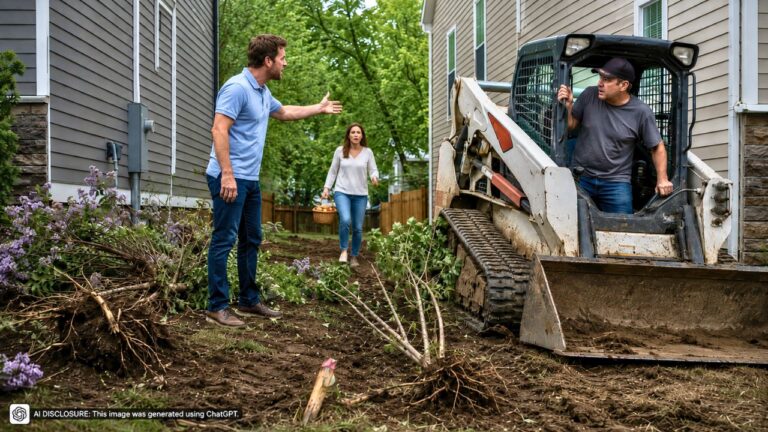
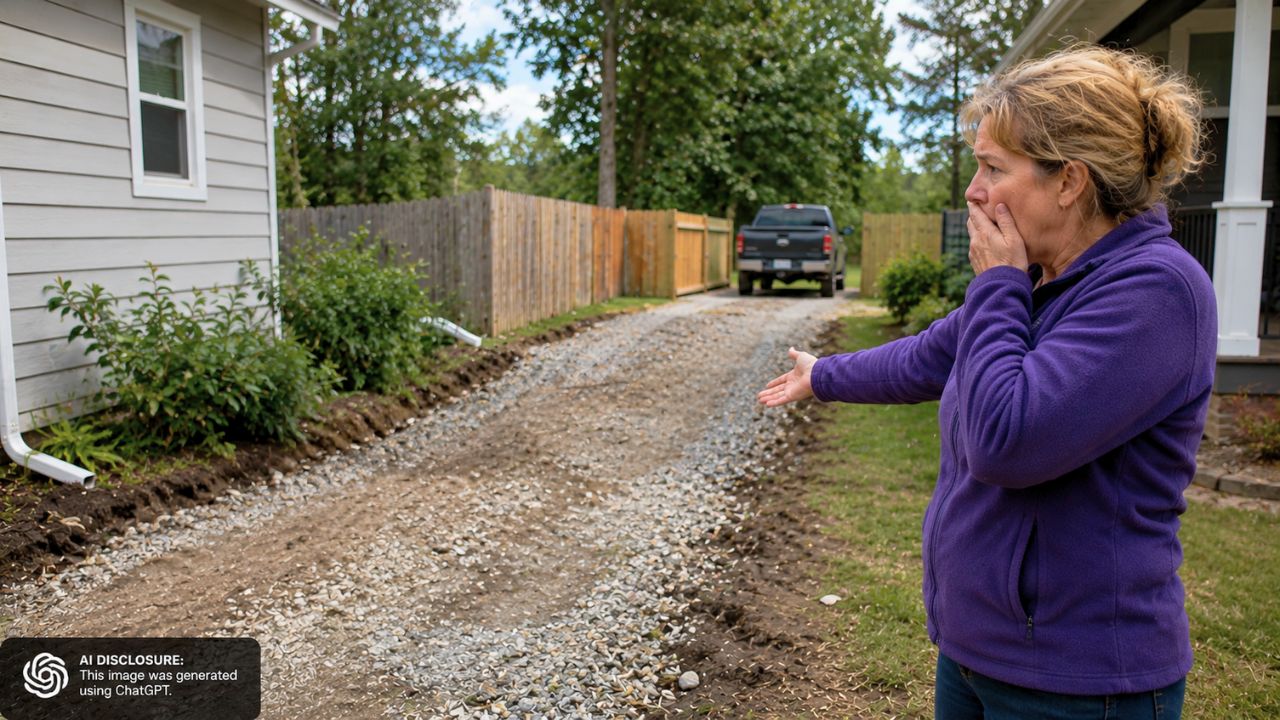
Photo credit: AI-generated image created using ChatGPT. Illustrative only.
You don’t usually expect your yard to change overnight. But that’s what happened to an Illinois homeowner on a corner lot who looked out and found a fresh strip of gravel and dirt laid down along the side of their property—like someone had quietly built a mini road while they slept.
The homeowner described the surprise in the original post: a valley runs along the left side of the house and stretches toward the next block over. On the far side of that valley sits another home with its back facing theirs. Sometime “yesterday or this morning,” a driveable lane of gravel and dirt appeared—on what the homeowner believed was their land.
A corner-lot valley turned into a makeshift driveway
The geography is what makes this feel so specific—and so frustrating. Corner lots often have weird triangles of grass, drainage swales, and odd setbacks that don’t match the simple “square yard” you imagine when you buy a house.
In this case, the homeowner said there was a valley on the left side of the home, and across that valley was a house facing the opposite direction. The new gravel strip wasn’t just dumped randomly. It was placed “down the other side of the valley” in a way that suggested purpose: vehicle access.
That detail matters, because it turns a messy nuisance into something bigger. Dirt and gravel can affect drainage, create ruts, and invite repeated traffic. Once a path exists, people start treating it like it has always been there.
The part that rattles homeowners: “All on my property”
The homeowner’s first instinct was straightforward: someone came onto their land and altered it without permission. That’s the kind of thing that makes people check windows, look for tire tracks, and wonder what else happened overnight.
And unlike a neighbor trimming a hedge a little too far over the line, gravel is hard to ignore. It’s a visible claim. It signals repeat use. Even if the initial “pour” was quick, the consequences can drag out for months if the access route becomes established.
The homeowner didn’t know who did it or why, which is often the worst part. When you don’t know the decision-maker, you don’t know whether to confront a neighbor, call the city, or brace for a contractor coming back to “finish the job.”
Then the plot twist: it might not be their land
After the initial alarm, the homeowner added an update that shifted everything. Their stepfather—who previously owned the home—told them there may be a strip of land running down the valley that is actually city-owned.
If that’s true, it reframes the whole morning shock. The gravel may have been placed on public right-of-way or some kind of municipal strip rather than private yard. In a lot of neighborhoods, especially around corners, valleys, and drainage channels, the maintained-looking grass can still be public land on paper.
That’s the trap: homeowners often care for and mow areas they don’t technically own, because it blends into their yard. Years go by like that. Then one day someone uses that strip for access, or the city does work, and suddenly the “property” isn’t as simple as it felt from the porch.
The homeowner said they couldn’t find the paperwork needed to confirm it, so they planned to have someone from the city come out and look.
Why a gravel strip can become a long-term problem fast
Even if the gravel is on city land, it still sits right next to a home—and it still changes how that space functions. A vehicle-access lane means more than just rocks on dirt. It means tires, noise, headlights, and the potential for the “route” to widen over time as drivers avoid puddles or ruts.
It can also change water flow. Valleys and dips exist for a reason, and adding material can redirect runoff toward a yard, a foundation, or a neighbor’s fence line. What starts as “access” can become washouts, mud, and a constant mess after storms.
And if the strip actually crosses onto private property, the stakes get sharper. Allowing it to remain can create pressure to tolerate ongoing use. Homeowners worry about liability if someone gets stuck, slides, or damages a vehicle on what looks like a driveway. They worry about resale, too—because buyers see “shared access” and start asking hard questions.
Reactions focused on proof and boundaries before emotions
The homeowner’s question was simple: what legal action can they take to find out who did it and have it removed? That’s usually where practical voices steer people away from shouting matches and toward documentation.
When something appears overnight, the smartest next move is often to confirm the boundary before accusing anyone. That’s exactly the direction this story moved once the stepfather mentioned a city-owned strip. If the gravel is on municipal land, a private removal demand could go nowhere—or even backfire if it interferes with drainage or right-of-way work.
Having the city come out isn’t just about getting an answer. It’s about getting the right answer on the record: where the line is, whether there’s an easement, and whether vehicle access is allowed there at all. Without that, every conversation with a neighbor becomes a guessing game, and guessing games are how small property disputes become permanent feuds.
A quiet yard can turn into an access route overnight
This homeowner’s problem didn’t start with a face-to-face argument or a letter in the mailbox. It started with stepping outside and realizing someone made a decision about their land while they weren’t looking.
The update hints at how these problems often resolve in real life: not with a dramatic confrontation, but with paperwork, maps, and a city employee walking the area and pointing at invisible lines. Still, even that kind of “boring” resolution can be tense, because if the gravel is allowed to stay, the homeowner may be living next to a new drive path they never asked for.
For now, the gravel strip remains a reminder of how quickly a familiar yard can change—and how, on corner lots and along valleys, the ground you mow and the ground you own aren’t always the same thing.
Like Fix It Homestead’s content? Be sure to follow us.