Landowner Finds a Two-Acre Parcel Landlocked Inside His Property With a Twenty-Foot Easement — Then His Contractor Strays Across It and the Neighbors Call Police
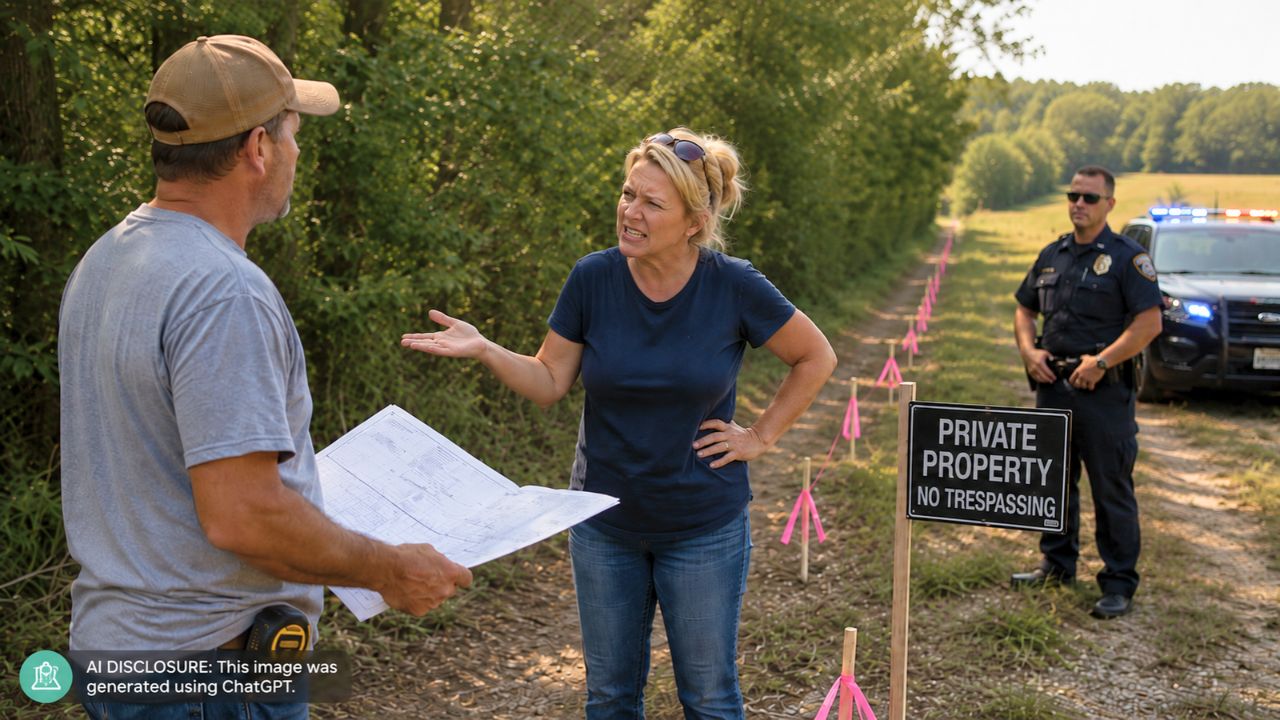
Photo credit: AI-generated image created using ChatGPT. Illustrative only.
It started the way a lot of rural property headaches start: with a map and a surprise. In Ulster County, New York, a two-acre parcel sat completely boxed in by someone else’s land, reachable only by a skinny, 20-foot-wide easement road. Everyone’s deeds spelled it out, but once tempers flared, that strip of access turned into a daily pressure point—and eventually a court fight over a gate, a washed-out roadway, and who gets to “fix” what.
The details come from the discussion of Venezia v. Luma, where the judges walked through what happens when a shared access road becomes the place neighbors decide to wage war.
The landlocked parcel that depends on one road
Tracy and Joseph Luma owned the landlocked two-acre parcel. Justin Venezia and Tedhar Setton owned the surrounding property—meaning the Lumas couldn’t reach their own land without crossing the neighbors’ land.
That’s where the easement came in. The Lumas’ deed expressly granted them a 20-foot-wide easement for ingress, egress, and utilities across the surrounding property. On paper, it sounds clean: a defined corridor, a clear right to pass, and a shared understanding that the road needs to stay usable.
But in real life, a single access road isn’t just a line on a survey. It’s every delivery, every emergency vehicle, every time someone needs to leave in a hurry, and every time weather turns the driveway into a mess.
One wrong turn by a subcontractor, and the tone changed
The spark in 2022 was almost mundane: a subcontractor working for Venezia and Setton “accidentally crossed” onto the Lumas’ property. The Lumas responded by calling law enforcement.
If you’ve ever lived next to someone you don’t fully trust, you know how fast that can harden the boundary lines. After police get involved, people stop assuming mistakes are mistakes. Every tire track starts looking intentional.
And once a neighbor dispute becomes “documentable,” it doesn’t usually cool down on its own. It escalates into physical changes on the land—barriers, berms, cameras, and “improvements” that are really just leverage.
The gate went up—and daily life got more complicated
The next month, Venezia and Setton installed a gate near the property boundary across the easement road. They gave the Lumas the security code, which sounds like a compromise until you picture the routine.
The gate was 16 feet wide and operated by a keypad. But the keypad wasn’t positioned in a way that let someone roll down their window and punch in the code. The court found the Lumas had to stop at least 16 feet away, get out of the vehicle, walk to the keypad off the traveled portion of the easement, enter the code, then walk back and drive through. Rain, snow, bad weather—didn’t matter.
Then there’s the human factor: other people. Delivery drivers couldn’t enter unless they were given the code. And the gate malfunctioned at least once, leaving Tracy Luma unable to leave her own property until the neighbors intervened. That’s the kind of detail that makes a “minor inconvenience” feel like being trapped on your own land.
Joseph Luma testified he entered and exited up to 15 to 20 times per day. Put that on loop: stop, park, get out, walk, punch code, walk back, drive. Over and over. This wasn’t a once-a-week cabin driveway. It was daily life.
Then the easement road got “fixed” with fill—and that sparked another fight
A few months after the gate went in, the Lumas placed several truckloads of fill on the easement to raise its grade. According to the court, the fill was intended to repair storm and water damage, and the roadway had partially washed out.
But the fill also interfered with the gate’s operation. That’s where the conflict stopped being about feelings and started being about competing claims: was this maintenance within the easement rights, or was it trespass and damage to the surrounding owners?
Venezia and Setton sued, arguing the fill amounted to trespass and asking for damages and an injunction. The Lumas counterclaimed that the gate itself unlawfully interfered with their easement rights and should be removed.
If you’ve ever watched neighbors argue about drainage, you’ve seen this pattern: one person “fixes” water problems; the other person experiences it as a new obstruction or a new risk. The same dirt pile can look like prevention on one side and provocation on the other.
The judge focused on one question: does the gate impair access?
New York law generally allows the owner of property burdened by an easement to install a gate or fence across it—if it doesn’t impair the easement holder’s right of passage. The court wasn’t deciding whether gates are always bad. It was deciding whether this gate, in this location, in this setup, crossed the line.
After a bench trial, the court sided largely with the Lumas. It found they had the right to place fill within the easement to repair storm and water damage, and that this work didn’t improperly increase the burden on the surrounding property. The trespass claim failed.
But the bigger ruling was about access. The court held the gate unreasonably interfered with the Lumas’ ability to come and go, and ordered Venezia and Setton to remove it. It also permanently prohibited them from maintaining another gate across the easement.
The evidence didn’t help the gate-makers: the court noted Venezia and Setton admitted the gate didn’t affect their own ability to enter or leave their property, and it was installed specifically in response to the dispute. The trial judge even found that “spite or revenge played some role,” though the appellate court emphasized motive mattered only because the gate actually interfered with legal access rights.
How homeowners reacted: “Document everything” energy
This is the kind of dispute that makes homeownership forums light up, because it hits so many nerves at once: landlocked property, shared roads, contractor mistakes, and the temptation to “secure” your land with something that looks reasonable until you live with it.
The practical-minded crowd tends to focus on proof before confrontation. When there’s a narrow access corridor, people talk about treating it like a utility line: keep records of maintenance, take photos after storms, and track any changes in grade or drainage over time. If something goes wrong, you want to be able to show what the road looked like before, what it looked like after, and why the work was done.
And on the access side, the reactions usually land on reliability. A gate that requires someone to exit the vehicle repeatedly, blocks delivery drivers, or malfunctions isn’t just annoying—it can create real safety risks when weather turns, when someone is alone, or when time matters.
Even without anyone saying it out loud, the subtext is obvious: once police get called over property boundaries, the next moves tend to be physical and symbolic—gates, berms, obstacles—and those moves can backfire if they collide with someone else’s deeded rights.
The appellate court affirmed the entire judgment. Even though the Lumas sold their property while the appeal was pending, the court still decided the case because the ruling could affect future property owners. That’s the lingering tension in these easement fights: people come and go, but the road stays, and the paper rights follow the land.
Like Fix It Homestead’s content? Be sure to follow us.