Landowner Finds One Tree Trimmed Well Into the Property Line — Then Notices Every Other Tree Was Trimmed to Match Her Own Fence
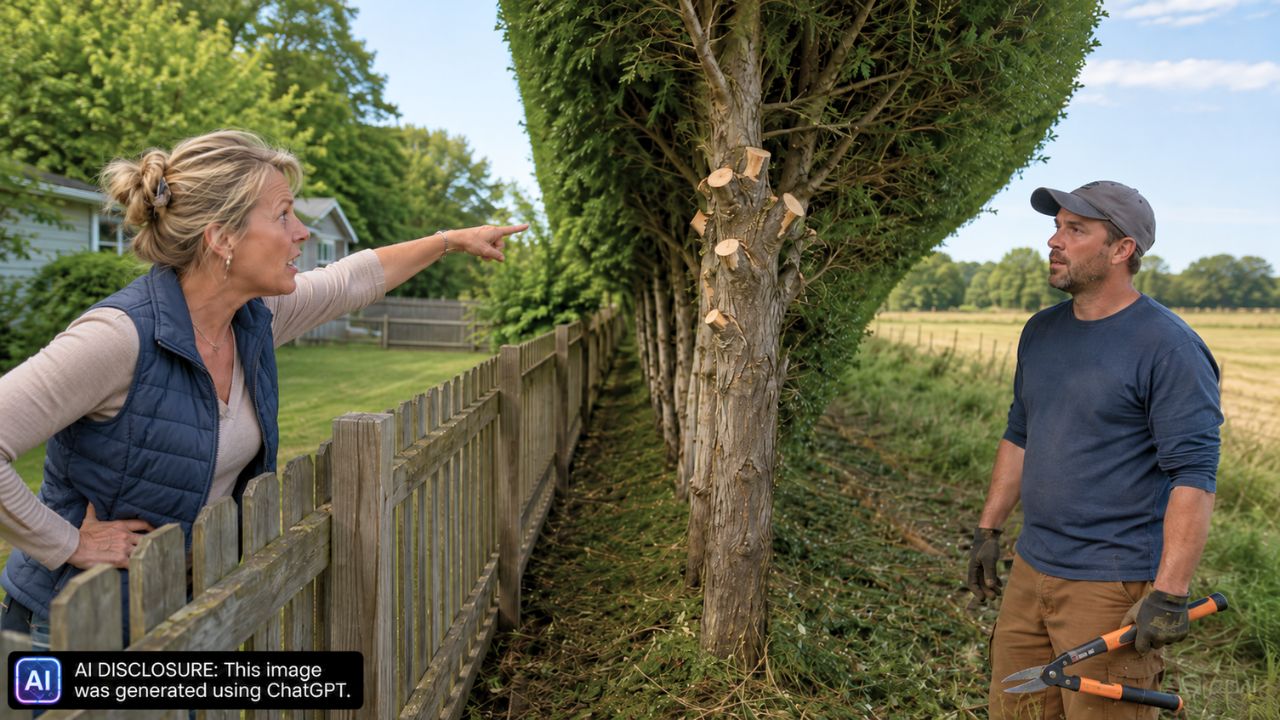
Photo credit: AI-generated image created using ChatGPT. Illustrative only.
One year into owning their home, a new landowner walked outside to find a familiar boundary tree suddenly looking wrong—lopsided, stripped back, and nothing like it did when they bought the place. What stung wasn’t just the fresh cuts. It was the sense that someone had made a permanent decision about their yard without asking.
In the original post, the homeowner shared before-and-after photos of the tree they were “most upset about.” They say their neighbor trimmed multiple trees along the fence line so the branches now line up neatly with her fence, but this particular tree was cut “well into our property” and, in their view, even beyond the neighbor’s fence line.
The first sign was a complaint before the keys were even warm
The homeowner hasn’t lived there long—about a year—and they didn’t plant the trees. But from the beginning, the neighbor made her opinion known. During the home inspection, she approached the inspector to complain about the trees.
After the move-in, every friendly wave seemed to turn into another comment about how much she hated them. The homeowner says it left a clear impression: the neighbor wanted the trees gone, period.
Still, the new owners tried to keep things calm. They shrugged it off and didn’t plan to remove the trees. More than that, they say they would have been willing to help trim the trees on the neighbor’s side of the fence if she had simply asked.
Then the trimming showed up… and it didn’t stop at her side
When the cutting finally happened, it wasn’t framed as a neighborly request or even a heads-up. The homeowner just found the aftermath. Multiple trees had been trimmed back in a way that made them match the fence line—almost like someone took the fence as a ruler and tried to make everything flush.
That’s the detail that makes this feel less like routine maintenance and more like a deliberate reshaping of someone else’s landscaping. It’s not just “I cut what hung over my yard.” It’s “I made your trees conform to my fence.”
And then there was the one tree. The homeowner believes it was cut deeper than the rest, far enough that it crossed into their property line. To them, it wasn’t a minor tidy-up. It was damage.
The real hit wasn’t the leaves—it was the feeling of losing control of your own land
Even when you didn’t plant the trees, you inherit them the day you buy the house. You inherit the shade, the privacy, and the way the backyard feels when the wind moves through the canopy. You also inherit the responsibility when branches fall or roots creep.
That’s why the homeowner’s reaction wasn’t just irritation. They said they were “sad” their neighbor “destroyed our tree.” There’s a specific kind of frustration that comes from having your yard altered without permission—like someone walked into your kitchen and rearranged the cabinets because they didn’t like where you kept the plates.
And unlike a cabinet, a tree doesn’t bounce back overnight. A harsh trim can leave a tree stressed, misshapen, or more vulnerable to pests and disease. Even if it survives, the privacy and screen it provided can be gone for years.
Small boundary choices can turn into big property-line fights fast
Fence lines create a tempting visual shortcut: “This is mine, that is yours.” But property lines don’t always sit exactly where the fence sits, and neighbors don’t always agree on where “over the line” begins once branches and trunks are involved.
The homeowner’s description suggests two separate pressure points. First, whether the neighbor trimmed only what reached into her yard. Second, whether she cut beyond what would be considered her side at all—especially on the tree the homeowner believes was cut well into their property.
That distinction matters because trimming is one thing and entering another person’s space (or cutting growth that isn’t on your side) can feel like a completely different level of escalation. For a new homeowner, it also creates an immediate, nagging question: if this happens once and goes unanswered, what happens next time?
Most reactions centered on proof, not yelling across the fence
Even without a blow-by-blow comment section included in the post, this kind of neighbor tree dispute tends to draw the same practical drumbeat from other homeowners: document everything before you confront anyone. Photos, dates, and clear “before” shots matter because trees change quickly—especially after a fresh trim.
People who’ve dealt with boundary disputes often emphasize figuring out where the legal line actually is, not where it feels like it should be. A fence can be slightly inside one property, installed for convenience, or placed years ago without a perfect survey. Once money enters the picture—tree care, replacement landscaping, potential loss of property value—feelings and assumptions don’t carry much weight compared to measurements and records.
Another common theme in these disputes is keeping communication controlled. Not a heated driveway argument, but a calm conversation—or even a written message—focused on what happened and what needs to change going forward. The goal is to stop the next round of cutting before it happens, not to win an argument in the moment.
Now the homeowner has to live with the cut—and the neighbor who wanted it
The hardest part is that the homeowner didn’t ask to be in a long-running fence-line saga. They didn’t plant the trees. They didn’t start the disagreement. They just bought a home, moved in, and tried to be civil.
But once someone alters your property without permission, it forces a decision. Do you let it slide to keep the peace, even if it invites more trimming later? Do you confront it and risk turning every future outdoor project into a standoff? Do you spend money verifying boundaries and assessing damage, even though you didn’t create the problem?
For now, the homeowner is left staring at a tree that no longer looks like the one in their “before” photo, and a fence line that suddenly feels less like a boundary and more like a battleground. The trimming may have been quick, but the tension it created can last a lot longer than the branches that were taken off.
Like Fix It Homestead’s content? Be sure to follow us.