Long Beach Homeowner Starts an Exterior Remodel and Finds the Neighbor’s Gate Physically Attached to the House — Then Climbs Through a Window Because the Neighbor Won’t Detach It
Photo credit: AI-generated image created using ChatGPT. Illustrative only.
Exterior remodeling has a way of turning “we’ll deal with it later” into “we have to deal with it right now.” That’s what happened to one Long Beach homeowner who finally hit a wall—literally—when their neighbor’s gate, long attached to the side of their house, started blocking access to an active jobsite. The homeowner laid out the mess in the original post, asking what they’re supposed to do when a neighbor won’t detach something that’s physically connected to their structure.
The gate and fence connection wasn’t new. It had apparently been “like this for a long time,” the homeowner said. But once exterior work began, that old attachment stopped being a weird boundary quirk and started acting like a padlock on the project.
The access problem turned a remodel into an obstacle course
On paper, “a gate attached to the neighbor side” might sound like a small inconvenience. In practice, the homeowner described it as a major access issue—one that slowed construction and blocked the side of their home when workers needed to get in.
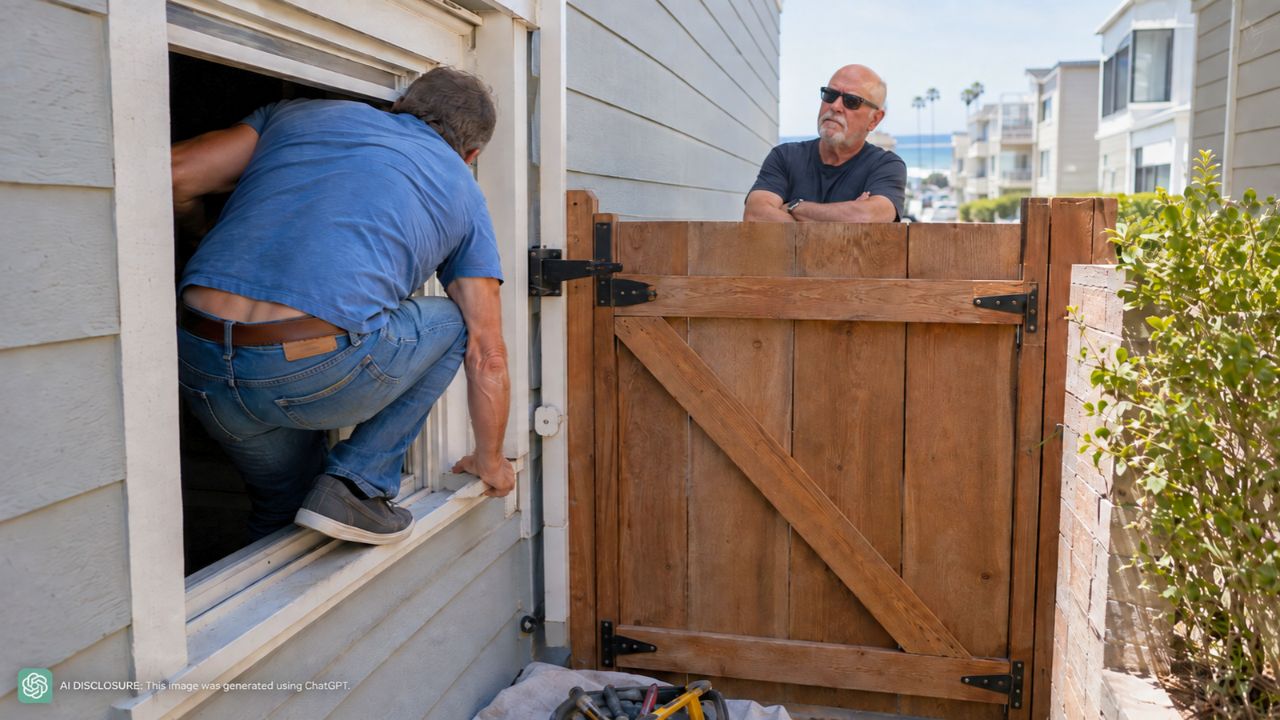
There’s a specific moment that makes the whole thing feel less like a property-line disagreement and more like a day-to-day reality problem: the homeowner said they ended up climbing through a window they’re replacing just to reach that side of the house because they couldn’t wait for the neighbor to be home.
That’s not a normal part of exterior remodeling. But it’s the kind of improvisation people resort to when they’re working around something that shouldn’t be there in the first place—and when the other party controls access like it’s theirs to grant.
“You need permits” became the neighbor’s stop sign
When the homeowner asked the neighbor to remove the portion attached to the house, they didn’t get a yes, a no, or even a “let’s figure out a time.” They got a condition: the neighbor claimed the homeowner needed permits and had to show them before the gate could be detached.
To the homeowner, that didn’t pass the smell test. Their understanding was that permits apply when building or modifying a fence, not when removing something improperly fastened to someone else’s structure. In their mind, it wasn’t a permitting question—it was an encroachment problem.
And that’s the trap with these disputes: the more one side frames it as “a legal/permit requirement,” the easier it is to stall without actually saying they refuse. The project doesn’t pause because the neighbor is right. It pauses because the neighbor is in the way.
The history with this neighbor didn’t help
This wasn’t a one-off misunderstanding between two people who usually wave hello. The homeowner described the neighbor as consistently unfriendly—no acknowledgement, no neighborly rapport, and only one notable interaction: the neighbor complaining about a family member’s car parked on the street in front of the neighbor’s house.
That kind of background matters because it tells you what “coordination” is going to look like. If someone won’t greet you, they’re not likely to happily schedule a gate removal so your contractors can finish a wall.
The homeowner also shared a suspicion that the neighbor killed the tree in the front of their house, though they said they don’t have proof. They connected that belief to how the neighbor allegedly got the city to remove the neighbor’s two dead trees. Even without evidence, it shows the level of distrust already baked into the relationship. By the time the gate became urgent, goodwill was already gone.
This wasn’t just annoying—it created real project risk
Home projects live and die on access. Contractors need room to move materials, repair siding, address stucco, replace windows, paint, patch, and seal. If a gate blocks the side yard, you can’t just “work around it” forever—not if you want the job done correctly.
The homeowner’s post makes it clear the attachment isn’t merely adjacent to their house. It’s attached directly to it. That raises uncomfortable questions that go beyond schedule delays: what’s been screwed into the exterior? Has it created hidden damage points? What happens if that gate shifts, sags, or gets slammed for years against someone else’s wall?
Even when no one is talking about insurance or liability out loud, the pressure is there. When a neighbor’s structure is fastened to your structure, the lines blur. And once you start remodeling, you’re no longer living with the quirk—you’re actively disturbing the area around it, which makes the neighbor more defensive and the homeowner more desperate.
Most people focused on documentation and enforcement, not arguing on the porch
The homeowner asked what the “correct way” is to handle it if the neighbor refuses: code enforcement, written notice, or something else. The way the question is framed shows they’re past casual conversation and into “what steps actually work” territory.
While the post itself is the main detail source here, the practical direction people commonly push in disputes like this is predictable: document everything, keep communication in writing, and involve the appropriate city department if it’s an encroachment or unsafe attachment. When a neighbor insists on permits as a condition to stop trespassing on your structure, many homeowners start thinking about proof—photos of attachment points, property records, and whether the fence line is where everyone assumes it is.
That approach is less satisfying than a quick agreement, but it’s often the only thing that moves a standoff. Friendly conversations don’t work well when the other party’s strategy is delay.
The remodel forced the question: who controls the side of the house?
For years, this gate being attached to the house was apparently survivable. It sat there as part of the landscape—wrong, but tolerated. Remodeling changed the rules. Once workers needed access and progress depended on it, the homeowner couldn’t pretend it was fine.
Now they’re stuck in that uniquely exhausting homeowner limbo: trying to improve their property while another person’s hardware is physically in the way, and being told to jump through “permit” hoops just to get their own wall back.
Nothing about this feels resolved in the homeowner’s telling. But the moment they described—climbing through a replacement window because the neighbor’s gate blocked access—captures what pushes these disputes from passive resentment into action. When you can’t even reach your own exterior without an improvised entry, it stops being neighbor drama and starts being a functional problem that demands a paper trail and a plan.
Like Fix It Homestead’s content? Be sure to follow us.