New East Texas Landowner Buys Vacant Land at a Tax Auction — Then Learns the Elderly Neighbor Has Been Storing Junk Cars and Farm Equipment on an Acre of It for Years
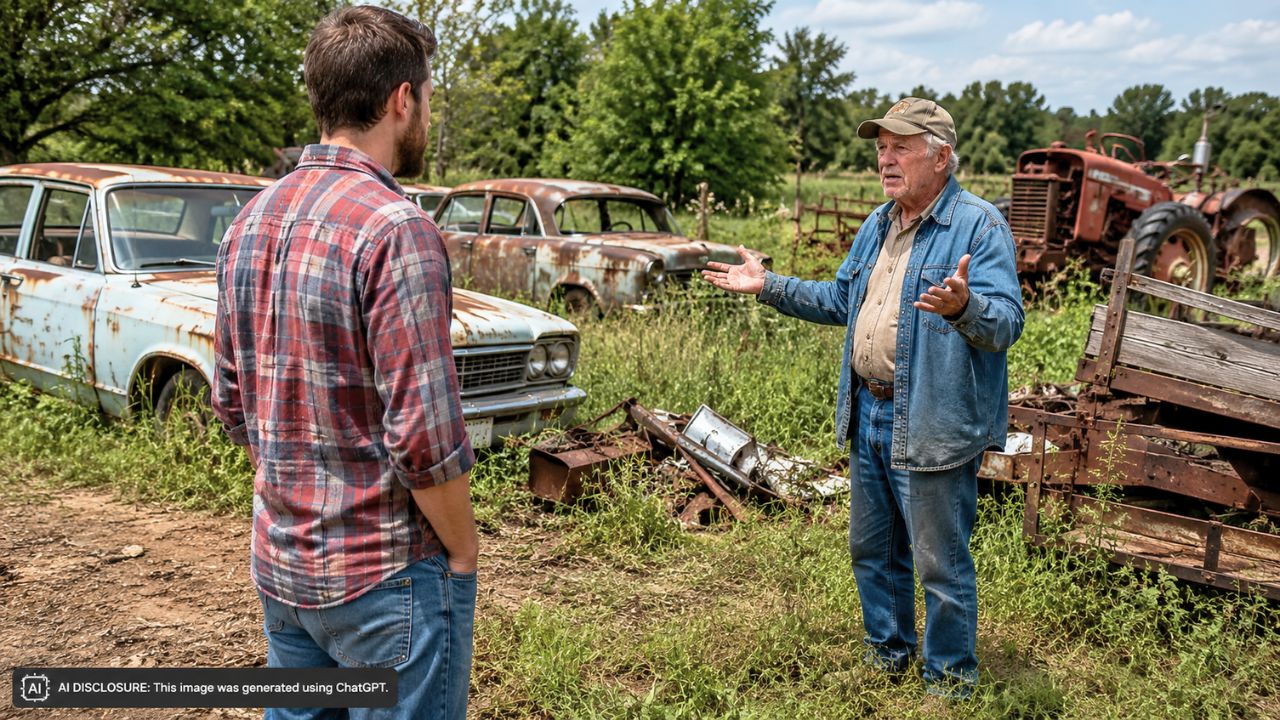
Photo credit: AI-generated image created using ChatGPT. Illustrative only.
Buying rural land is supposed to feel like a clean slate: woods, quiet, and the freedom to do what you want. But one new East Texas landowner says the first thing he found on his newly purchased acreage wasn’t deer sign or a good spot for a blind—it was someone else’s “storage yard.”
After picking up 13.4 vacant acres at a tax auction, he met the neighbor next door, an elderly man who has lived there for decades. The neighbor casually explained that he’d been storing junk on the property for years back when it was abandoned—about an acre covered in junk cars, scrap metal, and farm equipment. The landowner laid it out in the original post: he doesn’t love the mess, but he’s more worried about what it could mean for the boundary lines and ownership down the road.
Vacant land, tax sale, and a surprise “junkyard”
Tax auction properties come with their own brand of mystery. You might not get a neat handoff with a seller walking you through the corners and fence lines. In this case, the buyer says the land was vacant and had been for years, which is exactly the kind of place that can quietly turn into a dumping ground—especially in rural areas where nobody is watching the back forty.
The neighbor didn’t deny it or act sneaky. He openly admitted he’d been using part of the acreage to store junk, and told the new owner he would move it. But the neighbor is “really old and not in great shape,” and the new owner doesn’t see a fast cleanup happening.
That’s the first pressure point a lot of rural landowners recognize: you can be reasonable and patient, but time has a way of turning “temporary” into “permanent,” especially when heavy equipment and scrap piles are involved.
He doesn’t mind the junk—he minds what it could turn into
The twist here is that this isn’t a simple “get off my land” standoff. The buyer says he doesn’t really mind the junk being there. What he minds is the idea that leaving it there could help the neighbor claim ownership of that portion later under adverse possession rules.
That fear is what makes this kind of problem so stressful. It’s not just aesthetics. It’s not just the annoyance of looking at junk cars when you’re trying to enjoy hunting land. It’s the thought that being neighborly today might create a paperwork nightmare tomorrow.
And because the land was purchased at a tax auction, the buyer is also thinking in timelines. He plans to get a survey done “this summer after the redemption period has passed,” which hints that the sale isn’t fully settled in his mind until that window closes.
Property lines are invisible until they aren’t
An acre is not a small misunderstanding. In rural settings, an “acre of junk” can mean rutted ground, fluid leaks, broken glass, snakes and pests, and the kind of cleanup that’s physically hard even for someone young and healthy. Add in the fact that it’s farm equipment—meaning big, heavy items that don’t just get tossed into a pickup—and it’s easy to see how this could sit for years more if nobody draws a hard line.
The buyer’s plan to survey is the practical move most people wish they’d done first. Until a survey pins down the boundaries, everything else is guesswork—old fence lines, tree rows, “we always used it,” and local lore. That’s how rural disputes get started, and how they last.
But surveys take time and money, and in the meantime the landowner is stuck with the messy in-between: a neighbor who’s been using the land openly, a pile of property that isn’t his, and a nagging worry about what “years” of use might mean.
The hardest part is setting boundaries without starting a war
This is where homestead reality kicks in. If this were a vacant lot in town, you’d call a tow company, code enforcement, or a lawyer and let the system grind. Out in the country, you still can—but you’re also dealing with someone who lives next door, knows the area, and will be part of your day-to-day life every time you drive out to hunt.
The owner’s tone is telling: he’s trying not to be cruel about it. He’s acknowledging the neighbor’s age and health. He’s not pounding his chest about “my land.” He just wants to avoid accidentally handing over rights by being too passive.
That’s a tough needle to thread. If he pushes too hard, he risks turning a manageable cleanup into a personal feud. If he pushes too softly, he risks letting the junk pile—and the implied permission—become the new normal.
People urged documentation, surveys, and getting it in writing
The responses to stories like this usually land in the same practical bucket: don’t rely on handshakes and good intentions when land is involved. Readers tend to focus on proof before confrontation—getting a survey, taking photos, and documenting what’s there and when you found it.
Another common theme is creating a paper trail that makes the neighbor’s use clearly permissive, not hostile. In plain terms, people often suggest putting something in writing that says the neighbor is allowed to store items there temporarily and must remove them by a certain date—because the difference between “he took it” and “I let him” can matter in disputes.
Even without diving into legal theory, the homestead logic is straightforward: if you ever need to show what happened later, you’ll want more than a memory of a friendly chat over a fence line.
Where this leaves a new landowner
For now, the buyer is waiting out the redemption period, planning a survey, and watching an acre of his land remain functionally occupied by someone else’s junk cars and equipment. The neighbor says it will be moved, but time and health aren’t on anyone’s side.
It’s the kind of rural property problem that doesn’t start with shouting. It starts with a shrug and a “it’s been here a long time,” and then one day you realize you’ve inherited a storage yard along with your hunting land.
If the owner can get the boundary confirmed, get the agreement clarified, and get the junk moving—without turning the neighbor into an enemy—he’ll have the thing most tax auction buyers want but don’t always get: land that’s truly his to use, not just on paper, but out in the dirt where it counts.
Like Fix It Homestead’s content? Be sure to follow us.