New Homeowner Finds a Drainage Pipe Installed an Inch From the Property Line Aimed Straight at Her Firewood Pile — Then Learns One Elbow Joint Could Have Sent the Water Downhill Instead
Photo credit: AI-generated image created using ChatGPT. Illustrative only.
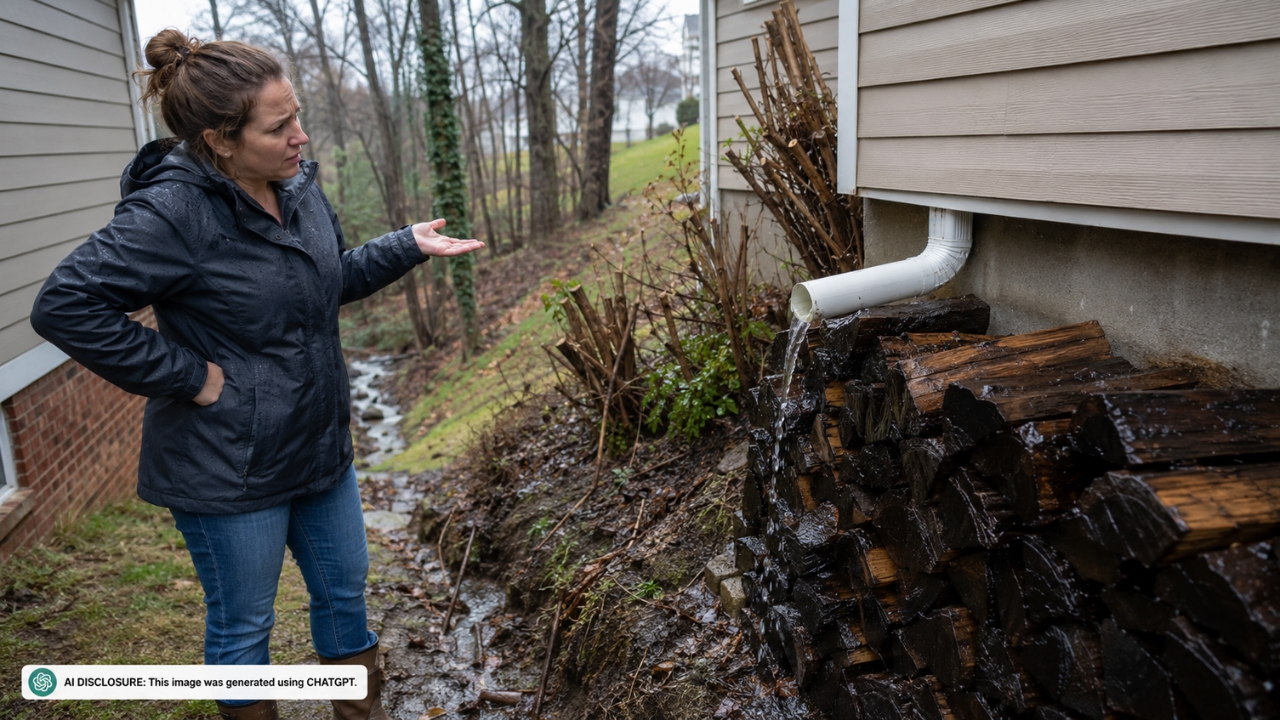
She’d barely settled into being a new homeowner when she noticed something that felt both petty and personal: a white PVC drainage pipe ending near the edge of her yard, aimed right at her stacked firewood. Not a drip. A directed stream of rainwater that turned “seasoned and ready” into “soaked and questionable.”
In the original post, she explains that the pipe sits about an inch from the property line and appears to have been installed recently. On her side, a line of overgrown bushes had been hacked out around the area, like someone needed a clean path for water to exit—straight into her woodpile.
It wasn’t just water—it was where the water was sent
The homeowner’s frustration wasn’t only about the damage. It was about how avoidable it seemed. She lives in a hilly dead-end neighborhood where many people route rainwater downhill toward a ditch line and ultimately toward a creek at the bottom of the woods.
That’s what made this feel so deliberate. She says a simple elbow joint and a few extra feet of PVC could have redirected the flow down the backyard slope with help from a small drainage ditch. Instead, the outlet was positioned to dump onto her property—close enough to claim it “stays on theirs,” but aimed like a nozzle.
The stakes were immediate and practical. The wood in those stacks wasn’t decorative. It was meant for an indoor wood-burning stove. Wet firewood isn’t just annoying; it can be difficult to burn cleanly, can smoke more, and can turn into a moldy, rotting mess if it stays damp.
The clue that made it feel intentional
What escalated the story from “neighbors are careless” to “neighbors are doing this on purpose” was a detail from the home’s past. The property used to belong to the homeowner’s mother, and she had a memory that stuck.
According to the daughter, her mother said she had told the neighbors not to do it when she heard them talking about “just hide it under the wood pile” while installing the line. The new owner believes that’s why the pipe ends on the neighbors’ side of the line—technically—while the discharge hits her wood and yard.
That inch matters because it creates plausible deniability. If the pipe itself doesn’t cross the property line, the neighbors may act like it’s not their problem. But the water doesn’t care about boundary markers, and the person getting soaked is still the one left with the mess.
Firewood damage was only the beginning
The woodpile was the most visible victim, but she also mentioned “some minor other issues,” hinting that the runoff may be affecting more than just stacked logs. Water aimed at one spot can carve channels, soften soil, and create the kind of soggy corner that attracts pests and makes mowing and yard work miserable.
And when drainage is involved, problems tend to grow legs. A steady discharge can undercut a small area and then spread into a wider muddy patch. In wet seasons it can turn into standing water, and in winter it can become an icy hazard.
What makes these disputes so exhausting is that they’re repetitive. It’s not one bad day. It’s every time it rains, every storm, every downpour. The homeowner isn’t dealing with a one-time mistake—she’s dealing with a system that was installed to keep water off someone else’s property by pushing it onto hers.
The most discouraging part: “The Borough said they can’t do anything”
When she asked what options she had, she shared an answer that will sound familiar to anyone who’s tried to get help with neighbor-to-neighbor property problems: her mother had already contacted the Borough, and the response was that they “can’t do anything.”
That kind of response can feel like hitting a wall, especially when the problem is visible and the fix seems so simple. A small elbow, a longer run of pipe, and the whole issue might disappear into the downhill drainage path like the rest of the neighborhood.
But municipal boundaries can be narrow. If the local office views it as a private dispute—especially if the pipe remains technically on the neighbor’s side—they may shrug and step back. That leaves the homeowner stuck with the one thing most people dread: having to confront the neighbor directly, while also protecting herself if the neighbor refuses.
How other homeowners tend to respond in drainage standoffs
Even without a long back-and-forth included in the source material, this type of complaint usually pulls practical, protective advice from other homeowners who’ve been through similar fights. When water is being redirected, people often focus on two things first: documentation and boundaries.
Documentation is the unglamorous step that matters later. Photos of the pipe placement, the hacked-away bushes, the wood damage, and—most importantly—what happens during rain can turn a “he said, she said” argument into something concrete. People also tend to suggest keeping communication in writing, because drainage disputes can get emotional fast.
Boundaries are the second piece, and they’re not just about fences. They’re about knowing exactly where the line is, because “about an inch from the property line” can still become a major argument if the neighbor insists the line is somewhere else. In a lot of real-world disputes, nothing moves forward until someone can say, with confidence, where the property actually begins and ends.
There’s also the practical reality that some homeowners try to solve the immediate problem while the larger dispute is playing out—moving firewood, elevating it, covering it, or relocating the pile to higher ground—because waiting for agreement can mean losing an entire season’s worth of wood.
A small fitting became a symbol of something bigger
What makes this story stick is how small the “fix” seems compared to the resentment it creates. An elbow joint is cheap. A few more feet of PVC is not a major construction project. Yet the choice to point the outlet at a neighbor’s woodpile—especially after a warning not to—turns it into a statement.
Now the homeowner is left weighing uncomfortable options: push the issue and risk a neighbor feud, or absorb the damage and quietly adapt. Neither feels fair when the water was redirected by someone else in the first place.
For now, the pipe is still there, the wood is still damaged, and the stress is real every time storm clouds roll in. And that’s the maddening part of drainage fights: they don’t stay in one yard. They seep into everything else.
Like Fix It Homestead’s content? Be sure to follow us.