New Homeowner Finds a Letter Claiming the Neighbor Now Owns an Eighth of an Acre by Adverse Possession — Then a Real Estate Attorney Says the Claim Could Actually Hold Up
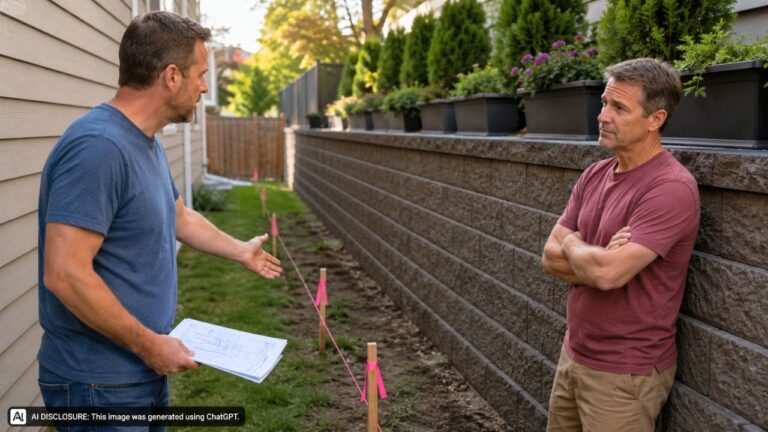
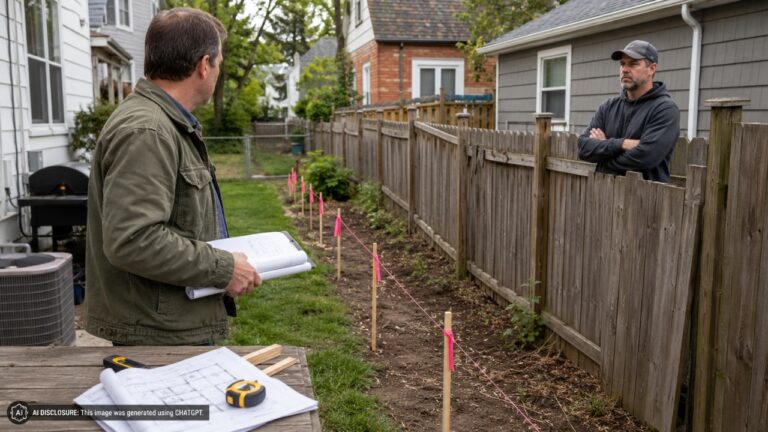
Photo credit: AI-generated image created using ChatGPT. Illustrative only.
It started with a fence that never looked quite right. The homeowner bought a place on an acre when they were young, and the chain-link divider between their yard and the neighbor’s had all the signs of a weekend DIY job: it zigged around trees, wandered off the straight line, and created the visual impression that a big wedge of land belonged to the neighbor.
Years later, the worry isn’t about curb appeal. It’s about ownership. In the original post, the homeowner explains that while they’re close with their current neighbor—“like a father figure”—he’s aging, and the homeowner can’t shake the fear that a future buyer might look at that crooked fence line and decide it’s not just a boundary mistake, but a claim waiting to happen.
The fence line that quietly rewrote the yard
The property itself is simple on paper: one acre, with a clear property division that should be a straight line. But the fence tells a different story. Whoever installed it avoided trees and took an “in and out and around” approach, leaving a jagged boundary that doesn’t match the deeded line.
The homeowner’s gut feeling is that the fence cuts into their own property more than it cuts into the neighbor’s. That means the neighbor’s side looks bigger than it should, at least from a casual glance or a walk-through with a buyer. And in real estate, appearances can become arguments faster than anyone expects.
To make it messier, the area on the other side of the fence isn’t being maintained. It’s overgrown, and the neighbor doesn’t work it. The homeowner kept the fence mostly because they’ve always had dogs, and a fence that’s “good enough” for pets can sit unchanged for a long time—until someone starts treating it like an official boundary marker.
When a friendly neighbor isn’t the risk
The most unsettling part is that the homeowner isn’t fighting with the person next door. They’re friends. There’s trust. There’s history. The homeowner describes genuinely adoring the neighbor and his wife, and there’s no current dispute over the strip of land the fence seems to give away.
That’s exactly why it feels like a trap. Friendly neighbors don’t demand surveys, push paperwork, or force hard conversations. They wave, they share small favors, and they let the old fence stay because it’s easier than stirring up trouble.
But the homeowner can see the clock ticking. If the neighbor sells, a new owner may not care about the long relationship. A buyer might show up with sharper elbows and a different view: the fence is the line, the line is “theirs,” and the fact that it’s been that way for years becomes part of the pitch.
The overgrown strip and the fear of a future claim
Adverse possession is the phrase hovering over this whole thing. The homeowner is essentially asking: if a fence has been sitting in the wrong place long enough, can that be used later to argue that the neighbor’s side owns what the fence encloses?
They also point out a detail that matters in everyday life, even before you get to legal definitions: the neighbor doesn’t maintain the area. It’s overgrown. So while the fence may visually “donate” land, the neighbor isn’t actively treating it like a yard extension that they care for.
Still, the homeowner is anxious about how easily a new buyer might spin the story. Fences are powerful. They guide mowing patterns, landscaping, where people walk, where kids play, where sheds get placed. After enough time, neighbors forget what was “supposed” to be true and start treating the fence as if it’s the deed.
And then there’s the financial squeeze. The homeowner says they can’t afford a new fence right now, which is the kind of constraint that turns a small boundary problem into a long-term risk. Even if you want to fix it, you may not be able to.
The survey question nobody wants to pay for
The homeowner’s big practical question is the one that hits a lot of first-time buyers years after closing: should they even bother with a survey if they can’t afford to rebuild the fence anyway?
A survey can feel like paying money just to confirm bad news. If it proves the fence is wrong, then what? You still have to deal with it. And if you don’t deal with it, you worry the survey just created a paper trail that makes future disputes more intense.
But living with the uncertainty has a cost too. Without a survey, the homeowner is stuck guessing how much land is affected and whether the fence actually crosses the line in a meaningful way. The fence “mostly” cutting into their property could mean a narrow sliver—or something big enough to matter when appraisals, refinancing, or resale come up.
That’s where the fear spirals: the neighbor is kind, but time changes things. Ownership changes things even faster.
How people reacted: document first, fight later
Even without a blow-up, situations like this tend to pull homeowners into the same uncomfortable realization: you can’t fix what you can’t prove. When a fence wanders, property lines become a “he said, she said” problem until there’s documentation that doesn’t rely on memory.
And once the neighbor sells, the power dynamic can flip overnight. A new owner may arrive with their own survey, their own interpretation, and their own urgency—especially if they think the fence line boosts their usable yard. That’s why people in similar predicaments often focus on getting their facts straight before emotions get involved.
There’s also a social angle that’s easy to underestimate. If you wait until a new buyer moves in, your first conversation becomes adversarial by default: you’re introducing yourself and immediately disputing a boundary. If you address it earlier—while you still have a relationship next door—you may have more room for cooperative solutions, even if money is tight.
The hard part: fixing a line without breaking the peace
The homeowner isn’t trying to take something from the neighbor. They’re trying to avoid losing something quietly, over time, because of an old chain-link fence that never matched the lot line in the first place.
That’s what makes the problem so sticky. The “fix” can be straightforward in theory—confirm the line, align the fence—but in practice it means money, effort, and an awkward conversation that feels unnecessary right up until it’s too late.
For now, the fence still stands, the strip is still overgrown, and the friendship is still intact. But the homeowner’s question lingers in the background the way a leaning fence post does: it hasn’t fallen yet, but you can see the direction it’s headed if nobody braces it in time.
Like Fix It Homestead’s content? Be sure to follow us.
- Man Says He Found Out the Fence He Paid For Wasn’t Actually on His Property
- Woman Says Her Neighbor Started Taking Mulch From Her Delivery Pile Before She Could Even Spread It
- I made Joanna Gaines’s Friendsgiving casserole and here is what I would keep
- What Caliber Works Best for Groundhogs, Armadillos, and Other Digging Pests?