New Homeowner Finds a Second Sump Pump Draining Straight Into the Yard Every Time It Rains — Then the Neighbor Refuses to Move the Discharge Hose Three Feet
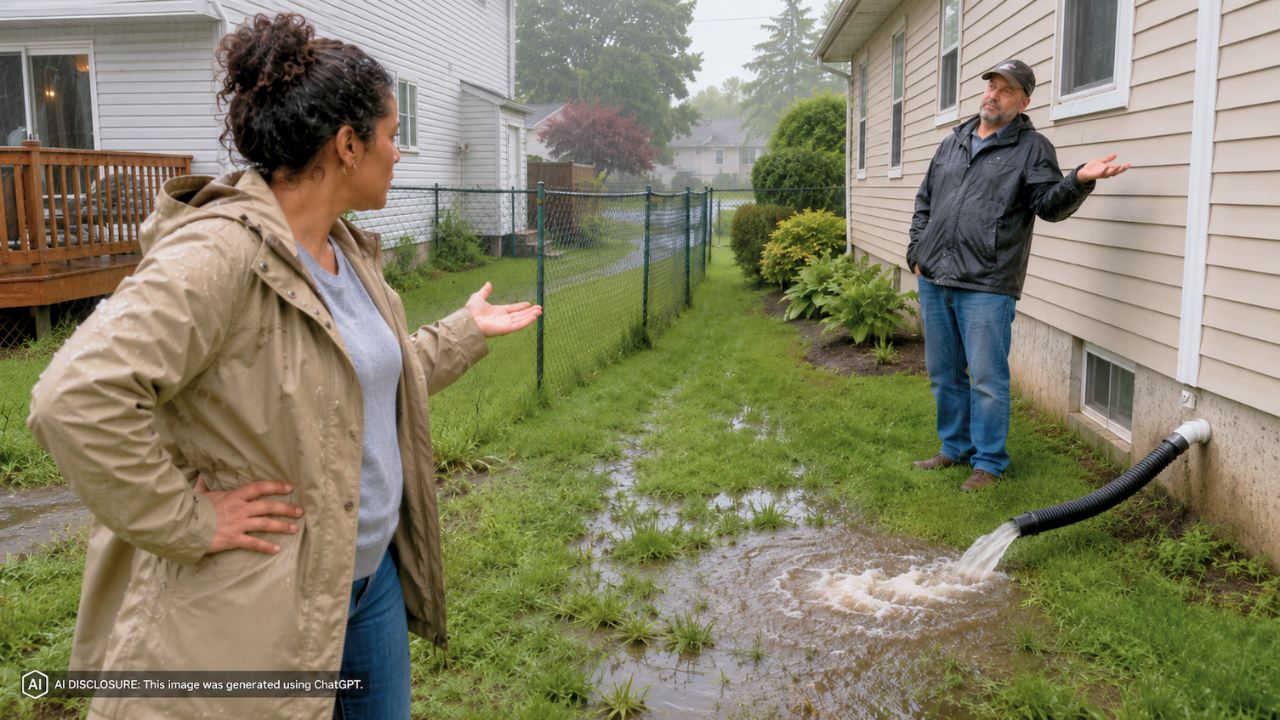
Photo credit: AI-generated image created using ChatGPT. Illustrative only.
It started like one of those rainy-day mysteries you don’t notice until you can’t unsee it. A new homeowner realized their yard wasn’t just getting “wet” during storms—it was getting soaked in a way that didn’t match the rest of the property.
After some poking around, they traced it to the neighbor’s sump pump discharge sending water straight into their yard. In the original post, the homeowner said the runoff was flooding their yard and they weren’t sure how to handle it without turning a drainage problem into a full-blown neighbor war.
The first rainy day made it obvious where the water was coming from
Yards flood for lots of reasons—heavy clay soil, a low spot, a gutter that’s clogged. But sump pump water has a tell: it’s consistent, directional, and shows up exactly when the pump cycles, often during or right after a rain.
This homeowner says the neighbor’s sump pump was draining into their yard and actively flooding it. That’s not just annoying; it can turn parts of a lawn into mud, drown landscaping, and create standing water that doesn’t belong there.
Once you connect the dots, it’s hard to pretend it’s “just the weather.” The water is being mechanically redirected from one property to another. And that changes how personal it feels.
They tried the normal, polite route first
The homeowner didn’t jump straight to threats or complaints. They asked—multiple times—for the neighbor to reroute the discharge.
They even offered to help dig, which is about as neighborly as it gets for an issue that’s literally dumping water onto someone else’s land. But instead of action, they got excuses. The neighbor claimed they were too busy, and the discharge stayed right where it was.
This is the part that makes these disputes drag on. The fix can be as small as moving a hose, but it requires cooperation—and cooperation is exactly what the homeowner couldn’t get.
When a simple fix turns into a daily nuisance
Flooding isn’t just a one-time inconvenience. Depending on the yard layout, repeated sump discharge can carve channels, soften soil along foundations, and create a soggy strip that never quite dries.
Even if it’s “only when it rains,” that can mean weeks of recurring mess during wet seasons. And once the ground is saturated, every new storm hits harder because the soil can’t absorb much more.
The homeowner eventually took matters into their own hands. They manually rerouted the discharge back into the neighbor’s yard, trying to stop the worst of it without escalating things officially.
But even after that, they said it still floods. That detail matters. It suggests the yard might already be graded to hold water, the discharge volume might be high, or the flow path is still sending water across the property line in a way that isn’t fixed by a quick redirect.
The homeowner’s next move: call the city or keep the peace
With the neighbor stalling, the homeowner reached out to the city. They learned a code violation could be issued, but they weren’t sure whether that would “stir the pot.”
That’s the classic homeowner dilemma: protect your property, or avoid making an enemy next door. A complaint can force movement, but it can also lock both sides into a long, tense standoff where every interaction feels loaded.
At the same time, letting it go has its own cost. Saturated soil can wreck grass and plantings. Persistent wet areas can attract bugs. And if water repeatedly ends up near a structure, people start worrying about bigger, more expensive problems—even if they can’t prove them yet.
The homeowner is stuck between two bad options: keep absorbing the damage, or bring in enforcement and accept the social fallout.
What people zeroed in on: documentation and leverage
Even from the limited details shared, the practical angle is clear: when water crosses property lines, it stops being a “preference” and becomes a boundary problem.
Homeowners dealing with this kind of issue typically focus on proof before confrontation ramps up. Water is tricky because it disappears, and then it’s your word against theirs. A flooded yard today can look “fine” in two days—until the next rain.
That’s why the talk in these situations often centers on documenting when it happens, what it looks like, and where it’s coming from—especially if the next step is code enforcement. The homeowner already made an effort to handle it informally, and that history matters if it comes down to showing a pattern of requests and refusals.
And there’s a second layer: the homeowner already tried physically moving the discharge. If the flooding persists, it strengthens the argument that the issue isn’t just “a hose pointed the wrong way,” but a drainage setup that needs a real reroute.
A yard can be repaired, but neighbor tension doesn’t dry out fast
The ugly part of drainage disputes is that the fix can be small, but the resentment gets big. Water feels invasive. It turns a private problem—keeping your basement dry—into someone else’s headache.
This homeowner did what most people hope will work: ask politely, offer help, avoid escalation. They still ended up with excuses, a flooded yard, and the looming choice of involving the city.
For now, the yard is still flooding even after the homeowner’s attempt to redirect the flow. And that’s what keeps the pressure on. Every time it rains, the problem announces itself again—right outside the back door—along with the same question homeowners hate answering: how long can you live with it before you have to make it official?
Like Fix It Homestead’s content? Be sure to follow us.
- Man Says He Found Out the Fence He Paid For Wasn’t Actually on His Property
- Woman Says Her Neighbor Started Taking Mulch From Her Delivery Pile Before She Could Even Spread It
- I made Joanna Gaines’s Friendsgiving casserole and here is what I would keep
- What Caliber Works Best for Groundhogs, Armadillos, and Other Digging Pests?