New Homeowner Learns the Neighbor Has Been Drawing Free Water From Her Well Since a Deal With the Previous Owner — Then He Insists She Pay to Connect to Public Water So He Can Keep Using It for Free
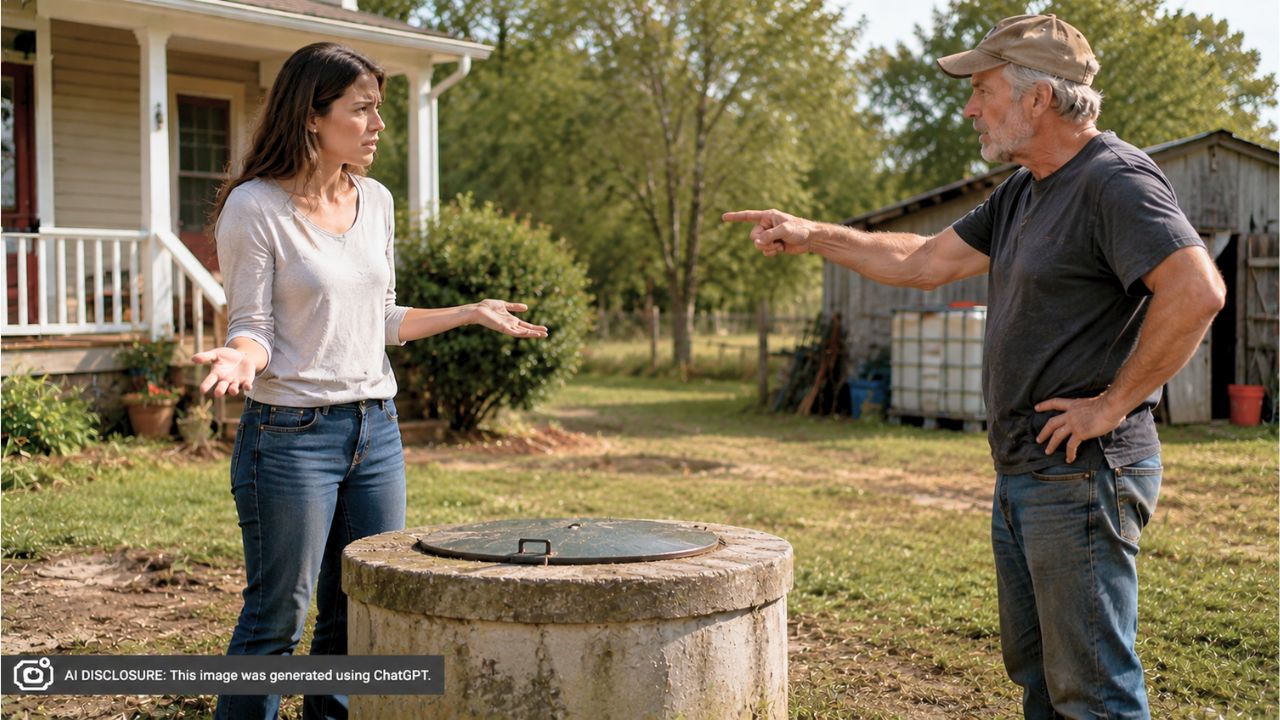
Photo credit: AI-generated image created using ChatGPT. Illustrative only.
Buying a home comes with the usual surprises: a sticky door, a mystery light switch, a patch of yard that never dries out. One new homeowner found a surprise that wasn’t quirky at all—another household had been pulling “free” water from a well on her property, and they expected that arrangement to keep going.
In the original post, the homeowner explains that the neighbor had an agreement with the previous owners to dig his own well on their land and use water from it. But after the home changed hands, the neighbor didn’t come over to introduce himself and ask what the new owner wanted to do. He came over worried about supply—and with a demand that turned the whole thing upside down.
A “deal” from the previous owner became the new owner’s problem
According to the homeowner, the neighbor’s setup dates back to an arrangement made before the sale. He was allowed to dig a well on the property and draw water from it. Later, the neighbor also connected to the public water supply, which usually would have ended the need to rely on the private well.
Instead, the neighbor kept using the well water anyway. And once the new owner bought the house, that private arrangement didn’t quietly fade out—it became a live expectation, like it was written into the land itself.
The homeowner describes her own well being “next to his well” on her property, which makes the dispute feel even more personal. This isn’t a neighbor borrowing a garden hose once. This is a permanent water source on someone else’s land, tied to daily life.
Then came the ask: “You should pay so I can keep using it”
The neighbor’s fear wasn’t subtle: if the homeowner started using her well normally, there might not be enough water left for him. That’s already awkward—because it treats the homeowner’s basic use of her own property like the threat.
But the conversation didn’t stop at concern. The neighbor reportedly insisted that the homeowner should connect her house to the public water supply so he could continue using the well water on her property, free of charge.
That’s where the story turns from weird to infuriatingly practical. The homeowner notes her house is about 150 meters uphill from the public water supply, making it expensive to connect. In other words: the neighbor wasn’t suggesting a minor change or an easy compromise. He was asking her to take on a significant infrastructure cost so he could keep avoiding a bill he already has the ability to pay.
It’s a classic rural-living pressure point: water isn’t just a utility, it’s an asset. And when it’s on private land, the person who owns the land expects control—until someone else has been using it long enough that they start treating it like a right.
It wasn’t just water—there were other “creative” expectations
The homeowner added an edit that makes the neighbor’s mindset clearer. She said he had floated other strange ideas before, including a suggestion that she buy fish to stock her pond for him, while he would buy food for them.
Even that request had a water angle. The neighbor’s pond also gets water from the homeowner, and it runs low in the summer. So the fish idea wasn’t just quirky; it was another attempt to turn the homeowner’s property and resources into something the neighbor could benefit from, with the homeowner covering the expensive or inconvenient parts.
These details matter because neighbor disputes often aren’t about one single thing. They’re about patterns. When someone pushes once and it works, they push again. When they don’t get immediate resistance, the requests get bolder.
The real stakes: cost, control, and what happens if water runs short
This kind of dispute can become serious fast, even before anyone calls a lawyer or an inspector. Water is essential, and wells are not infinite. If two wells are close together, heavy use from one can affect the other depending on the aquifer, the well depths, and seasonal conditions.
From the homeowner’s perspective, the stakes are concrete. If the neighbor continues drawing from a well on her land and something fails—pump issues, contamination, low yield—she’s the one living on the property where all of that is happening. Even if the neighbor has his own pump or piping, it’s still her land, and landowners tend to be the ones dragged into conflicts when damage, access, or repairs come up.
Then there’s the access question. If a neighbor has equipment on your property, you’re one argument away from someone claiming they need entry to “check” something, “fix” something, or “just get to the well.” Over time, that kind of routine access can start to feel normal—until you try to stop it and it turns into a standoff.
And the municipal connection the neighbor is pushing? It’s not just a trench and a pipe. It can involve permits, excavation, restoring the yard, and whatever complications come with being uphill. The homeowner framed it plainly: it would be expensive. The neighbor’s demand essentially shifts his ongoing water costs onto her, permanently.
How readers reacted: stop negotiating and start documenting
Even without a long comment thread included in the source material, the shape of the advice in these stories is usually consistent: don’t treat this like a casual misunderstanding. Treat it like a property and utility issue that needs clarity.
When a neighbor claims a long-running “agreement” with a previous owner, the practical response is typically to ask what’s in writing, what’s recorded, and what the actual property rights are. People also tend to push for documentation before confrontation—photos of the well area, notes about conversations, and any paperwork from the home purchase that might reference easements or utility arrangements.
Because the most dangerous version of this story isn’t the one where someone makes a ridiculous request. It’s the one where the new owner tries to be nice, delays action, and then finds themselves dealing with entrenched expectations and blurry boundaries years later.
When she said no, the neighbor went silent
The homeowner’s update was short and telling. After she told the neighbor she would not hook up to municipal water, he stopped all communication with her.
That kind of silence can feel like relief at first—no more doorstep pressure, no more arguing. But it can also signal the start of something colder: avoidance, resentment, and the possibility that the neighbor will keep using the water without asking, hoping the homeowner won’t want to escalate.
For a new homeowner trying to settle in, it’s a miserable trade-off. Be firm and risk turning the relationship icy. Give in and set the precedent that your property is negotiable if someone pushes hard enough. In this case, the homeowner chose the firm line—because paying to connect to public water so someone else can keep taking “free” water isn’t neighborly. It’s a bill disguised as a favor.
Like Fix It Homestead’s content? Be sure to follow us.