New Homeowners Get Cleared by Police After the Neighbor Falsely Accuses Them of ‘Stealing His Electric’ Over a New Internet Line — Then He Mows a Circle Ten Feet Into Their Backyard
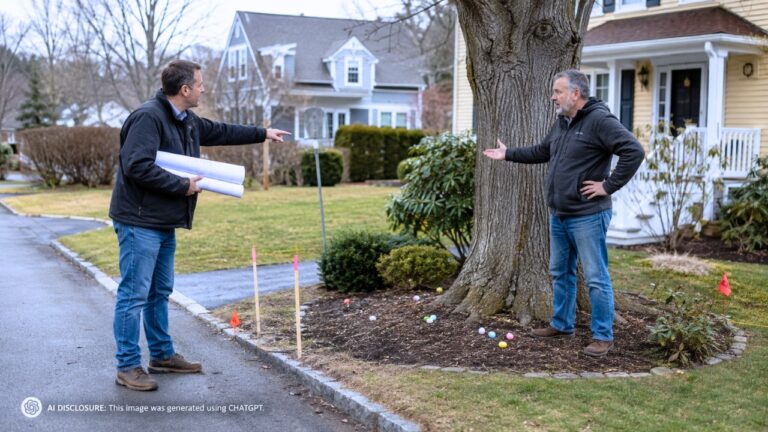
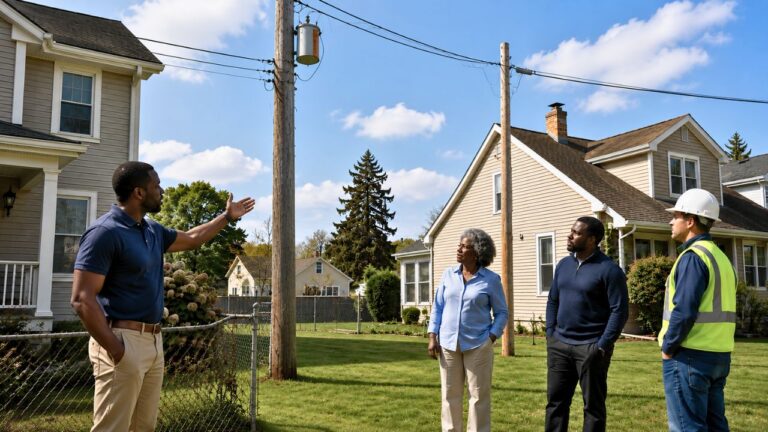
Photo credit: AI-generated image created using ChatGPT. Illustrative only.
Moving into a new house is supposed to feel like a reset: fresh paint, new routines, and a neighborhood you can settle into. For one family, it took just one temporary internet line across the yard to find out they had a boundary problem—and a neighbor who seemed determined to turn it into a spectacle.
In the original post, the homeowner explains that they’d just bought a house on a corner lot, with other neighbors on two sides and one “back corner” where a problematic neighbor’s property touches theirs by a few feet. People nearby had already warned them the man—identified only as Rion—has a history of reckless choices, from leaving fires unattended to grabbing political signs he doesn’t like. Then the internet install happened.
The first sign was a cable, and a neighbor in their yard
The family had Spectrum set up their internet service. The line was left above ground temporarily until a crew could bury it, a common setup that can take a few days depending on scheduling.
That short window was enough. The neighbor reportedly marched into the homeowners’ backyard, shirtless, and signaled for them to come to the patio door so he could confront them about the cord.
The homeowner told him it was temporary and would be buried in a few days. But instead of leaving it there, the neighbor insisted the installers needed to “talk to him first,” claiming the line was on his property.
“You’re stealing my electric” became the accusation
This wasn’t just a misunderstanding about a boundary. According to the homeowner, the neighbor escalated by telling another nearby neighbor that the new homeowners were “stealing his electric.”
From there it jumped to official attention. The neighbor reportedly contacted police and the cable company (the homeowner says “charter,” relayed through another neighbor) to come investigate. The result: they looked at it, and “said that it’s all good.”
In other words, the attempt to frame the family as thieves didn’t stick. But the fact that it happened at all was a warning: this neighbor wasn’t simply curious about property lines—he was willing to make accusations and involve authorities over a basic utility install.
Once the cable was buried, the mower showed up
You might think the story calms down after the cable gets buried. It didn’t.
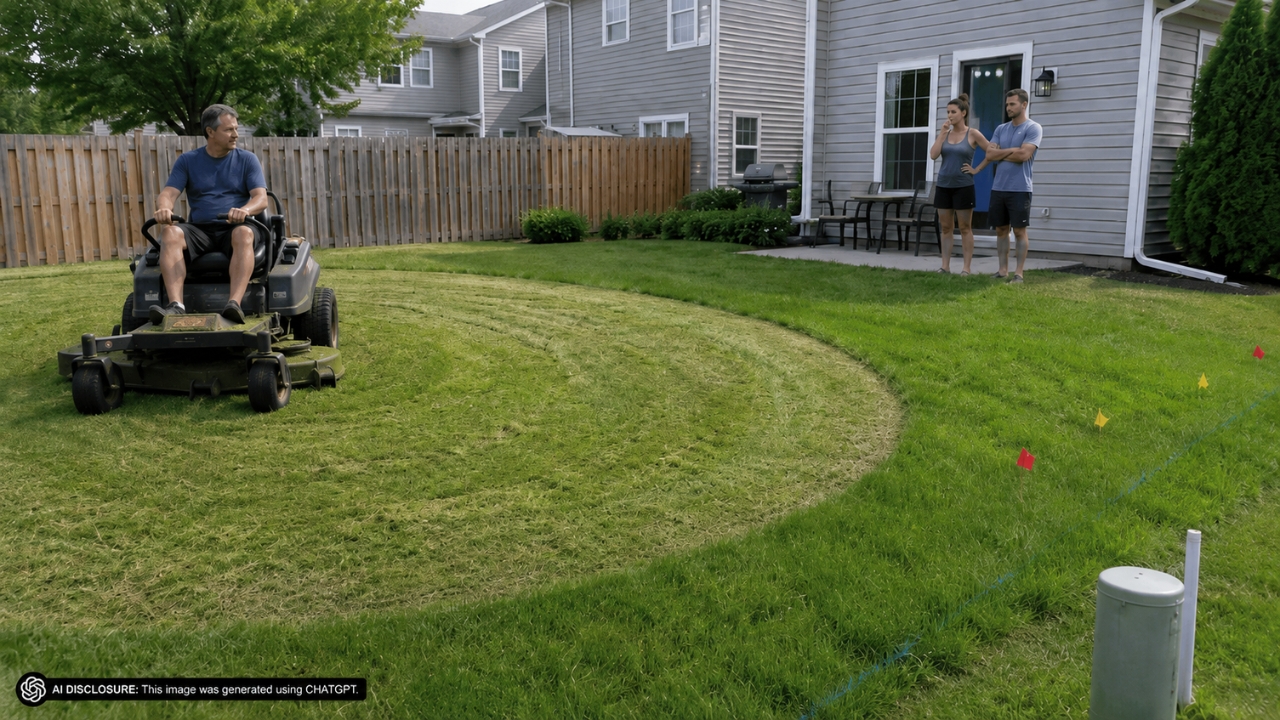
After the line was underground—and the homeowner says you could barely see where it ran—the neighbor mowed through another neighbor’s yard and cut a circle roughly ten feet into the new homeowners’ backyard.
That’s the kind of detail that makes people’s stomach drop. Mowing isn’t just mowing when it’s across a boundary; it’s a physical statement. It changes the look of the yard, it creates an apparent “mow line” that can confuse guests and contractors, and it signals, “I can come onto your property whenever I want.”
The homeowner also noted they were only assuming property lines based on existing mow patterns and what other neighbors’ yards look like—meaning the neighbor may have been taking advantage of the uncertainty that comes with a new purchase.
The expensive part is the time between “I think” and “I know”
If you’ve ever bought a home, you know how many things you plan to do “soon.” A survey often ends up on that list, right next to replacing locks and finding out where the shutoffs are.
Here, the survey became urgent. The homeowner said they’re getting the property surveyed in a couple of weeks, which is the moment this kind of conflict usually pivots from vague arguments to hard lines on paper.
Until then, every step feels slippery. A cable crew shows up. A neighbor claims it’s on his land. Another neighbor repeats an accusation. Then a mower cuts into the yard. Without stakes in the ground and a map that matches reality, it’s too easy for a pushy person to act like they’re the “real” owner of the corner.
At the same time, surveys cost money, and you don’t get to control the schedule. That waiting period is exactly when people install cameras, take photos, and start saving every message—because once someone has shown they’ll call police over an internet line, you don’t want the next call to be over something worse.
Security cameras weren’t about drama—they were about receipts
The homeowner said a security/camera system is almost fully installed. That detail matters because it shows they’re already thinking in the language of documentation, not arguments shouted across a fence line.
In neighbor disputes, especially ones involving property edges, the “what happened” part becomes the whole fight. Did he step onto your land or just “near it”? Was it ten feet or two? Did he damage anything? Did you tell him to stop? Did he come back?
A camera doesn’t fix a hostile neighbor. But it can prevent the most maddening part: having to prove reality later when the yard has been mowed, the cable has been buried, and everyone’s memory has gotten conveniently fuzzy.
It also changes behavior. Some people keep pushing until they realize every trespass and every drive-by is being recorded in a way that’s easy to show to law enforcement if it escalates again.
How people reacted: measure first, talk later
The homeowner’s post ends with a simple question: “What should I do about this guy?” Even without a long comment thread included in the source material, the likely homeowner-to-homeowner reaction is pretty predictable, because this pattern is familiar.
When a neighbor starts with a baseless accusation and ends with physical encroachment, most practical-minded homeowners focus on proof before confrontation. Not because they’re afraid to talk, but because the wrong conversation—too early, too heated, too informal—can turn into the neighbor’s next story about how they were “threatened” or “harassed.”
The steps the homeowner already mentioned are the ones people tend to push hardest: a survey to establish the boundary, cameras to document entry, and keeping the utility company’s work tied to an easement instead of anyone’s opinion. That’s also why it matters that the police and the provider already checked the line and found it acceptable. It creates a paper trail that the neighbor’s narrative didn’t match the facts.
If the mowing did damage (sprinkler heads, newly seeded grass, landscaping), that’s where people usually suggest logging it immediately—photos, dates, and what it cost to fix—so the dispute doesn’t stay abstract. “He’s being weird” is frustrating. “He cut ten feet into my yard and destroyed X” is concrete.
For now, the family is stuck in that uncomfortable early phase of homeownership where you’re still learning your house, but you’re also learning the personalities around it. A buried cable should have been a forgettable detail. Instead, it turned into a test of boundaries—literal and social—and the next couple of weeks, once the survey is done and the cameras are up, will likely decide whether this stays a one-time flare-up or becomes the new normal on that back corner.
Like Fix It Homestead’s content? Be sure to follow us.