New Landowner Confronts a Neighbor Over a Septic Tank Dug Twenty-Five Feet Onto Vacant Land — Then He Insists the Property Line Must Be Farther Out and Demands His Own Second Survey
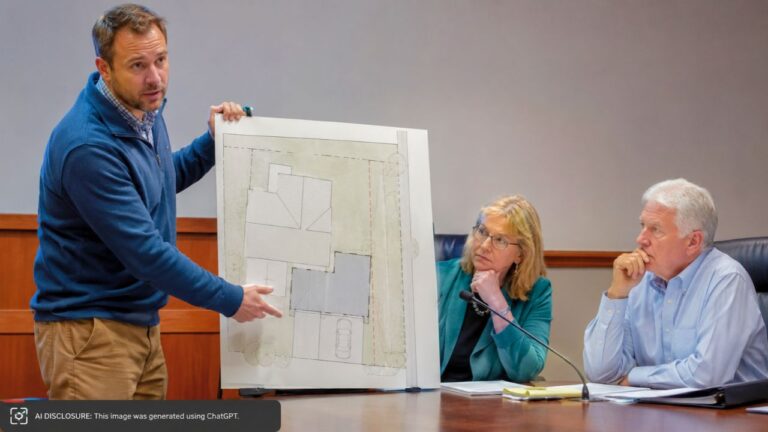
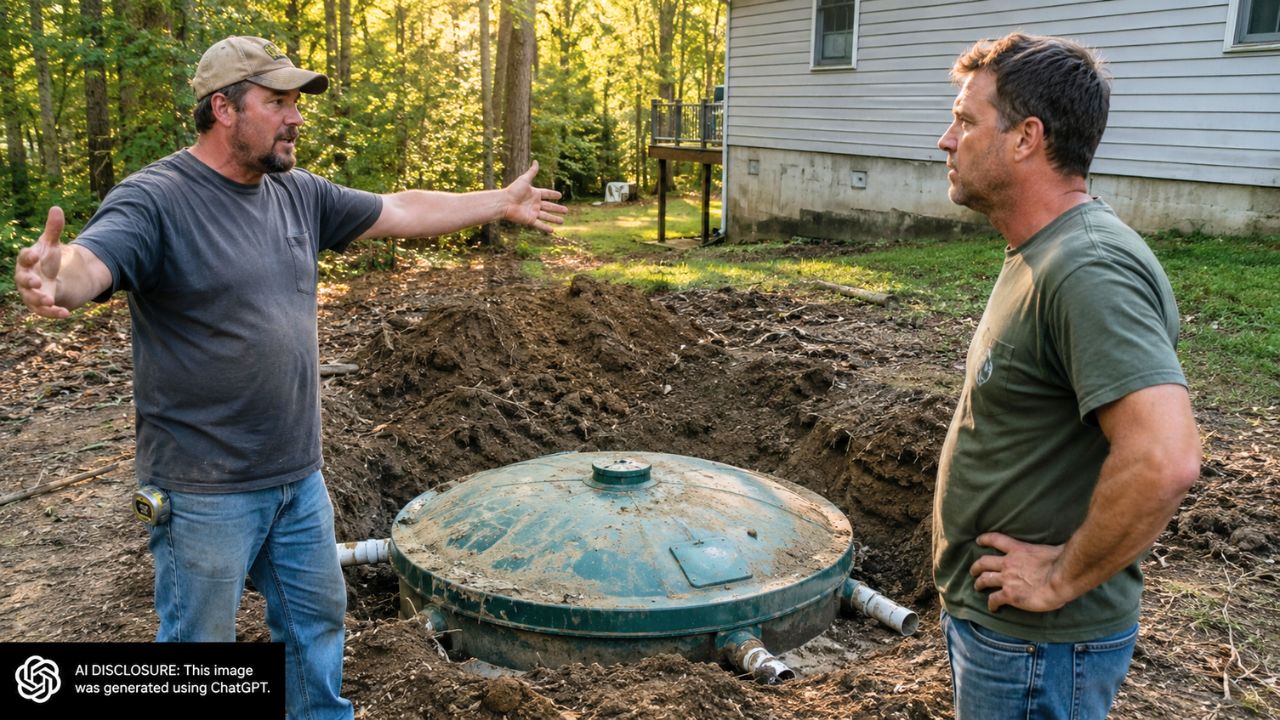
Photo credit: AI-generated image created using ChatGPT. Illustrative only.
Buying a vacant lot is supposed to feel like the clean start: no bad wiring, no mystery plumbing, no questionable additions. Just dirt, trees, and a set of property pins you can build from. For one new landowner in a small Nebraska town, that “blank slate” got wrecked the moment he walked the site and saw fresh excavation where it didn’t belong.
He’d purchased the land about six months earlier and planned to start home construction in roughly two months. But while he and his wife were still living out of state, a neighboring property owner replaced a failing septic system—and the digging started about 25 feet over the line. The landowner laid out the details in the source post, trying to figure out what comes next when someone installs a major utility on land they don’t own.
A quiet lot, then a brand-new mess
The timeline is what makes this kind of problem feel especially disrespectful. The owner says the lot was “pretty much unattended” because they weren’t living locally yet, and construction wasn’t scheduled to begin for another couple of months.
In that window, the neighbor’s septic system apparently failed and needed replacement. It’s common in small towns where many homes are on septic, but the replacement turned into a land grab by mistake—or by assumption—when the new tank (or at least the disturbed ground leading to it) ended up well onto the vacant parcel.
Worse, the neighbor didn’t mention anything at the time. When the landowner came by to talk to a contractor, he learned the septic work had been finished “more than a month” earlier. So this wasn’t an active crew that could simply shift a few feet. The damage was already buried and signed off in everyone’s mind—except the person whose land it was.
Twenty-five feet is not a rounding error
It’s one thing for a fence to be a foot off, or for a driveway edge to drift over time. A septic tank isn’t a decorative improvement you can ignore. It’s a large, heavy installation tied to a home’s waste system, typically involving a tank, lines, and sometimes a drain field depending on the design.
The landowner didn’t claim he knew the exact position of the tank itself, but he could see where the digging began. The start of the disturbed dirt was about 25 feet from the property line—far enough that it didn’t look like a small misunderstanding.
And it wasn’t just the principle. The owner wasn’t even planning to use septic for his future house; he intended to connect to the town system. So he wasn’t staring at an unwanted “upgrade.” He was staring at a buried obstacle on the land he was about to build on, with unknown implications for permits, setbacks, excavation, and where his home could safely go.
The neighbor’s response: deny the line, then sell the “solution”
When confronted, the neighbor acted shocked and insisted the property line must be farther out than the markers show. The landowner pointed out the marker locations from his own survey, done only six months earlier by a reputable company.
Instead of backing down, the neighbor pushed for a second survey—his own surveyor—scheduled for the next week. That’s the kind of move that can be reasonable if there’s genuine doubt, but it also buys time and shifts the conversation from “you dug on my land” to “we’re not sure where the land is.”
Then came the part that made the landowner livid: the neighbor floated what he called the “only viable solution.” If the line really was where the new owner said it was, the neighbor wanted him to buy the septic system. The neighbor said it cost $9,000 and offered to be “fair and square” for $7,000.
In the same breath, the neighbor offered alternative deals: an easement for that portion of the property, or buying that portion outright. All of those options have something in common: they turn the neighbor’s mistake into a transaction where the new landowner pays to make it go away.
“Undo it” sounds simple until someone has to pay
The landowner’s preference was blunt and practical: reverse everything that was done on his land and return it to how it was before. That’s the instinct most people have when they discover someone else’s permanent installation sitting in their build zone.
The neighbor’s answer was equally blunt: he said that wasn’t possible because he didn’t have the money, and that if it had to happen, the landowner would have to pay for it himself.
That’s where these property-line fights get ugly in the real world. A septic replacement is expensive to install and expensive to move. It’s also not something you can safely “half fix” with a shovel and good intentions. If the tank, lines, or disturbed soil interfere with construction, the new owner could be looking at redesigning a house footprint, delaying permits, or dealing with excavation surprises once the build begins.
And on the neighbor’s side, a forced removal could mean tearing up a yard again, disrupting service, and paying for a second installation the neighbor never budgeted for. Nobody wants to eat that cost—especially when they’re convinced the line “should” be somewhere else.
Reactions focused on proof, paper, and not getting cornered
Even without a full comment thread included in the source material, the shape of the advice this kind of post typically draws is predictable, because the stakes are so concrete. People tend to zero in on documentation and on slowing down the neighbor’s attempt to turn it into a handshake deal.
The immediate practical theme is: don’t negotiate against your own survey in your own driveway. A recent survey with marked corners is one of the strongest anchors a landowner has, and letting a neighbor’s preferred surveyor become the “real” map of the world can put you on defense.
Another common reaction is to keep everything in writing and to stop discussing money until the location is confirmed. Once someone hears “$7,000,” the conversation can get framed like you’re shopping for a septic tank, not responding to a trespass and a major unapproved use of your land.
And because a septic system is usually tied to permits and health rules, people often point out the value of involving the right officials—especially if the system was installed without verifying setbacks and property boundaries. Whether that becomes a code issue depends on the local permitting process, but it’s hard to imagine a proper installation that’s truly indifferent to lot lines.
A ticking clock: construction starts in two months
The part hanging over everything is the landowner’s schedule. He isn’t casually holding a lot for the next decade; he’s about to build. That means contractors, equipment, foundation decisions, and inspection timelines are already approaching.
A surprise underground system 25 feet over the line isn’t just an insult—it’s a planning hazard. Depending on where it sits relative to the planned build, it could affect where a driveway goes, where utilities trench, and how the site is graded. Even if it doesn’t physically block the home, it can create future liability questions: access to service, accidental damage during construction, or the neighbor asserting ongoing rights to enter the property to maintain “his” system.
The neighbor’s insistence on a second survey sets up a tense week. If the surveys agree, the discussion shifts from “where is the line” to “who pays to fix what got put in the wrong place.” If the surveys disagree, the lot becomes a contest of maps with a septic tank sitting in the middle like a concrete argument.
For now, the landowner is left with a freshly disturbed patch of soil on a lot he just bought, a neighbor trying to sell him a solution he never asked for, and a build date creeping closer. The dirt may be packed back down, but the problem isn’t buried at all.
Like Fix It Homestead’s content? Be sure to follow us.