10 Christmas Light Mistakes That Damage a Roofline
Photo credit: Crystal Madsen/Shutterstock.com
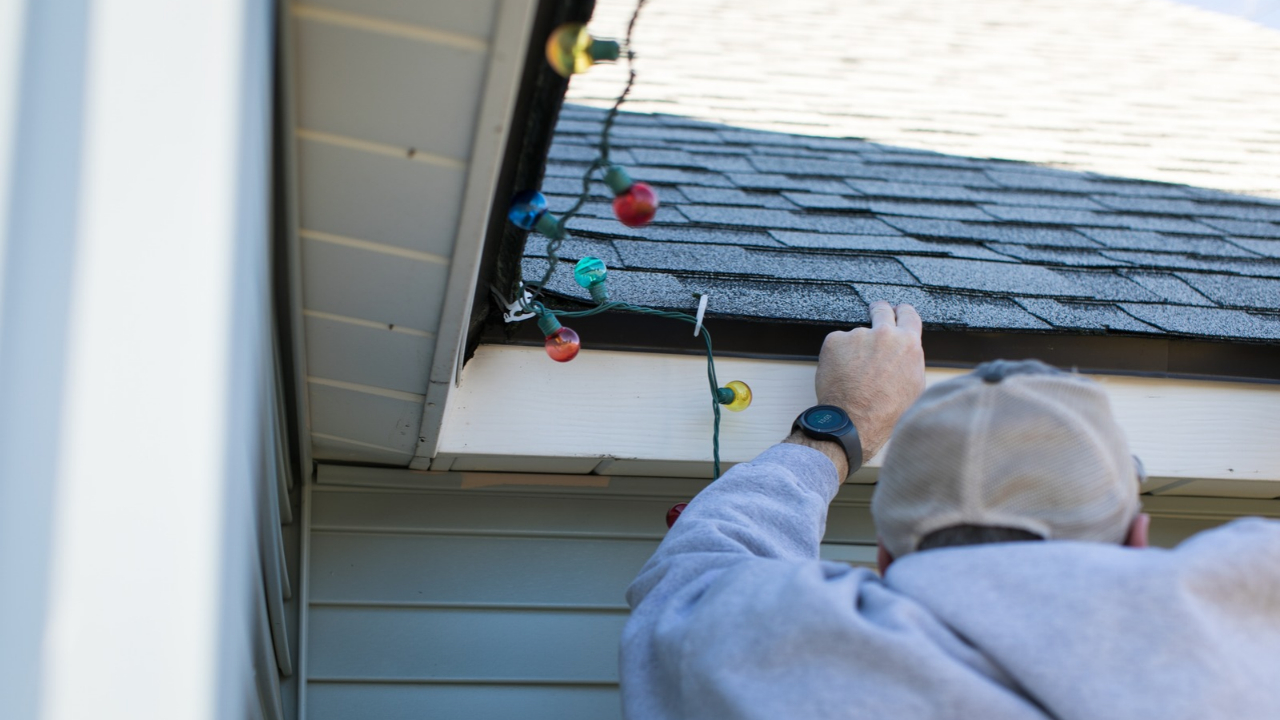
Holiday lights look harmless, but the roofline is a fussy place to mess around. A little extra force, the wrong fastener, or a quick shortcut can turn into leaks, rot, bent metal, or a gutter that never drains right again. Most of the damage shows up later, right when you want the house sealed tight for winter.
1. Driving Nails Or Staples Through Shingles
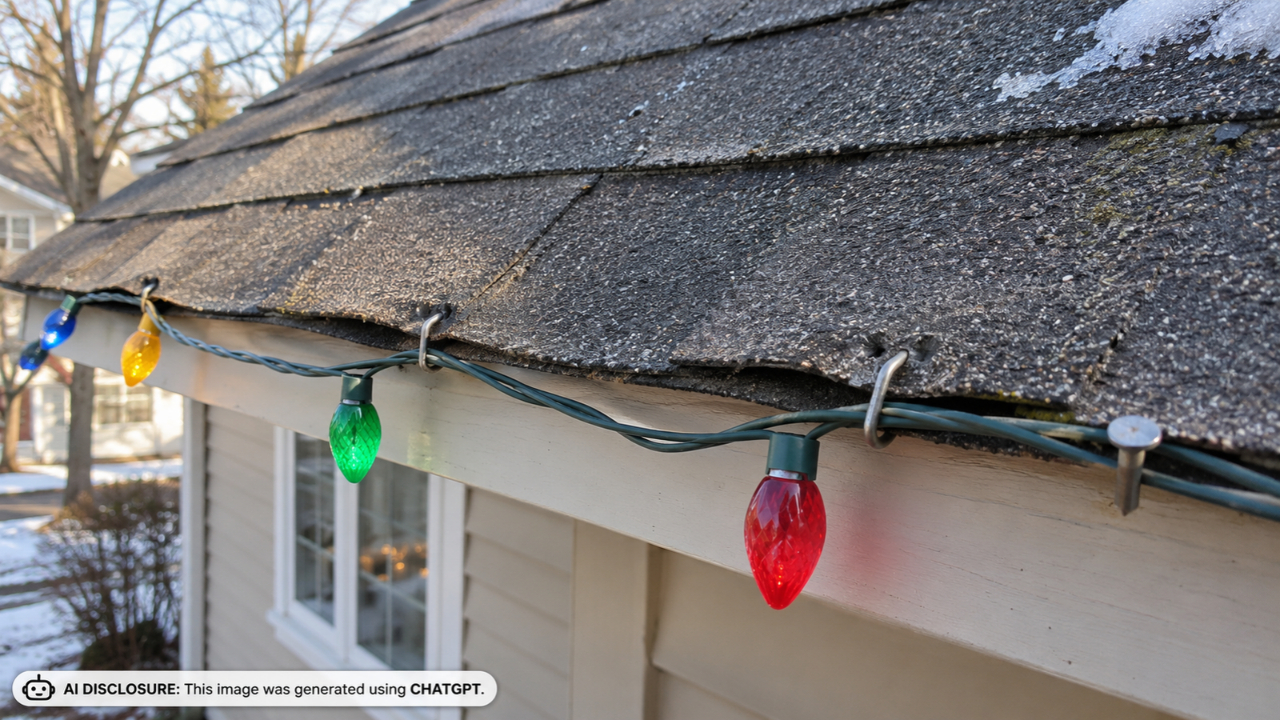
Putting fasteners through shingles is a leak you’re scheduling for later. Even a tiny nail hole can wick water under the shingle, and freeze and thaw will work it bigger. Once that deck plywood gets wet, you’ll hear it first as a soft crunch underfoot, then you’ll see staining in the attic.
Skip anything that punctures the roof covering. Use shingle-safe light clips made for the edge, or mount lights to gutters, drip edge, or fascia with the right clips. If you already made holes, patching is a roofing job, and a licensed roofer is worth the call if you can’t see exactly what you hit.
2. Hanging Clips From The Wrong Edge
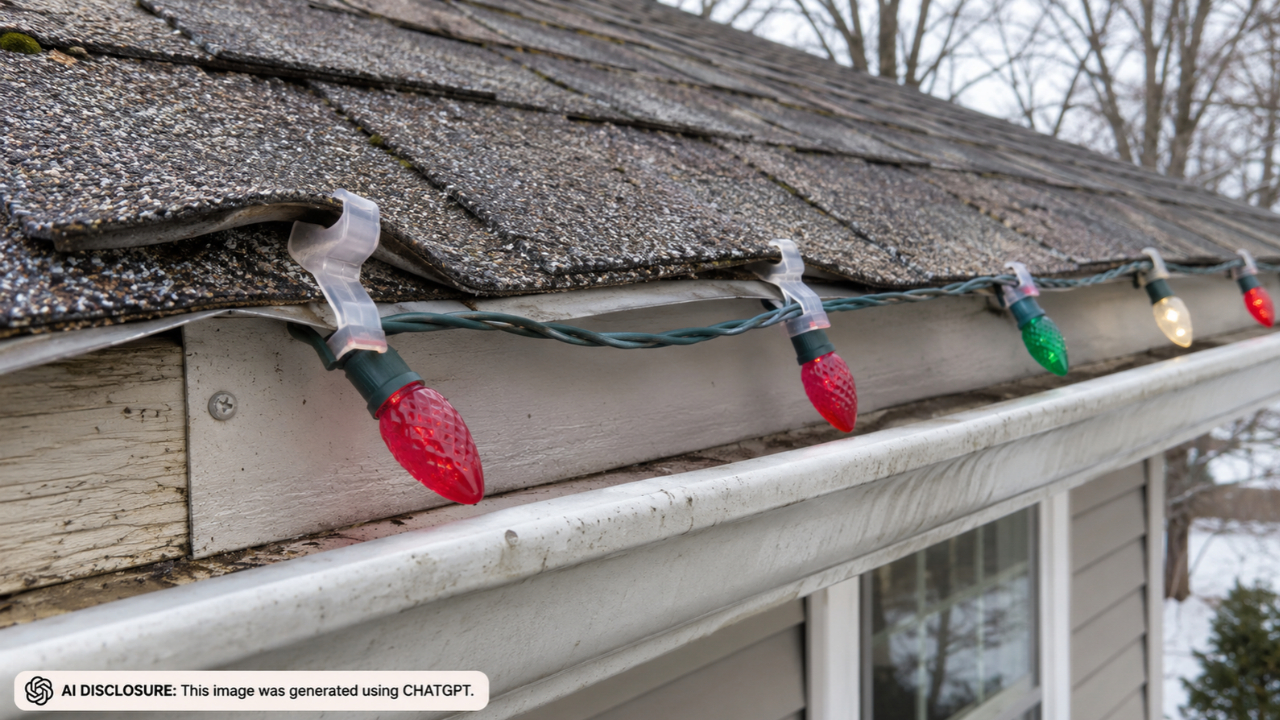
People hook clips under the first thing they can grab, and often that’s the drip edge or the shingle itself in a way it was never meant to hold. Pulling down on the drip edge can bend it, open a gap, and let wind-driven rain get behind the fascia board. Pulling down on shingles can break the seal strip and lift the tabs.
Match the clip to the surface. Gutter clips go on gutters, fascia clips go on fascia, and some roof-edge clips are made to grab the drip edge without prying it open. If you can’t attach without tugging metal or flexing shingles, move the run a couple inches and do it cleaner.
3. Overloading Gutters With Heavy Displays
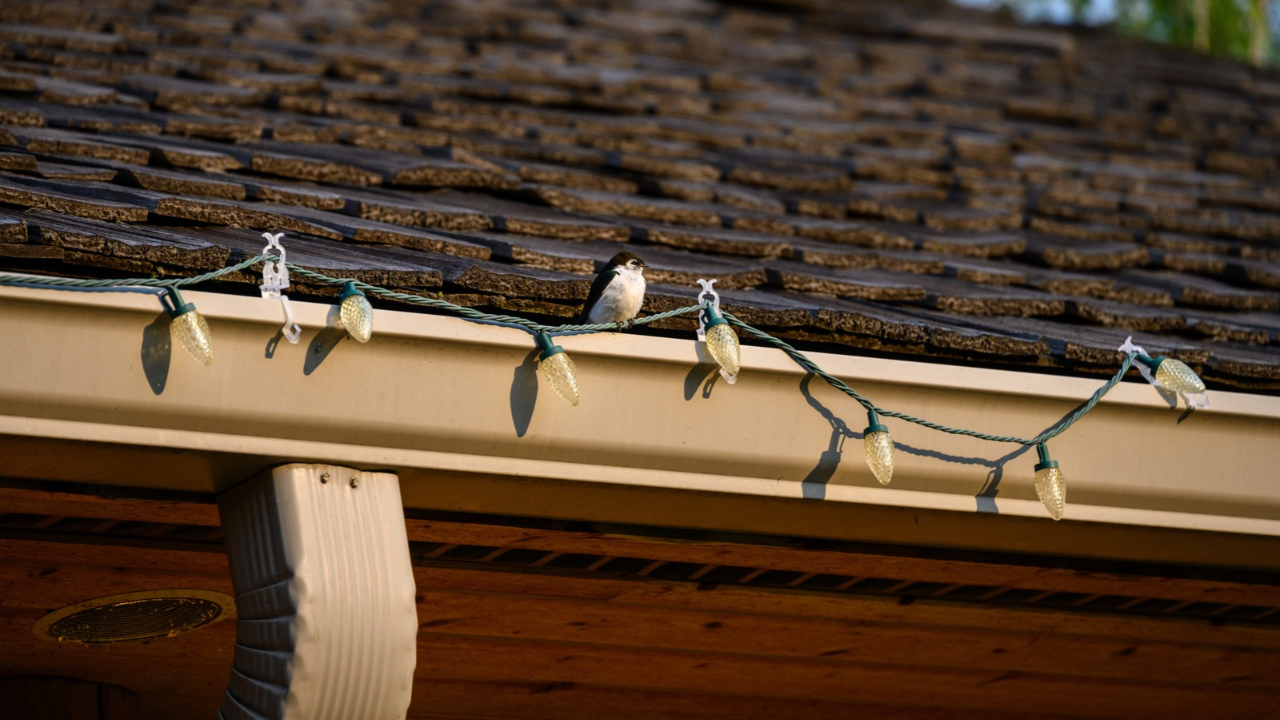
Plastic mini lights are one thing. Big C9 strings, thick extension cords, and oversized ornaments are another, especially after an ice storm adds weight you didn’t plan on. Gutters are strong, but they’re not a shelf, and the hangers can twist or pull out.
Keep the gutter load light and spread out. If you want the big bulbs, support the run from the fascia with proper clips, or use a lightweight stake and net lighting on shrubs instead of building a roof-edge billboard. Bent gutter sections and popped seams cost real money to straighten out.
4. Forcing Cords Under Shingles
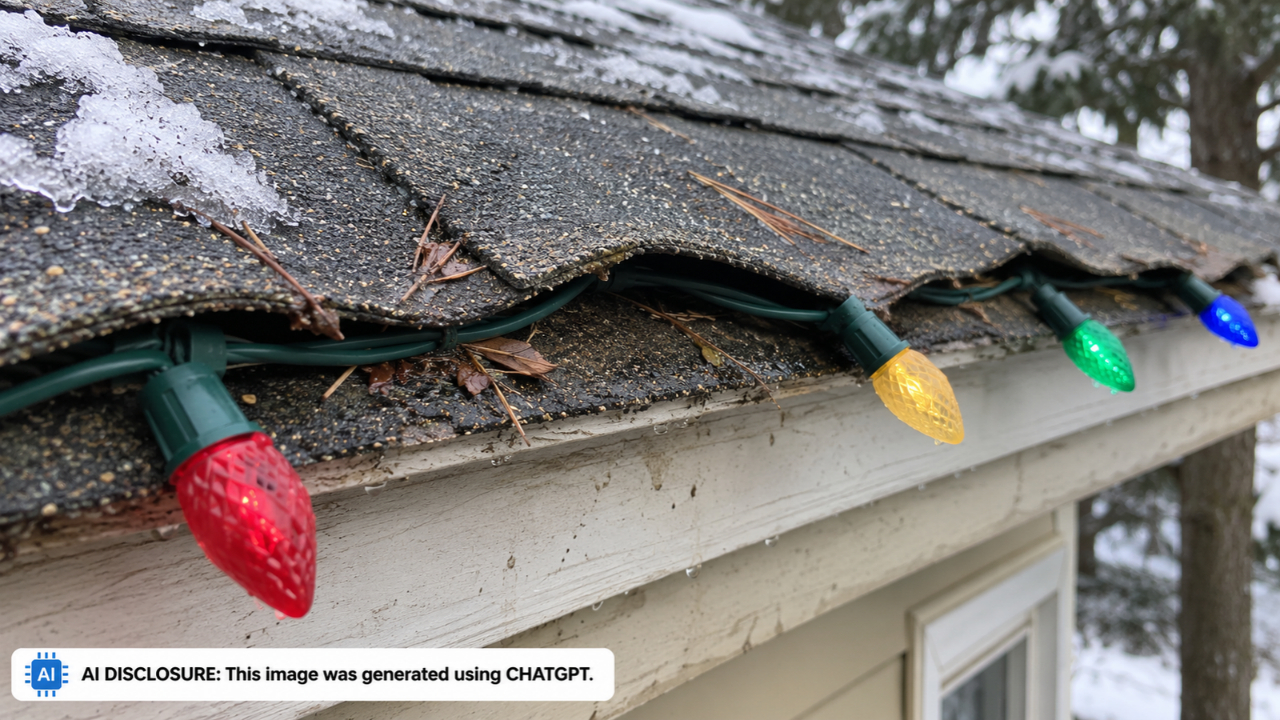
This one looks tidy, but it’s rough on the roof. Shoving wire under shingle tabs can crack cold asphalt, break the adhesive seal, and leave a spot that lifts in every wind. It also creates a little tunnel where water and pine needles like to sit.
Run cords where they’re meant to run, along fascia, soffit, or the outside of the drip edge, then secure them every few feet so they don’t flap. If the only way to hide a cord is to jam it under shingles, you’re better off buying a longer light set or adding a short extension cord rated for outdoors.
5. Using Duct Tape As A Roofline Fastener
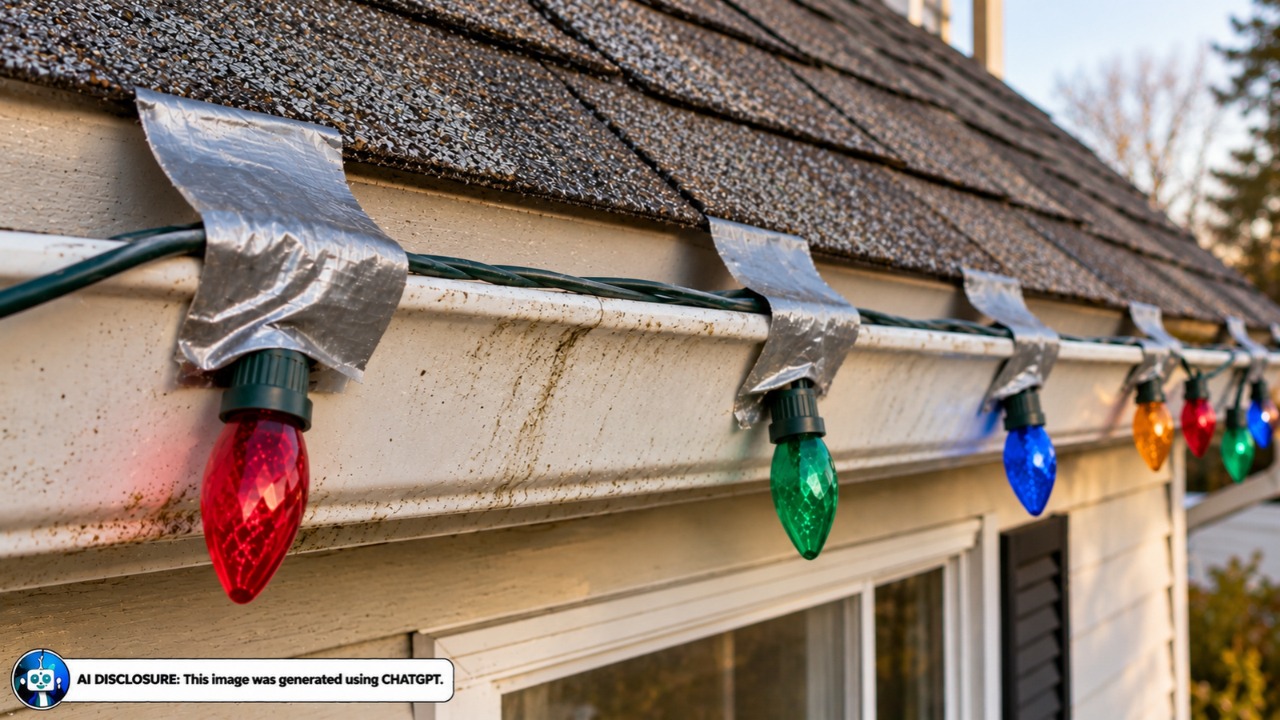
Tape seems gentle, right up until you remove it. In cold weather, adhesive can grab paint, pull a thin layer of aluminum coating, or leave a gummy strip that holds dirt and stays wet. On some gutter finishes, you’ll be looking at a dull patch all year.
Use clips for holding and zip ties for bundling, not for anchoring to the house. If you must use something sticky for a day or two, painter’s tape can be an honest exception on smooth, clean metal, but only for very light strain relief and only if you pull it off slow before it bakes in the sun. Don’t rely on tape to hold a line in wind.
6. Yanking Lights Off In Freezing Weather
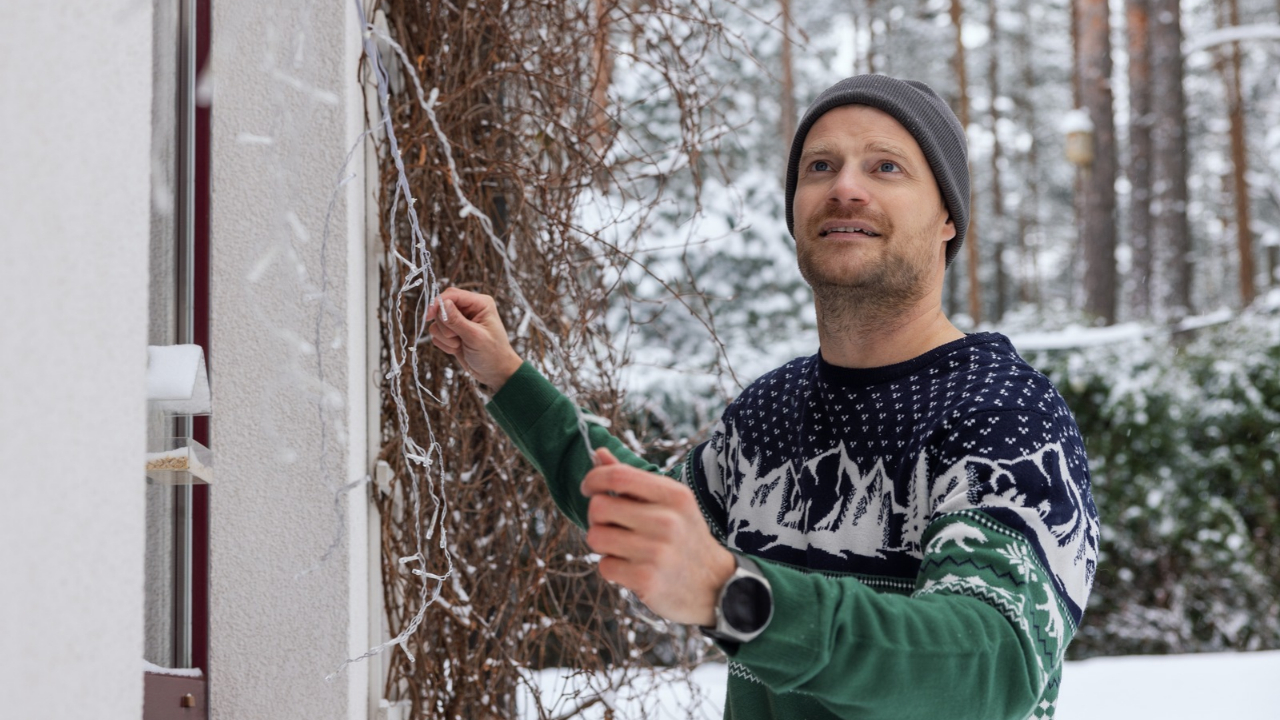
January removal is where a lot of roofline damage happens. Cold plastic snaps, metal clips bite, and that “just rip it down” move can tear gutter screens, bend drip edge, or peel paint off fascia. You’ll also leave broken clip bits behind that rattle in the gutter all spring.
Pick a warmer afternoon, even if it’s only in the 40s, and take them down like you put them up. Use a small step ladder so you can unhook clips instead of pulling from the yard. If a clip is frozen in place, warm it with your hand and work it loose, don’t twist it like a bottle cap.
7. Leaving Staples And Hooks Up All Year
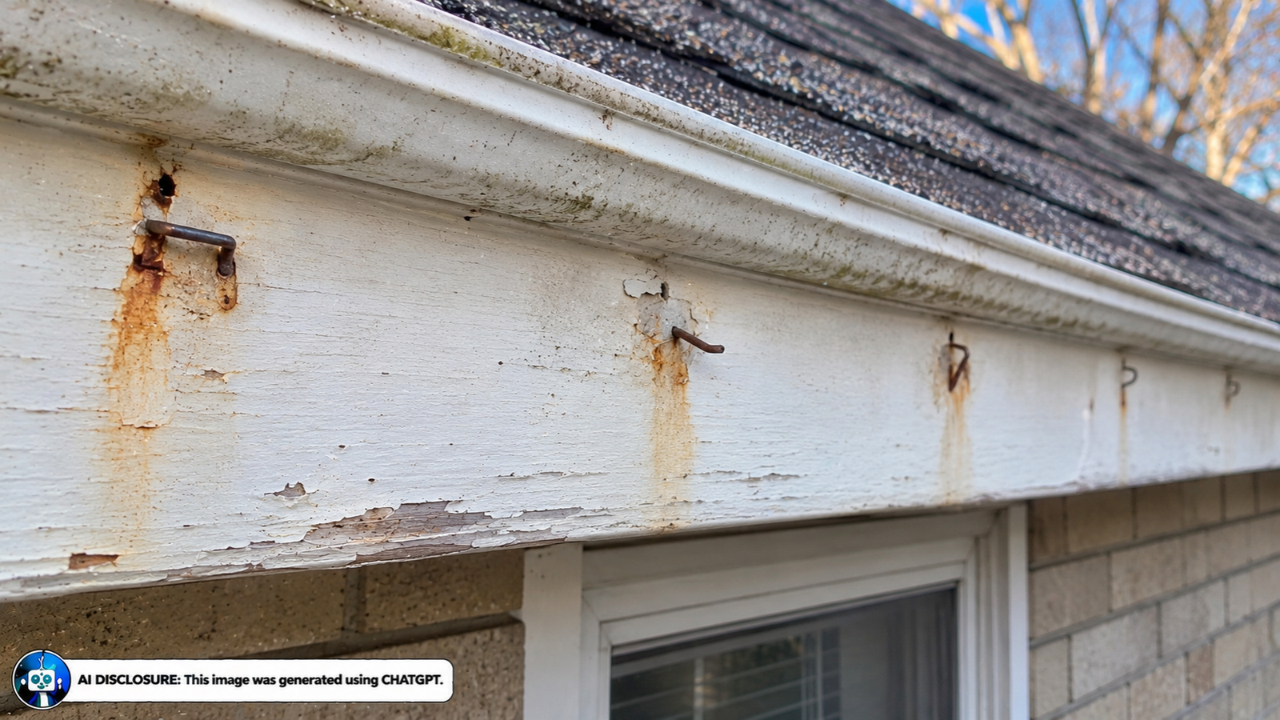
Those “temporary” hooks turn into little rust points and little water traps. Fasteners left in fascia can stain paint, and holes in wood invite carpenter ants and rot once they start cycling wet and dry. On metal, dissimilar metals can corrode where they touch.
Take down the hardware when the lights come down. If you want a system that stays, install a purpose-built track or permanent clips that are made for year-round exposure and mount them where water doesn’t sit. Drilling into fascia still needs thought, and if you’re not sure what you’re hitting behind it, hire it out.
8. Letting Wind Whip The Light Runs
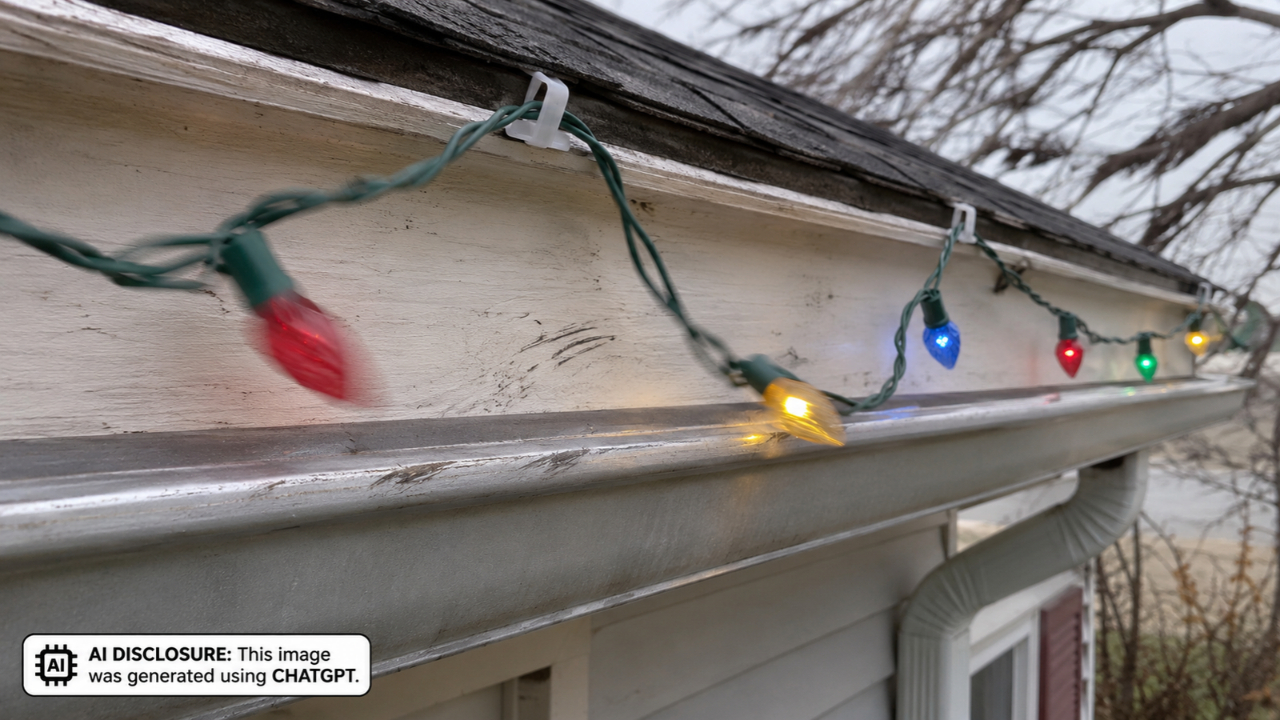
If the line is loose, the wind will do the damage for you. You’ll hear it first, that tapping or buzzing against metal, usually at night when it’s gusty. Over time it can scuff paint off fascia, wear a groove into a soft aluminum gutter lip, and snap sockets from repeated flexing.
Add more support points. A clip every couple feet keeps movement down without making removal miserable. Also give the cord slack at corners so it isn’t pulled tight across an edge that acts like a knife.
9. Plugging In Too Many Sets End To End
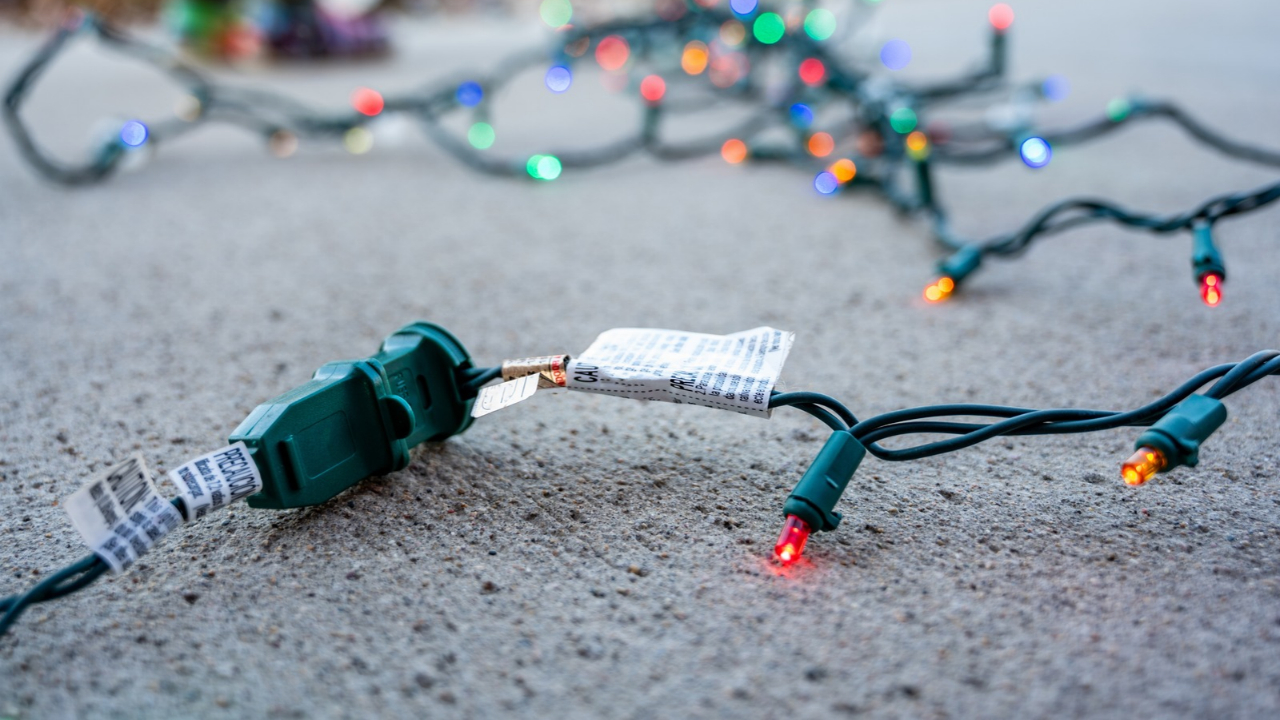
This isn’t a roof material problem at first, it’s a heat and failure problem that becomes a roofline problem. Overloaded strings and connections run warm, and warm connections under an eave can soften cheap plugs or crack older insulation. Then you get flicker, arcing, and a dead section right where it’s hardest to reach.
Read the tag on the light set and follow the max link count, especially with incandescent strings. Use outdoor-rated extension cords that are long enough so you aren’t stretching a connection tight at the gutter. If you need a new exterior outlet added near the roofline, that’s a job for a licensed electrician and it has to meet local code and GFCI rules.
10. Skipping A Quick Gutter Clean First

Hanging lights over a gutter packed with leaves is asking for an ice dam and an overflow line down your fascia. The lights hide the problem, then a warm day hits, meltwater backs up, and suddenly paint is peeling near the soffit vents. The mess also makes clips sit crooked and pries on the gutter edge.
Spend 20 minutes clearing the channel before you clip anything on. A gutter scoop, gloves, and a hose does most of it, and you’ll spot loose hangers while you’re up there. If your roof is steep or the second story makes your ladder feel sketchy, pay for the cleanout and save the fall risk.
Before you plug anything in, walk the perimeter and look at the roof edge from a few angles. If something is pulling, bending, rubbing, or sitting in standing water, fix that now while the ladder’s already out. Your spring self will be glad the roofline still looks the same as it did in October.
Like Fix It Homestead’s content? Be sure to follow us.