10 Things That Draw Rats to a Feed Room
Photo credit: ValeriyPH/Shutterstock.com
A feed room is supposed to be boring. Quiet, dry, and easy to sweep. If you’re hearing scratching after dark or finding little black pellets near the bins, something in that room is rolling out the welcome mat.
Rats don’t show up out of nowhere. They follow food, water, warmth, and easy hiding spots, then they stay because the setup keeps paying them back.
1. Torn Feed Bags Left On The Floor
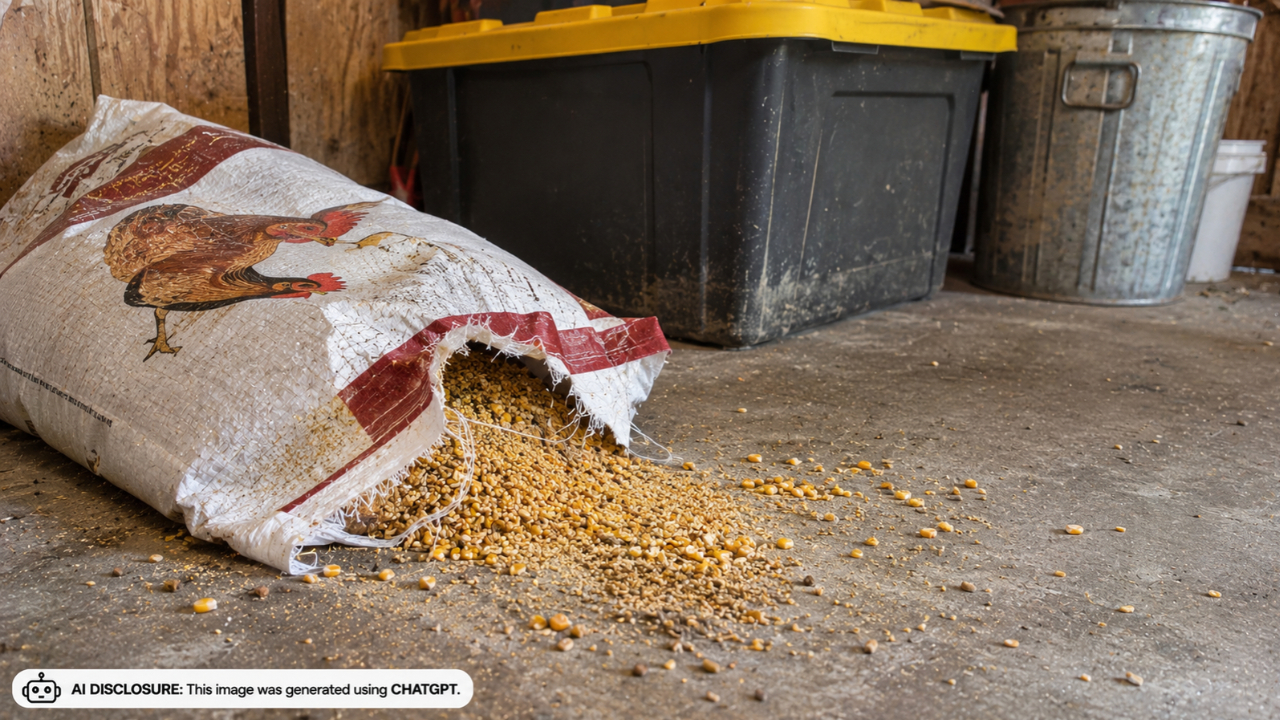
The fastest way to get attention is a ripped bag bleeding grain onto concrete. Rats smell it, find it, and then the hole gets bigger every night. Even if you “just set it there for a minute,” floor-level food is a low-risk buffet for anything with whiskers.
Move open bags into a lidded container the same day you bring them home. If you buy in sacks, keep a tough plastic tote or metal can right by the door so you don’t set anything down “temporarily.” Sweep the spill, then sweep again along the wall where the fines collect.
2. Lids That Don’t Actually Seal
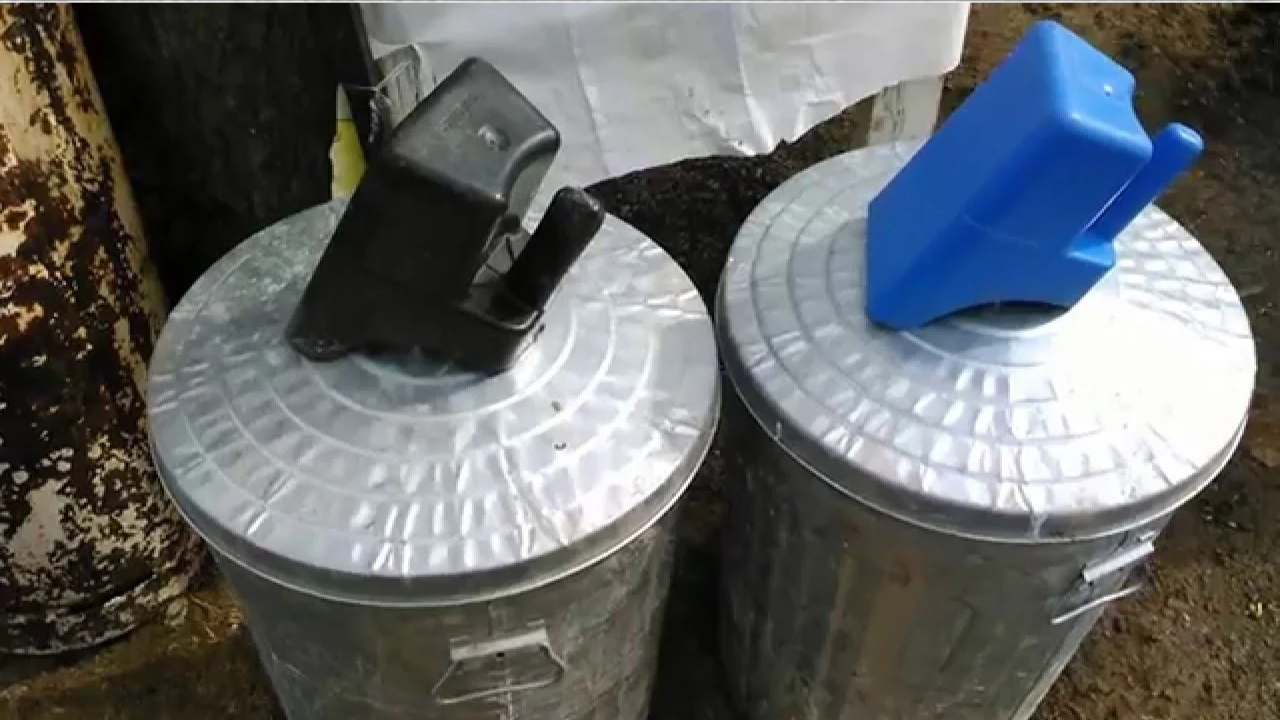
Snap-top lids that bow, cracked plastic, and “mostly closed” garbage cans are basically invitations. Rats don’t need much of a gap, and once they learn a lid pops off with a shove, they’ll work it nightly. You’ll also get that sour feed smell that seems to hang around no matter how much you clean.
Use containers with a rigid rim and a lid that clamps or screws down. Metal cans work well, but only if the lid fits tight and you’re not leaving it cocked on one side. If you stick with plastic, replace warped lids instead of stacking something heavy on top and hoping for the best.
3. Feed Dust And Cracked Corn Under Shelves
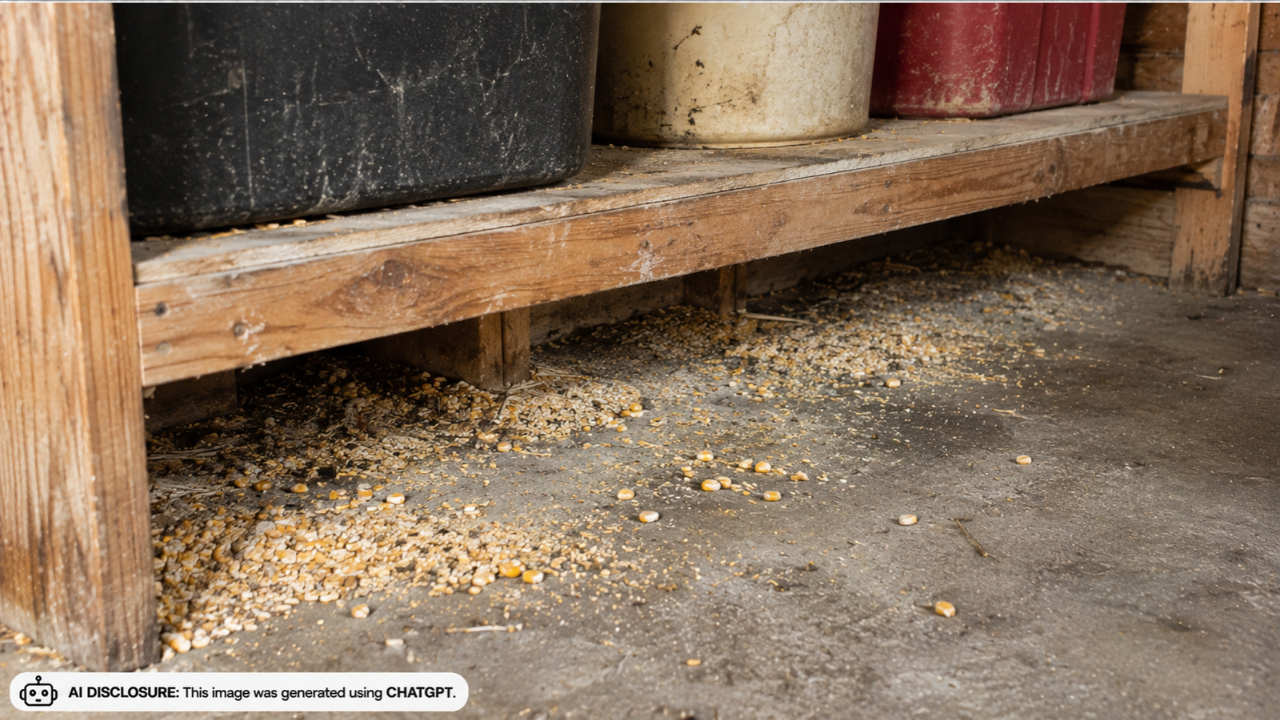
You can keep feed in perfect bins and still feed rats with what falls behind them. Grain dust, pellets, and cracked corn sift into corners and under shelving, then sit there untouched for months. That’s slow, steady calories that don’t look like a “spill,” so it gets ignored.
Once a week, pull a couple bins out and sweep the footprint. A flat shovel, a stiff broom, and a shop vac get it done fast. If the room is small, raise bins and cans onto pallets or simple 2×4 runners so you can see and clean underneath without throwing your back out.
4. Leaking Hydrants, Buckets, Or Condensation
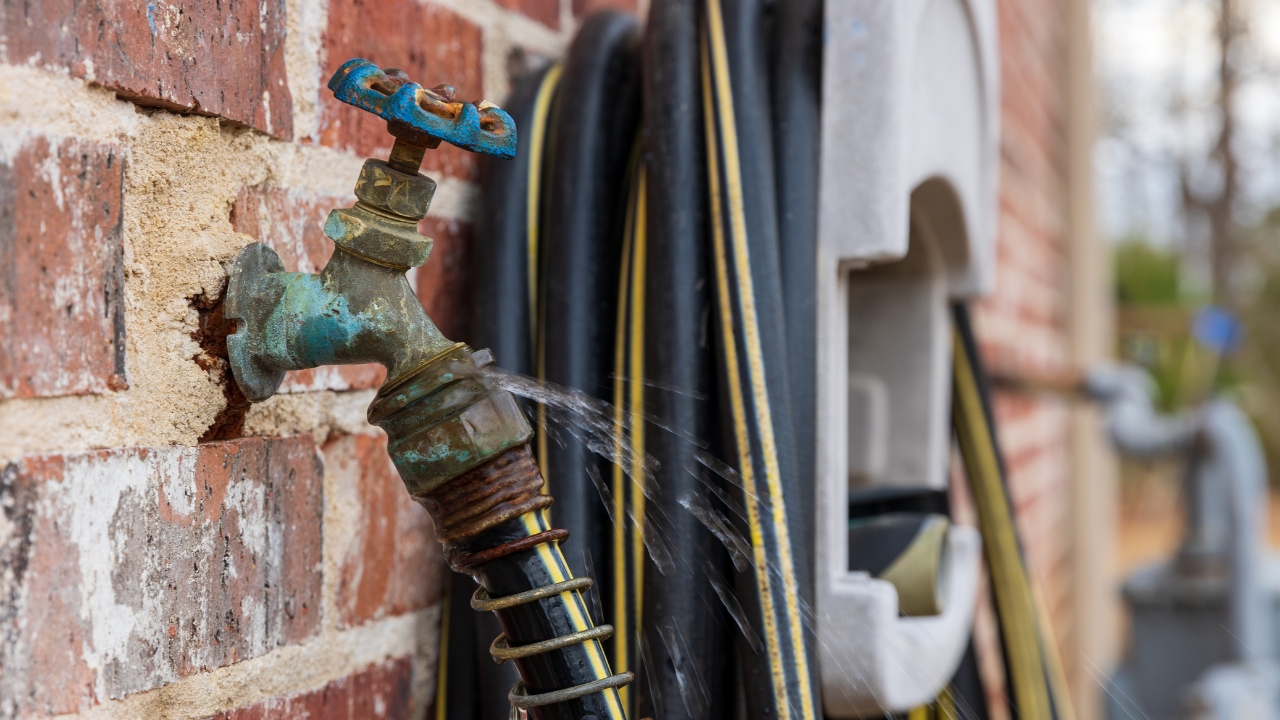
Food brings rats in, but water lets them settle in. A slow drip from a frost-free hydrant, a sweat-soaked pressure tank, or a bucket that always has an inch in the bottom gives them a dependable drink. You’ll notice damp feed clumping, a musty smell, and sometimes trails in the dust where they run to the water spot.
Fix leaks when they’re small. Tighten fittings, swap a worn washer, or replace a cracked valve, and put a catch pan under known problem spots until you’re sure it’s dry. If you’ve got a pressure tank or plumbing sweating in summer, add insulation on the cold lines and run a small dehumidifier if the power bill makes sense for your setup.
5. Door Sweeps Missing Or Chewed Up
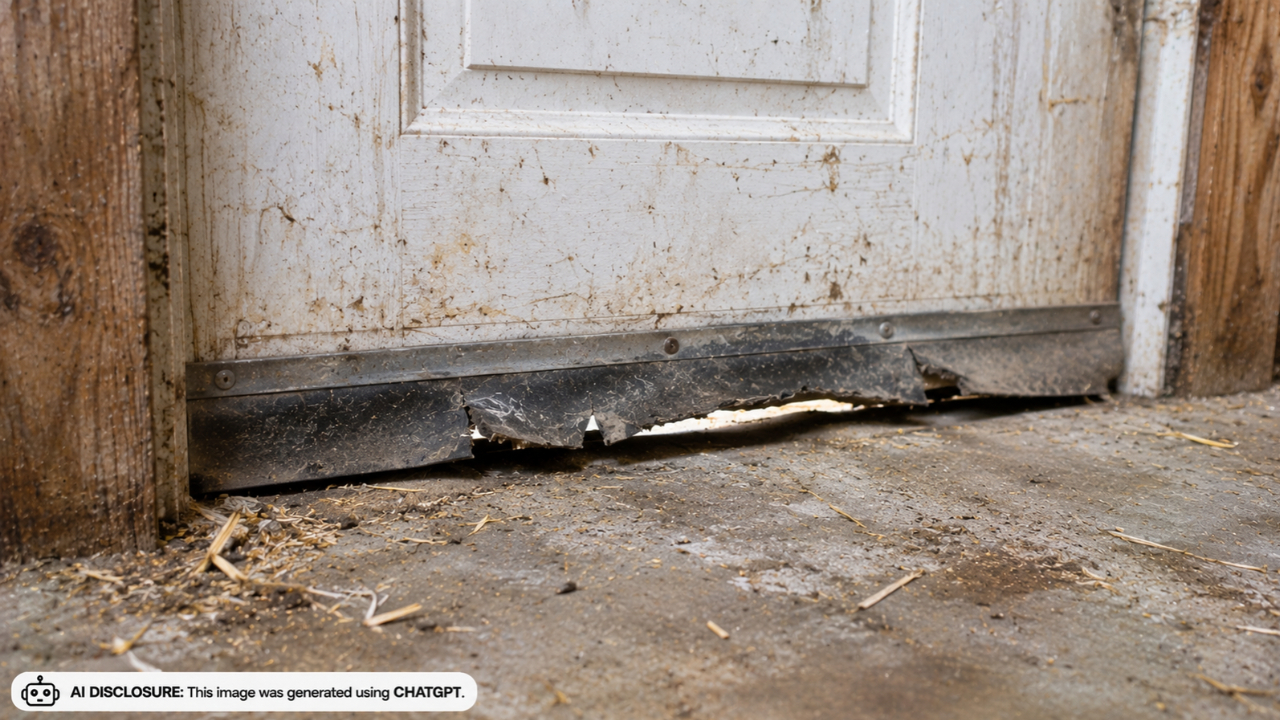
That little gap under the feed room door is a freeway at night. Weatherstrip gets torn, door sweeps rot, and then you’ve got a half-inch of daylight that you stop noticing. Rats don’t need the door wide open, they need one easy pass-through that doesn’t scrape their backs.
Replace the sweep with something tough, not foam. A heavy-duty rubber sweep or a metal-reinforced style holds up better, and it’s a cheap afternoon fix with a drill and a screwdriver. If the threshold is uneven, add a proper threshold strip so the sweep actually seals instead of riding high in the middle.
6. Cluttered Corners Full Of Hiding Spots
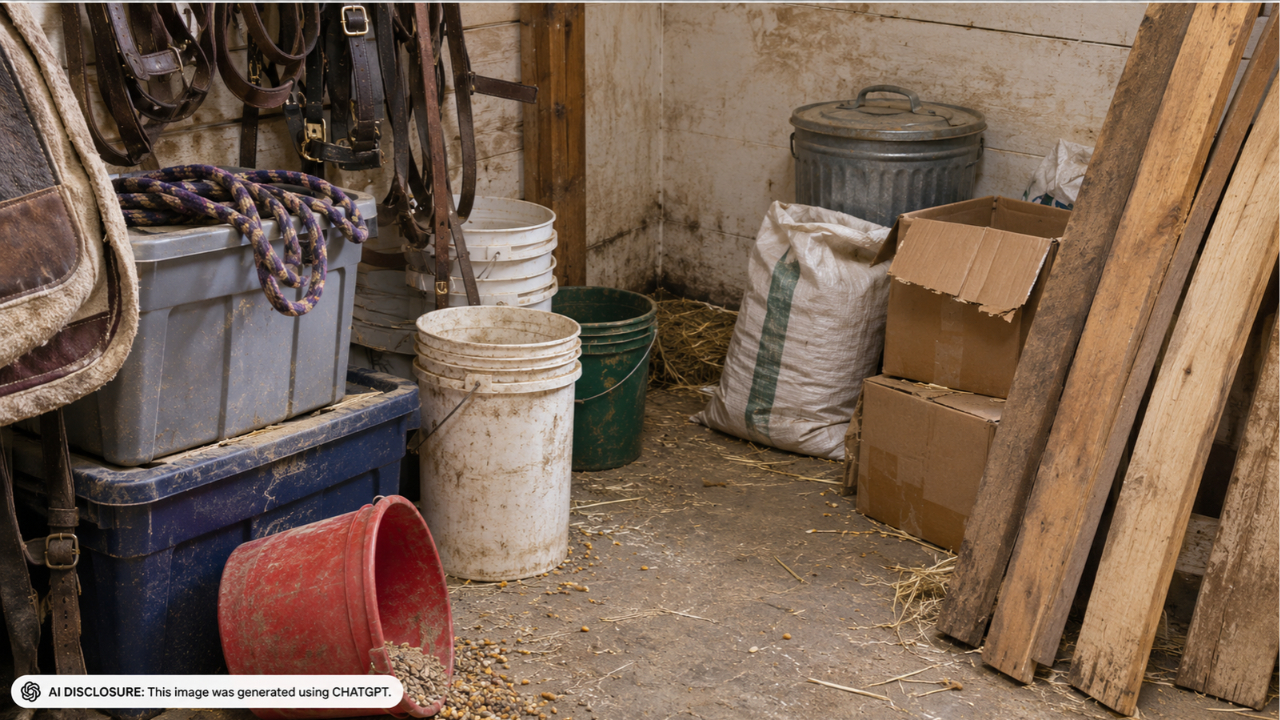
Extra buckets, empty totes, old tack, and random boards stacked “for later” make a rat feel safe. They like tight cover where they can duck in fast, and a messy feed room gives them ten options within a few feet. You’ll see gnaw marks on cardboard and that greasy rub line along the wall where they travel.
Clear the floor and keep the walls visible. Store gear on wall hooks or open shelving so you can spot droppings and nesting material right away. Cardboard boxes are the worst choice in a feed room, they’re chewable and they hold smells, so swap them for hard bins or just get rid of the stuff.
7. Pet Food Stored With Livestock Feed
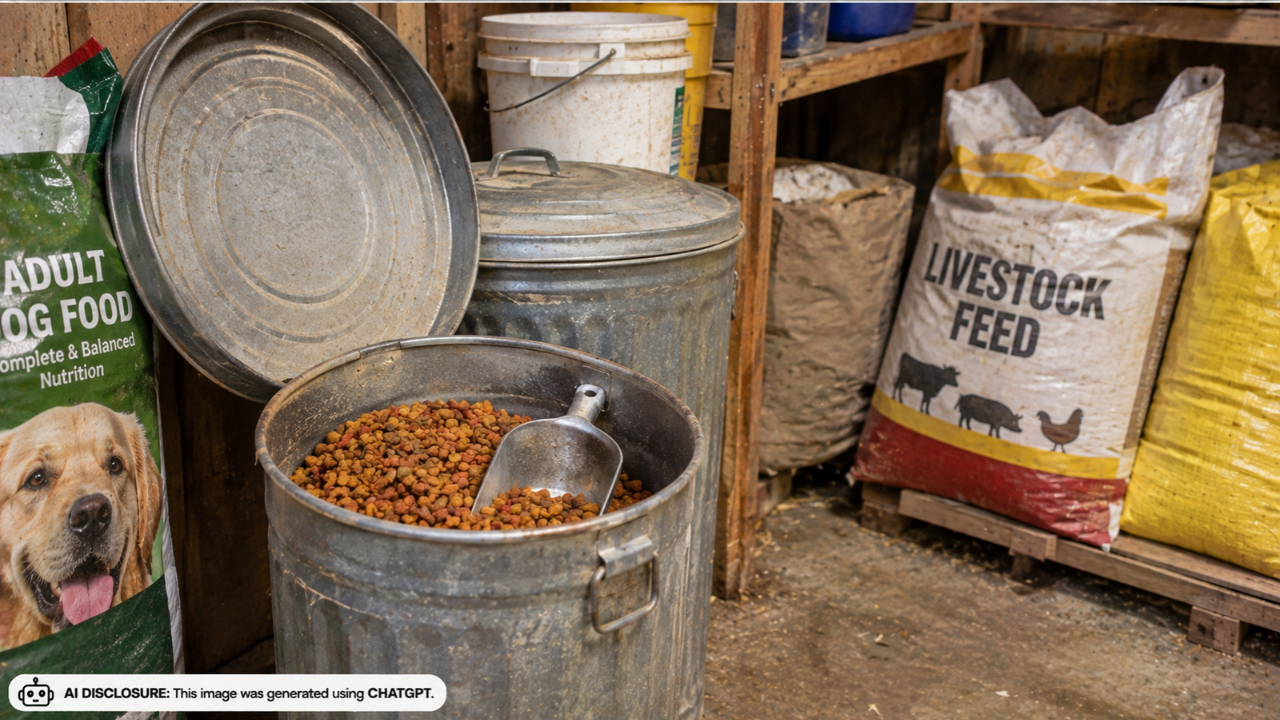
Dog food and cat food often smell stronger than grain, and rats go nuts for it. If you’re tossing a few scoops in the feed room because it’s “already a storage area,” you’re adding a higher-value bait. The kibble dust that builds up around a bag is a steady snack even when you think the bag is closed.
Put pet food in its own sealed container and keep it off the floor, even if it’s only a small bag. If the feed room is the only spot you’ve got, at least keep pet food in a metal can with a tight lid and don’t leave the scoop buried in the kibble where it props the lid open.
8. Warm Appliances And Idle Motors Nearby
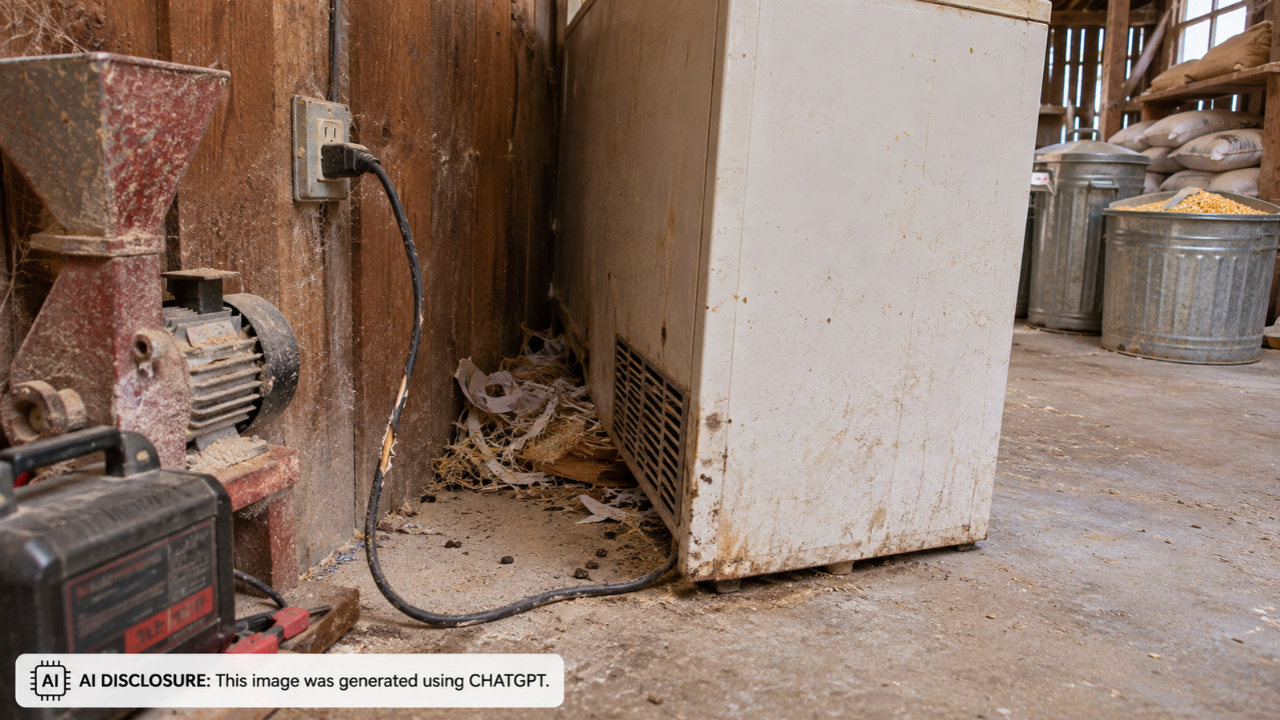
A chest freezer, an old fridge, a feed grinder motor, or a battery charger can create a cozy zone, especially in fall and winter. Rats will nest behind or under warm equipment, then run a short route to the feed. Sometimes the first clue is chewed insulation on a cord or shredded paper tucked behind the compressor area.
Pull appliances out a couple times a year and clean underneath and behind them. Keep cords up off the floor and protected in conduit where it makes sense, especially if the room sees rodents already. If you find chewed wiring on anything plugged in, unplug it and get the cord replaced before you keep using it.
9. Open Vent Screens And Unsealed Wall Gaps
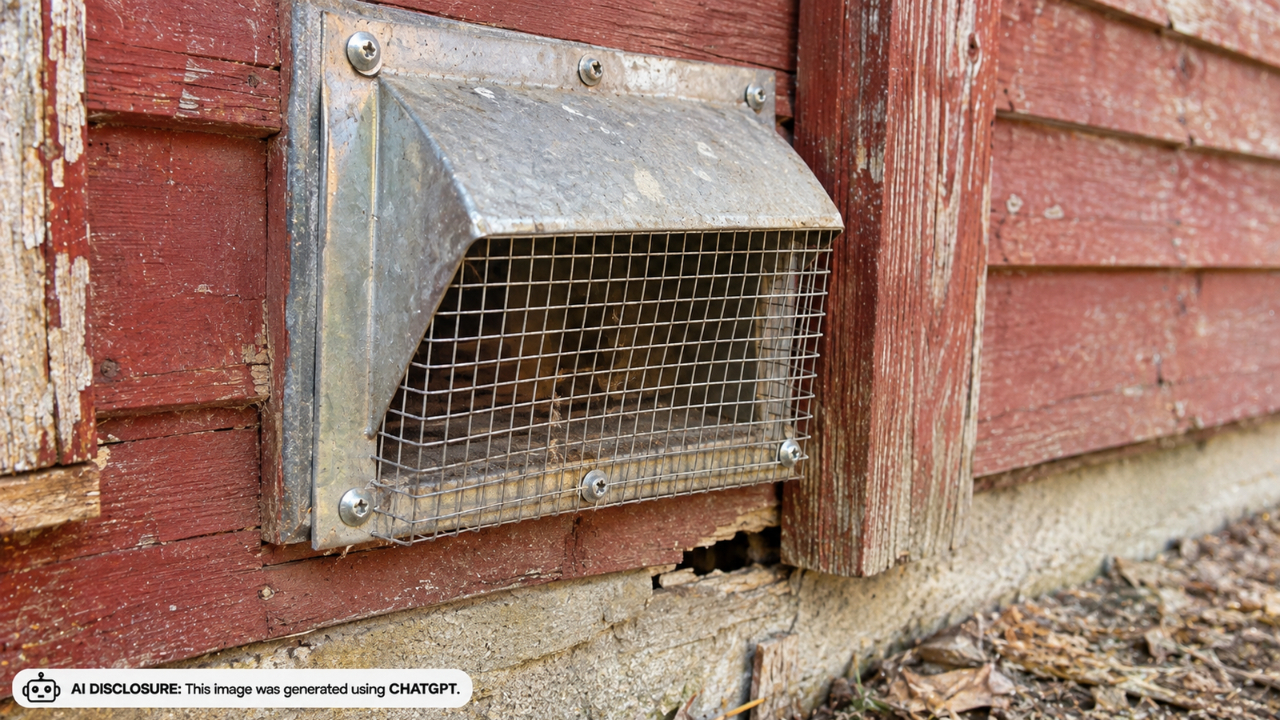
People spend money on nice bins and forget the building itself has holes. Dryer-style vents, soffit gaps, missing hardware cloth, and cracked siding corners are entry points that stay open year-round. If you can fit a finger in the gap, that’s big enough to take seriously.
Patch with materials rats can’t chew. Metal flashing, hardware cloth, and proper fasteners beat foam and caulk alone, although a good exterior sealant is fine as a finish layer. For bigger repairs, like rotten sills or failing siding, it’s worth fixing the structure instead of playing whack-a-mole with traps.
10. Overusing Poison Instead Of Fixing The Setup

Relying on bait as the main plan often backfires. Dead rats end up in walls, under pallets, or behind stored gear, and you’ll smell it for weeks. There’s also the risk of secondary poisoning for pets, working cats, and wildlife if you’re not strict about placement and pickup.
Traps plus cleanup and exclusion usually beat a bait-only routine. If poison is the only realistic option for your situation, keep it in tamper-resistant stations and follow the label, no shortcuts. For heavy infestations, calling a licensed pest pro can cost some money up front, but it can stop the cycle faster than burning months on half-measures.
If rats have started treating your feed room like a pantry, don’t aim for perfect all at once. Start with sealing food, drying up water, and closing the easy gaps, then work outward from there. A room that’s clean, tight, and boring stops being worth the trip.
Like Fix It Homestead’s content? Be sure to follow us.