Rural Homeowner Calls the Neighbor Each Time His Cow Breaks Onto Her Three Acres — Then His “Fixed” Fence Fails Again and Again While the Cow Destroys Her Chicken Feed
Photo credit: AI-generated image created using ChatGPT. Illustrative only.
When you buy a house on a few acres, you expect the usual rural surprises: wind, mud, maybe a stray critter. What one Midwest homeowner didn’t expect was a repeat trespasser with hooves—a neighbor’s cow that keeps slipping through a “fixed” fence and treating their yard like an all-you-can-eat buffet.
In the original post, the homeowner describes moving from a tiny town to a three-acre place surrounded by fields and cattle pasture. The neighbor who owns the cows doesn’t live on the land behind them—he just grazes his herd there. And one particular cow has decided the new place next door is where she wants to be.
The first sign was easy to brush off
At first, it sounded like the kind of rural hiccup people laugh about later. A cow wandered over. The homeowner contacted the neighbor, and he came and fetched her. He also said he “fixed” the fence.
Problem solved, right? Except it wasn’t. The same cow came back. Then again. Then again. Each time, the neighbor retrieved her and repeated the same promise—fence repaired, shouldn’t happen again.
Living next to livestock, you can tolerate a lot if it’s occasional and harmless. But repeated break-ins don’t feel accidental anymore, especially when the animal seems to have a favorite route and zero fear of returning.
The damage stopped being “just a cow in the yard”
The homeowner’s patience wore thin when the wandering cow started impacting their own small livestock setup. They keep chickens, ducks, and rabbits—exactly the kind of animals that come with feed tubs, stored bags, and routines you can’t just pause.
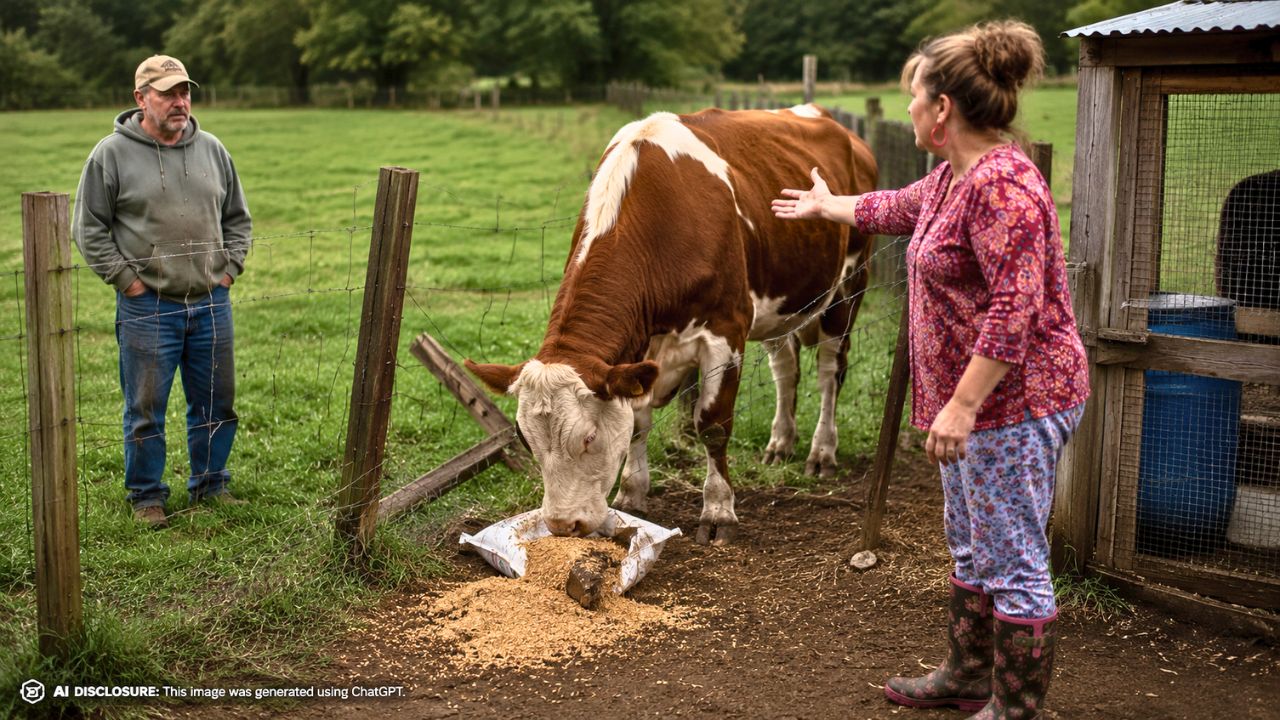
The cow ruined two feed tubs and ate multiple bags of rabbit food. That’s not just annoying; it’s money, time, and a sudden scramble to replace supplies. Feed storage is supposed to be predictable—buy it, store it, dole it out. When a large animal decides to help itself, that whole system gets knocked sideways.
And then there’s the yard. The homeowner says the cow tore holes in the ground and left “cow pies everywhere.” Three acres can handle a lot, but concentrated traffic and digging from a heavy animal can quickly turn into ruts, bare patches, and a cleanup chore you didn’t sign up for.
The fence “fix” became the real problem
The most frustrating part isn’t that a cow got loose once. It’s the pattern: retrieve the cow, “fix” the fence, repeat. The homeowner is left watching the same failure happen over and over without being able to control the root cause, because the fence is on the neighbor’s side and the cow is the neighbor’s responsibility.
Rural fence issues are rarely complicated in theory. Either the posts are sound, the wire is tight, the gate latches, and the corners hold—or they don’t. When one animal repeatedly crosses the same boundary, it often means there’s a weak spot that was patched fast instead of repaired thoroughly.
To the person getting invaded, a temporary fix feels worse than no fix at all. It creates the impression the issue was handled, while the homeowner is still replacing feed, repairing messes, and checking the yard like they’re the one keeping track of someone else’s livestock.
When “being nice” starts getting expensive
The homeowner makes it clear they’ve been trying not to start off on the wrong foot. That’s a real concern in the country, where you might share a road, rely on each other in storms, or just have to coexist for years within shouting distance of a fence line.
But the cost of staying friendly is piling up in practical ways. Animal feed isn’t cheap. Replacing tubs isn’t free. And the hidden cost is the constant vigilance—wondering when the cow will come back and what she’ll find next.
The homeowner also points out a key detail: in their state, it’s illegal for them to claim abandonment possession. In other words, they can’t just decide the cow is theirs because it keeps showing up. That shuts down the most obvious “frontier” solution and leaves them stuck between informal neighborly requests and formal enforcement.
The two options on the table: formal action or deterrence
By the time they wrote in, the homeowner had narrowed their choices to two realistic paths, neither of which feels great when you’re new to the area.
Option one: capture the cow and turn matters over to law enforcement. The homeowner says that route would let them charge $500 a week in “boarding fees” and also charge for property damage, but they suspect it would end in a lawsuit. Even if you’re fully in the right, “winning” can still mean months of stress and a neighbor who treats you like an enemy.
Option two: buy a paintball gun and try to scare her off. That’s the rural version of a non-lethal warning system—something that might teach the cow the yard is unpleasant without escalating to the legal system. But it also risks escalating in a different way if the neighbor sees it as harassment of his animal, even if the goal is simply to keep her away from feed and livestock.
What makes both options hard is that the homeowner isn’t choosing between good and bad. They’re choosing between confrontation now or confrontation later, after more damage is done.
Readers zeroed in on documentation and boundaries
Even without a full comment thread included, the way the homeowner frames their choices reflects the kind of practical advice people tend to give in property disputes: document everything, keep communication clear, and stop letting the problem drift.
When an animal repeatedly crosses onto your land, the “proof” part matters more than people think. Dates, photos of damage, images of the cow on the property, and records of every contact with the owner can quickly shift the conversation from “accidents happen” to “this is a pattern with costs.” It also helps if the dispute ever becomes formal.
And there’s a second boundary besides the fence line: the relationship boundary. Being polite doesn’t have to mean being passive. A calm but firm message—preferably in writing—can put a clock on the problem and signal that the next step won’t be another friendly phone call and a shrug.
For now, the homeowner is still in that tense in-between space: trying to settle into their new acreage while one persistent cow keeps testing the property line. The fence may be the physical failure, but the real pressure point is time—how many more “fixes” can happen before the homeowner stops asking and starts acting.
Like Fix It Homestead’s content? Be sure to follow us.