California Homeowner Redoing Her Backyard Learns the Neighbor’s Drainage Floods Downhill Into Her Yard — Then He Demands She Pay One Hundred Percent to Fix His Own Runoff
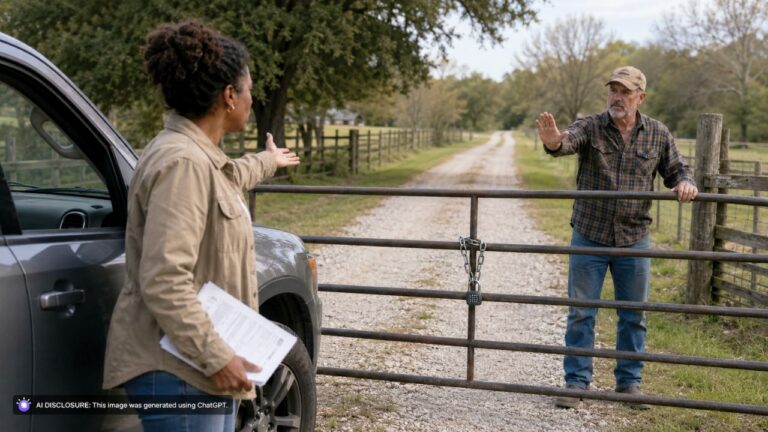
Photo credit: AI-generated image created using ChatGPT. Illustrative only.
Backyard projects have a way of exposing problems you didn’t even know you owned. For one California homeowner, tearing up the yard for a full overhaul—while pregnant and preparing for a baby—turned into an awkward standoff with the people uphill.
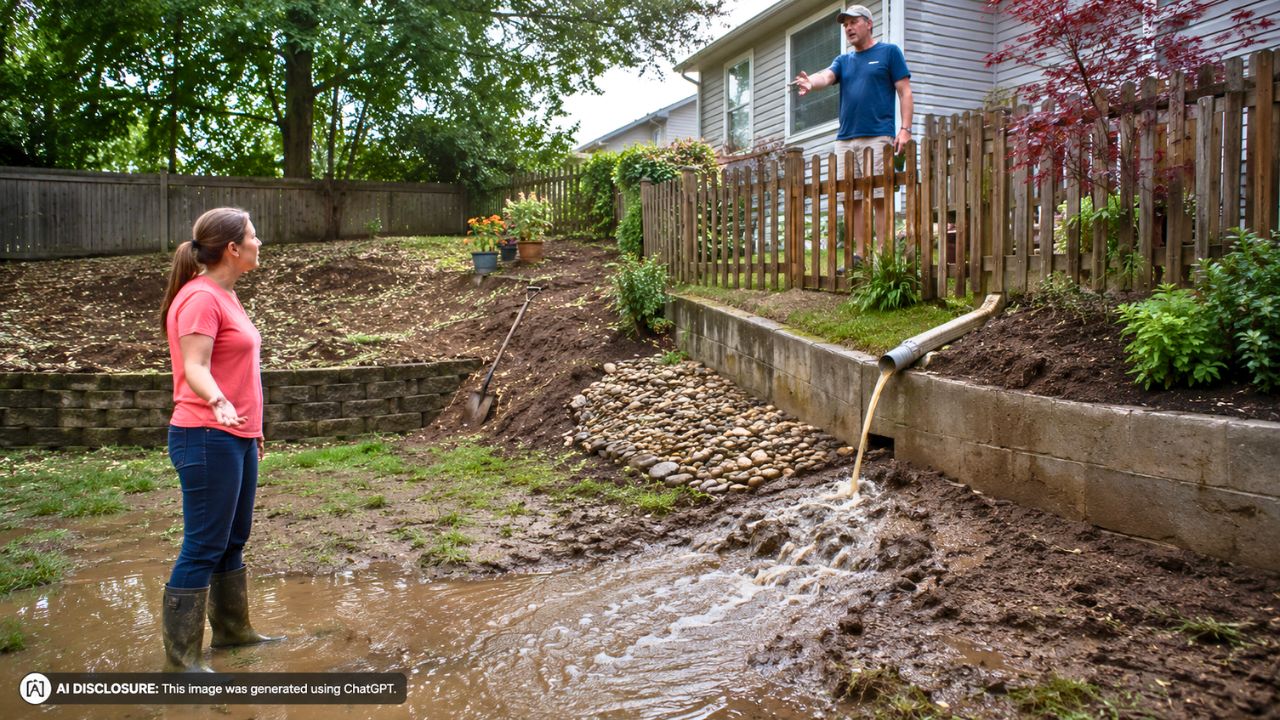
In the original post, she explains that her home sits on a corner lot that’s downhill from both the neighbor behind her and the neighbor on the side. With heavy rains dumping water lately, she and her husband did “a ton of trenching” to push water away from their property and avoid future issues. Then the back neighbors asked for a meeting—and brought up a drainage line that sits about a foot from the property line and sends water straight downhill into her yard.
A backyard redo turned into a runoff audit
The homeowner thought she was being proactive: regrading, trenching, and planning for storms. When you’re downhill, you learn quickly that your yard isn’t just your yard—it’s where everyone else’s water wants to end up.
That’s why the neighbor’s request landed so badly. According to the homeowner, the back neighbors’ drainage is routed from their backyard and ends close to her yard, where gravity does what gravity does. It doesn’t “kind of” go her way. It goes into her yard.
And the timing wasn’t subtle. She’s in the middle of a major project, and the neighbor seemed to take that as an opening: since you’re already digging, you should just handle ours too.
“Larry” wanted the fix—on someone else’s dime
The neighbor—she calls him “Larry”—didn’t want to be “nasty,” but he pushed hard for a very specific outcome: she and her husband should trench and reroute the drainage so it no longer flows into their yard, and they should pay 100% for it.
That’s the part that hit a nerve. The homeowner wrote that if she had been at the meeting, she would have snapped back that he should be responsible for any damage. She’s already juggling construction decisions with a baby on the way, and now an uphill neighbor is essentially presenting a bill for his own water.
There was some verbal back-and-forth on principle. She said Larry agreed “on principal he should pay for the repair,” but then capped his offer at 50%. In other words: yes, it’s my drainage, but I’m only paying half—because it’s convenient for you to handle it during your remodel.
Small favors and big expectations started stacking up
Part of what makes these neighbor disputes go sideways is how fast they expand beyond the original ask. The homeowner added that her husband already agreed to remove a stump on the neighbors’ property. That kind of favor can build goodwill, but it can also blur boundaries—especially when there’s already a disagreement about who’s responsible for what.
Once you’re doing work on someone else’s side of the line, even something as “simple” as stump removal, it becomes easier for the neighbor to act like the whole project is shared. The homeowner clearly wasn’t treating it that way. She was trying to protect her property from water.
And in the background is a long-term plan: they want to install an outdoor shed office within the next five years. Runoff isn’t just about muddy grass. If water is consistently being discharged toward the downhill lot, it can affect future structures, the usable footprint of the yard, and the stress level every time the forecast changes.
A quick workaround was suggested—Larry didn’t want it
The husband floated a different approach: installing metal flashing to redirect the water away from their yard and back toward the neighbors’ side. It’s the kind of idea homeowners reach for when they’re trying to stop damage without signing up for an expensive excavation project.
But Larry “doesn’t understand” and still didn’t want to be “nasty” about why they can’t add his drainage reroute to their list. That response matters, because it shows the disagreement isn’t only about money—it’s about whose problem this is, and who gets to decide what counts as an acceptable fix.
From the homeowner’s perspective, the request reads like this: you’re already spending money and disrupting your yard, so do ours too and call it fair. From the downhill homeowner’s perspective, it reads like: you’ve been draining onto us, and now you want us to pay to stop you.
The scary part wasn’t today’s puddles—it was future damage
She asked the question most downhill homeowners end up asking eventually: could the uphill neighbor be liable if the water causes damage?
Even without visible damage right now, runoff disputes tend to get serious when money enters the frame—especially when a homeowner is planning a future structure like an office shed. Drainage patterns that “worked fine” can suddenly become a major issue after landscaping changes, heavier rains, or just finally noticing where the discharge point is.
What makes this harder is the reality of living on a slope. Water will move downhill no matter what anyone feels is fair. But a deliberate drainage route that terminates near the property line can feel very different than ordinary sheet flow during storms. And once one side starts trenching, the other side may fear being stuck with the consequences.
The homeowner’s frustration came through plainly: “Y’all I think my hormones are activated here, I’m pissed.” Not because she wants a fight, but because she’s looking at a project list that’s already huge—and someone uphill is trying to add his own line item.
Readers pushed documentation and firm boundaries
While the post itself doesn’t quote replies in detail, the type of problem described usually pulls the same practical instincts out of homeowners: get clarity before anyone starts digging across lines, and don’t let a “friendly” conversation become an informal contract you regret.
In disputes like this, people tend to emphasize keeping communication in writing, taking photos of the current drainage outlet, and being careful about any work that touches a neighbor’s property—especially when the neighbor is already bargaining over percentages. A 50/50 promise can turn into “you changed it, you own it” surprisingly fast once the first rain hits and someone decides it still isn’t right.
Even when neighbors are polite, the repeated phrase “doesn’t want to be nasty” can be a tell. It often means the next step, if the answer is no, is going to feel nasty anyway.
For now, the homeowner is left in a familiar downhill position: trying to protect her yard, her future plans, and her sanity—without accidentally taking responsibility for an uphill neighbor’s drainage system just because she had the bad luck of starting a remodel at the wrong time.
Like Fix It Homestead’s content? Be sure to follow us.