Homeowner Leaves a Three-Foot Maintenance Gap Behind a New Privacy Fence — Then the Neighbor Moves Their Own Fence Posts to Seal It Off and Claim the Strip as Their Yard
Photo credit: AI-generated image created using ChatGPT. Illustrative only.
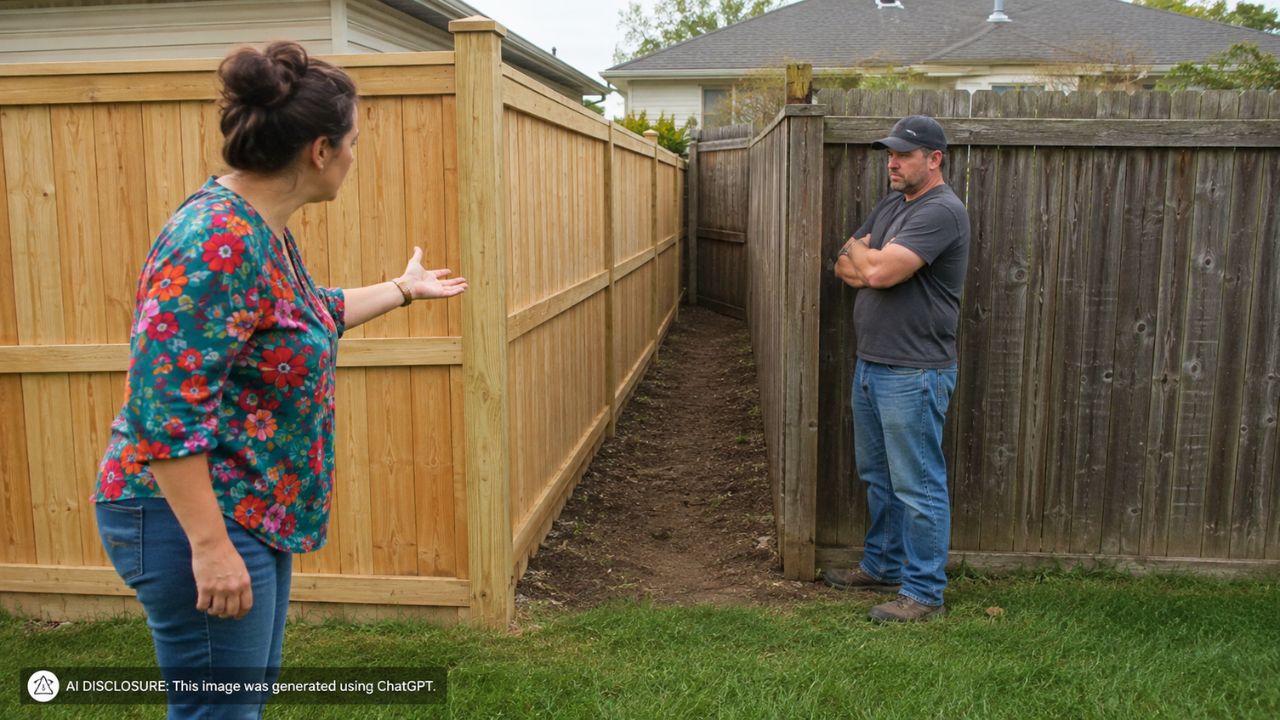
Eight months after putting up a new 6-foot privacy fence, one homeowner stepped into their backyard and realized something felt “off” behind it. The gap they’d intentionally left for access and maintenance—about three feet inside their own property—had effectively disappeared.
Behind the fence, the neighbor had moved their own fence posts to meet the corners of the new privacy fence, blocking the homeowner from reaching the back side of their panels and turning that strip into “their” enclosed space. The full account, including the escalating face-to-face exchanges, is laid out in the original post.
The gap wasn’t a mistake—it was the whole plan
The homeowner said they’d surveyed the property before installing the fence. Their borough allows fencing right on the property line, but they deliberately set theirs back, leaving roughly three feet around the perimeter.
It wasn’t about giving away land. It was practical: room to get behind the fence for repairs, trimming, and general upkeep without having to squeeze between structures or trespass onto someone else’s side.
For months, the setup worked. Then one day, they noticed the neighbor had dug up their old fence posts and shifted the corners so their new line butted directly into the privacy fence corners, blocking access completely.
One quiet change turned into a land grab feeling
From the homeowner’s perspective, the move did two things at once: it sealed off the maintenance corridor and let the neighbor use the privacy fence as part of their own enclosure. They described it as the neighbor “using the run of my fence to fence in a large part of their yard.”
What made it sting was that there were still survey spikes in the ground—physical markers—suggesting the line wasn’t ambiguous in the moment. The homeowner believed the neighbor ignored those markers to scoop up what they estimated as a roughly 4-by-70-foot strip.
That’s the kind of boundary move that doesn’t just create an inconvenience. It creates a long-term risk: damage to a fence you paid for, ongoing access problems, and a creeping fear that “possession” becomes a claim if it goes unchallenged.
They considered confronting the neighbors directly and even wondered whether they could set a deadline for removal or remove the encroaching portion themselves.
The face-to-face conversation went sideways fast
When the homeowner went over, they caught the neighbor’s wife happily showing off the fence progress on a video call—awkward timing when you’re about to explain someone just built onto your land.
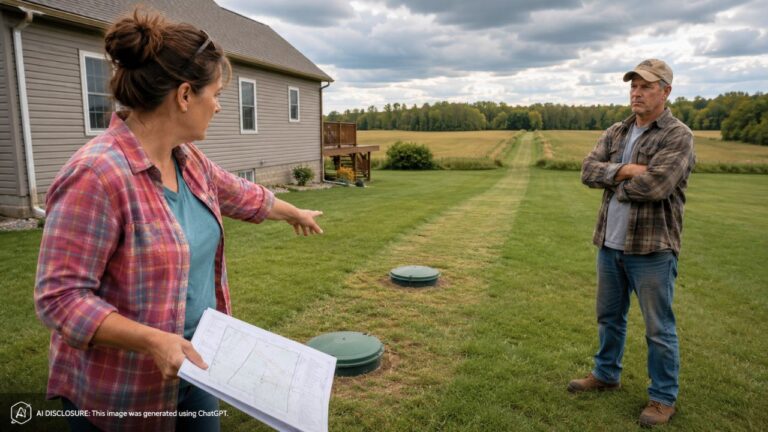
They pointed to a boundary spike and described how the neighbor’s new posts were built outward past it by close to three feet. They also said there had been a mid-line property marker that seemed to be removed. The neighbor’s wife claimed they thought the markers were theirs and moved them—an explanation the homeowner didn’t buy, especially given the direction the fence had shifted.
Then came the justification: the space between fences wasn’t big enough for their tractor, and the narrow strip was a hassle to maintain. She also claimed the strip had become overgrown and an “eyesore” because the homeowner didn’t have to look at it from their side.
The homeowner pushed back, saying they maintained the area within local grass-height rules and had also been trimming the neighbor’s bushes back. At that point, the conversation started feeling less like a misunderstanding and more like two people trying to build a record of who’s “reasonable.”
Conflicting surveys, easement talk, and a paper trail
The story got messier when the neighbor suggested they’d also had a survey done and implied the property line near a back corner could be skewed—enough to create a weird wedge or triangle and potentially conflict with other neighbors’ landscaping and structures.
Instead of accepting a casual “oops,” the neighbor pushed toward an easement-style agreement: paperwork acknowledging the strip was the homeowner’s land, even if the neighbor maintained it or treated it as part of their yard.
The homeowner wasn’t interested in sharing fence responsibilities or letting the neighbor “borrow” the space informally. If anything, they wanted the opposite: keep the line clean, keep the fences separate, and keep access open. They floated options like adding a gate for access and landscaping the strip with pea gravel and weed barrier to reduce growth and future arguments.
They followed up with an email that included the survey plat and a birds-eye visual showing potential options—while still making one point non-negotiable: the neighbor needed to pull their fence back off the homeowner’s property.
The neighbor apologized—then criticized the homeowner for documenting it
The reply text from the neighbor had an apology and a promise: they would “rectify it today and ensure we are off of your property entirely.” But it also came with a defense: they said they removed their fence section because the homeowner hadn’t maintained the grass “once since the fence was erected,” calling it an eyesore.
They also took issue with the homeowner sending an email instead of a quick chat, saying it “makes it clear what kind of neighbors you wish to be.” In other words: yes, we’ll fix it, but you’re the problem for making it official.
More importantly, the neighbor admitted they removed the wooden stake with a flag because it was an eyesore—while insisting they didn’t remove the pins. To the homeowner, that mattered. Even if the metal pins stayed, the act of pulling a marker reads like someone trying to make the boundary harder to prove later.
Within a couple days, the homeowner said the encroaching sections were removed and the neighbor began rebuilding a privacy fence about an inch inside their own line, using a string line to guide it.
Even after the fix, the tension stayed in the yard
The physical encroachment was corrected, but the relationship didn’t improve. The homeowner asked the neighbor to start construction from the far side so they could lay weed barrier along a tighter corner section first. The neighbor brushed it off, suggesting nothing would grow between two fences.
Then came the passive comments: the neighbor mocked the idea of landscaping “since we never once took care of it,” then walked it back by saying trimming took two minutes and “it’s not a big deal.” The homeowner pressed the obvious question—if it wasn’t a big deal, why move the fence posts and effectively take the strip?
That exchange escalated into insults and shouting. The homeowner’s takeaway was simple: the neighbor could have knocked on the door at any time, but instead chose the sneaky option first, then acted offended when confronted.
What’s left is the kind of unresolved homestead stress that doesn’t show up on a survey plat: two fences running tight, a narrow strip that will always need some kind of maintenance plan, and neighbors who now know exactly where the line is—but also know how quickly a “simple” fence project can turn into a property fight.
Like Fix It Homestead’s content? Be sure to follow us.