Neighbors Find the Path They’ve Used for Thirty Years Jackhammered and Blocked With Concrete Bollards — Then a Judge Fines the Owner $21,152
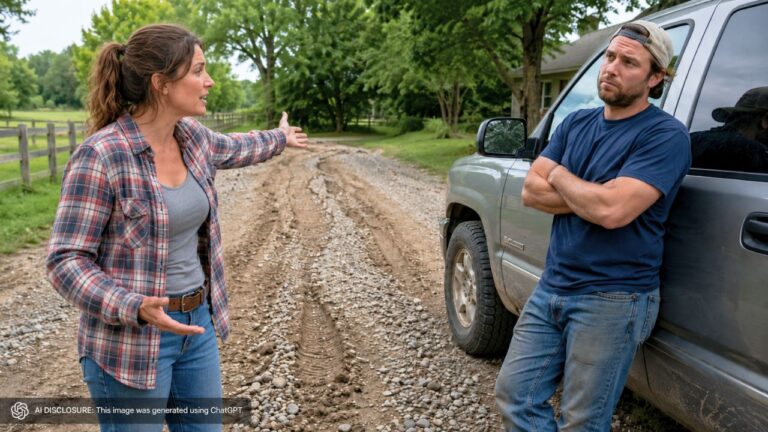
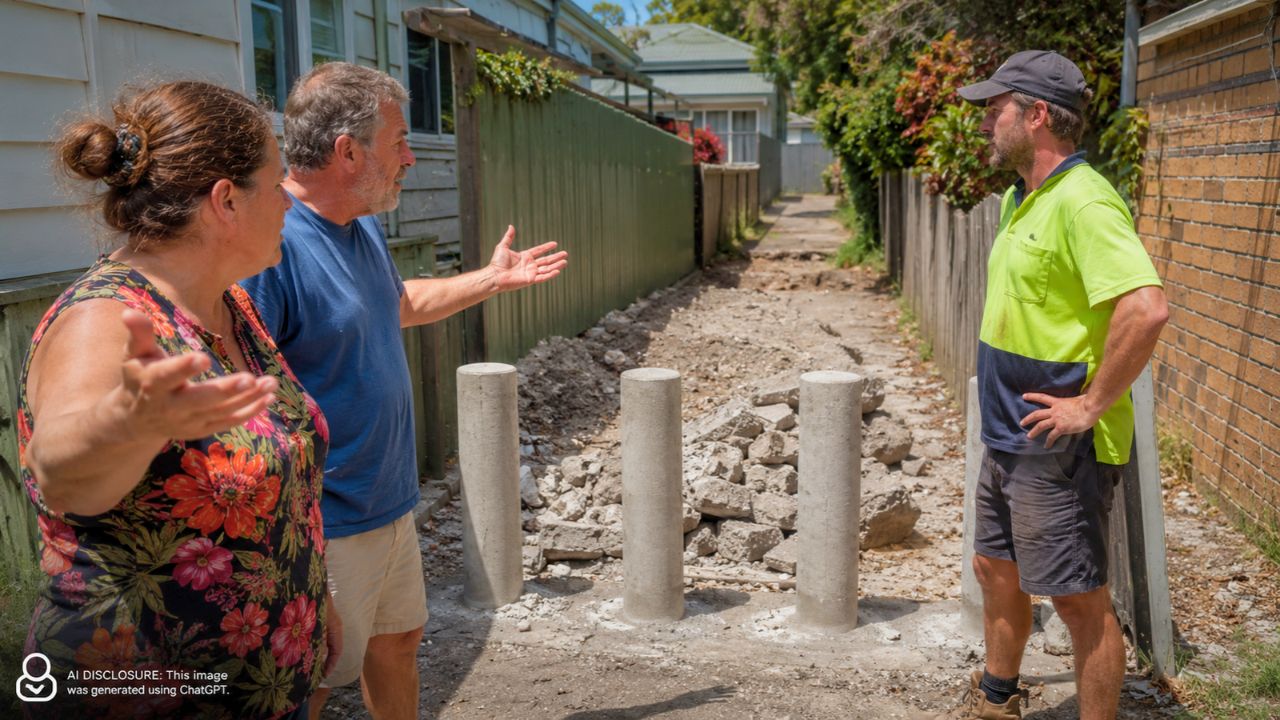
Photo credit: AI-generated image created using ChatGPT. Illustrative only.
On a quiet stretch of Montibello Drive in Cary, neighbors walked the same cut-through for decades without giving it much thought. Then one day the entrance wasn’t just “closed” with a sign or a chain. It was torn up with a jackhammer and blocked off with concrete bollards.
That moment—captured in a tense video and later turned into a full-blown legal fight—ended with a judge ordering the homeowner to stop interfering and to pay $21,152. The details come from the original post about the case, which centered on a pedestrian easement that had been in place for more than 30 years.
The shortcut everyone treated like part of the neighborhood
This wasn’t a brand-new trail someone carved out behind the houses. According to the report, the developer granted the space to the neighborhood homeowner’s association through an easement more than three decades ago. In practical terms, it was a recognized pedestrian path running between two properties.
That kind of access becomes background noise to the people who use it. Kids walk through. Dog walkers cut across. Neighbors treat it like a small piece of community infrastructure—more like a sidewalk than a “favor” from any single homeowner.
But easements can be strange that way. They don’t always look dramatic on the ground. Sometimes it’s just a strip of pavement between lots, quietly carrying a lot of neighborhood traffic until one person decides it shouldn’t.
When “I’m closing it” turned into concrete and a jackhammer
The dispute boiled over publicly last year when video showed a confrontation between two men at the trail entrance. One of them was seen jackhammering the entrance, turning what had been a walkable access point into damaged pavement.
It didn’t stop there. The homeowner, Keith Myers, also placed concrete bollards on the trail—physical barriers that don’t just suggest “please don’t enter,” but force the issue. A bollard isn’t a note on a door. It’s a hard object that tells every passerby, “You’re not getting through here.”
If you’ve ever lived near a shared drive, a drainage easement, or a path that sits close to someone’s fence line, you can probably picture how fast the temperature changes when the first permanent-looking obstruction goes in. People start asking: Is this allowed? Is it temporary? Who approved it? What happens if someone trips? What if emergency access ever mattered?
The paperwork argument: “I can do what I want” vs. “that’s not yours”
Myers argued that an agreement filed by the town of Cary allowed him to close off the trail access and do what he wanted with the easement property. From a homeowner’s perspective, that’s a tempting line to take—especially if you feel like strangers are walking too close to your home or you’re tired of traffic between your lots.
The HOA saw it differently. In their view, the easement existed for a reason, and it didn’t get erased because one owner decided it was inconvenient. They took Myers to court to keep the path usable and to stop the damage and blockages.
This is where neighbor disputes get expensive, fast. Once concrete is poured and pavement is destroyed, the disagreement isn’t theoretical anymore. It’s about physical alteration of land that other people believe they have a right to use—and it’s hard to “un-ring” that bell without someone paying to restore what was there.
A judge draws a hard line—and puts a price on it
Last week, Superior Court Judge Paul C. Ridgeway ruled in favor of the HOA. The ruling prohibited the Myerses from “damaging, obstructing or interfering” with the association or its members’ use of the easement.
That language matters because it doesn’t just say “remove the bollards.” It addresses the whole pattern: blocking, breaking, getting in the way. It tells the homeowner that any attempt to physically interfere with use of the path is off-limits.
Then came the number that made every property-owner sit up a little straighter: $21,152 in fines. The report also says the HOA was authorized to enforce liens and foreclosure on the couple’s property to pay those debts. That’s the part that turns this from a neighborhood argument into a real financial threat.
People hear “HOA” and think about grass height and mailbox paint. But in court-backed disputes over property rights, an HOA can act like a serious enforcement machine. Liens and foreclosure aren’t theoretical tools; they’re how associations collect when a homeowner refuses to comply or pay.
How homeowners reacted: less debating, more documenting
Even without a comment thread included in the report, the practical homeowner reaction to a story like this is predictable because the playbook is familiar. When someone starts altering a shared access point, neighbors tend to shift from arguing on the street to gathering proof.
In real life, that usually means photos of “before,” videos of the work happening, copies of plats or easement maps, and timestamps that show when barriers appeared. People also start pulling any neighborhood documents they can find—HOA records, developer documents, and whatever was filed with the town—because once concrete shows up, the question stops being “who’s right” and becomes “what can we prove.”
And after a confrontation is captured on video, many homeowners become even more cautious about in-person exchanges. Not because they’re afraid of talking, but because these disputes can escalate quickly. A phone camera often becomes the neutral third party when trust is gone.
The messy part isn’t the path—it’s living next to the fallout
A blocked trail is a physical problem with a physical fix: remove the obstructions, stop damaging the entrance, restore access. But living next to the aftermath is harder. Once neighbors take sides, every small thing can feel loaded—where someone parks, how close a fence gets to a line, whether a camera points at the wrong angle.
And for the homeowner who tried to shut it down, the consequences don’t stop at writing a check. Court orders come with ongoing expectations. The HOA now has legal backing to enforce the easement, and the ruling’s wording suggests there’s little patience left for creative workarounds.
For everyone else on the street, the lesson isn’t “never fight your HOA.” It’s that when an easement is real and established—especially one granted decades ago—trying to erase it with heavy tools can turn into a five-figure problem. On a neighborhood trail, a jackhammer doesn’t just break pavement. It breaks the illusion that everyone can live side-by-side without the paperwork ever mattering.
Like Fix It Homestead’s content? Be sure to follow us.