Ottawa Homeowner’s Security Camera Catches the Neighbor Admitting to His Contractor He Doesn’t Know Where the Property Line Is — Then He Stakes a New Garage Using an Inaccurate City Map Anyway
Photo credit: AI-generated image created using ChatGPT. Illustrative only.
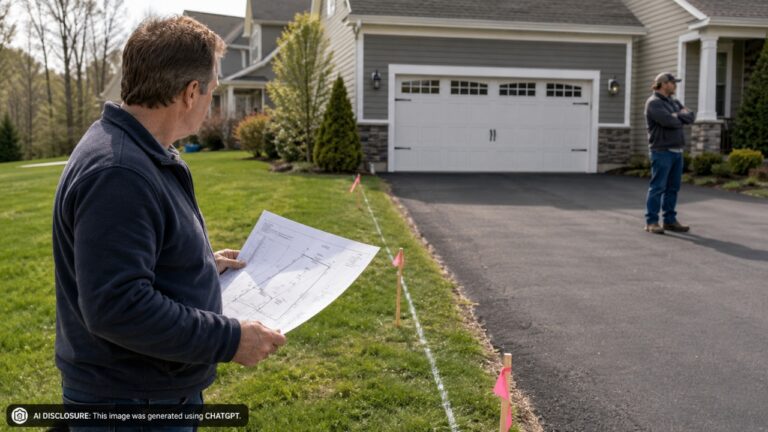
It started the way a lot of property-line headaches start: a few stakes in the ground, a contractor measuring between two tight lots, and a neighbor acting like the details will sort themselves out later. Except this homeowner in Ontario says they overheard something on their security camera that made their stomach drop—an admission that the neighbor didn’t actually know where the property line was.
In the original post, the homeowner explains that the neighbor appears to be planning a garage or carport squeezed into the narrow space between the two houses. The lots are already close, with roughly 20 feet between homes, and now the proposed structure seems to be creeping within a couple feet of where the homeowner believes the line should be.
The new stakes showed up before any conversation did
The homeowner describes the neighbor as “newish,” and the build plans as something they were never approached about directly. No knock on the door. No “Hey, we’re thinking of putting up a carport, mind if we chat about setbacks?” Just staking.
From the homeowner’s view, that silence is part of what makes it feel like a land grab. When the first visible marker of your neighbor’s plan is posts laid out close to your side, you don’t have a lot of time to get comfortable with it. You either respond quickly or you’re watching concrete get poured.
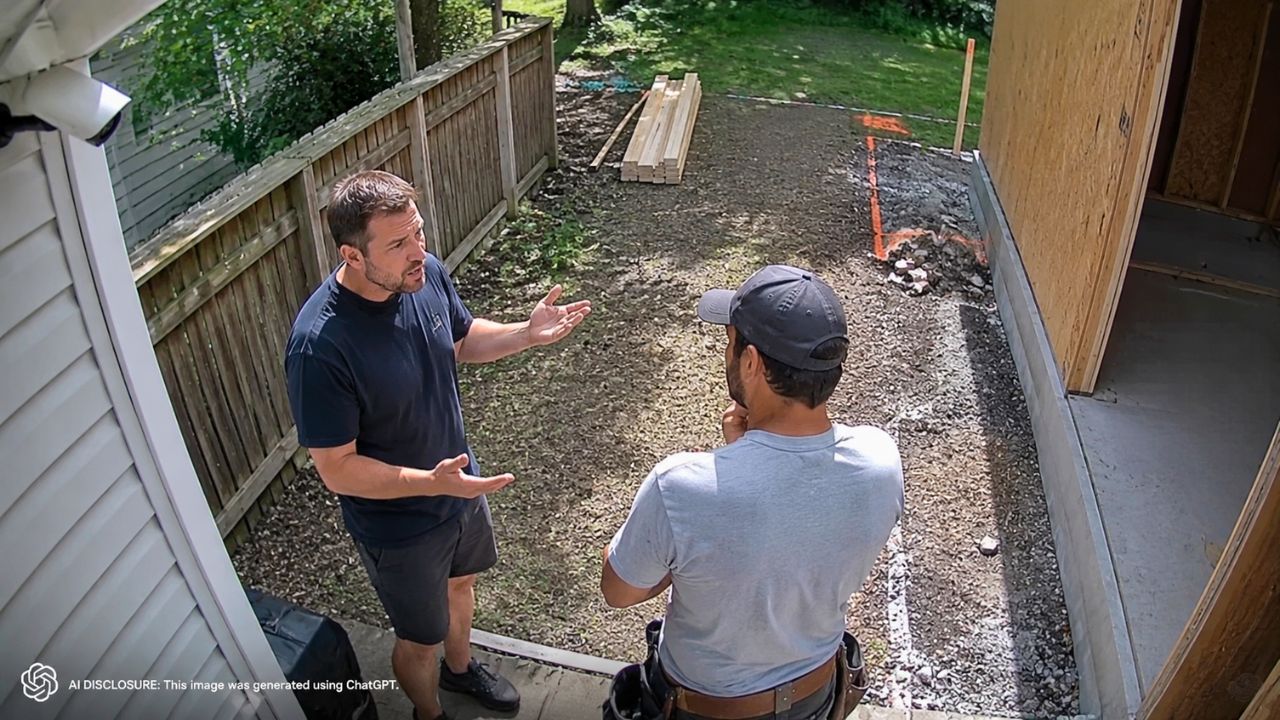
What sharpened it was the security camera audio. The homeowner says they overheard the neighbor talking to his contractor and admitting he didn’t know where the property line was—then pivoting to the idea that they’d “assume” the line based on an online city mapping tool.
“GeoOttawa says…” and the map that doesn’t match reality
The homeowner’s biggest worry isn’t just that the structure will be close. It’s that the placement might be wrong in the first place, because the neighbor is relying on GeoOttawa to make decisions that normally require a survey.
The homeowner says they’ve checked the map against other properties on the street and noticed obvious issues—mapped lines that cut through houses or run oddly across driveways. That’s the kind of thing that destroys confidence fast, because if the map is wrong by a few feet, a garage post can end up on the wrong side of the line without anyone noticing until it’s too late.
And once it’s built, “too late” becomes a very real word. A mistake isn’t just an awkward conversation anymore. It’s a structure, permits, sunk costs, and a neighbor who now feels entitled to keep what he paid for.
The quiet fear: permits without a survey
The homeowner is trying to figure out what the city will do with a build like this. Would a permit be issued and plans approved without a proper survey? Or is there some checkpoint that forces the true line to be verified before construction gets too far?
It’s a practical question with big consequences. If the city will permit based on drawings and assumptions, then the homeowner’s window to prevent an encroachment could be measured in days, not months.
The other layer is spacing. When two houses sit about 20 feet apart, any new wall, roofline, or drainage path between them can change daily life—light, access for maintenance, snow and water runoff, and even how you get a ladder or a wheelbarrow through the side yard.
The hedge became the early battleground
Before the posts, there was the hedge. The homeowner says there’s a shared hedge that they maintained with the previous owner, and they’ve lived in their home for more than a decade. Past residents had small dogs and put in a chain-link fence, which often becomes part of the “everybody knows where the boundary is” ecosystem on older lots.
The new neighbor, according to the homeowner, believes the hedge is theirs. The homeowner says the neighbor has been trimming it back “to the stumps,” and the fear is that the hedge will be cut down entirely to make room for the new structure.
That detail matters because shared hedges are more than landscaping. They’re privacy. They’re a visual boundary. They’re also one of those things neighbors fight about when nobody can agree where the line is. The homeowner even says they told the neighbor’s wife early on that the hedge was shared—but the trimming continued anyway.
What readers pushed: document first, don’t wait for concrete
Even without a pasted comment thread, the homeowner’s post reads like a classic “what do I do right now?” moment—when you can see the project taking shape and you’re trying to avoid a direct blow-up, but you also can’t afford to be passive.
The unspoken theme is documentation. The homeowner already has something many people don’t: a security camera capturing the neighbor acknowledging uncertainty about the line. That kind of record can matter later, not because it magically settles a boundary, but because it shows the neighbor knew there was doubt and proceeded anyway.
The other immediate pressure point is timing. Stakes are an early step, but they’re also the last “easy” step to undo. Once holes are dug, sonotubes appear, or a crew starts framing, it becomes harder to stop without escalating the fight. The homeowner’s anxiety reflects that—this isn’t about winning an argument; it’s about preventing a permanent mistake.
A narrow side yard doesn’t leave room for “close enough”
When a new garage or carport goes up beside your home, the impact is physical and daily. It can block access for repairs, make it harder to maintain siding or eaves, and create new water and snow patterns that weren’t there before. In tight spaces, even where a downspout points can matter.
And if the structure ends up even slightly over the line, you’re not just dealing with an eyesore. You’re dealing with the possibility of an encroachment that can affect future sales, refinancing, or your own ability to build or fence later. It can also turn neighbor relations into something transactional and tense, where every future project becomes a standoff.
That’s why this homeowner’s story feels so uncomfortable: the build is moving forward on an “assumption,” the hedge is already getting hacked back, and there’s been no respectful pre-build conversation. The stakes in the ground aren’t just marking a garage. They’re marking how the next few years next door might feel—either like normal neighbor life, or like living beside a project that never should’ve started without knowing where the line actually is.
Like Fix It Homestead’s content? Be sure to follow us.