Rural Homeowner Finds a Neighbor’s Enlarged Pond Flooding the Property From a Low Embankment — Then Learns the Redo Made It Worse
Photo credit: AI-generated image created using ChatGPT. Illustrative only.
On rural property, water is either your friend or your fastest enemy. One homeowner learned that the hard way after a neighbor expanded a pond along their shared border—and the first big rain turned into a muddy, expensive mess.
In the original post, the homeowner explained that both they and the neighbor moved in a little over a year ago. The pond sits on the neighbor’s land right where the two properties meet. After the neighbor had it excavated and made “a little bigger,” the water started behaving like it had found a new escape route: straight across the property line.
The pond got bigger, but the “low spot” became the real spillway
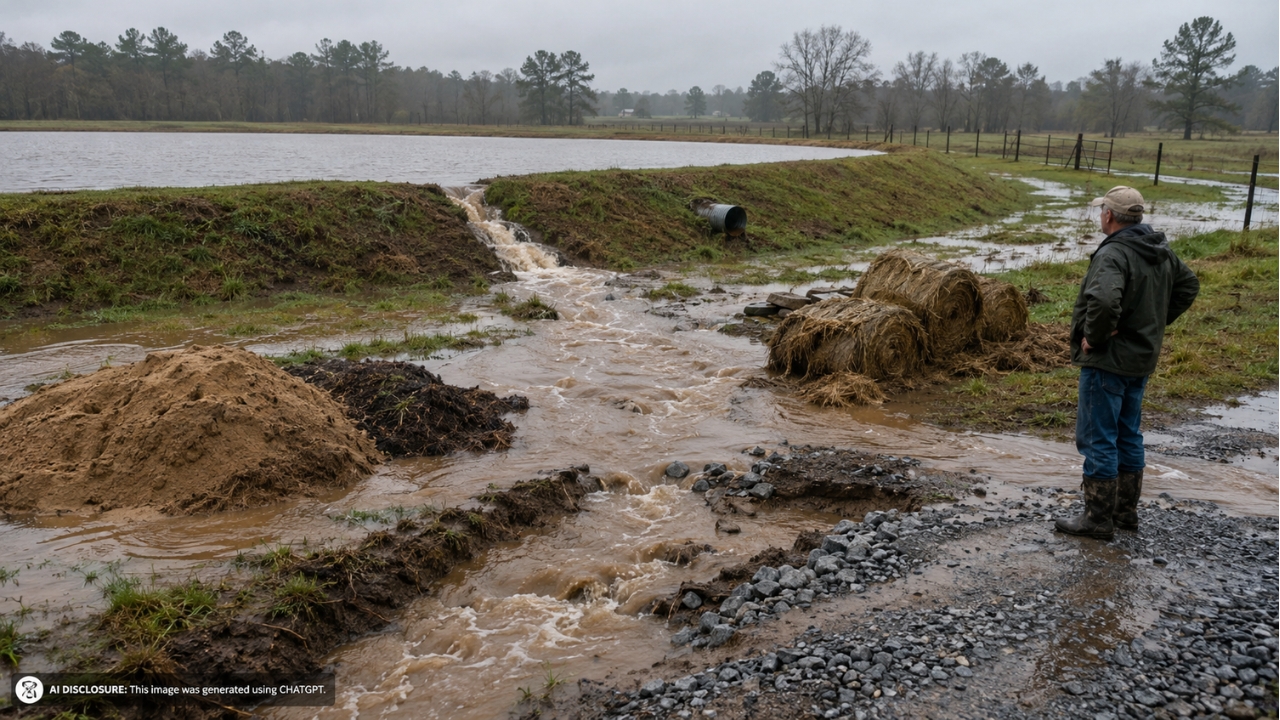
The homeowner’s complaint wasn’t that the pond existed. It was that the rebuild seemed to change how it released water. A contractor installed a dam and a drainage pipe meant to send overflow toward a designated stream, but the homeowner says the lowest point of the embankment ended up being the side facing their land.
That matters because ponds don’t care where the pipe is if there’s an easier way out. If the bank along the border is lower than the drain’s inlet elevation, heavy rain will push water over that low edge first. The homeowner described it bluntly: the pond floods “more into/through my property than it does into the designated drain stream.”
To back it up, they recorded video “from several angles” and uploaded photos and clips to show the flooding pattern. From their view, this would have been a non-issue if the neighbor had built the pond’s sides higher along the border—or if the drainage pipe hadn’t been set at a higher level than where the water is already escaping.
“It’s always been that way” didn’t match what the homeowner was seeing
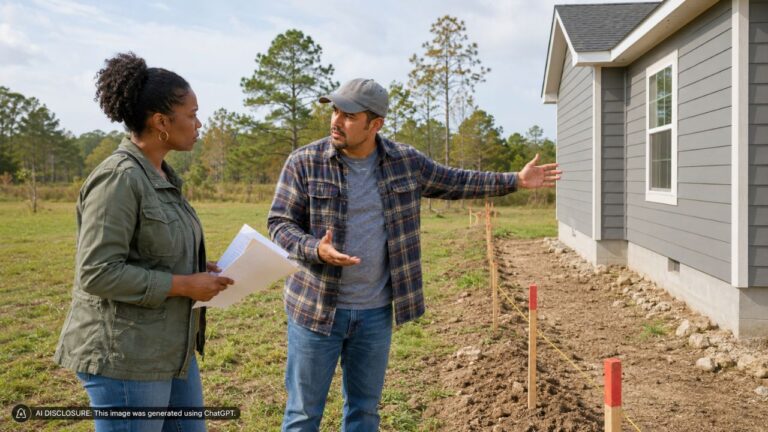
When the homeowner approached the neighbor, the response wasn’t collaborative. The neighbor insisted “it’s always been that way” and also claimed “it’s not lower,” even as the homeowner said the low point was “common sense and obvious” when standing there looking at it.
Worse, the neighbor became harder to reach after the first exchange. The homeowner described the neighbor as avoiding them, leaving the person downstream with the same question every rural owner asks when water starts crossing a line: if you didn’t cause it, why are you paying for it?
The contractor didn’t offer relief either. According to the homeowner, the contractor said he wouldn’t fix anything “until we figure out who is going to pay.” That left the homeowner stuck between a neighbor denying there’s a problem and a contractor treating it like a billing dispute instead of a failed design.
Then one heavy rain turned it into real damage
It only takes one storm to turn a drainage argument into a cleanup bill. After a heavy rain, the homeowner said the stream coming out of the pond flooded their front pasture—right where they had stored more than a thousand dollars’ worth of hay and landscaping materials like sand and compost.
When water hits hay, it’s not just “wet.” It can be ruined, moldy, and unsafe depending on how long it stays saturated. And sand and compost don’t exactly stay neatly piled when runoff cuts through them. The homeowner wasn’t describing a puddle; they were describing moving water with enough force to carry material across the land.
The runoff also went over their stone driveway and “washed half of it out.” That kind of damage isn’t just cosmetic. Once the base gets displaced, the remaining stone can shift and rut, and each vehicle pass can deepen the problem.
The detail that stung most: the homeowner said they had just paid to have that driveway done “for nothing now,” and it was completed by the same contractor who did the neighbor’s pond work—and was now refusing to fix the pond unless someone agreed to pay.
A rural nightmare combo: shared boundary, moving water, and a contractor in the middle
Boundary-line water problems are uniquely stressful because they blend physics with people. If the neighbor’s pond is effectively using the homeowner’s land as an overflow channel, the fix might be straightforward earthwork—raising and compacting the embankment, regrading, adjusting the drain elevation, or adding an emergency spillway in the right location.
But “straightforward” isn’t the same as “simple.” Dirt work requires equipment, time, and careful choices. The homeowner’s central frustration was that the design seems backwards: the drain that was supposed to handle overflow sits higher than the spot where the pond is actually spilling. That’s not a quirk; it’s a setup that practically invites flooding.
At the same time, the neighbor’s denial created a stalemate. If one person insists nothing changed and the other is staring at fresh washout and soaked hay, the next step stops being neighborly and starts becoming documentation-heavy.
People focused on proof first: video, angles, and the “who pays” paper trail
The homeowner did what many property owners do when they sense they’re about to be told they’re exaggerating: they documented. Videos from multiple angles and photos aren’t just for venting—they’re the beginning of a record that shows how water moves, where it crosses, and what it damages.
Even without a full comment thread included in the source material, the theme is familiar in these disputes: when one side is denying the basics (“it’s not lower”), the other side starts thinking in terms of measurable facts. Elevation is measurable. Water lines and flow paths are observable. And repeated storms create a pattern that’s hard to wave away.
The contractor’s position—no fix until someone agrees to pay—adds another layer. It means the homeowner isn’t just trying to convince a neighbor. They’re also trying to avoid being pressured into funding a repair that, in their view, corrects a mistake made during the pond expansion.
The tension is that every storm becomes a deadline
The homeowner wasn’t asking for drama. They wanted the pond shaped so it stays where it belongs, and so overflow goes where the drain was intended to send it. But once the driveway washed out and pasture storage got hit, it stopped being a theoretical dispute about embankment height.
The hard part about water problems is that they don’t wait for people to agree. Another heavy rain doesn’t care whether the neighbor answers texts or whether a contractor wants a deposit. It will take the same low route every time until something is built differently.
For now, the homeowner is left with damaged materials, a washed-out driveway, and a neighbor who insists nothing is wrong. In rural living, that’s the kind of unresolved standoff that hangs in the air every time the forecast turns dark—because the next storm isn’t just weather. It’s another round of proof, cleanup, and cost.
Like Fix It Homestead’s content? Be sure to follow us.