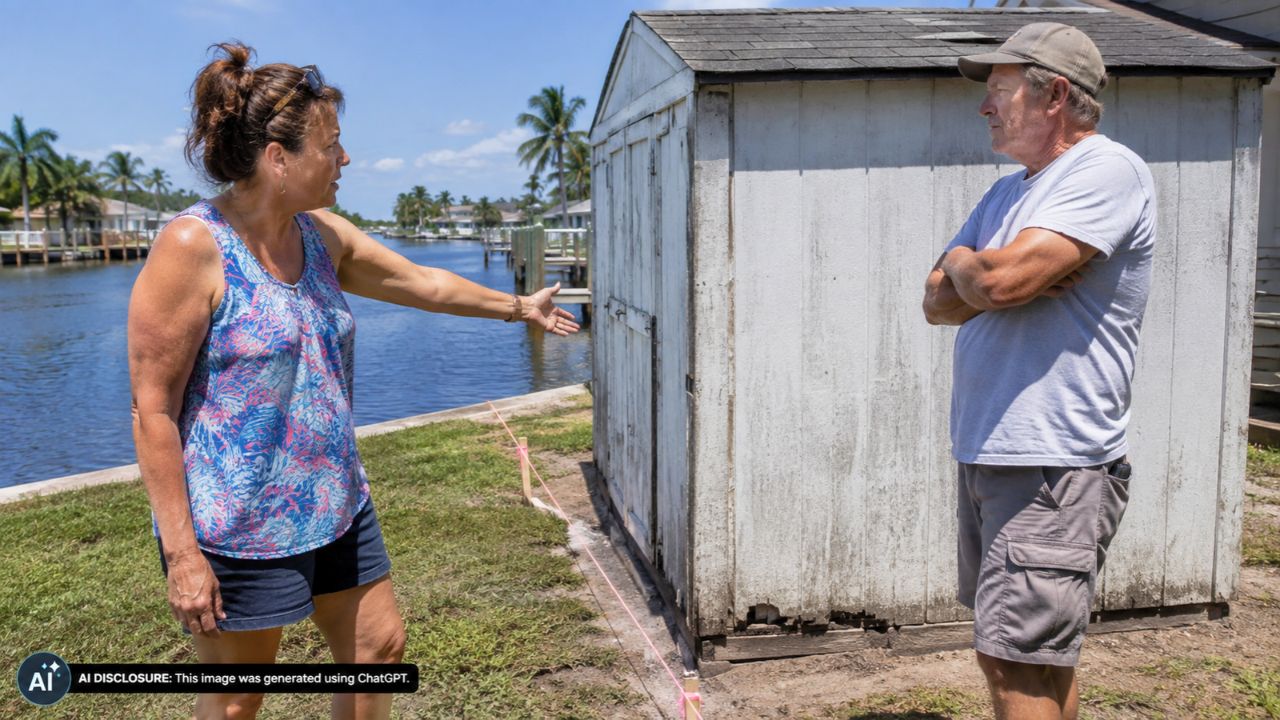
Waterfront Homeowner Finds the Neighbor’s Shed Sitting a Half-Foot Onto Her New Canal Lot — Then the Neighbor Calls It Grandfathered and Won’t Move It
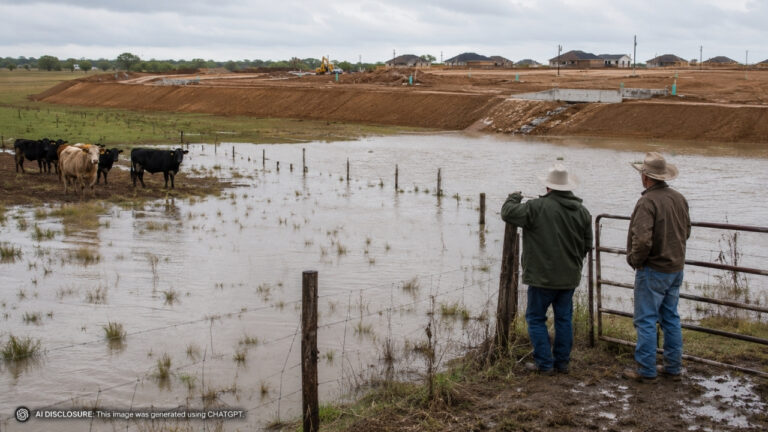
Photo credit: AI-generated image created using ChatGPT. Illustrative only.
The lot was supposed to be the clean slate. A canal-side build site, the kind of place you buy with visions of a straight fence line, a neat yard edge, and no leftover mess from whoever owned it before.
Then a new survey turned up the kind of surprise that doesn’t feel “new” at all: the neighbor’s shed wasn’t just close to the property line—it was sitting onto it. Not a dramatic invasion, but enough to wreck plans. In the homeowner’s telling on the source post, the structure appears to encroach at least half a foot onto the canal lot they bought a couple years ago, and the neighbor’s answer was simple: she won’t move it.
The fence project is what forced the issue
For a while, the boundary seemed “handled” by an old wood fence. The homeowner believed the previous owner installed that fence without a survey, basically eyeballing the line and calling it good.
That kind of thing can limp along for years—until you try to upgrade. The homeowner’s husband wanted to replace the aging wood fence with a black rail fence and run it straight down the actual property line. Suddenly, the encroachment wasn’t theoretical. The shed was now literally in the way.
And because this is canal property, the edges matter. Waterfront lots tend to make people extra particular: access, views, setbacks, and resale value all ride on where structures sit.
“Grandfathered” became the neighbor’s entire argument
When the homeowners approached the neighbor, they didn’t get a compromise. They got a refusal.
The neighbor reportedly claimed the shed had been there for decades—first “20 years,” then “25 years”—and insisted that meant it was “grandfathered” onto the homeowner’s side. The shed, in her view, had earned its spot with time.
That’s the kind of statement that sounds official enough to end a conversation, especially if you’re not used to property disputes. But it also raises immediate questions. Grandfathered under what rule? A zoning ordinance? A permit? A boundary agreement? Or is it just something people say when they don’t want to deal with moving a heavy structure?
Meanwhile, the homeowners were stuck. They wanted a clean fence line. They had a survey showing multiple encroachments, with the shed being the big one. And the couple they bought the lot from were deceased, so there wasn’t an easy “ask the previous owner what happened” option.
The real-world stakes: a half-foot that can cost real money
A shed doesn’t sound like much until you imagine trying to build around it.
If you can’t run your fence straight, you’re either redesigning the fence line (and potentially giving up usable land), or you’re installing an awkward jog that looks wrong forever. Either way, you’re paying for a change you didn’t budget for.
On a canal lot, the stakes can feel even sharper. A weird fence line can complicate landscaping, limit access along the water side, and create a permanent “whose space is this?” gray zone. And once you accept an encroachment by building around it, you risk normalizing it in the eyes of the neighbor—and maybe in the eyes of future buyers.
The homeowner’s question wasn’t petty. It was practical: how do you figure out when the shed was erected, and what can you actually do to make it move?
Paperwork is where this kind of fight usually starts
A real estate attorney responding to the question pointed toward something a lot of homeowners forget exists until they need it: the public record.
First stop is ownership history. The attorney noted that the neighbor’s period of ownership can be found by reviewing title records at the county register of deeds office. If you’re trying to pin down timelines—who owned what, and when—this is where you build that foundation.
But the more interesting suggestion wasn’t about deeds. It was about permits.
The attorney recommended checking with the township zoning officer to see whether a permit for the shed is on file and whether the shed complies with the township zoning ordinance. That’s a different kind of leverage. If the shed was built without permits, or if it violates setbacks or zoning rules, “it’s been there forever” becomes less of a winning argument and more of a liability.
And if there’s a permit? That paperwork might help establish an approximate build date and what the shed was supposed to be—plus whether it was ever approved where it currently sits.
The reactions homeowners tend to have in these boundary standoffs
Even without a comment pile attached, this kind of story reliably triggers the same homeowner instincts: document everything, stop relying on fence folklore, and don’t negotiate from vibes.
People who’ve been through property-line problems tend to focus on proof before confrontation. A recent survey is a strong start, but they’ll often advise keeping copies, marking corners correctly, and communicating in writing once the tone shifts from neighborly to hostile.
Others tend to zoom in on the “grandfathered” claim. In everyday talk, it’s used like a magic spell. In reality, it usually ties back to specific rules: a nonconforming structure allowed to remain under certain ordinances, or a legal concept like adverse possession or prescriptive rights—things that aren’t decided by who speaks the loudest across the fence.
And practically, the permit angle is what many homeowners chase first, because it’s concrete. Either the township has a record or it doesn’t. Either it meets setback rules or it doesn’t. That’s often a faster reality check than arguing about what happened 25 years ago.
Why “just be nice about it” doesn’t always work
It’s easy to imagine the first conversation happening politely. A quick “Hey, we’re replacing the fence and the survey shows your shed is over the line.” The kind of thing you assume will end with, “Oh wow, I didn’t know—let me look into moving it.”
But once the neighbor flat-out refuses, the homeowner’s options narrow. You’re no longer talking about neighbor etiquette. You’re talking about land use, compliance, and whether a structure is unlawfully occupying space you paid for.
The attorney’s final point was blunt: a local real estate attorney can help. That’s not dramatic advice—it’s the recognition that, once you’re dealing with recorded documents, zoning compliance, and a neighbor who won’t budge, you need someone who can read the rules in your township and tell you what actually applies.
For now, the homeowners are left with a survey, a fence plan, and a shed that’s in the wrong place—plus a neighbor leaning hard on a “grandfathered” claim that may or may not mean anything without paperwork to back it up.
Like Fix It Homestead’s content? Be sure to follow us.