Waterfront Property Owner Finds a Neighbor’s Dock Built Over the Deeded Property Line — Then Their Court Date Is Already on the Calendar
Photo credit: AI-generated image created using ChatGPT. Illustrative only.
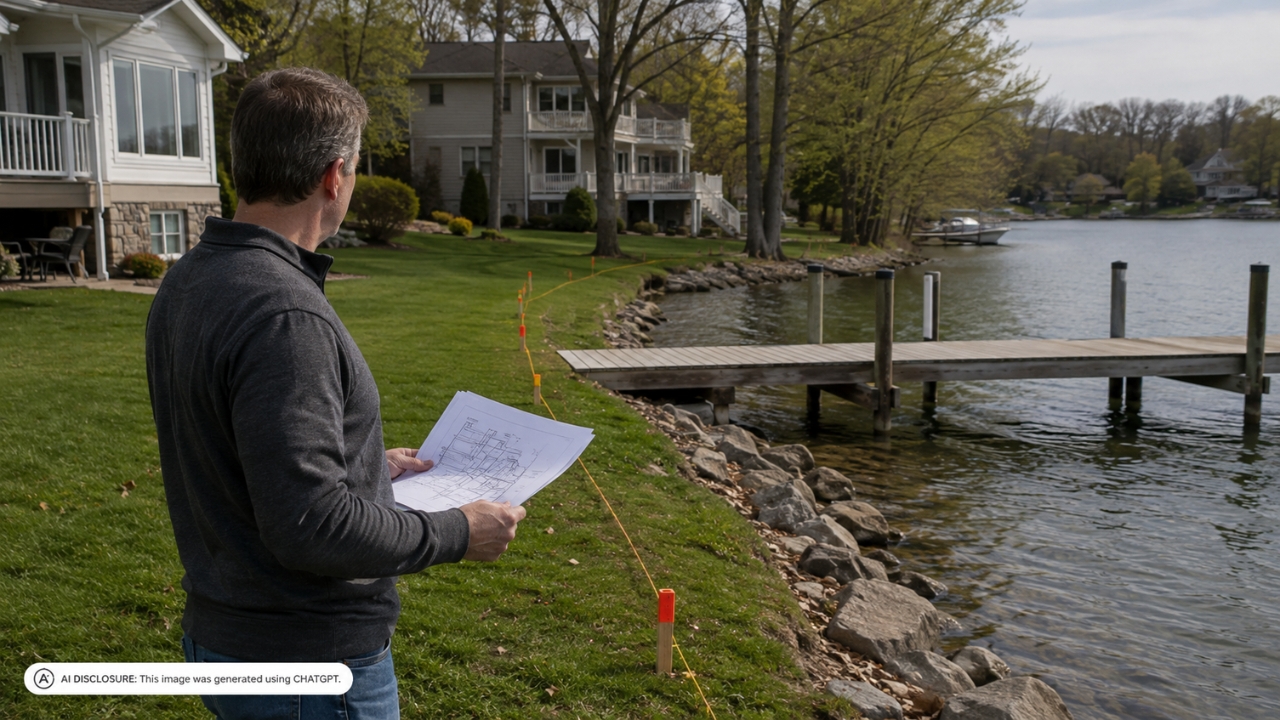
It starts like a lot of waterfront neighbor trouble does: you look out at the lake and realize the view isn’t the only thing changing. A Pennsylvania property owner says their neighbor’s dock appears to cross over the deeded property line—right where their own frontage and access are supposed to be.
In the original post, the homeowner lays it out in plain terms: their deed shows 300 feet of waterfront access, but the neighbor’s dock permit was “improperly drawn,” and now there’s already a court date on the calendar. And instead of a slow-moving dispute that might settle with a chat and a measuring tape, they’re already preparing for a legal fight where they say they’ll need to prove the dock is a nuisance.
The moment the shoreline stopped feeling like “yours”
Waterfront property has its own kind of anxiety. You can’t just put a fence in the water and call it done, and everybody on the lake watches what everybody else builds. This owner says the complication is baked into the location: in their area, “water is owned by state,” but the land is “owned by a 3rd party.”
That’s the kind of setup that makes normal property-line arguments feel slippery. You can have a deeded right of access and still end up arguing over where one person’s improvements end and another person’s begin. In this case, the owner says their deed clearly gives them 300 feet of waterfront access, but the neighbor’s dock is sitting over that line anyway.
A permit exists, but nobody wants to police the boundary
One of the most frustrating details in the post is the permit angle. The homeowner says the dock permit paperwork is wrong—“improperly drawn”—which is exactly the sort of thing people assume will be an easy fix once someone at the permitting office takes a look.
Instead, the owner says the permit person told them it was “not his job to enforce property lines.” That’s the part that makes a lot of homeowners feel trapped: a structure can be permitted, but the permit doesn’t necessarily settle whether it belongs where it’s built. So you end up with a dock in the water, a neighbor insisting it’s allowed, and a homeowner staring at paperwork that doesn’t magically move the boards and pilings back where they belong.
And once a dock is in, it’s not like a trash can you can slide a few feet over. It’s an anchored structure tied to use of the shoreline, access paths, boat traffic, and space for swimming—basically, the whole reason people pay for waterfront in the first place.
Escalation: enforcement complaints and “we’ll put ours right on the line”
This owner isn’t waiting around quietly. They say they’re “going down 105 enforcement with depa,” describing a push through enforcement channels rather than informal back-and-forth. Even without knowing the exact agency names behind the shorthand, the intent is clear: they’re trying to get an authority involved in a way the permitting office wouldn’t.
At the same time, they’re thinking about physical counter-moves. The homeowner says they “can put our dock out right that property line,” and they also plan to place “2 wake buoys.” That detail says a lot about how these disputes turn personal: once one structure feels like it’s encroaching, the natural urge is to stake your own claim as visibly as possible.
But on a lake, “staking a claim” changes how people move. It can shift where boats idle, where kids swim, where wakes hit the shore, and how easy it is to come in and out without feeling like you’re trespassing. Even when it’s fully legal, it can turn a tense neighbor relationship into day-to-day friction.
The court date isn’t about feelings—it’s about proving “nuisance”
The homeowner says their upcoming challenge is specific: “we have to show their dock is a nuisance to us.” That’s a different burden than simply pointing at a line on a map and saying the dock crossed it.
“Nuisance” is where quality-of-life details matter. It’s the practical stuff that changes how you can use your property: blocked access, reduced safe maneuvering room, interference with quiet enjoyment, or making routine lake use harder than it should be. The post doesn’t list the exact impacts they plan to present, but the fact that they’re thinking in those terms shows they understand court isn’t always persuaded by indignation alone.
And there’s another layer: if the water is owned by the state and the land situation involves a third party, the courtroom story can get complicated fast. One side might treat it like a simple boundary dispute, while the other side frames it as permitted use of shared water space—two narratives that can collide depending on how the deeded access and shoreline rights are defined.
The practical advice people tend to push in dock-line fights
The post is essentially a call for last-minute trial tips: “any other trial tips.” In property-line disputes—especially ones involving water—people usually stop talking about “winning” in the abstract and start talking about proof you can hold in your hand.
When homeowners trade advice on cases like this, the themes are predictable because they’re effective: paperwork that matches the deed, documentation that shows where the neighbor’s dock sits relative to the claimed line, and a clean timeline of what happened when. When there’s already a court date, people also tend to emphasize being careful with any retaliatory moves on the water, because anything that looks like escalation can get spun as provocation instead of self-protection.
Even the owner’s own plan—placing their dock right on the line and adding wake buoys—reads like a strategic choice that could either clarify boundaries or inflame the lake. Once both sides start placing hardware in contested space, it stops being a quiet disagreement and becomes a daily standoff.
A shoreline dispute can swallow the whole season
What makes dock arguments so consuming is that they don’t stay on paper. You don’t just “not think about it” when you’re trying to enjoy your property and the object of the dispute is literally in your view.
In this case, the homeowner is already beyond the “let’s talk to the neighbor” stage. They’ve got a court date, a permit they believe is drawn wrong, a permitting office that won’t enforce the line, and an enforcement route they’re pursuing anyway. The next chapter hinges on what they can demonstrate in court and how the lake’s overlapping ownership rules treat deeded access versus built structures.
For now, the tension sits right where these fights always do: at the edge of the water, where one neighbor’s dock feels like another neighbor’s lost space—and where every weekend can feel like a reminder that the property line isn’t just a line when it’s tied to the only way you reach the lake.
Like Fix It Homestead’s content? Be sure to follow us.