New Homeowner Confronts the Neighbor Mowing Three Feet Into Her Yard — Then He Insists the Closing Survey Is Wrong and “Everyone on the Street” Knows the Real Line
Photo credit: AI-generated image created using ChatGPT. Illustrative only.
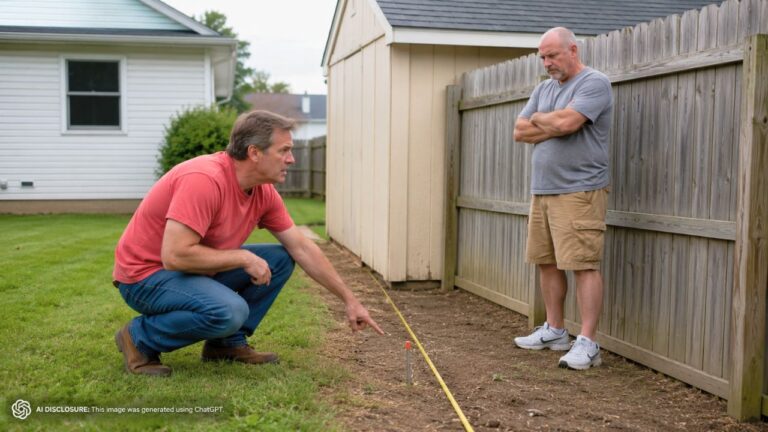
Three months into owning a new house, the yard still feels like it’s finally yours—until someone else starts treating it like it’s theirs. That’s exactly what one new homeowner described in the original post, after coming home to find the next-door neighbor mowing several feet past the fence line and into her grass like it was routine maintenance.
When she questioned it, he didn’t back off or apologize. He told her that strip of lawn—about three feet—actually belonged to him, and that the fence had been “placed incorrectly years ago.” It wasn’t just a one-time misunderstanding either. He’d already been laying the groundwork with little comments, and now he was acting on them.
The first sign was easy to brush off
The early warning signs didn’t look like an emergency. The neighbor made small remarks about the fence, suggesting it wasn’t in the right place and hinting that a previous owner had agreed to move it.
That’s the kind of comment a lot of people shrug off, especially right after moving. New homeowners are already juggling unpacking, repairs, paperwork, and learning the rhythms of a new street. A neighbor grumbling about a fence can sound like neighborhood lore—annoying, but harmless.
Except these weren’t just gripes. They were test balloons. And once someone starts floating the idea that a boundary is “wrong,” it can turn into a steady campaign to make you doubt your own documents.
Then she caught him mowing into her yard
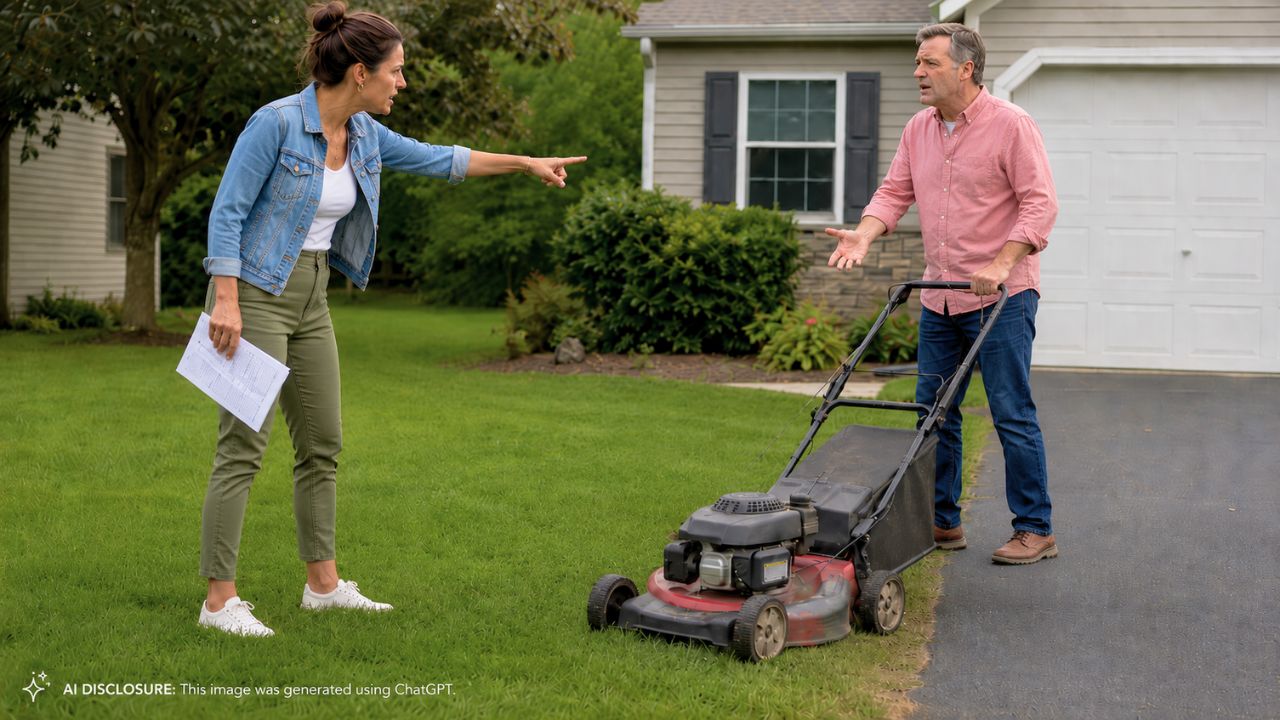
The moment it stopped being background noise was the day she came home and saw him mowing about three feet into her side. Not trimming along the edge. Not accidentally crossing over for a second. A clear strip, cut like it was part of his regular route.
When asked what he was doing, he didn’t act confused. He told her that section belonged to his property and the fence was wrong. That statement matters, because it wasn’t about grass anymore. It was a claim.
Property-line disputes have a way of feeling petty right up until they don’t. Three feet can be the difference between where you put a shed, where you plant trees, where kids play, and where you assume you’re covered if something gets damaged. It can also become the “accepted” line if the wrong person keeps using it long enough and nobody challenges it.
The paperwork said one thing—he said the street said another
She did what most homeowners would do first: she pulled the property survey from closing. According to her, it clearly shows the fence line exactly where it sits now.
That should have ended it. But when she showed him the survey, he dismissed it outright. He insisted the documents were wrong and claimed “everyone on the street” knows the real boundary is different.
That’s a classic escalation point in neighborhood conflicts: replacing measurable proof with social pressure. “Everybody knows” is hard to argue with in the moment, because it’s not a fact you can hold in your hand. It also implies you’re the outsider—the new person who doesn’t understand how things are “supposed” to be.
Meanwhile, his behavior didn’t settle down. He kept making comments about how they’re using his land and how the fence will have to be moved eventually. The word “eventually” is doing a lot of work there, like he’s announcing a future project that he expects her to accept.
It’s not the grass—it’s the daily pressure
By this point, the homeowner wasn’t only dealing with a boundary claim. She was dealing with the atmosphere that comes with it. She wrote that it’s becoming uncomfortable because every time they’re outside, he stares at the fence like he’s measuring it.
Anyone who’s lived next to a difficult neighbor knows that feeling. Your own backyard stops being relaxing. You start listening for footsteps or lawn equipment. You hesitate before you garden, before you host people, before you do anything that might invite a comment.
And unlike a one-time argument, this kind of ongoing pressure creates a weird new routine. The neighbor’s constant remarks turn a simple fence into a daily reminder: he’s watching, he disagrees, and he’s not dropping it.
That’s also why the mowing matters. Mowing is visible. It’s repetitive. It’s a way of showing ownership without building anything—quietly creating a new “normal” by maintaining the strip like it’s his.
What neighbors urged: lock down proof before it turns into a “tradition”
Even with the limited details shared, the practical direction most homeowners lean in these disputes is the same: don’t let a casual pattern become the story everyone repeats later. When someone says the survey is wrong and the street “knows” better, it’s a signal that they’re trying to win on repetition and confidence.
In real life, that typically pushes people toward two immediate instincts: documentation and boundaries. Homeowners often start taking dated photos of the fence line, saving copies of their closing paperwork, and keeping notes of each interaction—especially if the neighbor’s statements keep evolving from “it’s wrong” to “you’re using my land” to “the fence will have to be moved.”
Another common move is to stop informal contact and shift everything into a calmer, more controlled channel. When a neighbor is dismissing official documents, a face-to-face chat can become a loop: he repeats his claim, you repeat the survey, and nothing changes—except the tension goes up.
And because the neighbor is physically entering and maintaining the strip, homeowners in this spot often start thinking about deterrence: making it harder to “accidentally” mow over, and easier to show where the line is if it comes up again.
The fence didn’t move, but the relationship already did
Right now, the fence remains where it is, and the homeowner believes her survey backs that up. But the neighbor isn’t acting like someone who plans to agree later. He’s acting like someone who’s trying to wear her down until “eventually” arrives.
That’s the most draining part of property disputes: the lack of a clean ending. If it was just about confirming a line, the survey should have settled it. Instead, she’s left with a neighbor who’s mowing into her yard, dismissing her documents, and treating community gossip as stronger than a closing survey.
For a new homeowner, it’s a rotten way to settle in. The house is yours on paper, but the neighbor is trying to make the outside space feel negotiable. And when someone starts measuring your fence with their eyes every time you step outside, it stops being about landscaping and starts being about control.
In the meantime, the grass will grow back. The discomfort won’t, unless one of them finally stops pretending that “everyone knows” is the same thing as a boundary line.
Like Fix It Homestead’s content? Be sure to follow us.