New Homeowner’s Survey Finds Fifteen Feet They Assumed Was the Neighbor’s Land Is Actually Theirs — Then the Survey Flag Turns Up Moved Ten Feet Back Onto Their Property Overnight
Photo credit: AI-generated image created using ChatGPT. Illustrative only.
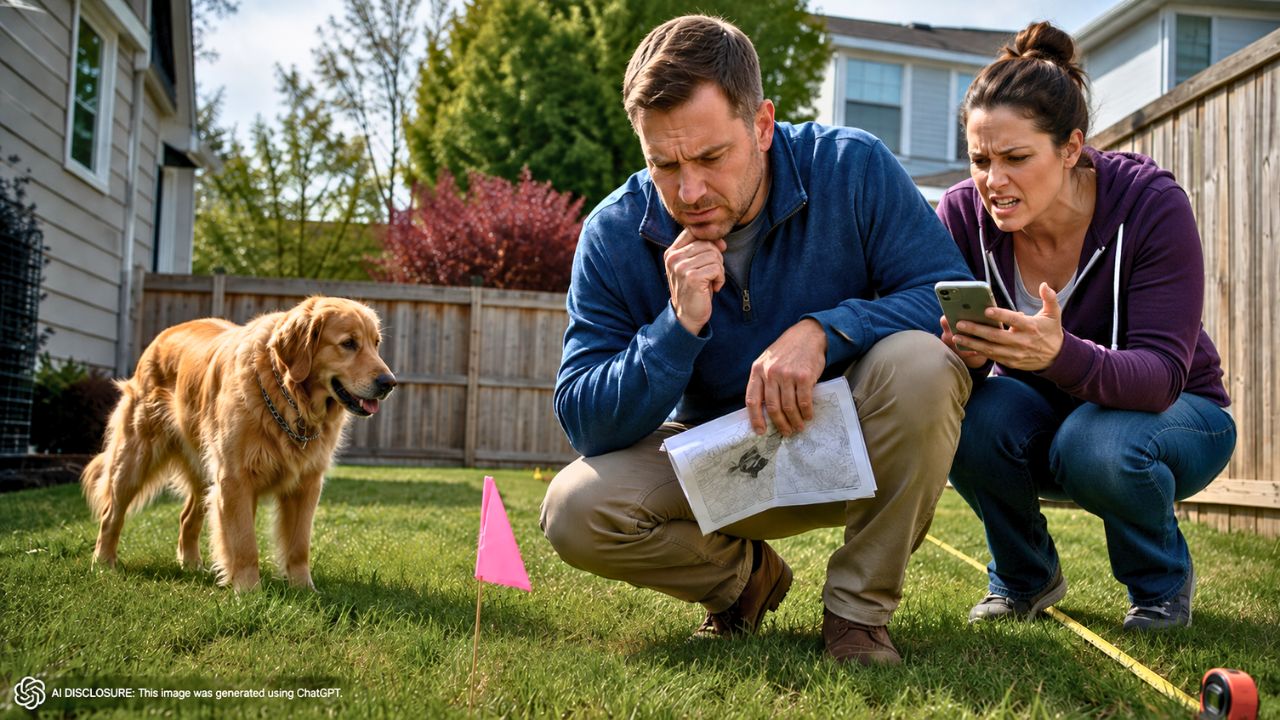
The new backyard routine was supposed to be simple: clip on a leash, let the dog burn off energy, and start planning a long-overdue fence. Instead, three weeks into owning their home, one homeowner found themselves staring at a property-line flag that had quietly “walked” overnight—pulled ten feet back onto land that a fresh survey said was theirs.
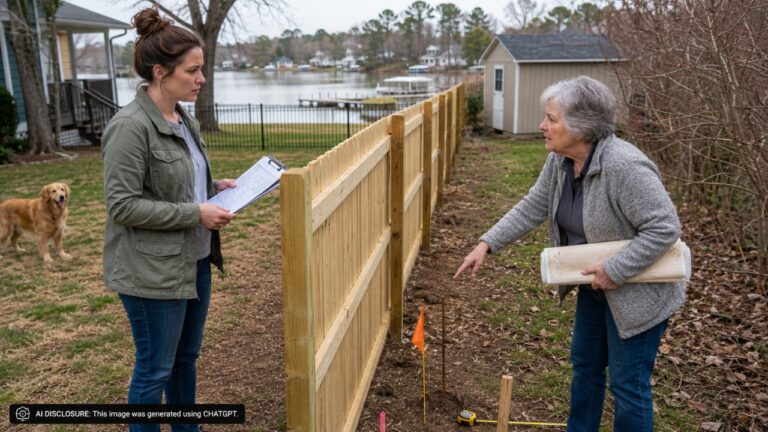
In the original post, the homeowner explains that a 65-pound dog was the daily reminder they needed to finally fence the yard. So they did what plenty of people do when a fence is on the horizon: hired a surveyor to mark the boundaries. The survey delivered a surprise—about fifteen feet of what they’d always assumed belonged to the neighbors was actually part of their parcel.
A fence plan turns into a property-line reality check
The surveyor marked the boundary, and one marker landed in a spot that made the change hard to miss: roughly in the middle of a mulched tree ring. The homeowner even had a photo showing the marker’s original placement, a small visual that suddenly carried a lot of weight.
Along that line sat another detail that made the discovery feel less theoretical. The homeowner noticed a tree entirely on their side that the neighbors appeared to have planted within the last 12 to 18 months. It wasn’t a decades-old mistake baked into the landscape—it looked recent, intentional, and now awkwardly positioned.
The homeowner hadn’t even met the neighbors yet. Three weeks is that weird stage where you’re still learning which light switch does what, but you’re also expected to navigate shared space like you’ve lived there for years. They wanted to be firm, but not come in hot and ruin the first impression.
The morning walk that changed the tone
Then came the moment that made it feel personal. While walking the dog in the backyard one morning, the homeowner saw the survey flag had been moved. Not bumped. Not bent by a mower. Moved about ten feet back into their property.
They clarified that the in-ground iron marker—the metal bolt or pin that actually matters—had not been pulled out. It was the flag marking it that was relocated. Still, that small act landed like a message: “We don’t like where that line is.”
And that’s where property-line disputes get messy fast. A flag isn’t legally defining the boundary, but it’s the visible reminder of where the boundary is. Moving it doesn’t change the survey, but it does change the day-to-day reality of what looks “normal” from either side of the yard.
Fifteen feet is not a rounding error when you live there
The difference between “their yard” and “our yard” can be emotional even when the numbers are small. But fifteen feet isn’t small when you’re talking about a fence run, a dog’s safe play area, and future maintenance. That’s space you mow, landscape, and potentially pay taxes on—space that influences privacy, resale value, and how you use your own property.
It also changes what “the property line” feels like to the neighbors, especially if they’ve been treating that strip as theirs. If they’ve been planting, mulching, or informally extending their yard into that space, the survey doesn’t just redraw a map. It rewrites habits.
Add a newly planted tree to the mix, and now there’s a physical object sitting in the wrong story. Trees aren’t like patio furniture. Once they’re in the ground, they come with years of growth, shade, roots, and potential arguments about removal later.
The first move was quiet: replace the flag, try a friendly hello
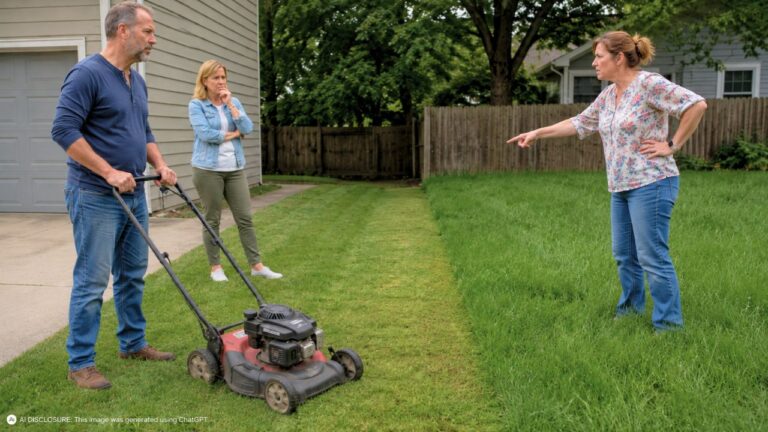
Instead of charging over the moment they saw the moved marker, the homeowner took a more measured approach. They went over with their wife to introduce themselves. No one answered the door.
About 30 minutes later, the neighbors had guests come to visit. The homeowner replaced the flag back where it belonged, marking the iron pin again. Then they left a greeting card in the mail—an attempt to keep the tone neighborly while still putting the issue on the table.
The note didn’t accuse anyone directly. It simply introduced them and mentioned they’d had a survey done, and they were curious about who had planted the trees near the property line. It’s a small detail, but a smart one: it opens a conversation without starting with, “Why did you move my survey marker?”
Still, the tension hangs in the space between that friendly card and the moved flag. When your first real “interaction” with a neighbor involves a shifted boundary marker, it’s hard not to read it as a test.
Homeowner reactions leaned toward proof, not porch arguments
Even without a full comment thread included in the source material, the theme is familiar to anyone who’s watched these disputes play out: don’t rely on vibes and verbal promises when property lines are involved. People can be polite in conversation and still push the line inch by inch with landscaping, edging, or “accidental” fence placement.
That’s why the homeowner’s clarification matters. The iron marker is still in the ground, which means the true boundary reference point remains intact. But the moved flag signals that future misunderstandings—or deliberate “confusion”—could happen, especially once a fence is involved.
In situations like this, homeowners often focus on keeping documentation tight: the survey paperwork, photos of markers, dated images of the yard, and any communication in writing. Because if the next step is a contractor quoting a fence or a neighbor insisting the “old line” was somewhere else, the person with the clean paper trail usually has an easier time holding the ground they actually own.
A small plastic flag can turn into a big expensive problem
On its face, a moved flag is petty. But it’s also the kind of petty that can snowball. Fences cost real money, and a fence placed even slightly wrong can trigger disputes that drag on for months—especially if one side feels embarrassed or blindsided by the survey results.
There’s also the practical reality of living next to someone you might see every day. The homeowner wanted to be firm without coming off like a jerk, which is the tightrope almost everyone walks when they discover a property issue after closing. You don’t want to surrender your land, but you also don’t want the next decade to be a cold war over shrubs and mower lines.
For now, the homeowner’s choice—to reset the flag, attempt a face-to-face introduction, and leave a calm written note—keeps the door open. But the line in the yard has already been drawn, literally. If the neighbors respond with more “invisible” moves instead of a conversation, that fence is going to stop being a dog project and start being a boundary project.
And that’s the part new homeowners don’t expect: you think you’re buying a house, but sometimes you’re also inheriting a story about where one yard ends and the other begins—whether anyone ever agreed to it or not.
Like Fix It Homestead’s content? Be sure to follow us.