Rural Homesteader Finds the Neighbor Pulled Up the Surveyor’s Property Marker — Then Learns He Repurposed It as a Garden Stake for His Rose of Sharon
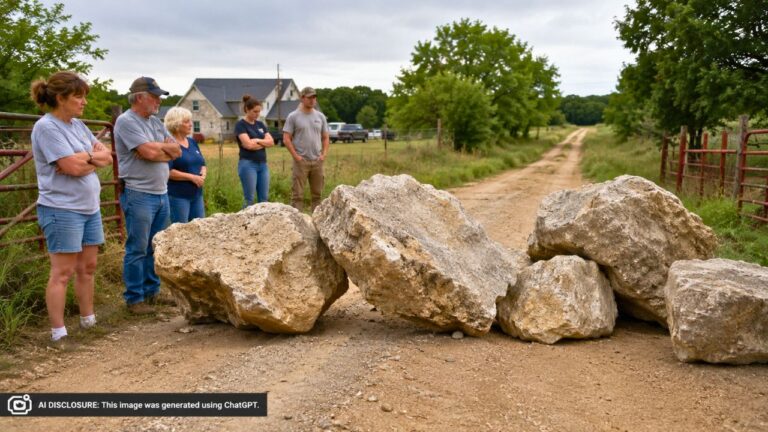
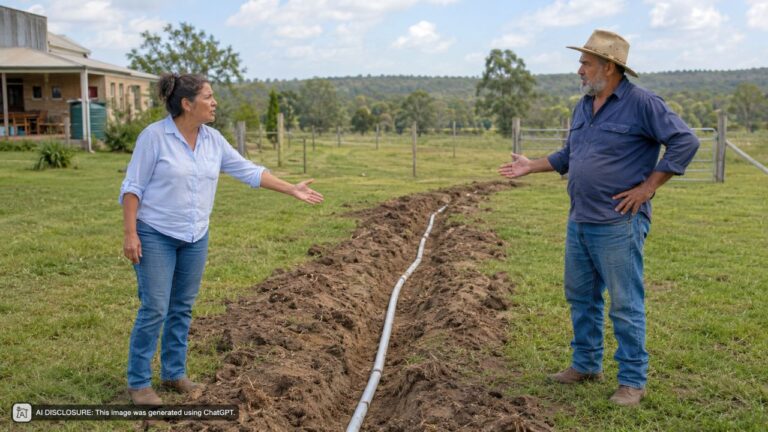
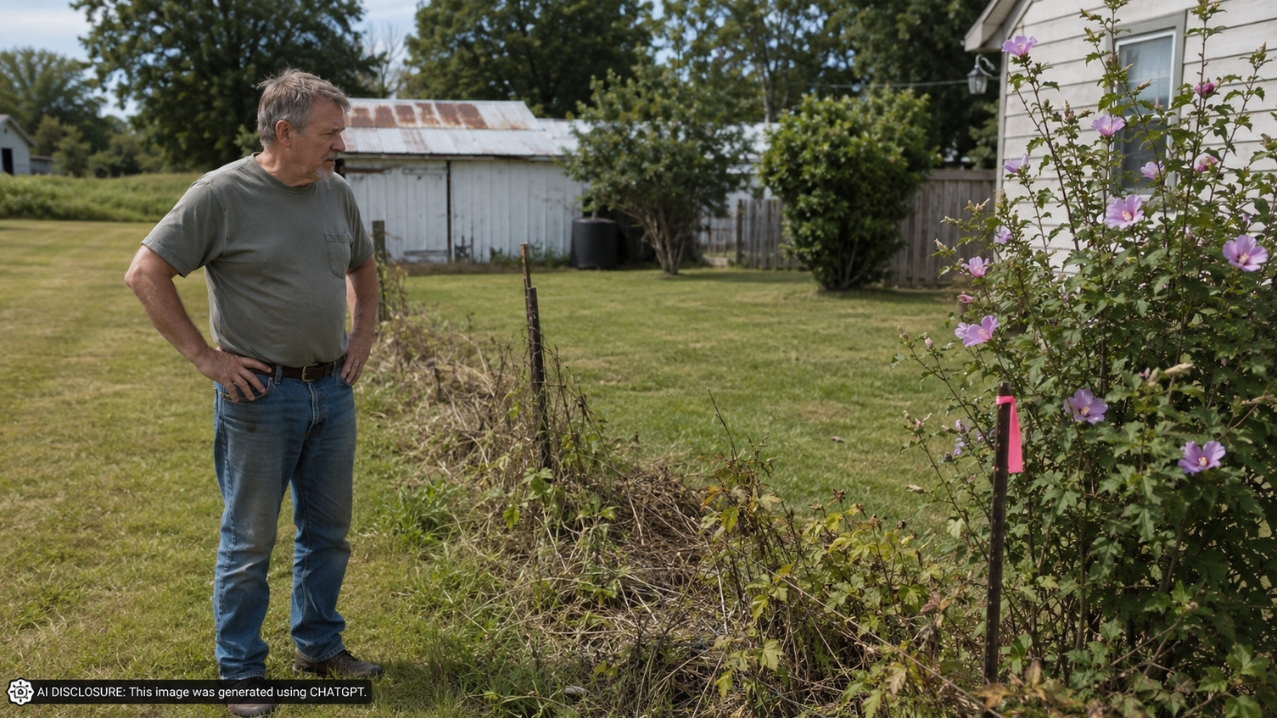
Photo credit: AI-generated image created using ChatGPT. Illustrative only.
On a rural homestead, you expect the usual annoyances: a wandering dog, a shared ditch that never drains right, maybe a fence that needs constant tweaking. What you don’t expect is to walk your line and realize the surveyor’s property marker—one of the few physical “this is it” signals you’ve got—has vanished.
That’s where one homesteader found themselves, sharing the story in the original post. The marker hadn’t just been knocked over or buried in tall grass. The neighbor had pulled it up and moved it onto his own side, not to hide it exactly, but to hold up a Rose of Sharon that needed staking.
A tiny metal stake that carries a lot of weight
Property markers don’t look like much. They can be easy to miss, easy to bump with a mower, easy to confuse with a random piece of rebar. But when you live next to someone you already consider “problematic,” that little stake starts to feel like the only thing keeping the peace.
The homesteader said they already know where the property line is. The marker wasn’t their only reference point, and the neighbor moving it didn’t suddenly erase their understanding of the boundary. Still, the fact that it was moved—deliberately—turned an ordinary boundary detail into a trust issue.
And it didn’t help that the neighbor moved it deeper into his own property. On paper, it’s almost comical: if anyone took that relocated marker at face value, it would appear to “give” the homesteader more land, not less. But that’s not how real disputes play out once people start pointing at stakes.
“Go take it back” sounds simple until you picture the next ten years
Their realtor kept urging a direct fix: go over, take the stake, and put it back where it belongs. That advice has a certain clean logic to it. Restore the marker, reset the baseline, don’t let bad behavior become normal.
But the homesteader hesitated for a reason most rural homeowners will recognize. You can be right and still pay for it—through passive-aggressive boundary games, a neighbor who suddenly “doesn’t see” your driveway when it snows, or an endless series of small retaliations that make day-to-day life miserable.
What made it harder was the tone of the whole thing. Using a property marker as a garden stake isn’t a harmless accident in the way knocking one over might be. It’s casual disrespect dressed up as practicality, the kind that says: I’ll use what I want because it’s convenient.
The real fear isn’t losing land—it’s losing control of the story
Even if the neighbor’s moved marker technically benefits the homesteader, it muddies the record. Physical markers are one of the first things people photograph when they’re planning a fence, putting in a driveway, clearing brush, or doing any work near a line. When that marker is no longer where the surveyor placed it, you can’t trust what a quick glance is “proving.”
That’s where this turns from petty to practical. If the homesteader ever needs to hire contractors, build something near the boundary, or sell the place later, the question becomes: will the next person find the marker and assume it’s legitimate? Will the neighbor point to his Rose of Sharon stake and claim that’s always been the corner?
It’s also a signal about future behavior. Someone willing to grab a survey stake because it’s handy may not hesitate to “adjust” other things too—brush piles creeping across the line, a new shed placed just a little too close, a fence that “accidentally” zigzags. The marker itself is small. The precedent is not.
Why a Rose of Sharon stake can become a boundary battle
The story has a certain rural absurdity: a flowering shrub propped up by the one object that’s supposed to stay put. But that’s exactly why it gets under people’s skin. It’s not a dramatic land grab. It’s a quiet test of what the neighbor can get away with.
And because the homesteader already dislikes these neighbors based on “many other things,” the relocated marker lands like another entry in a longer list. That context matters. In a vacuum, you might chalk it up to ignorance. In a pattern, it looks like the beginning of something you’ll regret ignoring.
The homesteader also pointed out the weird logic trap: if they “do nothing,” the marker remains wrong. If they “do something,” they risk escalating. Meanwhile, the neighbor gets to enjoy the comfort of acting like nothing happened—because the stake is on his land now, holding up his plant, like it was always meant to be there.
Reactions leaned toward documentation before confrontation
In homestead circles, the most common instinct in a property-line dispute is to avoid the shouting match and build a paper trail instead. Even without a full comment section included here, the homesteader’s realtor advice reflects that same theme: correct the record, restore what’s official, and don’t let it slide.
People who’ve lived through boundary headaches tend to focus on two things early: proof and predictability. Proof means photos of the marker’s current location, notes about when it was discovered, and anything that shows it was moved. Predictability means taking an action that you can defend later—something that looks reasonable if a third party ever has to step in.
That’s why the seemingly “dumb” and “petty” question isn’t dumb at all. If a fence goes up next year, if a tree comes down near the line, if someone calls a contractor who eyeballs boundaries, the homesteader will want to be able to say: the marker was tampered with, and I addressed it promptly—or I documented it clearly and sought a proper correction.
The hardest part is fixing it without living in a feud
The homesteader’s central worry wasn’t confusion about the line. It was the emotional and practical cost of turning a tense neighbor relationship into open conflict. In rural living, you don’t just “move away from” a bad neighbor. You see them at the mailbox, on the road, near the ditch line, sometimes through your own kitchen window.
At the same time, letting a moved survey marker sit in someone’s garden like it’s a decorative stake can feel like surrender. Not because it changes ownership, but because it normalizes the idea that boundaries are flexible and enforceable only when you’re willing to fight.
For now, the tension hangs in that uncomfortable middle: a realtor pushing for a clean, direct reset, and a homeowner trying to avoid lighting a fuse with someone who has already shown they’re willing to cross lines—literally—when it suits them. On a homestead, peace is worth a lot. But so is a marker that stays where it was put.
Like Fix It Homestead’s content? Be sure to follow us.