New Homeowner Finds the Neighbor’s Septic Leach Field Covering Eighty-Four Percent of the Back Yard — Then Learns No Easement Was Ever Signed to Allow It
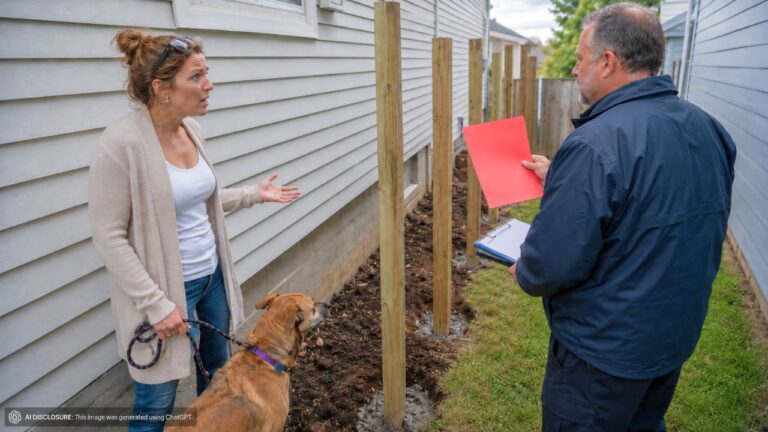
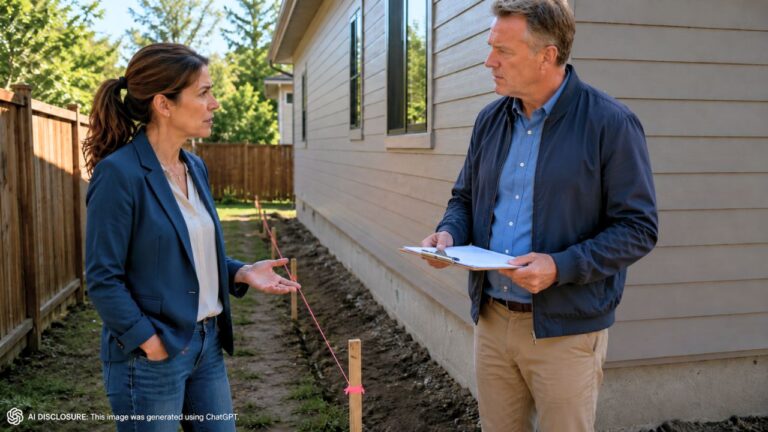
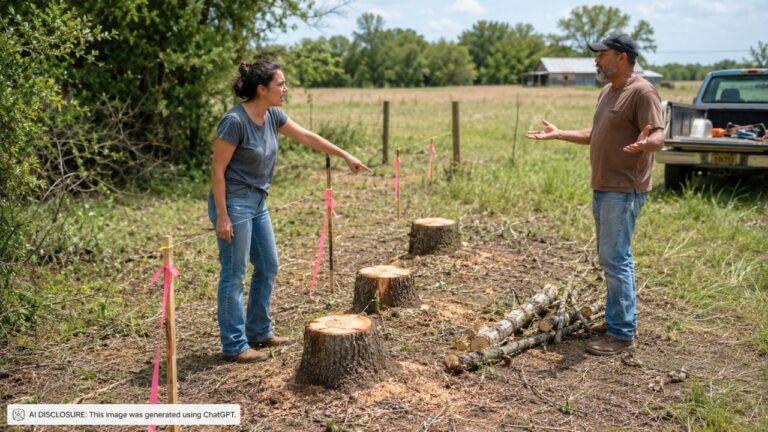
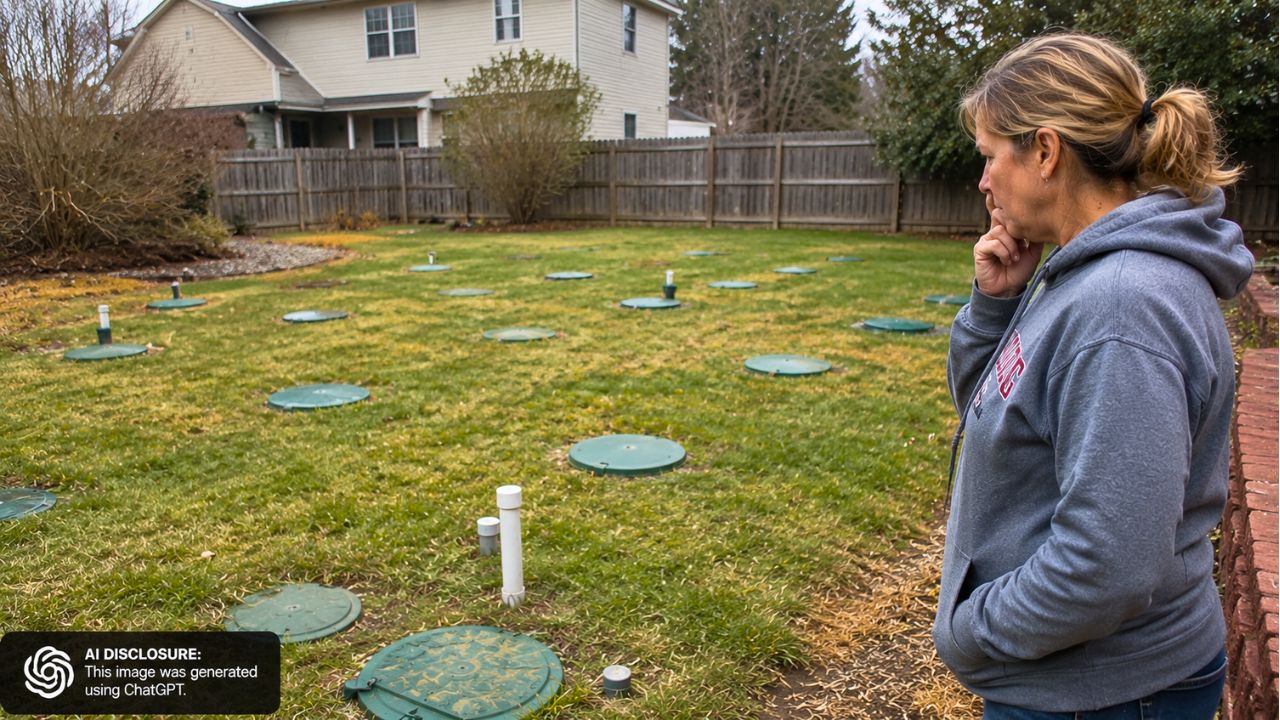
Photo credit: AI-generated image created using ChatGPT. Illustrative only.
It started as the fun part of homeownership: making plans for a backyard that finally felt like theirs. Trees for shade, an above-ground pool for summer, a playground for everyday life. The kind of project that has you measuring twice and imagining where everything will go.
Then the paperwork came back from the county, and the whole yard vision got boxed in by something they didn’t install, didn’t agree to, and didn’t even know existed. In the original post, an Idaho homeowner described learning that nearly the entire neighboring home’s septic leach field runs through their backyard—ending about 10 feet from their house.
A backyard makeover ran straight into a septic map
The homeowner said they did what careful people are supposed to do before digging: they called the county office and pulled the site plans so they could be certain where their own septic tank and well were located. They weren’t trying to start a fight. They were trying to avoid puncturing something expensive and gross.
But once they had the plans in hand, they noticed something that didn’t match reality—or at least didn’t match what they believed they bought. The neighbor’s leach field showed up on their parcel. Not a corner. Not an overlap that could be chalked up to an old fence line. The homeowner wrote that all but four feet of the neighbor’s leach field is in their backyard: roughly 84 feet of it.
The details made it feel even more personal. The neighbor’s septic tank is on the neighbor’s side of the fence, but the leach field extends over. And it doesn’t just wander into the property—it ends about 10 feet from the homeowner’s house.
When one hidden feature blocks everything else
Septic systems don’t just take up space; they control what you’re allowed to do with that space. You can’t casually plant trees where roots might chase moisture into pipes. You can’t build heavy structures over certain areas without risking damage. And you definitely don’t want to discover these limits after you’ve already installed a pool or started digging.
This homeowner said the combined footprint of their own well and septic, plus the neighbor’s leach field, leaves them without enough room to make the improvements they want. That’s the moment it stops being “a weird map detail” and becomes a daily, practical problem.
A backyard is where families spend money to make a house feel like home. It’s also where mistakes get expensive fast. If you can’t use most of your land because someone else’s wastewater system occupies it, you’re not just losing square footage—you’re losing the plans you’ve been saving for.
The timeline made it feel like a trap
The homeowner shared a timeline that adds an extra layer of frustration. The neighbor’s house was built in 2001. The neighbor originally built that house for their son, the homeowner said, and later the son sold it and moved away when the family farm went out of business.
The homeowner’s property, they explained, was created later: the neighbor subdivided their land and built the homeowner’s house in 2009. The current homeowner bought in 2019.
That order matters because it suggests the leach field might have been laid out before the subdivision was finalized, or at least before a new buyer would reasonably expect to inherit someone else’s infrastructure. In plain homeowner terms: it feels like buying a yard and learning it’s been “reserved” for the neighbors the whole time—without anyone saying so.
The homeowner also made one point crystal clear: they don’t believe they signed an easement allowing this. In fact, they said they didn’t even know the leach field was there.
Awkward neighbors, real consequences
It’s easy for outsiders to say, “Just tell them to move it.” In reality, that sentence contains months of stress. Moving a leach field isn’t like relocating a shed. It can mean engineering, permits, heavy equipment, and time without a fully working system if it goes sideways.
And the human side is messy. The homeowner admitted they feel bad and don’t want conflict with their neighbors. That’s a familiar rural living problem: you don’t just “win” a property dispute and go back to normal when the people involved live a fence-length away.
Still, the physical fact doesn’t care about anyone’s feelings. A leach field that close to a home—ending about 10 feet away—doesn’t just limit improvements. It lives in the back of your mind every time you smell something off after rain, every time you notice soggy patches, every time you picture your kids playing in a yard that’s supposed to be yours.
Paperwork shock: public records can change the whole story
One of the most striking parts of the homeowner’s account is how they got the information in the first place. They weren’t snooping; they were pulling plans for their own project. Then, because the records were public, they were able to get the neighbor’s septic plans too.
That’s when the property drama becomes hard to ignore: it’s not a rumor, not a guess based on where the grass grows differently. It’s on file.
Homeownership has a way of turning “I’m sure it’s fine” into “Why didn’t anyone tell us this?” overnight. People assume that if something as major as a septic drain field crosses a boundary, there must be paperwork somewhere making it official—an easement, a recorded agreement, something that would have come up during the purchase. This homeowner’s fear is that none of that exists.
How people typically reacted: document first, talk second
Even without a blow-by-blow comment thread included, the kind of practical reactions this scenario tends to trigger are predictable: don’t start with a shouting match at the fence. Start with proof. The homeowner already took the first step by getting the county plans.
From there, the usual homeowner-to-homeowner advice tends to focus on confirming boundaries and building a paper trail before any confrontation hardens into a feud. When property lines and septic layouts collide, a casual conversation can go nowhere fast if both sides are working from different “facts.”
And if the homeowner truly never signed anything allowing the neighbor’s system to occupy most of the backyard, the next steps stop being about “yard improvements” and start being about what rights came with the deed—and what obligations may have been quietly baked into the land long before the current owners arrived.
The homeowner hasn’t said what they’ll do next, only what they’re wrestling with: whether to ask the neighbors to move it, and how to handle a massive, expensive overlap without turning daily life into an ongoing standoff. For now, the backyard plans are on hold, waiting on an answer no one expects to need when they buy a home: whose septic system is actually in the yard?
Like Fix It Homestead’s content? Be sure to follow us.