New Homeowner Has a Surveyor Mark the Property Line Before Building a Fence — Then the Neighbor Claims Ring Camera Footage Proves It Weaves an Inch Over and Bangs on the Next-Door Neighbor’s Door to Complain
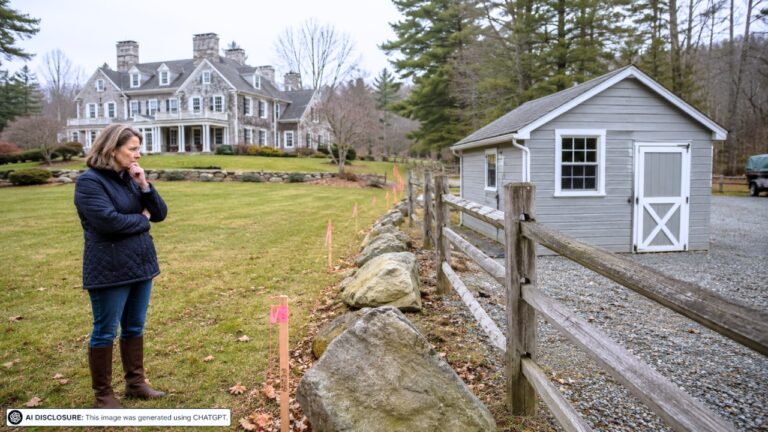
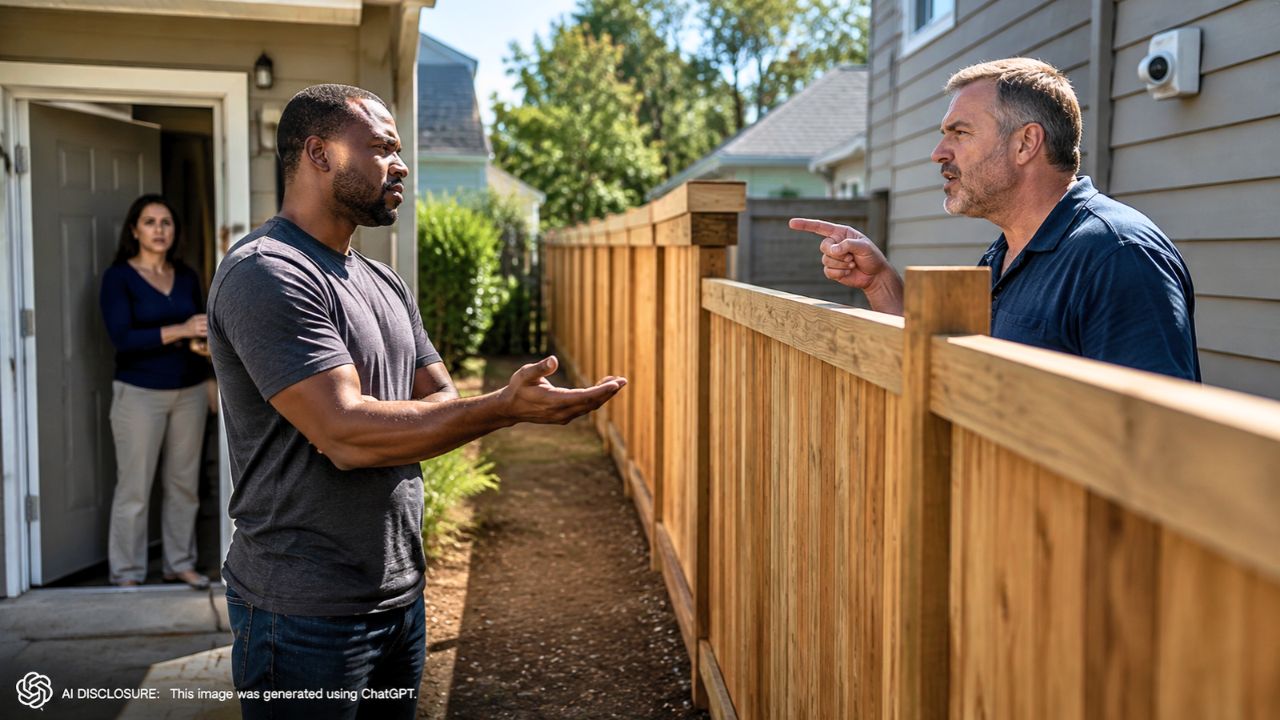
Photo credit: AI-generated image created using ChatGPT. Illustrative only.
The fence was supposed to be the clean, satisfying kind of new-home project: mark the line, set the posts, finish the job, move on. Instead, one homeowner found themselves staring down a property-line accusation after doing what people always say you should do—paying a surveyor before digging.
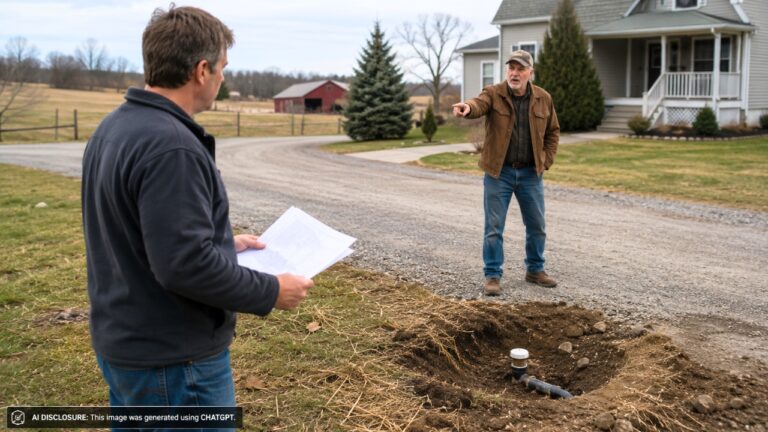
In the original post, the homeowner says they hired a land surveyor to mark the property boundaries, then rented a trencher, cemented posts, and built the fence. That’s when the neighbor claimed the fence “weaves” and crosses over the line by about an inch in one spot—and that a Ring camera recorded the entire install as proof.
They did the “right” thing first: survey, then dig
The homeowner’s version of events is straightforward. Before any trenching or concrete, they paid for a land survey and had the property lines marked. With those marks as the guide, they built.
That sequence matters because fences are where neighbor disputes go to multiply. Once posts are set in concrete, “just move it” stops being a casual suggestion and starts sounding like a bill—time, money, more rentals, more materials, and the risk of tearing up a yard twice.
The neighbor didn’t frame it as a friendly heads-up, either. The complaint was specific—an inch over—and backed with a not-so-subtle flex: video of the whole project.
The accusation came with a side of boundary-testing
According to the homeowner, the neighbor wouldn’t discuss the issue face-to-face. Instead, she banged on another neighbor’s door to complain and tried to recruit them to her side.
That move changed the tone from “let’s double-check the line” to “this is becoming a neighborhood campaign.” The homeowner also described earlier moments that made them suspicious of where this was headed, including the neighbor “caring” for sections of lawn that were clearly not hers—like weed-whipping behind the homeowner’s shed.
Then came the comment that tends to show up in property disputes when someone is shopping for leverage: “If you care for someone’s property for X amount of years it becomes yours.” Even if the speaker believes it, it lands like a warning—one that suggests they’re thinking about long-term claims, not just fence aesthetics.
A Ring camera turned an ordinary fence into a performance
The neighbor’s claim leaned heavily on surveillance. She said she had saved footage of the entire installation and that it proved the fence wandered over her line.
For the homeowner, that introduced a different kind of stress: the sense of being watched while working on their own yard, then having that footage framed as evidence. The homeowner even admitted they were tempted to respond with petty behavior while rebuilding—because they were bracing for the possibility they’d have to take the fence down and redo it under someone else’s camera lens.
It’s a familiar modern twist on an old problem. Property-line arguments used to be about tape measures and landmarks. Now they come with doorbell cameras, saved clips, and the feeling that every shovel of dirt is being narrated by the neighbor next door.
They paid for a second survey—and got it on video
Rather than argue in circles, the homeowner went back to the one thing that usually ends these fights: professional measurements. They had the surveyor return and remark the lines again.
This time, the homeowner says the surveyor referenced metal irons marking the corners—physical markers used to establish boundaries. Using those irons and the measurements from the property line, the surveyor confirmed the fence was on the homeowner’s side.
Not only that, the homeowner recorded the surveyor doing the work, placing markers, and stating the fence was on their side of the line. That detail is important because it shifts the dispute from “she said/she said” into “here is the boundary being established in real time.” It’s also a quiet acknowledgment of the world we live in: if the neighbor is compiling video, the homeowner wants their own record too.
The homeowner added one more wrinkle: parts of the fence are “RIGHT up to the property line,” which they said is allowed in their county. It’s legal, but it can still feel provocative to a neighbor—especially one who expected to keep informally using or maintaining that strip of yard.
Now the hardest part: delivering the news without igniting a bigger war
After the re-mark, the homeowner’s question wasn’t how to move the fence. It was how to tell the neighbor they weren’t moving it at all.
The neighbor had already threatened to “file a claim” if the fence wasn’t relocated. So the homeowner is stuck in a tense in-between: they have professional confirmation, but they also have a next-door neighbor who has been escalating socially—knocking on other doors, making ownership comments, and leaning on camera footage as a pressure tactic.
And fences don’t live on paper. They’re permanent, visible, and emotional. Every time someone takes the trash out, every time the dogs go out, every time the mower runs that line, it’s a reminder of who “won.” That’s why even being right can feel like a problem.
Most readers zeroed in on documentation, not retaliation
The homeowner initially asked for petty ideas, but the update shows the advice they acted on was the practical kind: verify the corners, confirm the measurements, and get clean documentation.
When property lines are disputed, the only proof that tends to matter is the kind that’s boring—survey stakes, corner irons, recorded measurements, and paperwork you can hand over without raising your voice. The homeowner’s decision to have the surveyor come back a second time, and to record the process, fits that mindset.
The neighbor’s “I have video” claim also loses some punch when the boundary itself is independently re-established. Footage of a fence being installed doesn’t actually show the legal line unless the camera also captures the verified markers and measurements in a way that can’t be misinterpreted.
Now the homeowner is left with a smaller, sharper question: not “Where is the line?” but “How do I live next to someone who wanted the line to be somewhere else?”
The fence is up, the corners are marked, and the surveyor’s assessment is on record. But the emotional mess doesn’t get pulled out with a trencher. The next move—whether it’s a calm heads-up, a written note, or simply refusing to engage beyond the documented facts—will decide whether this becomes a one-time flare-up or a long-term cold war across a few inches of grass.
Like Fix It Homestead’s content? Be sure to follow us.