New Homeowner Hears Banging and Watches the Neighbor Install a Gate Blocking the Shared Driveway — Then He Refuses to Answer the Door
Photo credit: AI-generated image created using ChatGPT. Illustrative only.
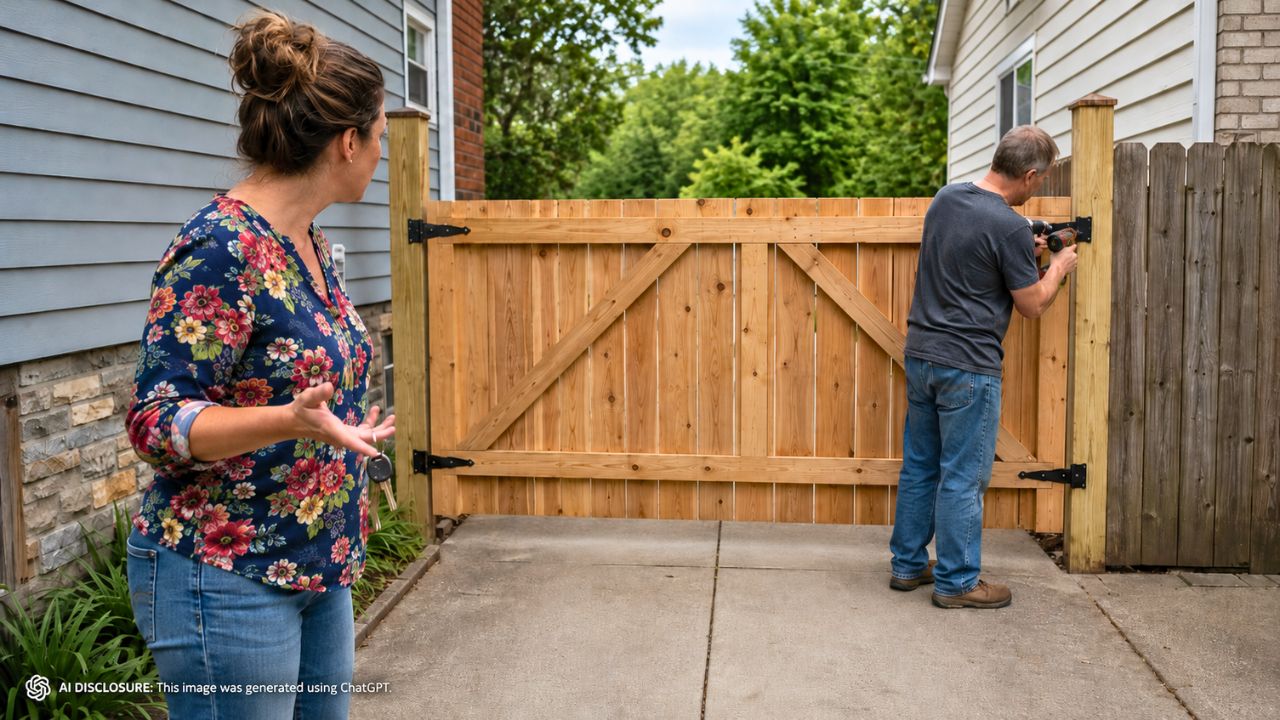
The new house still had that “we just moved in” feeling when the banging started. Not normal hammering, either—the kind that makes a home feel like it’s vibrating. When the homeowners looked out, they saw someone putting up a gate across the shared driveway area that runs along their property.
The details came from the original post, where the homeowner laid out a problem that started as awkward neighbor timing and turned into a tangle of access, property lines, and even a sudden basement leak. The gate went up fast. The neighbor, an older man who lives alone (but has a girlfriend), didn’t answer the door when the new owners tried to introduce themselves.
The first weeks were all about learning the driveway
This wasn’t a simple suburban driveway. The home sits offset from the street, with a long drive that begins at the sidewalk and runs back to the house. That stretch is the homeowners’ property, but there’s an easement agreement allowing the neighbor to use part of it to come and go so he can park in front of his own house.
Then it gets more complicated. The “side and back part” of the drive leads to a garage that—according to the homeowner—was sold off decades ago for a nominal amount, and that garage/back driveway area is now the neighbor’s. The two properties aren’t separated, and getting to the homeowners’ backyard means either going through the basement or walking along the side of the house. In other words, it’s close quarters with no clear physical boundary, which is exactly the kind of setup where small changes feel big.
The gate went up before introductions ever happened
When the banging started, the owners assumed it was just work being done nearby—until they saw the gate being installed to block travel toward the back. A friend who lives next door to the neighbor filled in the motive: the neighbor worried that new residents might start driving to the rear and block his garage access.
The homeowners didn’t actually plan to drive back there. They weren’t looking to store cars by the garage or use the back drive like a second parking lot. It sounded like a simple misunderstanding that could be smoothed over with a conversation.
So the husband went to the neighbor’s door to introduce himself and reassure him. No answer. The gate stayed.
A face-to-face hello turned into a fence argument
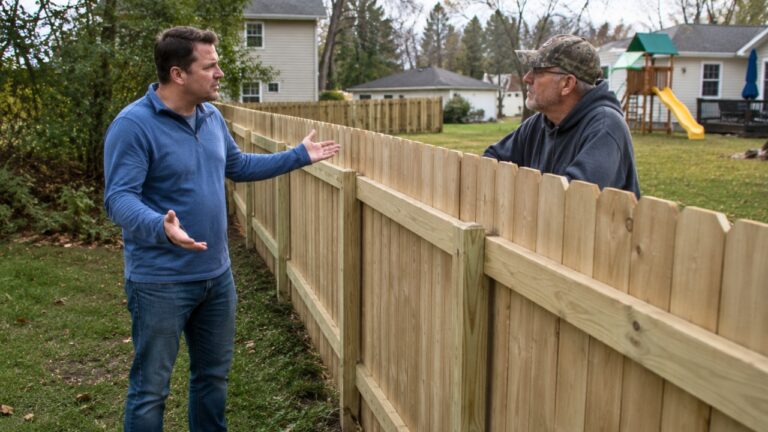
A few weeks later, they finally caught the neighbor outside. They introduced themselves, and the neighbor brought up the gate right away. He told them he didn’t want anyone bringing cars back there, but they could open the gate whenever they needed to pass through.
That might have been the end of it—except the homeowners have small children, and they wanted to fence their yard for safety. They mentioned their plan to fence along their property line so the kids wouldn’t wander onto the neighbor’s land (or out toward the driveway). That’s when the neighbor pushed back and said they couldn’t build the fence because there was an easement in the back.
The homeowners went home and did the unglamorous work: paperwork, surveys, town records. What they found was simple—there was no documented rear easement. The only easement they could confirm was at the front, the one that allowed him to travel in and out for access and parking.
But the neighbor’s position didn’t soften. He claimed he needed to be able to back his car into their yard to pull his boat out of the garage. For parents with two small kids, the idea of a vehicle routinely backing into their yard wasn’t just inconvenient—it was a safety threat they didn’t feel obligated to accept.
The expansion plans made the property line feel like it was moving
Then a letter arrived from an architect: the neighbor wanted to build an addition, including a master suite, because his bedroom is currently on the second floor. Normal enough. But when the homeowners reviewed the blueprint, they saw something that made the earlier “back easement” claim feel less like confusion and more like strategy.
The plans included a proposed property line and a back easement—one that, as drawn, would effectively take a chunk of the homeowners’ land. The owners attended the board meeting and raised concerns about the proposed line and the easement. The town approved the neighbor’s plans, but without the easement included.
That didn’t mean the homeowners could relax. The next meeting would cover the final blueprint, and they planned to be there to make sure the easement didn’t quietly reappear on paper. Because once something like that gets stamped into the official record, it can turn a handshake disagreement into a permanent, expensive reality.
The homeowner also described an exchange with the architect that made the stakes clearer. When asked where the fence would go, the owner drew a straight line down the property line shown on the survey. The architect responded that the neighbor “prefers the fence” installed per a sketch and asked them to “work around the paved black top,” saying the neighbor needed room to back out for vehicles and boats. The problem: that blacktop was described as being 20–30 feet away from the actual property line—meaning the “preferred” fence location would give up a wide strip of their yard.
Then the basement got water—right after the gate
Property fights are stressful. But property fights plus water problems are where people start losing sleep. After a rainstorm, the homeowners got water in their basement on the same side of the house where the gate had been installed above.
It wasn’t a flood, but it was new. The homeowner pointed out that even after a major storm in the past, the basement had stayed dry. Now, the first big rainstorm after the gate went in, water showed up.
It’s the kind of timing that makes a homeowner’s brain spin: Did digging for posts change grading? Did it create a channel where runoff now hugs the foundation? Did the gate installation disturb soil and compact it in a way that sends water toward the house? Or was it a coincidence and the rain hit differently? Either way, when water shows up where it never did before, you don’t get to shrug it off.
On top of that, the gate itself was installed on the homeowners’ property. And because it was put up without permits, the town made the neighbor take it down. The homeowner noted another key detail: neither party is allowed to install anything on the property that encumbers the easement. So the gate wasn’t just irritating—it potentially collided with the rules governing the shared access.
People pushed documentation and a paper trail over more door-knocking
In the discussion around the post, the practical theme was consistent: stop treating it like a neighborly misunderstanding and start treating it like a boundary dispute that needs records. The homeowner had already taken some of the steps that people typically urge—checking town documentation, reviewing the easement agreement, and relying on surveys.
The town’s response to the unpermitted gate also showed why documentation matters. A verbal claim like “there’s an easement in the back” doesn’t hold much weight without something recorded. Meanwhile, a physical change like a gate post hole in the wrong place can turn into a bigger problem when it affects drainage, access, or the ability to safely fence in children.
At this point, the tension isn’t just about one gate. It’s about competing expectations of how the shared space works: a neighbor who wants room to maneuver boats and vehicles, and a new family trying to make their property safe, enclosed, and predictable.
The gate is down for now, but the bigger questions remain. Where exactly do the lines fall, what rights does the front easement actually grant, and how much pressure can a neighbor apply through “preferred” sketches and building plans before it becomes an attempt to rewrite the layout of someone else’s yard? For the homeowners, it started with banging and a locked door. Now it’s surveys, meetings, and watching the basement walls every time it rains.
Like Fix It Homestead’s content? Be sure to follow us.