Rural Neighbors Find Forty-Foot Mounds of Dirt Rising on the Sod Farm Next Door — Then a Jury Awards Them $800,000 for Nuisance and Trespass
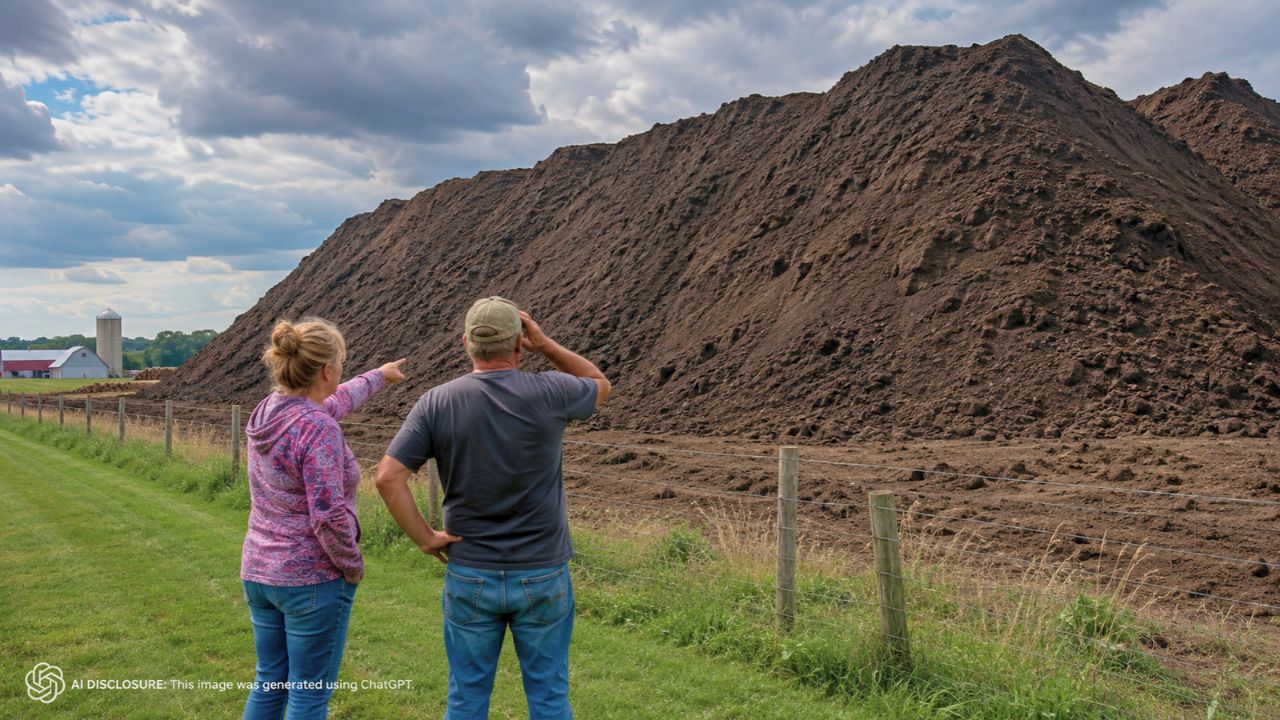
Photo credit: AI-generated image created using ChatGPT. Illustrative only.
It starts the way a lot of rural neighbor problems do: a few trucks on a back road, a little engine noise in the morning, some heavy equipment moving dirt. You tell yourself it’s temporary. A project. A farm getting set up.
But in Fauquier County, Virginia, neighbors say the “temporary” part never ended. Instead, they watched dirt piles rise across 56 acres—some of them as tall as 40 feet—while dump trucks kept showing up day after day. The back-and-forth, detailed in the original post, eventually led to a jury award of $800,000 to neighbors who sued for nuisance and trespass, though that judgment has been stayed pending appeal.
The first sign was the sound—then the ground started changing
Neighbors say the early mornings became predictable in the worst way. Dump trucks, starting around 6 or 7 a.m., six days a week. The kind of steady industrial rhythm that doesn’t match “quiet neighborhood,” even if you live out in the country and expect some tractors now and then.
Residents say what they were told in 2017 was a sod farm—grass grown for lawns. But as the years dragged on, they say what they saw looked less like farming and more like dumping: rising mounds and a steady stream of trucks.
One neighbor, Anita Burke, described the routine plainly: “They start dumping at 6, 7 o’clock in the morning, six days a week.” Another resident, Jennifer Rainwater, put it even more bluntly: “This is not sod farming. This is landfilling. This is wrong on every level. You don’t do this. You just don’t do this to other people.”
“Sod farm” on paper, dumping in the neighbors’ view
In court documents and interviews cited in the report, neighbors alleged the landowner accepted dirt, tires, asphalt, and concrete. That’s the kind of detail that makes homeowners start thinking beyond noise—toward drainage changes, runoff, debris, and the long-term risk of having fill material next door that you didn’t expect.
The NBC Washington I-Team said they saw plenty of trucks but no sod they could spot. That matters because a functioning farm looks like something: planting patterns, harvest activity, irrigation, pallets, deliveries going out. What neighbors described sounded like the opposite—material coming in, stacking higher, and not leaving.
Landowner Mike Hawkins told the I-Team he’s still working to get the sod farm up and running. When the I-Team visited, his son, Rylan Hawkins, said they have sold some sod over the years and are still working the land to get it fully operational. “Just building a farm, man,” he said, confirming he meant a sod farm.
When the fight went from property use to personal
A lot of neighbor disputes stay cold and quiet: letters, complaints, tense waves at the mailbox. This one, neighbors say, got pointed.
Residents claimed surveillance cameras were set up, with some pointing toward their backyards. Rainwater described a back-and-forth that felt less like “security” and more like intimidation: “If I’m out here and I’m taking a picture of a truck, he’ll take a picture of me taking a picture of a truck and he’ll send it and be like, ‘I’m watching you too.’”
Then came the flags. Court documents included photos of flags neighbors said were hung facing their homes on a fence Mike Hawkins built. The messages were vulgar, hostile, and unmistakably aimed at the people living next door. Rylan Hawkins told the I-Team he thought it was “kind of funny,” and when asked if he’d want them outside his own home, he replied, “Well, I wouldn’t be that kind of neighbor that they are.”
In rural life, you can tolerate a lot—mud on the road, equipment noise, the occasional smell. But when the line shifts into “I’m watching you” energy, it changes how people use their own yards. You stop relaxing on the porch. You think twice before letting kids play out back. You start documenting everything because you assume you’ll need it later.
Complaints, agency visits, and the feeling of hitting a wall
Neighbors and Hawkins have been tangled up for years, with court fights and county involvement going back to at least 2018. The landowner alleged interference. Neighbors called him a nuisance. The county said he violated zoning laws. And still, according to neighbors, the trucks kept coming.
Virginia’s Department of Environmental Quality visited several times in 2022 and told neighbors in writing, “There are no violations of regulations within our authority.” For homeowners living next to towering fill piles, that kind of response can feel like the most frustrating outcome possible: someone came out, someone looked, and yet nothing changes.
The Virginia Department of Agriculture and Consumer Services also couldn’t help, according to an email neighbors provided to the I-Team, because dumping is not an “agricultural activity.” That’s another gut-punch detail in this kind of dispute—getting bounced between agencies while the daily reality (noise, dust, truck traffic, and changing land contours) doesn’t pause.
Pat Hupp summed up what a lot of rural homeowners want most: “We wish it would stop. Peace and quiet would be really nice.”
The $800,000 verdict—and why it didn’t immediately end the trucks
Last year, a jury sided with the neighbors on their nuisance and trespass complaints and awarded them $800,000. For anyone who’s ever tried to sue over property impacts, that number jumps off the page—because it signals the jury believed the neighbors’ quality-of-life claims weren’t small or imaginary.
But the report also notes the judgment has been stayed pending appeal. In plain terms: even with a big verdict, life next door doesn’t automatically snap back to normal. You can “win” in court and still wake up to trucks.
In March, Hawkins and the county reached a settlement agreeing to resolve all disputes and litigation involving the turf farm, and Hawkins agreed the dirt dumping would stop at the end of July. Rylan Hawkins told the I-Team the trucks will stop coming on Aug. 1: “There won’t be no trucks in there.”
Hupp’s response sounded like someone who’s been promised endings before: she said she’d wait and see. When asked if it can get any worse, she answered, “Yes, I’m sure.”
The homeowner reaction: document first, because “normal” isn’t guaranteed
Even without a comment section attached, this story hits the same nerve that always runs through neighbor-property threads: when heavy activity next door becomes your daily life, you start thinking like a record-keeper. Photos of truck traffic. Dates and times. Videos of noise. Screenshots of messages. Copies of any agency emails.
That’s not because people want to be difficult. It’s because when the dispute turns into “he said, she said,” the neighbor with the notebook—and the patience to keep using it—usually has the clearest story when it finally reaches a courtroom or a settlement table.
For the Fauquier County neighbors, the case has already spanned years, agencies, court filings, and an explosive escalation in how the neighbors treated each other. The promised stop date is on the calendar. Now the neighborhood waits to see whether the landscape next door—and the mornings at home—finally get quiet again.
Like Fix It Homestead’s content? Be sure to follow us.
- Man Says He Found Out the Fence He Paid For Wasn’t Actually on His Property
- Woman Says Her Neighbor Started Taking Mulch From Her Delivery Pile Before She Could Even Spread It
- I made Joanna Gaines’s Friendsgiving casserole and here is what I would keep
- What Caliber Works Best for Groundhogs, Armadillos, and Other Digging Pests?